Converting from an F Permit to a B Permit for Integrated Refugees
Living with the "provisional" label of an F permit often feels like sitting in a permanent waiting room where the door is slightly ajar but never fully open. I remember speaking with a neighbor in Lausanne who had been on an F permit for six years, constantly feeling like his life was on pause despite his full-time job and fluent French. This guide provides the clear, actionable roadmap you need to finally convert that F permit into a more stable B permit through successful integration.
Understanding the F Permit Limbo
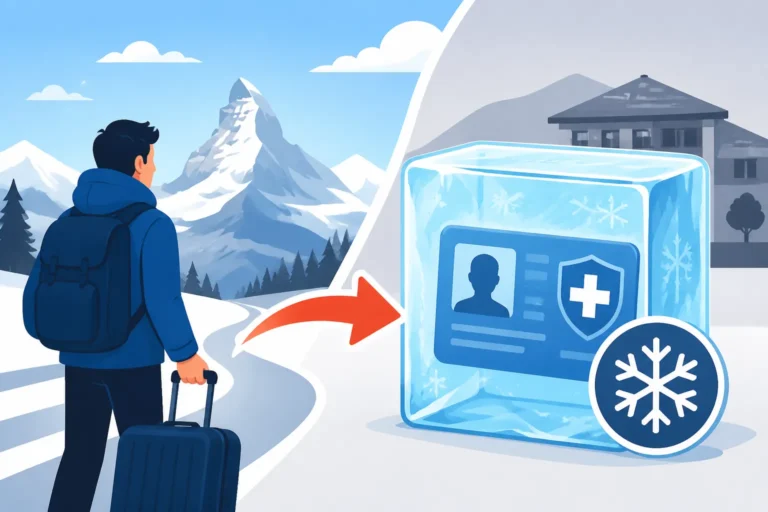
The F permit, officially known as "Provisional Admission," is one of the most misunderstood statuses in the Swiss immigration system. It is not a residence permit in the traditional sense; rather, it is a confirmation that while you do not meet the strict criteria for asylum, you cannot be deported because doing so would violate international law or put you at extreme risk. This "temporary" status often lasts for decades, creating a cycle of uncertainty that affects everything from your ability to rent an apartment to your career progression.
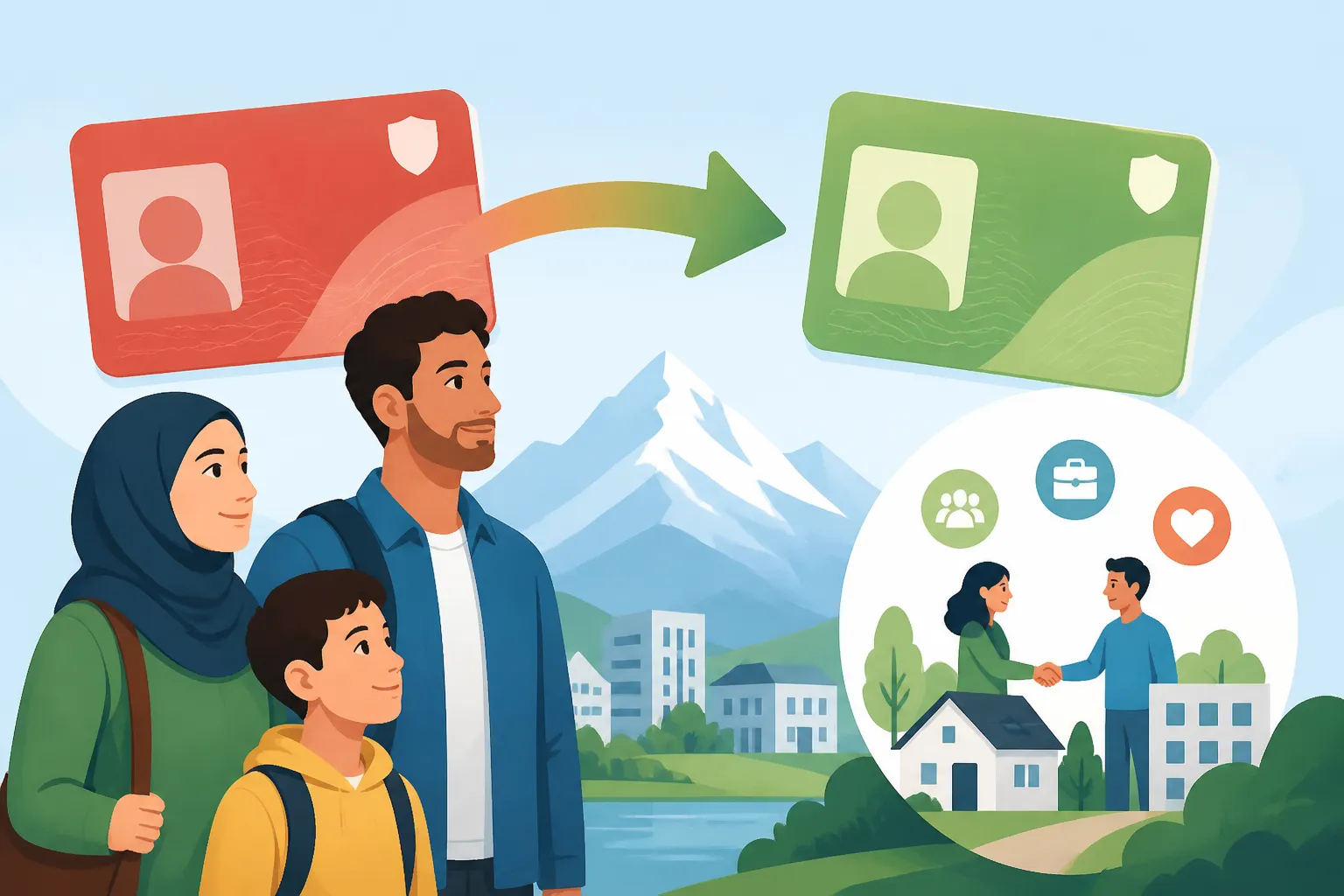
Transitioning to a B permit is a life-changing milestone because it shifts your status from "tolerated" to "resident." While an F permit holder is restricted in many ways—particularly regarding travel and family reunification—a B permit signifies that the Swiss authorities recognize your long-term place in society. This transition is often referred to as a hardship case application or an integration-based upgrade. It requires proving that you are no longer a guest waiting to leave, but a resident who has built a life here.
The administrative hurdles are significant, and the Swiss authorities will scrutinize every aspect of your stay. Unlike standard permit renewals, this conversion is discretionary. This means the canton and the State Secretariat for Migration (SEM) have the power to say no even if you meet the basic requirements, making the quality of your application dossier absolutely critical. You are essentially making a case for your future, and you need to present a narrative of "extraordinary integration" to succeed.
The Criteria for a Successful Conversion
To even begin the conversation about a B permit, you must meet the five-year residency requirement. In Switzerland, time is the ultimate currency of trust. You must have lived in the country for at least five years under the F permit status. During these years, your behavior must be impeccable. Any serious brushes with the law or significant "Betreibungen" (debt collection entries) can reset your progress or lead to an immediate rejection. The authorities look for a consistent history of following Swiss rules, from quiet hours in your apartment building to paying every bill on time.
Financial independence is the most common stumbling block I see expats and refugees face. To qualify for a B permit, you generally must be completely free from social assistance. If you have received social aid in the past, you are often expected to have repaid it or at least be in a stable enough professional position that you will never need it again. Holding a permanent work contract is a massive advantage. If you are a freelancer or have an irregular income, you may need to provide a Proof of Funds for Student Visas: Setting Up a Blocked Account style of financial guarantee to prove you won't become a burden on the state.
Language is the bridge to Swiss society, and for an F-to-B conversion, "getting by" is not enough. You will typically need to prove at least an A2 level of writing and a B1 level of speaking in the local national language of your canton (German, French, or Italian). The authorities want to see that you can navigate a Language Requirements for Swiss Permits: A1 to B2 Standards Explained assessment with ease. Beyond the certificate, they look for "social integration"—which might include memberships in local "Vereine" (clubs), volunteer work, or letters of recommendation from Swiss citizens who can vouch for your character and your contribution to the community.
Comparison of Rights: F Permit vs. B Permit
| Feature | F Permit (Provisional) | B Permit (Resident) |
|---|---|---|
| Travel Rights | Extremely restricted; requires special visa | Full Schengen travel rights |
| Family Reunification | Waiting period of 3 years + strict rules | Generally allowed for spouses/children |
| Employment | Allowed, but some sectors have restrictions | Full access to the labor market |
| Social Assistance | Higher risk of permit revocation | More protection, but still scrutinized |
| Canton Mobility | Requires permission to move cantons | Easier to move for work/family |
The Step-by-Step Application Process
Your first step is the creation of your "Integration Dossier." This isn't just a form; it is a story of your life in Switzerland. You will need to gather work contracts, salary slips from the last twelve months, and a confirmation from the social pass office that you are no longer receiving benefits. If you have children, their school reports are vital; they prove that the next generation is also integrating successfully. If any of your supporting documents from your home country are not in a national language, using a certified service like RushTranslate is essential to ensure the migration office accepts them without delay.
Once your dossier is ready, you submit it to your local "Gemeinde" (municipality) or directly to the Cantonal Migration Office, depending on your canton’s specific rules. This is where The 14-Day Registration Rule: Signing Up at the Gemeinde/Commune knowledge comes in handy—you must ensure your current address and registration details are perfectly up to date before filing. The canton will review your case first. If they believe you are a "hardship case" (Härtefall) who deserves a B permit, they will issue a positive recommendation.
The final hurdle is federal. Even if your canton loves you, the State Secretariat for Migration (SEM) in Bern has the final word. They will perform a final check of your criminal record, your financial history, and your Financial Independence Checks: Why Betreibungen (Debt) Stops Permit Renewals status. This process can take several months, during which you will remain on your F permit. It is a period of high anxiety, but as long as you haven't hidden any information, the federal government usually respects the canton's recommendation for integrated individuals.
Overcoming Common Hurdles and Administrative Barriers
One of the most painful realities of the Swiss system is the long memory of the social assistance offices. Many refugees on F permits are forced to take social aid when they first arrive. When you apply for a B permit, the migration office will look at Social Welfare (Sozialhilfe) and Its Impact on C Permit Revocation criteria to judge your eligibility. If you still owe money to the social office, try to set up a repayment plan before you apply. Showing a "good faith" effort to pay back what you received can sometimes satisfy a migration officer who is on the fence about your application.
Documentation is the silent killer of many applications. I have seen people lose months of time because a birth certificate or a marriage license from back home was not properly translated or apostilled. For these high-stakes applications, do not rely on a friend who speaks a bit of English or German. Use professional translators like RushTranslate to ensure that every word of your history is presented accurately and officially. In the eyes of a Swiss bureaucrat, a professional translation is a sign of a serious applicant who respects the local administrative standards.
Health insurance is another area where you cannot afford a gap. While F permit holders are often covered through communal schemes, moving to a B permit often means taking full responsibility for your own private insurance. You need to prove that you are correctly insured under the Swiss KVG/LAMal system. For those who travel or have complex international needs, looking into supplemental options like Cigna Global can provide a safety net that goes beyond the basic mandatory coverage. If you are denied because of a technicality, you must be prepared to follow Dealing with Permit Denials and the SEM Appeal Process protocols immediately, as the windows for appeal are very short.
Navigating the Härtefall Status
The legal mechanism for this conversion is often the "Härtefall" or hardship case. This is not a "right" you have; it is a request for an exception. To win this, you must prove that your integration is so deep that it would be a "hardship" for you to remain on a provisional permit or be asked to leave. You can find more details on this specific legal category in our guide on What is a 'Härtefall' (Hardship Case) Visa Status in Switzerland? to understand the nuances.
Think about your hobbies and social life. Do you play for a local football team? Do you help out at the local church or community center? Do you have a Swiss "godparent" or mentor? All of these "soft" factors weigh heavily in a hardship case. The migration office isn't just looking for a taxpayer; they are looking for a neighbor. If you can show that you are a vital part of your local community, you make it much harder for them to deny your request for a B permit.
Finally, keep an eye on your health coverage during this transition. Moving from a government-sponsored plan to a private one can be confusing. Ensuring you have a plan from a provider like Cigna Global or a local Swiss insurer that meets the "KVG" requirements is mandatory. You cannot be granted a B permit without proof of valid health insurance. If you have been a student during your F permit years, check Health Insurance for International Students: KVG Exemptions and Private Options to see if any of those rules still apply to your specific situation as you transition into full-time residency.
Mandatory Legal Disclaimer
The information provided in this article is for general informational purposes only and does not constitute legal advice. Immigration laws, cantonal practices, and federal regulations in Switzerland are subject to frequent changes and individual interpretation by authorities. We highly recommend consulting with a qualified immigration lawyer or a professional integration office before submitting any permit conversion applications. Your specific circumstances—such as your country of origin, cantonal residence, and personal history—will significantly impact the outcome of your case. All mentioned brands, such as RushTranslate and Cigna Global, are suggestions for supporting services and do not guarantee the success of your application.