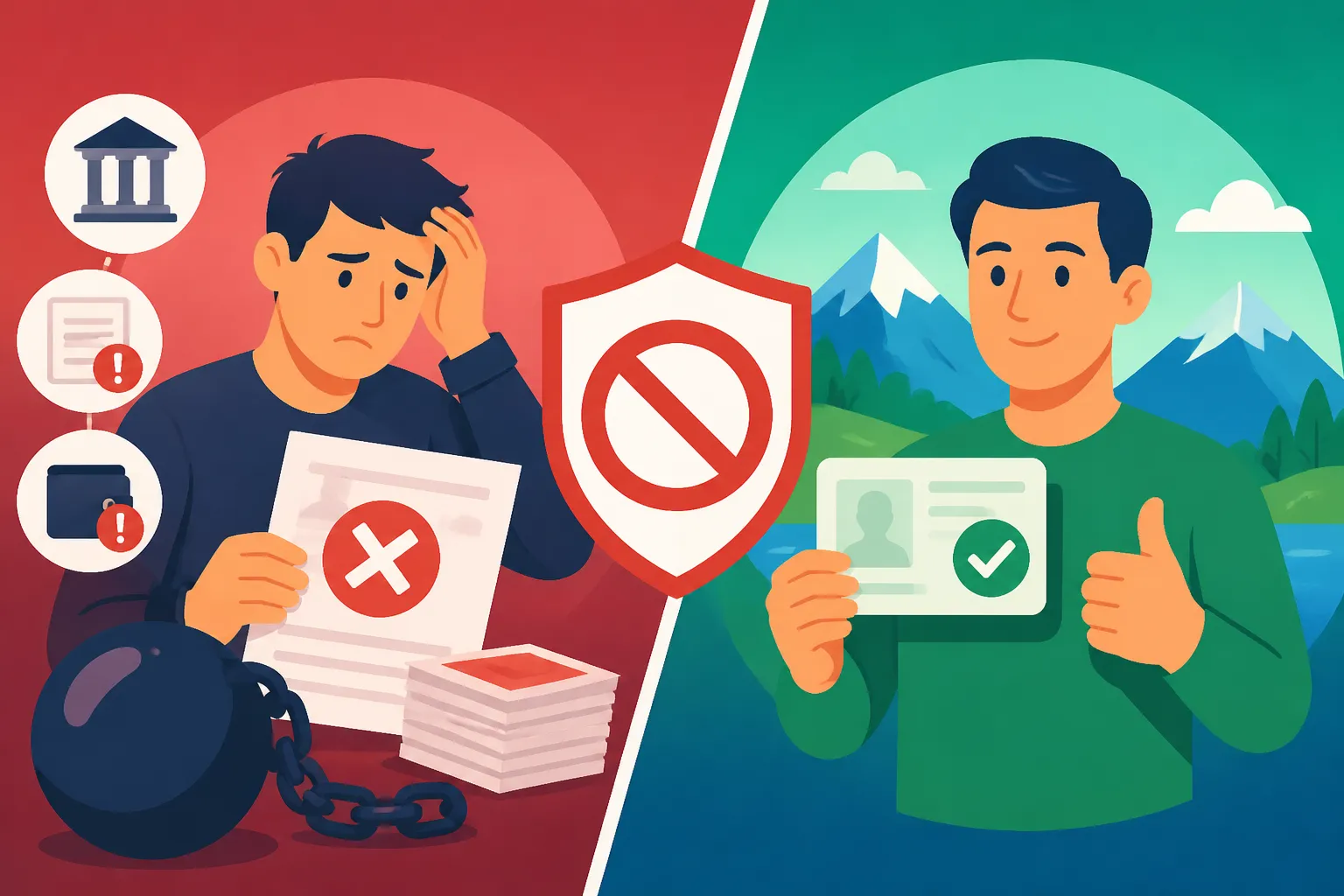
Financial Independence Checks: Why Betreibungen (Debt) Stops Permit Renewals
Receiving a renewal notice for your residency permit should be a simple administrative milestone, but for many, it triggers a wave of anxiety when a forgotten debt surfaces. I remember the cold sweat I felt when a disputed, three-year-old gym membership bill threatened my own permit extension. This guide explores how the Swiss debt register works and why financial "cleanliness" is the ultimate gatekeeper for your life in Switzerland.
The Reality of the Swiss Debt Collection System
In Switzerland, the system for collecting debt is uniquely efficient and, for the uninitiated expat, incredibly aggressive. The term you will hear constantly is Betreibung. Unlike in many other countries where a debt must be proven in a court of law before it appears on your public record, the Swiss system allows almost anyone to initiate a debt collection process against you for a small fee. This process is managed by the Betreibungsamt (Debt Collection Office), and it functions as a centralized ledger of your financial reliability.
When a creditor initiates a Betreibung, the office sends you a Zahlungsbefehl—a formal order to pay. This is usually a bright, intimidating slip of paper. If you don't pay or formally "object" within ten days, the debt is considered valid in the eyes of the register, regardless of whether you actually owe the money or not. I’ve seen expats ignore these slips because they felt the charge was unfair, only to realize months later that the entry had already "poisoned" their credit extract. This extract is a mandatory document for almost everything in Switzerland, from renting an apartment to renewing your Residence Permits in Switzerland: L, B, C, and G Permits Explained.
The Psychological Toll on the International Community
The stress of the Betreibung system cannot be overstated. Coming from a culture where debt is a private matter between you and a bank, the public nature of the Swiss debt register feels like a violation. In Switzerland, your financial history is a matter of administrative record that the state, potential landlords, and the Migration Office can access. It creates a "guilty until proven innocent" environment where a single administrative error—like a bill sent to an old address after you completed The 14-Day Registration Rule: Signing Up at the Gemeinde/Commune—can derail your long-term plans.
The feeling of being "tracked" by your bills often leads to a hyper-vigilance that defines the expat experience. You start checking your mailbox with a sense of dread, wondering if a forgotten medical invoice or a misinterpreted Serafe bill has triggered a new entry. This isn't just about the money; it’s about your right to remain in the country you’ve started to call home. If you are managing complex financial transitions or waiting for local insurance to settle, using a flexible international provider like Cigna Global can sometimes provide a buffer, ensuring you aren't left with unpaid local gaps that quickly turn into legal headaches.
How the Register Functions as a Social Filter
The debt register acts as a filter for Swiss society. It is designed to ensure that those residing in the country are "integrated," and in the Swiss view, integration is inextricably linked to financial self-sufficiency. If you cannot manage your bills, the authorities question your ability to contribute to the local economy. This is why the register is so influential. It isn't just a list of what you owe; it is a character reference. A clean extract tells the Migration Office that you are a reliable, law-abiding resident who follows the rules of the social contract. Conversely, a list of open debts suggests a lack of "effort" to integrate into the Swiss way of life.
Why the Migration Office Cares About Your Debts
The Swiss authorities operate under a fundamental principle: residency is a privilege, not a right. One of the core requirements for holding a B or C permit is that you do not become a "burden" on the state. While this often refers to social welfare, it also extends to private debt. The Migration Office views a high number of Betreibungen as a leading indicator that a resident may eventually require state intervention or social assistance. When it comes time for your renewal, the officers will look at your financial standing as a measure of your "integration success."
There is also the matter of legal compliance. In Switzerland, paying your bills is viewed as a legal obligation. By failing to settle debts, you are technically in breach of the standards expected of a foreign resident. This is particularly critical for those aiming for The Swiss C Permit (Permanent Residency): Fast-Track and Standard Routes. For a B permit, the authorities might be more lenient if the debt is small or disputed, but for a C permit, they expect a pristine record. If you have active debt collections, your application for permanent residency will almost certainly be rejected or put on hold until the record is cleared.
The Legal Basis for Permit Refusal
The Federal Act on Foreign Nationals and Integration (FNIA) explicitly states that residency permits can be refused or revoked if the applicant does not fulfill the criteria of "financial independence." This gives the Cantonal Migration Offices significant leeway. They aren't just looking for bankruptcy; they are looking for "persistent indebtedness." A single Betreibung for a 50 CHF phone bill might not get you deported, but five or six entries for various unpaid utilities suggest a pattern of behavior that the Swiss state finds unacceptable.
I’ve met people who were shocked to find that their permit was only extended for one year instead of the usual five because of an unresolved debt. The authorities use these shorter extensions as a "probationary" period to see if the resident will clean up their act. If the debt continues to grow, the next step is the non-renewal of the permit. If you're providing documents from your home country to prove your financial background during an appeal, make sure you use a certified service like RushTranslate to ensure your records are accepted without question by the cantonal bureaucrats.
Distinction Between Permit Types and Debt Impact
The impact of debt varies significantly depending on which permit you currently hold. If you are on an L permit (short-term), any sign of financial instability can make it nearly impossible to transition to a B permit. For B permit holders, the renewal process every one or two years is the primary danger zone. However, the highest stakes are for those pursuing the "Early C Permit" based on successful integration after five years. In these cases, the authorities do a deep dive into your financial history.
| Permit Type | Impact of Minor Debt (e.g., < 500 CHF) | Impact of Major Debt (e.g., > 5,000 CHF) | Risk to Residency |
|---|---|---|---|
| L Permit | Moderate: Can block transition to B. | High: Permit likely not renewed. | Very High |
| B Permit | Low: Usually results in a warning. | Moderate/High: Can lead to 1-year renewals. | Moderate |
| C Permit | Very Low: Hard to revoke once granted. | Moderate: Can trigger an "integration talk." | Low |
| G Permit | Low: Debt usually handled in home country. | Moderate: Can affect future B/C applications. | Low |
The Betreibungsauszug: The Document That Can Block Your Future
When you apply to renew your permit, the Migration Office will often ask for a Betreibungsauszug (Debt Register Extract). This document is the "credit score" of Switzerland, but it is far more transparent and punitive than the credit reports used in the US or UK. It lists every single debt collection action initiated against you in the last five years, even if you paid the debt immediately after the notice arrived. This is the part that catches most expats off guard: paying the bill does not automatically remove the entry from the record.
The extract will show three possible statuses for an entry: "Open" (you haven't paid yet), "Paid" (you paid, but the record remains), and "Objected" (Rechtsvorschlag). To the Migration Office, an "Open" debt is a red flag. A "Paid" debt is better, but a long list of paid debts still tells a story of someone who only pays when the legal "big guns" are brought out. Understanding How to Get a Betreibungsauszug at the Office des Poursuites is the first step in managing your residency profile.
Reading the Extract: Open vs. Closed Entries
When you receive your extract, you need to look at the "Status" column. If an entry says Verlustschein (Certificate of Loss), it means the debt was never paid, and the creditor has given up on collecting for now but holds a legal certificate allowing them to try again for the next 20 years. This is the worst-case scenario for a permit renewal. Even if you are currently Filing a Swiss Tax Return (C Permit or High Earners on B Permit) and showing a good salary, an old Verlustschein will haunt your application.
On the other hand, if you see an entry that you don't recognize, you must act immediately. Many expats fall victim to "zombie debts"—small amounts from old utility providers or medical labs that were sent to an address they lived in for only a month. If the status is "Objected," the Migration Office might ask for more details. They want to know if you are fighting an unjust bill or simply delaying the inevitable. Being proactive and explaining these entries in your renewal cover letter can sometimes save your permit.
How to Order the Correct Document
Don't wait for the Migration Office to ask for the extract. I always recommend ordering one for yourself six months before your permit expires. You can do this at the local Betreibungsamt of your Gemeinde. You will need to show your ID and pay a fee of around 17 to 20 CHF. Some cantons allow you to order this online, but going in person is often faster and gives you the chance to ask the clerk questions about any entries you don't understand.
If you have moved cantons recently, you may need to order extracts from your previous locations as well. The Migration Office wants to see your history for at least the last three to five years. If these documents are in a language other than the one spoken in your current canton (e.g., you moved from Geneva to Zurich), you might need to have them translated. Using a professional service like RushTranslate is often the quickest way to get these documents ready for the migration officials.
Social Welfare and Debt: A Double-Edged Sword
In the eyes of the Swiss government, there is a massive difference between Arbeitslosenentschädigung (Unemployment benefits/RAV) and Sozialhilfe (Social Welfare). Unemployment is an insurance you have paid into through your salary deductions; receiving it does not generally hurt your permit status. However, Sozialhilfe is a needs-based benefit funded by taxpayers. If you have significant debt and you have also received social welfare, your residency is in grave danger.
The authorities see a combination of debt and welfare as a failure to integrate financially. In fact, many cantons now require you to pay back every cent of social welfare you received before they will grant you a C permit or approve a naturalization application. I have seen families who lived in Switzerland for ten years be denied their permanent residency because they had a "debt" to the state for welfare they received during a period of illness or hardship years prior.
The Intersection of Debt and Sozialhilfe
The tragedy for many expats is that debt often leads to the need for welfare, and welfare prevents the permit renewal that would allow them to keep working to pay off the debt. It’s a vicious cycle. If you find yourself in this position, the most important thing is to communicate with both the Sozialamt (Welfare Office) and the Migration Office. Hiding your financial situation is the fastest way to get a "departure order."
The Swiss system is designed to be tough, but it isn't entirely heartless. If you can prove that your debt was caused by unforeseen medical expenses or a genuine emergency, and you have a clear plan to pay it back, the Migration Office may grant you a "hardship" extension. During these times, ensuring you have robust international coverage like Cigna Global can prevent future medical debts from piling up while you navigate the local system.
Repayment Obligations and Permit Renewal
If you have received welfare, you should immediately ask for a "Repayment Plan." Showing the Migration Office a signed agreement where you are paying back 200 CHF a month towards your welfare debt looks infinitely better than a silent, outstanding balance. This demonstrates the "will to integrate" that the FNIA law requires. It transforms you from a "burden" into someone who is taking responsibility for their financial history.
Step-by-Step Guide to Clearing Your Debt Register
If your extract isn't clean, don't panic—but do act. The most important thing to understand is that even after you pay a debt, it stays on your record for five years unless the creditor actively agrees to delete it. This is a crucial nuance. Simply paying the bill isn't enough to satisfy a strict Migration Office. You need the entry to be gelöscht (deleted).
The process of Clearing an Unjustified Betreibung from the Swiss Debt Register involves negotiating with the person or company that filed the claim. You must pay the debt (plus interest and administrative fees) and then, as a condition of payment, request that they send a formal letter to the Betreibungsamt withdrawing the claim and requesting its deletion from the public record. Many creditors will do this if you ask nicely—or if you refuse to pay until they agree to the deletion in writing.
Negotiating with Creditors
When you contact a creditor to settle an old debt, be very specific. Your email or letter should say: "I am prepared to settle the outstanding amount of X CHF immediately, provided that you agree to withdraw the Betreibung and instruct the Betreibungsamt to delete the entry from my record." Once they agree, and you pay, make sure you get a confirmation of the deletion request. Do not take their word for it over the phone; the Swiss system runs on paper.
In some cases, the creditor might be a large company like Swisscom or a health insurance provider. These companies have standard processes for this. For example, if you missed payments because you were Understanding KVG/LAMal: Mandatory Basic Health Insurance Explained and got confused by the billing cycles, explain this to them. Often, they will settle for the principal amount and a small fee, agreeing to clear your record once the balance is zero.
Legal Deletion and Court Intervention
If a creditor refuses to delete a paid entry, or if the debt was completely unjustified to begin with, you have legal options. You can petition the court to have the entry shielded from third parties (like the Migration Office). Since 2019, Swiss law has made it easier to "hide" unjustified debt collections. If you can prove that no legal action followed the initial Zahlungsbefehl within three months, you can apply to the Betreibungsamt to have that entry hidden from your extract. This costs about 40 CHF and is a lifesaver for permit renewals.
Proactive Financial Management for Expats
The best way to handle the Migration Office's financial checks is to ensure your record is never touched in the first place. This requires a level of administrative discipline that can be exhausting. You must keep track of every medical bill, every premium, and every "small" invoice. In Switzerland, there is no such thing as a "small" unpaid bill. A 10 CHF reminder for a library book can eventually lead to a Betreibung if left unaddressed.
One of the biggest traps for new arrivals is health insurance. Many expats struggle with What Happens if You Miss the 90-Day Health Insurance Registration Window? and end up with backdated bills for thousands of francs. These "lump sum" invoices are a primary cause of debt for foreigners. Staying on top of your Is Basic Health Insurance (KVG) Mandatory for Expats? A Plain-English Guide is essential. I always recommend setting up "LSV" (Direct Debit) for your recurring bills like insurance and rent. This ensures that even if you are traveling or forget to check your mail, the essential payments are made.
Health Insurance and Bill Payments
Medical bills in Switzerland are notoriously confusing. You might see a doctor in January, receive a bill in March, and then a separate bill from the lab in May. If you have a high deductible, as explained in How to Choose the Right Deductible (Franchise) for Your First Year, you are responsible for these costs out of pocket. It is incredibly easy for one of these invoices to get lost in the shuffle.
If you find the local billing system too overwhelming during your first year, having a secondary or bridge insurance like Cigna Global can simplify things, as they often handle claims differently than the local KVG providers. However, you must still ensure your mandatory Swiss insurance is paid. The Migration Office receives lists from insurance companies of people who haven't paid their premiums. Being on that list is a surefire way to have your permit renewal denied.
Avoiding the "Forgotten Bill" Trap
The most common reason for a ruined Betreibungsauszug isn't a lack of money; it's a change of address. When you move, the Post Office's mail forwarding service is only a partial solution. You must manually update your address with every single provider. If a bill goes to your old apartment and the new tenant throws it away, the creditor will eventually send a Zahlungsbefehl to your new address—but by then, the "damage" to your register is already done.
Keep a spreadsheet of every company that sends you an invoice. When you move, go through that list one by one. It feels tedious, but it is the only way to protect your residency. Remember, the Migration Office won't accept "I didn't receive the bill" as a valid excuse for a poor debt record. In their eyes, it is your responsibility to ensure your creditors can find you.
Disclaimer
This guide is for informational purposes only and does not constitute legal or financial advice. Swiss immigration laws and cantonal practices regarding debt and permit renewals can change frequently. Always consult with a qualified legal professional or the official website of the State Secretariat for Migration (SEM) for the most current regulations and specific advice regarding your situation.