Swiss Föhn Sickness: Why the Mountain Wind Causes Headaches
You wake up in Zurich or Lucerne, and the sky is a shade of blue so electric it looks filtered, while the Alps seem close enough to touch. Then it hits you: a crushing pressure behind your eyes and a dull throb in your temples. My first year in Zug, I thought I was coming down with a permanent flu until my neighbor explained the Föhn. This guide helps you navigate the mysterious world of Swiss Föhn Sickness and how to manage the "mountain wind" headaches that plague so many expats.
The Alpine Phenomenon Known as the Föhn
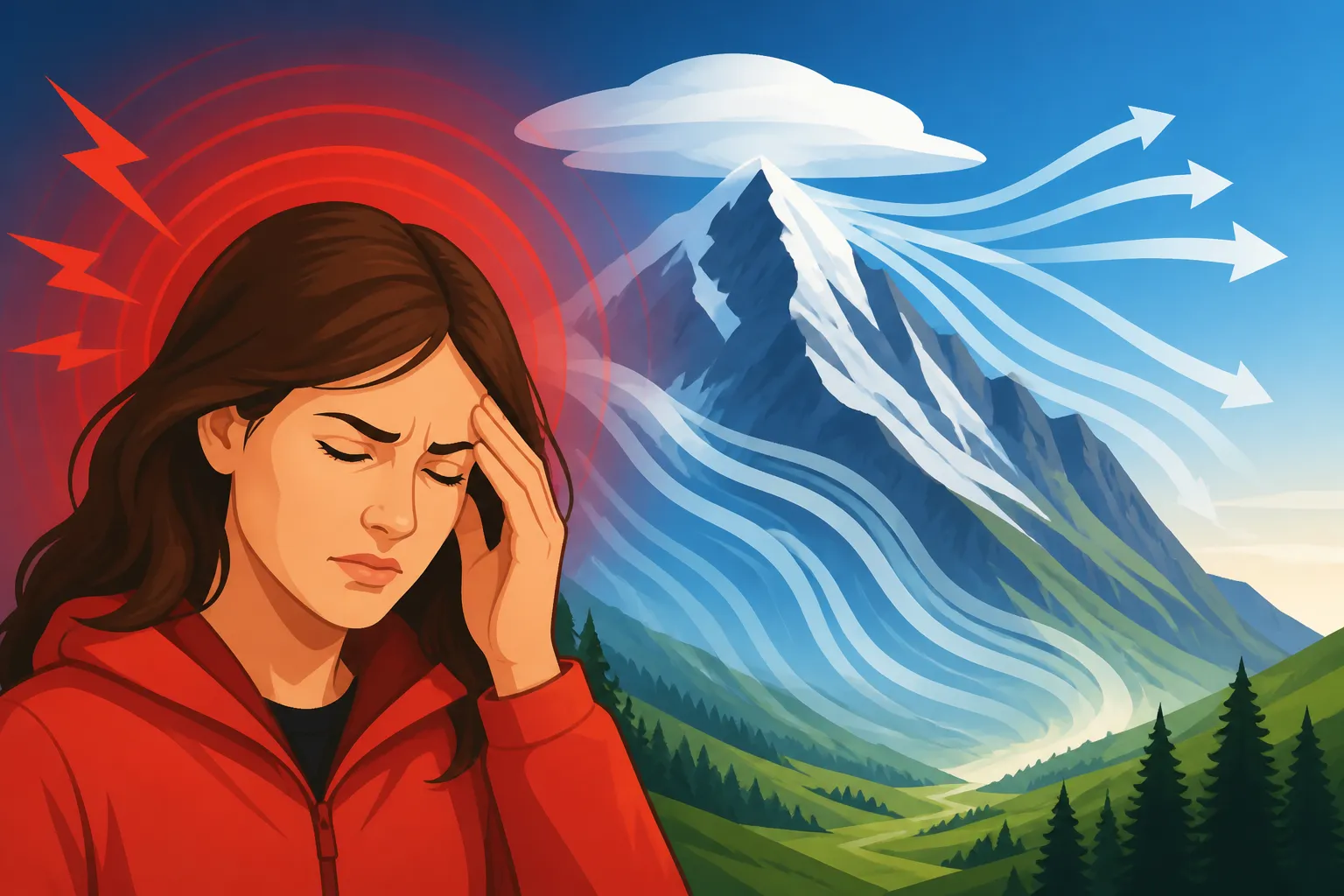
To understand why your head feels like it is in a vice, you first have to understand the meteorology of Switzerland. The Föhn is a warm, dry, down-slope wind that occurs on the lee side of a mountain range. In Switzerland, this usually happens when high pressure over the Mediterranean pushes air toward the Alps. As the air rises over the southern slopes, it cools and loses its moisture as rain or snow (the "Stau"). Once it crests the peaks and begins to descend into the northern valleys, it warms up rapidly—often gaining 1 degree Celsius for every 100 meters it drops.
When the Föhn hits the valleys of Central Switzerland or the Rhine Valley, the temperature can jump by 10 or 15 degrees in a matter of hours. For a newcomer, this sounds like a pleasant break from the winter chill. However, the sudden shift in atmospheric pressure and temperature is exactly what triggers the physiological response known as Föhnkrankheit, or Föhn sickness.
The Föhn Window and Visual Clarity
One of the most deceptive aspects of this wind is how beautiful it makes the country look. Meteorologists and locals often refer to the "Föhn window." Because the air is incredibly dry and the wind has "scrubbed" the atmosphere of dust and haze, visibility becomes supernatural. If you are Renting in Switzerland: The Complete 2027 Guide for Expats in a high-floor apartment in Zurich or Lucerne, you might notice that the mountains suddenly look like they are in your backyard.
This clarity is often a warning sign. When the peaks of the Berner Oberland are visible with startling detail from 100 kilometers away, the pressure is dropping, and the Föhn is likely blowing. For many expats, this visual beauty is the precursor to a day of physical misery. If you are using a service like HousingAnywhere to find a flat with a view, you might want to invest in some heavy blackout curtains for these specific days.
Why the Föhn is Different from a Normal Wind
Unlike the Bise, which is a cold, biting wind from the northeast, the Föhn is gusty, erratic, and warm. It can feel like someone is pointing a giant hairdryer at the city. This erratic nature is what disturbs the human nervous system. While you are out exploring your new home, perhaps using Airalo to keep your data active while navigating the hills of Glarus or Altdorf, you might feel the wind suddenly change from a gentle breeze to a violent gust that feels unnervingly warm. This thermal shock is a primary driver of the physical symptoms we experience.
Identifying the Symptoms of Föhn Sickness
Föhnkrankheit is not a single ailment but a cluster of symptoms that vary from person to person. While the "Föhn headache" is the most famous, the impact on the body is systemic. When the pressure drops sharply, the blood vessels in the brain can dilate, which is a classic trigger for migraines and tension-type headaches.
For many of us who moved here from sea-level countries, these sensations are entirely new. You might find yourself searching for Finding Medical Care in Switzerland: Doctors, Specialists, and Referrals because you are convinced something is wrong with your inner ear or your sinuses. In reality, your body is simply struggling to calibrate to the rapid atmospheric changes.
The Spectrum of Physical Pain
The most common symptom is a dull, heavy pressure in the forehead and behind the eyes. It often feels like a sinus headache but without the congestion. Others report joint pain, particularly in old injuries. The rapid change in air pressure can affect the fluid in your joints, leading to a strange "weather-sensing" ache that locals have lived with for generations.
Dizziness and nausea are also frequently reported. During a strong Föhn event, the equilibrium in the inner ear can be affected. If you are sensitive to these changes, you might feel slightly "off-balance" throughout the day, as if the ground isn't quite as solid as it should be. This is a common topic in the Weather and Geography: Föhn Winds, Winter Readiness, and Alpine Living circles, where veterans share their tips for staying upright.
The Psychological and Emotional Impact
It is not just your head that hurts; your mood might take a hit too. The Föhn is often associated with increased irritability, anxiety, and even insomnia. There is a legendary cultural belief in Switzerland—and parts of Germany and Austria—that the Föhn increases the crime rate and the frequency of car accidents. While the statistical evidence is debated, the "Föhnsturm" (Föhn storm) is widely accepted as a time when people are simply more "on edge."
You might find yourself snapping at colleagues or feeling an unexplained sense of dread. If you are already struggling with the transition to a new country, this can feel like Winter Depression (SAD): Light Therapy and Vitamin D Prescriptions hitting you all at once. Recognizing that these feelings are a reaction to the weather, rather than a personal failing or a permanent mood shift, is the first step toward managing the experience.
| Feature | Standard Swiss Weather | Föhn Weather Conditions |
|---|---|---|
| Temperature | Stable or slowly changing | Rapid increase (up to 15°C in hours) |
| Visibility | Variable, often hazy in valleys | Supernatural clarity; mountains look close |
| Humidity | Generally moderate to high | Extremely dry air |
| Cloud Formations | Stratus or Cumulus | "Föhnfische" (Lenticular/cigar-shaped clouds) |
| Common Sensation | Predictable seasonal feel | Erratic, warm gusts; "Heavy" air feeling |
| Primary Symptoms | None (Weather dependent) | Headaches, irritability, joint pain, insomnia |
Why Does the Mountain Wind Cause Such Distress
The scientific community in Switzerland has spent decades trying to pinpoint exactly why a warm wind causes such distinct physical suffering. While there is no single "smoking gun," three main theories dominate the conversation. Understanding these can help you choose the right tools for relief, perhaps by ordering specific supplies from Amazon Germany to help regulate your indoor environment.
The Theory of Rapid Pressure Drops
The most widely accepted explanation is the barometric pressure change. When the Föhn blows, the air pressure in the valleys can drop significantly and very quickly. This drop affects the pressure within the human body’s cavities, including the sinuses and the inner ear. It also impacts the vascular system. When external pressure decreases, the tissues in your body can expand slightly, putting pressure on nerves and blood vessels. This is why many people who suffer from Mental Health in Switzerland: Accessing Therapists and Psychiatric Care find that their physical symptoms of anxiety or tension are amplified during a Föhn event.
The Air Ionization Hypothesis
A more controversial but frequently discussed theory involves air ions. It is suggested that the friction of the wind moving over the mountain peaks creates an excess of positively charged ions in the air. High concentrations of positive ions are thought by some researchers to trigger an overproduction of serotonin in the body. While serotonin is usually the "feel-good" hormone, an excess can lead to the constriction of blood vessels and subsequent migraines. This theory explains why some people feel an "electric" or "charged" atmosphere before the wind even arrives in the valley.
Thermal Stress and Dehydration
The Föhn is incredibly dry. It acts like a giant sponge, soaking up moisture from everything it touches—including your skin and respiratory system. Because it is also unexpectedly warm, your body may begin to sweat or increase its metabolic rate to cool down, leading to rapid dehydration. Dehydration is one of the most common causes of headaches worldwide. When the Föhn is blowing, you are losing moisture through your breath and skin at a much higher rate than usual. If you haven't adjusted your water intake, a "Föhn headache" might simply be a dehydration headache amplified by the pressure changes.
Survival Strategies for the Föhn Sufferer
If you find yourself lying in a darkened room every time the Alps look a bit too clear, don't despair. There are several ways to mitigate the effects of the mountain wind. Most Swiss people have a "Föhn kit" ready to go, and as an expat, you should too.
Hydration and Mineral Balance
The first line of defense is aggressive hydration. You should double your water intake the moment you see those lenticular clouds (the cigar-shaped clouds that sit over the peaks). It isn't just about water, though; you need electrolytes. The dry air strips minerals from your body. Many expats find relief by taking magnesium supplements during Föhn periods, as magnesium helps regulate vascular tone and can prevent the blood vessel spasms associated with migraines.
Managing the Indoor Environment
Since the Föhn is a dry wind, the humidity in your Swiss apartment will plummet. This can lead to dry eyes, bloody noses, and scratchy throats, all of which contribute to the overall feeling of "sickness." Using a high-quality humidifier can make a world of difference. If you are living in a specific area like Bern Expat Healthcare Guide: Inselspital and Local Care Facilities, you might find that the local climate is particularly prone to these dry spells. Keeping your indoor humidity between 40% and 60% can help your mucous membranes stay hydrated and reduce the systemic stress on your body.
Medication and Traditional Remedies
When the headache is already in full swing, you may need to turn to the local pharmacy. In Switzerland, the most common over-the-counter solutions are Paracetamol and Ibuprofen. You will often hear locals talk about Over-the-Counter Painkillers in Switzerland: Dafalgan, Algifor, and Costs as the gold standard for Föhn relief. Dafalgan (Paracetamol) is frequently the first recommendation from a Swiss pharmacist for "weather headaches."
Some people find relief through more traditional methods. A "cold compress" on the forehead or the back of the neck can help constrict dilated blood vessels. Others swear by peppermint oil applied to the temples. If your symptoms are severe, don't hesitate to consult a professional. You can find help through resources like Finding an English-Speaking Family Doctor in Major Cantons to ensure you aren't overlooking a different underlying issue.
Long-term Adaptation and Cultural Context
One of the most interesting things about living in Switzerland is seeing how the culture has integrated the Föhn into daily life. In some cantons, the Föhn is even used as a legal mitigating circumstance in very old, albeit largely symbolic, judicial traditions. While you won't get out of a speeding ticket because the wind was blowing, the cultural recognition of "Föhn madness" is real.
Is It All in Your Head?
For many expats, there is a period of denial. You might think it is "just the weather" and that you shouldn't be affected by something as simple as wind. However, validation is a powerful tool. When you talk to your Swiss colleagues and they acknowledge that "Ja, der Föhn ist heute stark," it confirms that your physical pain has an external, environmental cause. This recognition helps reduce the anxiety associated with the symptoms. If you are struggling to communicate this to your doctor, you might look into What to Do If Your Doctor Refuses to Speak English During a Consultation to find a practitioner who understands the expat experience with the Swiss climate.
Moving to a "Föhn-Free" Zone?
If you are extremely sensitive to pressure changes, you might consider your location carefully when Where to Live in Switzerland: Cantons, Cities, and Commuter Zones. Some areas are known as "Föhn valleys" (like the Reuss Valley in Uri or the Haslital in Bern), where the wind is much more frequent and violent. Other areas, like parts of the Jura mountains or the northernmost parts of Basel and Schaffhausen, are significantly less affected by the Alpine Föhn.
Natural Progression and Immunity
The good news is that many people do adapt. After a few years of living through the cycles of the Föhn, your body’s baroreceptors (the sensors that detect pressure changes) may become less reactive. You might still notice the wind, but the crushing headaches may diminish into a minor annoyance. In the meantime, keep your Cough and Cold Medicine in Switzerland: Local Brands and Pharmacy Advice nearby and stay hydrated.
Learning to live with the Föhn is part of the "Swiss experience." It is a reminder that despite the high-tech cities and efficient trains, we are living in a wild, mountainous landscape that dictates our physical well-being. Embrace the beauty of the clear Alpine views, but keep your Dafalgan ready for the inevitable pressure drop.
Disclaimer
The information provided in this guide is for educational and informational purposes only and does not constitute professional medical advice. Always seek the advice of a qualified healthcare provider with any questions you may have regarding a medical condition or symptoms. Never disregard professional medical advice or delay in seeking it because of something you have read in this article. If you are experiencing a medical crisis, please refer to Emergency Numbers 144 vs 112: Which to Call in a Swiss Medical Crisis immediately.