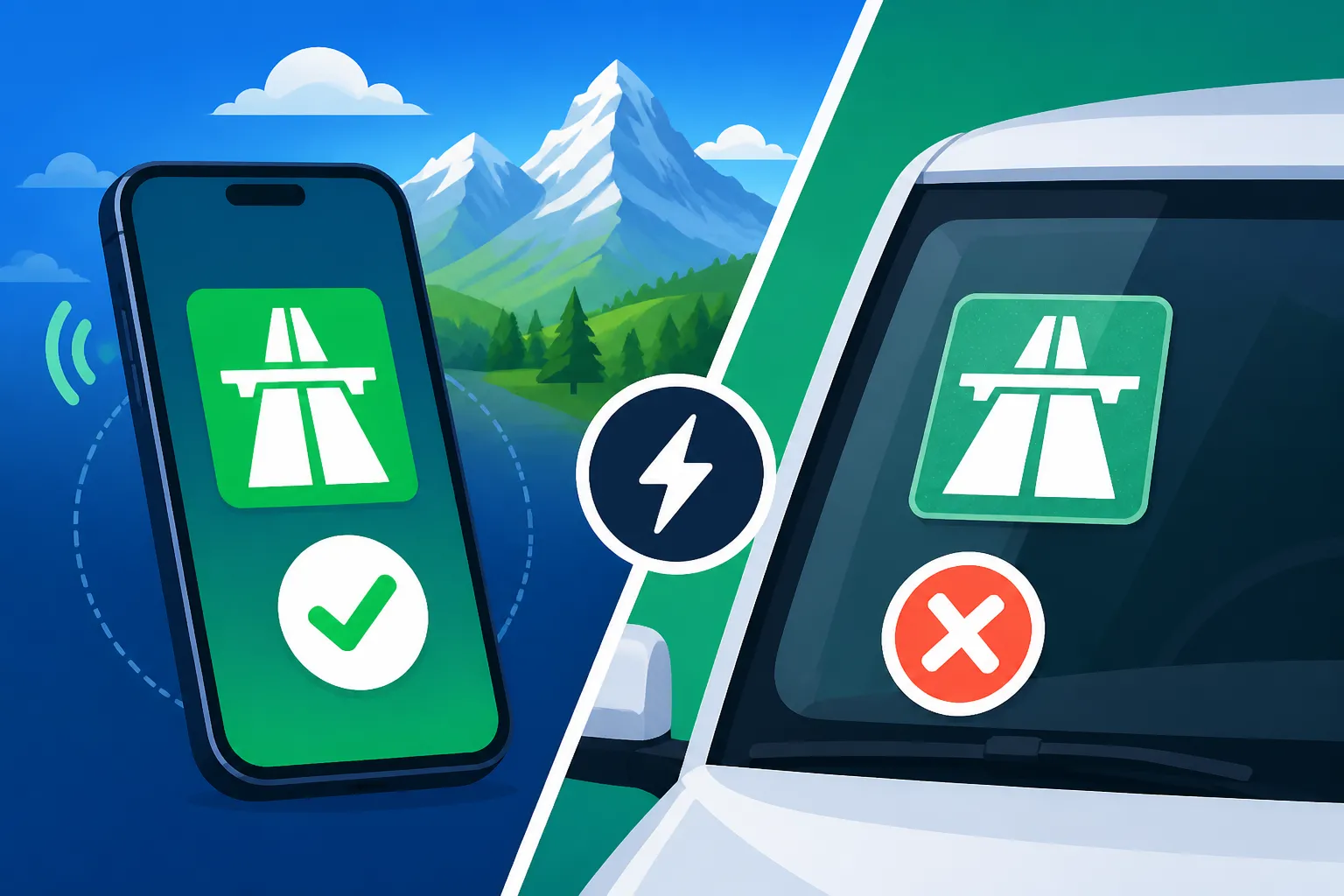
Swiss Autobahn Vignette: E-Vignette vs Physical Sticker for 2026
Navigating the Swiss motorway system for the first time is a rite of passage every expat remembers with a mix of awe and mild panic. I still remember my first winter here, frantically scraping off half-melted adhesive with a kitchen knife because I didn't realize the new year's sticker was already mandatory. This guide simplifies the vignette choices to save you from fines.
Understanding the Swiss Autobahn Vignette System
The Swiss motorway tax is remarkably simple compared to the complex toll booths you find in France or Italy, but its simplicity is exactly what trips people up. In Switzerland, you don’t pay per kilometer; you pay for a flat-rate annual authorization to use the national "Nationalstraßen" (motorways and expressways). This single payment covers everything from the sprawling tunnels under the Alps to the high-speed stretches between Zurich and Bern. For a veteran expat, the arrival of the new vignette color each year is as much a part of the seasonal calendar as the first fondue of autumn.
Why Switzerland Requires a Vignette
The requirement for a vignette isn't just a bureaucratic whim; it is the primary way the Confederation funds the upkeep of one of the world's most challenging road networks. Switzerland’s geography—dominated by mountains, deep valleys, and high-altitude passes—requires constant, expensive maintenance. When you are Driving in Switzerland: Licenses, Buying Cars, and Strict Traffic Laws, you quickly realize that the smooth asphalt and meticulously maintained tunnels you enjoy are funded directly by that small 40 CHF contribution. Unlike other countries that tax fuel heavily or use public funds, Switzerland places the burden directly on the road users, ensuring that even tourists passing through contribute to the infrastructure they use.
If you are caught on an Autobahn or an Autostrasse (indicated by green signs) without a valid vignette, the authorities are notoriously unsympathetic. I have seen many newcomers assume that because they only have five kilometers to go until their exit, they can skip it. The Swiss police often set up specific checkpoints at motorway entrances or use cameras to scan windshields and plates. The goal is simple: total compliance to keep the roads safe and the snow-clearing crews funded through the harsh winters.
Where the Money Goes: Maintaining the Alpine Infrastructure
Every cent of the 40 CHF you spend on your 2026 vignette is earmarked for the national road network. This includes the massive engineering feats like the Gotthard Road Tunnel and the San Bernardino Pass. For those of us living here, we see this money in action every time a heavy snowfall hits; the snow plows are out within minutes, often keeping the Autobahns clear while side streets remain buried. This reliability is a cornerstone of Swiss life, allowing for precise commuting even in the middle of January.
Beyond snow removal, the funds cover the installation of noise barriers in residential areas and the constant upgrading of safety systems in tunnels. If you've just moved and are Renting in Switzerland: The Complete 2027 Guide for Expats, you might find yourself living near an expressway. The high-quality noise mitigation you see is a direct result of this centralized funding. It’s a transparent system that, while annoying to pay upfront, provides a level of service that is hard to find elsewhere in Europe.
The 2026 Pricing and Validity Period
The price for the 2026 vignette remains stable at 40 CHF. This is one of the few things in Switzerland that hasn't seen massive inflation over the last decade, which we should all be grateful for. The validity period is also unique: a 2026 vignette is valid from December 1, 2025, through January 31, 2027. This 14-month window gives you plenty of "buffer time" to make the switch. I always recommend getting yours in December to avoid the long queues at gas stations on New Year’s Day when the "grace period" starts to feel a bit too close for comfort.
It is important to note that there are no short-term vignettes in Switzerland. Whether you are staying for two days or 365 days, the price is the same. For expats who are frequently hosting visitors, this can be a point of frustration. If your friends are driving in from Germany for a weekend, they must buy the full annual vignette. This is a common pain point, but it's the price of entry for using the Swiss highway system. If you are still in the process of moving your belongings, perhaps using a service like HousingAnywhere to find a temporary spot, you'll need to factor this into your initial relocation costs.
Physical Vignette: The Classic Green Sticker
For decades, the physical sticker was the only way to prove you'd paid your dues. It is a small, adhesive square that must be applied directly to the inside of your windshield. While the digital version is gaining popularity, many locals still prefer the physical version. There’s a certain tradition to it—seeing the new color every year and carefully peeling off the old one. However, the physical sticker comes with strict rules that can lead to a fine even if you've paid the money.
Where to Buy the Physical Sticker
The physical vignette is ubiquitous. You can find it at all post offices, gas stations, garages, and cantonal motor vehicle offices. If you are entering Switzerland from abroad, every border crossing has a dedicated lane or a booth where you can purchase one. Be prepared: at major crossings like Basel or Chiasso, the lines can be long during holiday weekends. If you are driving a car you recently purchased, you might want to check the Cost of Living Realities: Groceries, Telecoms, and Household Expenses in your area to see if your local garage offers them as part of a winter check-up service.
I personally prefer buying mine at the local Post office. It gives you a chance to practice your German or French, and you get a physical receipt, which is vital for some insurance claims if your windshield ever cracks. If you're a fan of online shopping and are used to getting everything from Amazon Germany, you should be aware that while you can sometimes find them there, it's always safer and often cheaper to buy them from an official Swiss outlet to ensure you aren't getting a counterfeit or an overpriced resale.
Correct Placement Rules to Avoid Fines
This is where the "Swiss-ness" of the system really shines. You cannot just throw the sticker on the dashboard or tape it to the glass. It must be permanently adhered to the inside of the windshield. The official law states it must be placed either behind the rearview mirror, in the top left corner (driver's side), or the bottom left corner. It must be clearly visible from the outside and not obscured by any tinted strips.
A mistake I see many expats make is using Scotch tape to hold the sticker up, thinking they can move it between two different cars. Do not do this. The sticker is designed to tear if you try to remove it. If the police pull you over and see that the sticker isn't properly adhered, they will treat it as if you don't have one at all. They view "non-permanent" placement as an attempt to defraud the system by sharing one sticker across multiple vehicles. If you have two cars, you need two stickers—unless you opt for the digital version, which we will discuss later.
The Dreaded Removal Process: Tips and Tricks
Removing an old vignette is a notoriously difficult task. The adhesive is designed to stay stuck through extreme temperature fluctuations, from -20°C in the mountains to 35°C in the summer sun. If you don't have the right tools, you'll end up with a sticky, shredded mess on your glass. Most veterans use a specialized glass scraper (basically a razor blade in a plastic handle). You can pick these up for a few francs at any Migros Do it + Garden or order a high-quality one from Amazon Germany.
The trick is to warm the sticker slightly with your car’s defroster before you start scraping. Once the bulk of the plastic is gone, you'll be left with a residue. A bit of nail polish remover or specialized adhesive remover on a paper towel usually does the trick. Just be careful not to let the chemicals drip onto your dashboard! For many of us, this annual ritual is a reminder of the precision required in Swiss life. If you're currently overwhelmed with the move and haven't yet mastered the art of Swiss maintenance, don't worry—it becomes second nature after the second or third year.
The E-Vignette: A Modern Expat's Best Friend
Introduced recently, the E-Vignette has revolutionized the way we handle road taxes in Switzerland. Instead of a physical sticker, the "vignette" is linked directly to your vehicle's license plate in a central database. This has been a massive relief for those of us who hate scraping glass or who frequently change cars. The system is entirely digital, and for the 2026 season, it is expected to be the preferred choice for the majority of the expat community.
How the Digital System Works with License Plates
When you buy an E-Vignette, you aren't buying a "thing"; you are buying an entry in the Federal Office for Customs and Border Security (BAZG) database. During the registration process, you enter your license plate number and the country of registration. Because the tax is linked to the plate and not the vehicle's physical chassis (unlike the sticker), this offers some unique advantages. If your windshield breaks and needs replacement, you don't have to worry about getting a replacement sticker—your digital registration remains valid.
The enforcement is done through plate scanners. While the police still do manual checks, mobile cameras can now scan plates as cars pass, instantly verifying if the 2026 tax has been paid. For those who are tech-savvy and perhaps already using eSIMs from Airalo to stay connected while crossing borders, the E-Vignette feels like a natural extension of the digital lifestyle. It removes the physical clutter and the risk of the sticker being stolen or damaged.
Purchasing the E-Vignette via the Official Portal
To buy the E-Vignette, you should only use the official government portal: "Via Portal" (web-accessible via the BAZG website). There are many third-party sites that look official but add "processing fees." Avoid these! The official price is always 40 CHF. The process takes about two minutes. You select your vehicle category, the country of registration, and enter your plate number. You can pay via credit card or Twint, the ubiquitous Swiss payment app.
One thing to be careful about: double-check your plate number! In Switzerland, the difference between a "ZH" (Zurich) and a "ZG" (Zug) plate is just one letter, but getting it wrong means you've paid for a non-existent car. If you make a mistake, correcting it involves a bureaucratic process that is best avoided. When you are Buying the 2026 E-Vignette Online via the Official Via Portal, make sure you have your car's registration document (Fahrzeugausweis) handy to ensure every character is exact.
Benefits for Multi-Car Households and Rental Users
The E-Vignette is a game-changer for households with "interchangeable plates" (Wechselschilder). In Switzerland, you can register two cars under one plate number, moving the physical plates between vehicles depending on which one you're driving. With the old physical sticker, you had to buy two stickers because each car had its own windshield. With the E-Vignette, because the tax is linked to the plate, you only need to pay once for both cars. This effectively saves you 40 CHF a year.
It's also a massive benefit for people using car-sharing services or those who have just arrived and are using a long-term rental while they figure out Where to Live in Switzerland: Cantons, Cities, and Commuter Zones. If you rent a car in Germany and drive into Switzerland, you can instantly buy an E-Vignette on your phone while parked at the border. No need to stand in line at a cold gas station or try to explain yourself to a border guard. This flexibility is perfect for the modern, mobile expat.
Choosing Between Physical and Digital
While the E-Vignette is convenient, the physical sticker isn't going away yet. There are pros and cons to each, and your specific situation might make one better than the other. In 2026, the split among drivers is expected to be about 60/40 in favor of digital, but that 40% who stick with the physical sticker often have very practical reasons for doing so.
Comparative Analysis: Pros and Cons
| Feature | Physical Sticker | E-Vignette (Digital) |
|---|---|---|
| Price | 40 CHF | 40 CHF |
| Transferability | Linked to car (not transferable) | Linked to plate (transferable to new car) |
| Windshield Replacement | Must request a new one from customs | Automatic (no action needed) |
| Interchangeable Plates | Must buy two stickers | Only buy once per plate |
| Ease of Purchase | Gas stations, Post offices | Online (Via Portal) |
| Privacy | High (No database entry) | Low (Plate is in a government DB) |
| Visual Confirmation | Police can see it immediately | Requires a database look-up |
The biggest "pro" for the digital version is clearly the flexibility with license plates and windshields. However, some people value their privacy and don't like the idea of their license plate being stored in a "paid" database, even if it is a government one. If you are someone who likes a clean windshield and no residue, the digital version is the winner. If you like the visual "badge" of honor that shows you are a Swiss resident, the green 2026 sticker is the way to go.
Situations Where the Physical Sticker Still Wins
There is one specific scenario where the physical sticker is actually better: when you are selling your car "vignette included." If you have a physical sticker on the windshield, that car is authorized for the motorway regardless of who owns it. If you sell the car to a friend, the vignette stays with the car. With the E-Vignette, the tax is linked to your plate. When you sell the car and take your plates with you (which is standard practice in Switzerland), the new owner has to buy their own vignette.
This might seem minor, but it can be a nice "selling point" if you are moving on and need to sell your car quickly. If you're using a platform to find a new place to live, like HousingAnywhere, and you realize you won't need a car in your new city (like Basel or Zurich), having that physical sticker might make your car slightly easier to sell to someone who needs to drive it home immediately.
Managing Your Vignette When Selling or Buying a Car
Buying a used car in Switzerland often comes with the question: "Does it have the vignette?" If the car has a physical sticker, check the year. If it's the current year, you're good until the following January. If the previous owner used an E-Vignette, you must buy your own as soon as you put your new plates on the car. Don't fall for the trap of thinking "the previous owner said they paid it." Unless they give you their plates (which is very rare and involves specific cantonal paperwork), you are not covered.
I once bought a car in February and the owner swore it was "all set." It turned out he had a digital vignette on his plates, not the car. I drove onto the A1 and luckily didn't get caught before I realized my mistake at the first gas station. Always check. If you're a new arrival and still Converting Your Foreign Driver's License to a Swiss Fahrausweis, take this time to learn these small but crucial details of the Swiss road system. It will save you a lot of stress during your first year.
Enforcement and Penalties: Staying on the Right Side of the Law
The Swiss are famous for their rules, and the Autobahn is no exception. Enforcement is a mix of high-tech surveillance and traditional police work. In 2026, with the digital system fully integrated, the "net" for catching non-payers is tighter than ever. Understanding how you might be checked will help you realize why skipping the 40 CHF is never a good financial gamble.
Automated vs. Manual Checks on the Autobahn
Police officers often stand at the "on-ramps" of major motorways, especially during the first two weeks of February when the grace period for the old year's vignette ends. They have a keen eye for the color of the current year. If they don't see the right color, they will wave you over. For E-Vignettes, the process is slightly different. Patrol cars are equipped with cameras that automatically scan the plates of cars in front of or behind them. If the plate doesn't show a "paid" status in the system, the blue lights come on.
There are also fixed cameras on some of the major Alpine transit routes. These aren't just for speeding; they can be configured to check for the vignette. For those traveling and perhaps using Airalo for navigation data, it's worth noting that your GPS might take you onto a green-signed road without much warning. Always assume that the moment you are on a high-speed road, you are being watched. The Swiss system relies on high levels of trust, but it verifies that trust with rigorous technology.
Understanding the Fine Structure for 2026
If you are caught without a valid vignette, the fine is 200 CHF. But it doesn't stop there. You are also required to buy the 2026 vignette on the spot. So, a simple 40 CHF requirement quickly turns into a 240 CHF bad day. If you have a physical sticker but it’s not applied correctly (e.g., you used tape), the fine is exactly the same. The authorities view an improperly applied sticker as an attempt at fraud.
I have heard stories of people trying to peel a sticker off a wrecked car to put it on a new one. If the sticker is torn or shows signs of being "re-stuck," the police will fine you. They have no "warnings" for this. It is a binary law: you either have a valid, correctly used vignette, or you don't. Given that 240 CHF could buy you a very nice dinner for two in Zurich, it’s just not worth the risk.
What to Do if You Forgot to Buy One
If you realize you’ve accidentally driven onto the motorway without a vignette, the best thing to do is to pull over at the very first rest area (Raststätte) or gas station you see. Most gas stations on the Autobahn sell them. Buying it five minutes after you got on the road is much better than being caught twenty minutes later. If you are stopped by the police before you can buy one, be polite. In Switzerland, being aggressive with the police never helps. Explain your situation, pay the fine, and consider it an "expensive lesson" in Swiss administration.
For those who are just moving in and perhaps managing their move through HousingAnywhere, the stress of relocation can make you forget these small details. Set a reminder on your phone for December 1st every year. That’s the day the new vignettes go on sale. If you buy it then, you’ll never have to worry about the "grace period" ending or the police checkpoints in February.
Driving Tips for New Expats in Switzerland
Driving here is a beautiful experience, but it requires a different mindset than driving in the US, UK, or even other parts of Europe. The vignette is just the start. To truly be integrated, you need to understand the seasonal and geographical requirements of the Swiss roads.
Essential Gear Beyond the Vignette
Besides your vignette, your car must have a warning triangle and a high-visibility vest. I also highly recommend keeping a "parking disc" (the blue cardboard clock) in your glove box. Many areas in Switzerland use "Blue Zones" for parking, where you need to set your arrival time to get free parking for an hour or two. If you don't have one, you'll get a fine even if the parking is theoretically free. You can get these at gas stations or order a pack from Amazon Germany.
Another essential for the Swiss winter is a good quality ice scraper and a snow brush. If you drive with snow on the roof of your car, the police can and will fine you, as it’s a hazard to drivers behind you. If you are Converting an EU Driver's License: The Simple Exchange Process, you might not be used to these strict "clean car" rules, but they are taken very seriously here.
Navigating Mountain Passes vs. Tunnels
Switzerland is a land of choice: do you take the tunnel or the pass? The Gotthard Tunnel is the fastest way south, but in the summer, the traffic can be hours long. The pass is beautiful but involves dozens of hairpin turns. If you're driving the pass, make sure your brakes are in good condition. Use your engine to brake on the way down to avoid overheating your pads.
If you're using Airalo for your data, make sure you download your maps for offline use. In the deep valleys and long tunnels, GPS signals often drop out. Knowing your route before you enter a 17km tunnel is much safer than trying to recalibrate in the dark. Also, remember that some mountain passes are closed from October to May. Your vignette doesn't help you if the road is under ten feet of snow!
Winter Driving and Legal Requirements
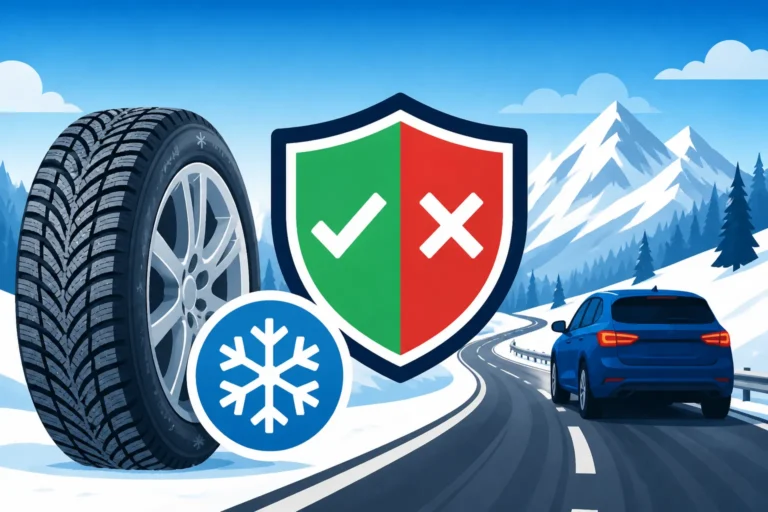
While winter tires are not technically mandatory by federal law in Switzerland, you are legally required to be in control of your vehicle at all times. If you cause an accident or block traffic because you are on summer tires in the snow, your insurance will likely refuse to pay, and the police will fine you heavily. Almost every resident switches to winter tires in October and back to summer tires in April.
For more details on this, you should read about Winter Tires in Switzerland: Are They Legally Mandatory in 2027? to understand the nuances. Many expats also keep a set of snow chains in the trunk if they plan on heading into the mountains for skiing. Driving in the Alps is a privilege, and the 40 CHF vignette is your ticket to that world. Treat the rules with respect, and you’ll find that the Swiss road system is one of the most rewarding and efficient in the world.
Disclaimer
This guide is intended for informational purposes only. While every effort has been made to ensure the accuracy of the information regarding the 2026 Swiss Autobahn Vignette, laws and regulations can change. Always check the official website of the Federal Office for Customs and Border Security (BAZG) for the most current rules, pricing, and purchase locations. The author and publisher are not responsible for any fines or legal issues arising from the use of this information.