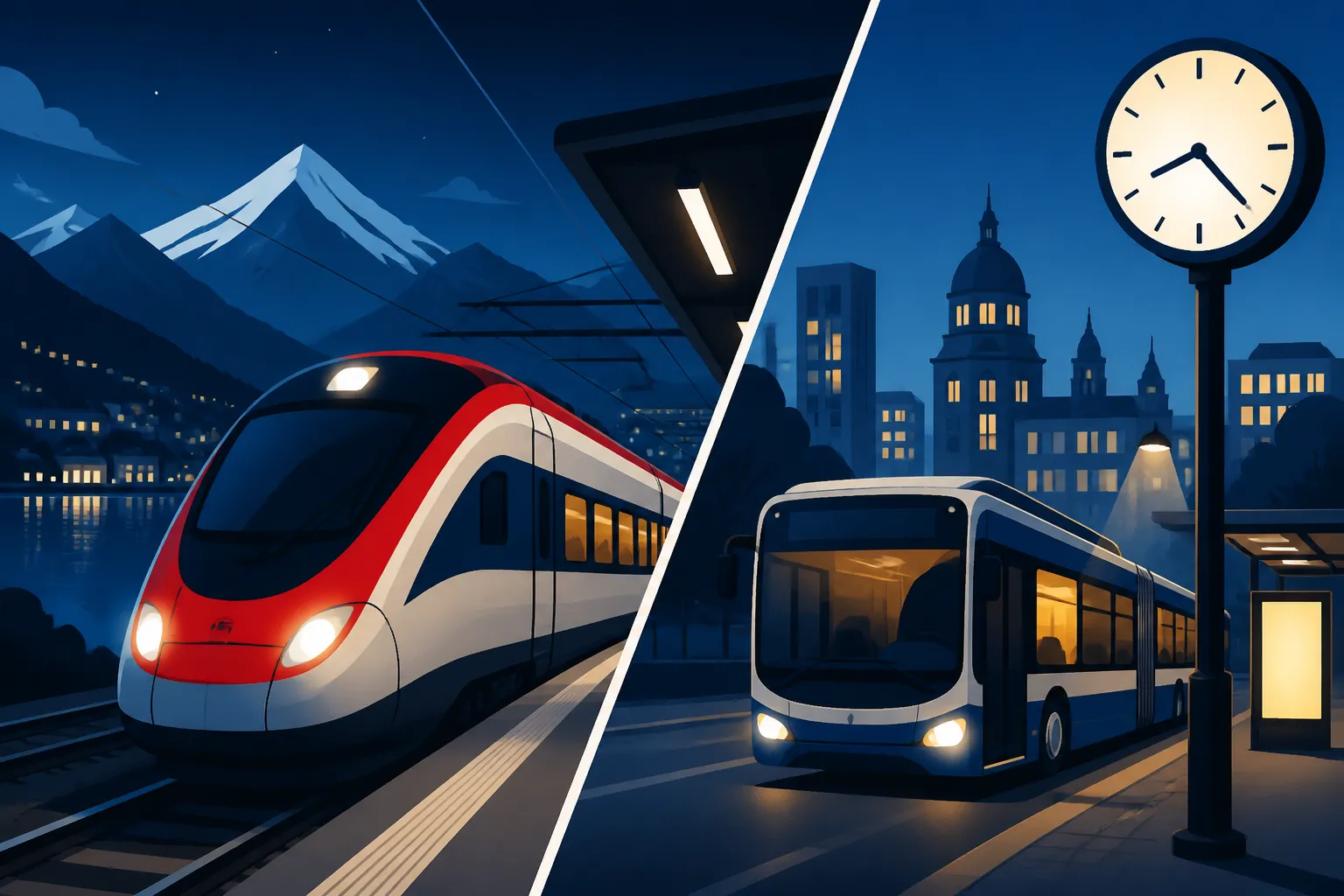
Night Trains and Late Public Transport in Swiss Cities
Oh, the quintessential expat dilemma in Switzerland: you’ve just had a fantastic evening out, perhaps a cozy Apéro Riche with friends in Zurich, or a lively concert in Geneva, or maybe you’ve been to a Fasnacht party in Basel, only to glance at your watch and realize it’s past midnight. A sudden chill runs down your spine – that familiar dread of missing the last train, leaving you stranded. Trust me, we’ve all been there. It’s a unique Swiss experience to navigate the meticulously punctual public transport system during the day, only to find it transforms into a somewhat different beast at night. This guide is here to shed light on how to get home safely and (mostly) affordably when the clock strikes late, covering everything from those crucial night trains to other essential alternatives.
Understanding the Swiss Night Transport Philosophy
Switzerland, for all its efficiency, has a charmingly old-school approach to noise and quiet hours. This extends to public transport, too. While it's one of the best systems in the world, night services operate on a slightly different philosophy than the bustling 24/7 networks you might find in truly massive global cities.
The 'Midnight Cutoff' and Cantonal Differences
For many newcomers, the first shock is the general "midnight cutoff." Unlike some major international hubs where trains and buses run continuously, traditional Swiss public transport services often wind down between 12:30 AM and 1:30 AM on weeknights. On weekends, things are a bit more relaxed, with dedicated night networks extending services significantly later, sometimes even into the early morning hours, around 3:00 AM to 5:00 AM. This isn't a hard and fast rule, though, and it really varies by canton and even by specific city within a canton. What works in Zurich might not apply in a smaller town in Aargau, for example. You quickly learn to appreciate the efficiency during the day, but it means you can't just assume continuous service after dark.
This tradition of quiet nights is deeply ingrained. Swiss efficiency also means avoiding unnecessary costs, and running empty trains all night long on weekdays isn't usually seen as a priority for general public services. So, if you're out past midnight on a Tuesday, your options might be far more limited than on a Saturday.
The Role of Night Networks (Nachtnetz) in Major Urban Centers
Thankfully, the major urban centers and their surrounding agglomerations have recognized the need for later services, especially for a vibrant nightlife and shift workers. This is where the Nachtnetz (night network) comes in. These are specially designated lines, often operating only on Friday and Saturday nights (and sometimes the night before a public holiday), that extend the reach of public transport. They typically consist of a mix of night trains (often S-Bahn lines), night buses, and sometimes even night trams, radiating out from the city centers. These services are invaluable, providing a lifeline for anyone wanting to enjoy an evening out without having to factor in an expensive taxi ride or having to leave the party prematurely.
It's crucial to understand that these night networks often operate on a reduced schedule compared to daytime services. You might find a train or bus only once an hour, or every 30 minutes, rather than the frequent 7-15 minute intervals of the day. This requires a bit more planning, but it's a small price to pay for getting home. Knowing your local night network is a true game-changer, especially if you're living in a city like Zurich or Geneva where social life extends well beyond dinner.
Your Travel Cards: GA, Half-Fare, and Local Zone Passes
If you're already integrated into the Swiss transport system, you're likely familiar with the fantastic range of passes available. These can make a huge difference to your wallet, especially when venturing out late.
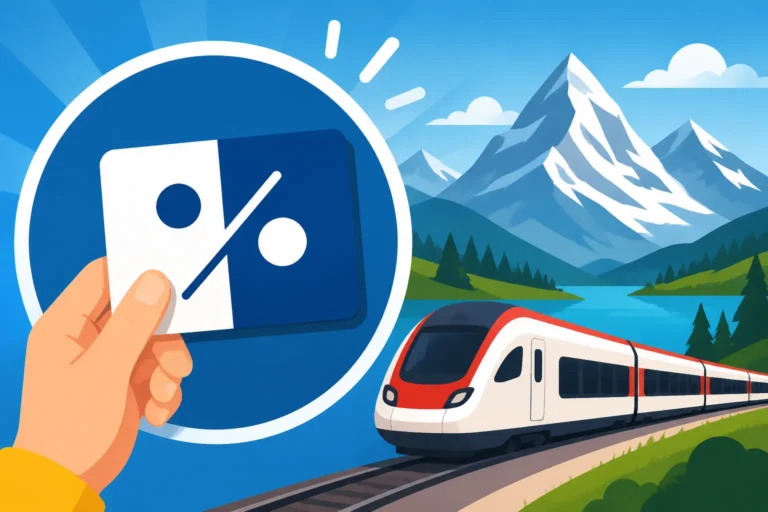
- Generalabonnement (GA): If you're one of the fortunate souls with a SBB Travelcards: Is the Generalabonnement (GA) Worth the CHF 4000+ Cost? (the GA), you might assume all your night travel is covered. While your GA covers the base fare on all SBB trains and most local networks, it often does not cover the mandatory Nachtzuschlag (night surcharge) that applies to most night services. You'll still need to buy this supplementary ticket. Always double-check the specific rules for your region.
- Half-Fare Travelcard (Halbtax): Similarly, The Half-Fare Travelcard (Halbtax): The Must-Have Pass for Swiss Residents provides a 50% discount on regular tickets, but it typically doesn't give you a discount on the Nachtzuschlag itself. You'll buy the full-price night surcharge and then your discounted regular ticket. This is still a massive saving compared to paying full price for both.
- Local Zone Passes: If you have a monthly or annual pass for a specific transport zone, like a ZVV (Zurich Transport Network) or Mobilis (Vaud) pass, it will usually cover the regular fare portion of your journey within those zones, but you will almost certainly still need to purchase the Nachtzuschlag.
The general rule of thumb is: your existing pass covers the 'daytime' portion of the ticket, but the 'nighttime' privilege usually comes with an additional, non-discountable fee. Don't get caught out thinking your GA will get you home for free after 1 AM on a Saturday – it won't. This is a common expat mistake, so consider yourself warned!
Your City's Night Ride: A Closer Look at Key Urban Areas
Let's dive into some of Switzerland's major cities and how their night transport networks stack up. Each city has its own nuances, so it pays to be prepared.
Zurich's ZVV Nachtnetz: Comprehensive Coverage for Party-Goers
Zurich, being Switzerland's largest city and a major economic hub, boasts arguably the most extensive night network, the ZVV Nachtnetz. This is a real blessing if you're out exploring Zurich's vibrant nightlife, attending a late-night event, or simply returning from a late dinner with friends. The ZVV Nachtnetz operates primarily on Friday and Saturday nights (into Saturday and Sunday mornings, respectively).
The network is comprised of:
- Night S-Bahn trains (SN-lines): These S-Bahn lines run every 30 to 60 minutes, connecting the city center with surrounding towns and even stretching out to places like Winterthur, Zug, and Schaffhausen. They typically run until around 4:00 AM or 5:00 AM.
- Night Trams and Buses (N-lines): Within the city and its immediate suburbs, special night trams and buses fill in the gaps, ensuring pretty comprehensive coverage. These often follow modified routes or run less frequently than their daytime counterparts.
For a detailed understanding of the routes and schedules, consulting the official Public Transport in Zurich: ZVV Zones, Tickets, and Night Service guide is a must. Remember, on top of your regular ZVV ticket (or GA/Half-Fare), you'll need the Nachtzuschlag, which is a flat fee, usually CHF 5.00, regardless of the distance traveled. It's a small price for the convenience and peace of mind.
Geneva's TPG Noctambus and Regional Services
Over in Romandie, Geneva also offers a vital night network to keep its residents moving after hours. The TPG (Transports Publics Genevois) operates the "Noctambus" service. This network of night buses ensures connections within Geneva and to key surrounding areas.
The Noctambus lines generally run on Friday and Saturday nights, with some services starting earlier in the evening and continuing until the early hours of the morning, often around 3:00 AM to 4:00 AM. These services are crucial for those enjoying the international city's varied cultural scene, from clubbing to attending events at the Grand Théâtre. For residents navigating the city, knowing the Noctambus routes is as important as understanding the daytime Public Transport in Geneva: TPG Network and Cross-Border Trams.
Like Zurich, a special night surcharge applies to these services. This fee is typically CHF 5.00 and is added to your regular TPG ticket or pass. It's always a good idea to check the TPG website or app for the latest schedules and any changes, as routes can sometimes be adjusted for events or construction.
Basel's Border-Crossing Night Lines: A Unique Advantage
Basel offers a unique proposition with its public transport, particularly at night, due to its strategic location at the Swiss, German, and French borders. The Basler Verkehrs-Betriebe (BVB) and Baselland Transport AG (BLT) operate a robust night network.
On Friday and Saturday nights, you'll find night trams and buses running well into the early morning, usually until around 4:00 AM or 5:00 AM. What's especially interesting about Basel's network is its cross-border nature. Some night services can take you into adjacent parts of Germany (e.g., Weil am Rhein) or France (e.g., St. Louis), which is incredibly handy if you live or socialize just over the border. However, be acutely aware of specific zone requirements and international ticket validity, as the night surcharge might still apply only to the Swiss portion of your journey. Always refer to the Public Transport in Basel: BVB, Trams, and the German/French Connections guide for the intricacies of these routes.
Again, the standard night surcharge (CHF 5.00) is required in addition to your regular fare. If you're a regular cross-border commuter or simply enjoy exploring the tri-national region, understanding these specific night lines is a huge advantage.
Bern, Lausanne, and Lucerne: Smaller But Still Capable Networks
Even if you're not in the absolute largest cities, fear not! Bern, Lausanne, Lucerne, and other regional centers also provide night transport options, albeit often on a slightly smaller scale or with less frequency.
- Bern: The capital city utilizes its BERNMOBIL network for night services. On Friday and Saturday nights, you'll find a network of night buses and trams covering the city and its immediate surroundings until around 3:00 AM to 4:00 AM. The night surcharge applies here as well.
- Lausanne: In the Canton of Vaud, Lausanne's TL (Transports publics de la région lausannoise) offers a "TL-Nocturnes" service. These night buses run on weekend nights, typically until around 3:00 AM, connecting the city center with various neighborhoods and some outlying communes. The same CHF 5.00 night supplement is standard.
- Lucerne: Lucerne's VBL (Verkehrsbetriebe Luzern) also provides night bus services on weekend nights, ensuring that residents and visitors can get around after the regular daytime services conclude. These usually run until around 3:00 AM.
For all these cities, it's paramount to check the specific cantonal or municipal transport websites or mobile apps. The times and routes can be quite localized, and it's always better to know before you go. Remember to factor in the Nachtzuschlag for these services too.
Practicalities of Night Travel: Tickets, Apps, and Safety First
Navigating night transport isn't just about knowing if a service runs, but how to use it effectively and safely. A little preparation goes a long way.
The All-Important Nachtzuschlag (Night Surcharge)
This is the big one, the one that catches many expats off guard: the Nachtzuschlag. As mentioned, it's a mandatory supplement that you need to purchase for most night public transport services on Friday and Saturday nights (and sometimes before public holidays) across Switzerland. It’s a flat fee, usually CHF 5.00, regardless of the distance you travel or what other travel passes you hold.
Why does it exist? Think of it as a special service fee. Running public transport late into the night requires additional resources, staffing, and often less efficient routes due to lower demand. This surcharge helps cover those extra costs. It's a small price to ensure that services remain available, rather than facing exorbitant taxi fares.
How to purchase it:
- SBB Mobile App: This is by far the easiest way. You can select your journey, and the app will automatically prompt you to add the Nachtzuschlag.
- Ticket Machines: Most SBB and local transport ticket machines will have an option to purchase the Nachtzuschlag separately or as part of a combined night ticket.
- Online: Some local transport providers allow you to buy it online.
- SMS: In some areas, you can even buy it via SMS by sending a specific code to a designated number, though this varies regionally.
Crucial tip: You must have the Nachtzuschlag before you board the night service. Conductors are vigilant, and penalties for not having one (even if you have a valid day ticket/pass) can be steep, often starting at CHF 90.00 or more. Don't risk it! It’s a bit like buying an umbrella on a rainy day – you don’t want to be without it.
Planning Your Journey with SBB Mobile and Local Apps
The Swiss public transport system is incredibly well-integrated digitally, and this extends to night services. Your smartphone is your best friend when planning late-night journeys.
- SBB Mobile App: This is the absolute gold standard for public transport in Switzerland. It's an indispensable tool for virtually any journey you make. When searching for connections late at night, the app will automatically display night services and prompt you if a Nachtzuschlag is required. It provides real-time updates, platform changes, and delays, which can be particularly useful if you're waiting for a less frequent night train. You can purchase your tickets and the night surcharge directly within the app, making it incredibly convenient. For international friends who are visiting and using an eSIM from a provider like Airalo, having data access to use this app is a game-changer.
- Local Transport Apps: Many cantonal and city transport networks also have their own apps (e.g., ZVV-App for Zurich, TPG-App for Geneva). These can sometimes offer more granular detail for local routes and may even allow you to purchase tickets specifically for their network. However, for most journeys, the SBB Mobile app is sufficient as it integrates data from all major transport providers across the country.
Always make sure your phone is charged! A dead battery at 2 AM with no idea how to get home is a truly miserable experience.
Staying Safe on Late-Night Public Transport
While Switzerland is generally very safe, exercising common sense and caution when traveling alone at night is always advisable, just like anywhere else in the world.
- Stay Aware of Your Surroundings: Avoid being completely engrossed in your phone. Be mindful of who is around you, especially when waiting at deserted stations or stops.
- Choose Well-Lit Areas: If possible, wait for your train or bus in well-lit areas.
- Travel with Friends: If you've been out with friends, try to travel home together or at least ensure someone knows your estimated arrival time.
- Trust Your Gut: If a situation or person makes you feel uncomfortable, remove yourself from it. Move to a different carriage, stand near other people, or exit the bus/tram.
- Emergency Numbers: Always have the Swiss emergency numbers stored in your phone: 112 (general emergency), 117 (police), 144 (ambulance). For more detailed information on emergency protocols, check out Emergency Numbers 144 vs 112: Which to Call in a Swiss Medical Crisis. It's better to know these beforehand, just in case.
- Avoid Excessive Alcohol: While it's great to enjoy yourself, being overly intoxicated makes you more vulnerable and less able to react to unforeseen situations.
Remember, the vast majority of late-night journeys are perfectly uneventful, but being prepared means you can relax and enjoy your evening without unnecessary worries.
When the Last Train Has Truly Left: Alternatives for Getting Home
Sometimes, even the extensive night networks don't quite reach your village, or perhaps you're out past the weekend's last night service. In these situations, you'll need to turn to alternatives.
Taxis and Ride-Sharing: Convenience at a Price
When public transport isn't an option, taxis become your primary fallback, but be prepared for Swiss prices. They are, shall we say, robust.
- Traditional Taxis: You'll find taxi stands at major train stations, popular nightlife areas, and airports. You can also hail one or call a local taxi company. While reliable and professional, a late-night taxi ride from Zurich city center to a further suburb could easily set you back CHF 50-80, or significantly more for longer distances.
- Ride-Sharing Apps: Services like Uber and Bolt operate in some major Swiss cities (Zurich, Geneva, Basel, Lausanne, Bern). These can sometimes offer slightly more competitive rates than traditional taxis, but demand-based pricing (surge pricing) can push costs up during peak late-night hours. The benefit is often the convenience of booking and paying through an app, with clear pricing upfront. However, remember that if you're living in the countryside vs. the city, availability might be limited.
Always ensure you have enough battery on your phone to book and track your ride, and consider setting up your payment method in advance.
Car-Sharing and E-Scooters: Last-Minute Mobility
For shorter distances or specific needs, other mobility solutions might be available, particularly in larger urban areas.
- Car-Sharing Services: Companies like Mobility Carsharing (Switzerland's largest) offer vehicles scattered throughout cities. If you're a member and there's a car available nearby, this can be a viable option. However, it requires prior registration and a valid driver's license. It's more of a planned alternative than a spontaneous one after a few drinks, but for those who might have left a car parked a bit further away, it's worth considering. You can read more about this in our guide on Car Sharing in Switzerland: How Mobility Works Without Owning a Car.
- E-Scooters and E-Bikes: In many Swiss cities (Zurich, Geneva, Basel, etc.), you'll find rental e-scooters and e-bikes from companies like Voi, Lime, and TIER. These are fantastic for short distances, especially if your home is just a few kilometers from the nearest night bus stop. They're typically activated via an app and charge by the minute. Crucially, never, ever use these if you've been drinking alcohol. Swiss laws on driving under the influence apply equally to e-scooters, and fines are hefty. Also, always wear a helmet if you have one, and be mindful of pedestrians and traffic rules.
Planning your late-night transport in Switzerland is a key part of fitting into the expat lifestyle. It might take a bit of getting used to, especially if you come from a country with 24/7 services, but once you master the Nachtnetz and its associated Nachtzuschlag, you'll be zipping home confidently, no matter how late the Swiss night gets.
Disclaimer
The information provided in this article is for general guidance and informational purposes only, and does not constitute professional advice. While we strive to keep the content up-to-date and accurate, public transport schedules, pricing, and regulations in Switzerland can change. Always consult official sources such as the SBB website, local transport authority websites (e.g., ZVV, TPG, BVB), and relevant cantonal authorities for the most current and precise information. We do not assume any liability for decisions made based on the information provided herein.