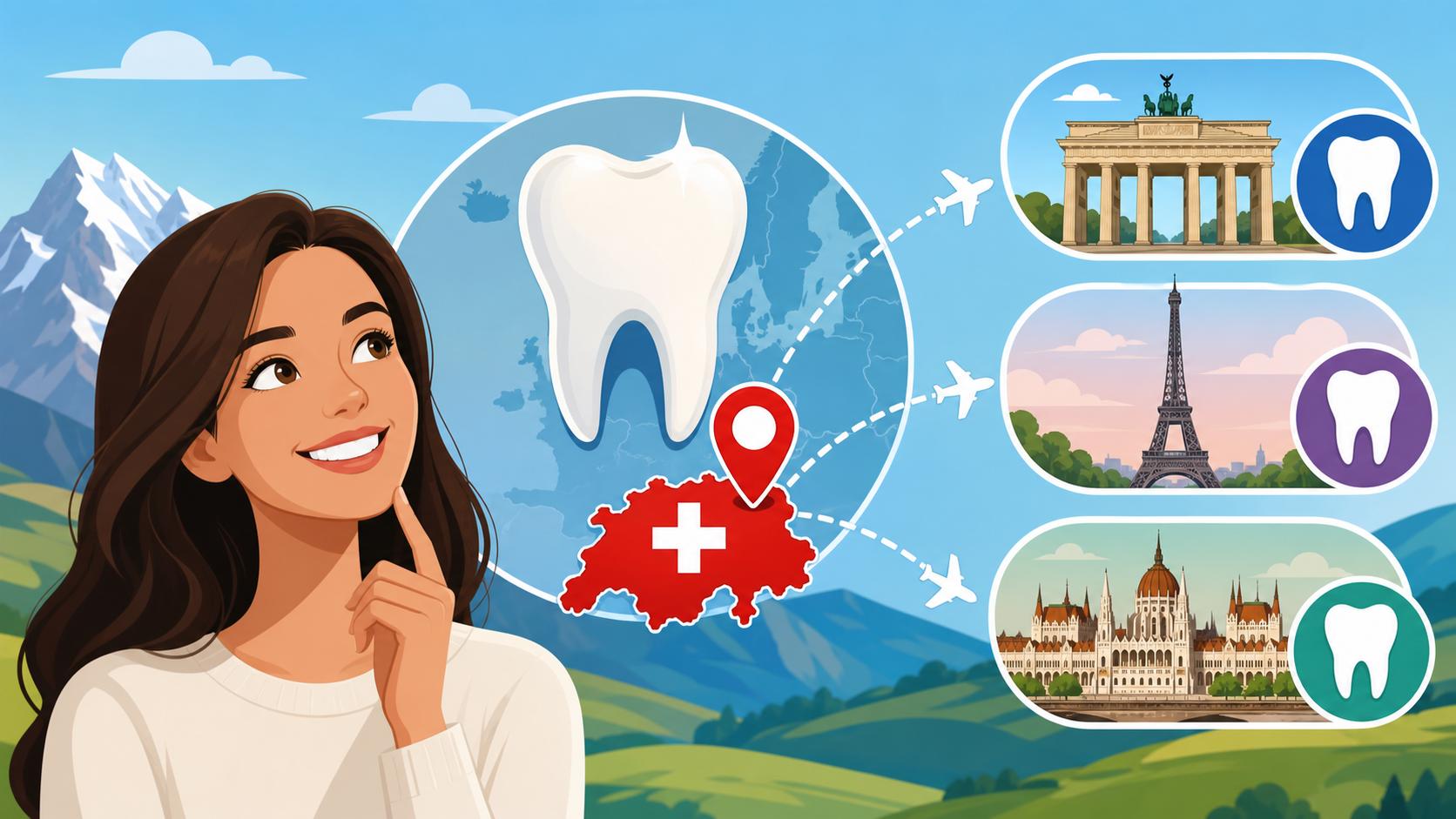
Dental Tourism from Switzerland: Going to Germany, France, or Hungary
Receiving a dental quote in Switzerland is often the moment of "financial initiation" for many expats. I still remember staring at a CHF 1,200 estimate for a single root canal in Zurich and wondering if I had misread the number of zeros. This guide breaks down how to navigate dental tourism to Germany, France, or Hungary to save thousands.
The Financial Reality of Swiss Dental Care
For many newcomers, the biggest shock isn't the price of a coffee, but the realization that your mandatory health insurance generally ignores your teeth. In the Swiss system, dental care is treated almost as a luxury or a separate biological entity from the rest of your body. Unless your dental issues are the direct result of a severe, unavoidable illness or a traumatic accident, you are expected to foot the bill entirely out of pocket.
This exclusion is a significant frustration for expats who come from countries with subsidized dental systems. You quickly learn that Dental Care in Switzerland: Costs, Insurance Reality, and Alternative Options is a topic of frequent discussion at expat meetups. Because the Swiss dental tariff system (Taxpunktwert) allows for high billing rates, even a routine cleaning and checkup can easily clear CHF 200, while more complex work like implants or bridges can reach the price of a mid-sized sedan.
While some residents opt for Supplementary Health Insurance (VVG): What It Covers and When to Buy It to mitigate these costs, these policies often have strict waiting periods and caps on how much they will actually pay out. This leaves a massive gap in the market that has fueled a robust industry of dental tourism. When you are looking at a multi-thousand-franc bill, the cost of a train ticket to Germany or a budget flight to Budapest suddenly looks like a very wise investment.
The Border Hop: Germany and France
If you live in northern or western Switzerland, your first instinct for dental savings will likely be to look just across the border. This is the most popular form of dental tourism because it requires very little travel time and allows you to return home the same day. For those in Zurich, Schaffhausen, or Basel, the German border is a goldmine for high-quality, lower-cost care.
Crossing the Rhine to Germany
German dental clinics in border towns like Waldshut-Tiengen, Konstanz, and Lörrach are essentially built to serve the Swiss market. You will find that many of these dentists are exceptionally well-versed in the Dental Costs in Switzerland vs. Border Countries: A Price Comparison and will often provide quotes that are 30% to 50% cheaper than their Swiss counterparts. The quality of care in Germany is world-class, and the technological standards often mirror exactly what you would find in a high-end Zurich clinic.
One of the major perks of going to Germany is the "tax-free" element. As a Swiss resident, you are often eligible for a VAT refund on the materials used (like crowns or bridges) if you follow the correct customs procedures. Furthermore, many German clinics offer a streamlined experience for Swiss residents, including English-speaking staff and an understanding of how to provide documentation that might be needed if you do have a private expat insurance plan like Cigna Global. After your procedure, you might find yourself heading to a local Apotheke to stock up on supplies, though many of us have found that ordering recovery supplements or specific oral care items through iHerb is more cost-effective than buying them at German retail prices.
Exploring the French Connection in Alsace
For those living in Basel, Jura, or Geneva, the French border offers similar advantages. Towns like Saint-Louis or the city of Mulhouse host numerous practitioners who offer significantly lower rates for orthodontics and general dentistry. While Orthodontics for Children in Switzerland: Insurance and Financial Planning can be a nightmare for expat parents, the French system often provides a more affordable path for braces and long-term dental alignment.
French dentists are known for their thoroughness, though you should be prepared for a slightly more traditional administrative experience compared to the highly digitized German clinics. If you are traveling to France for dental work, keep in mind the Cross-Border Shopping: Import Duty Limits for Meat, Alcohol, and Cheese if you plan on doing your grocery shopping after your appointment. It is quite common for expats to combine a dentist visit with a "big shop" at a French hypermarket, but the Swiss customs officers at the Basel border are notoriously diligent about checking meat and dairy quotas.
The Deep Dive: Why Hungary Remains the King of Crowns
When the dental work required moves beyond a simple filling or a single crown and into the realm of full-mouth reconstructions, multiple implants, or complex oral surgery, the destination of choice is almost always Hungary. Budapest has positioned itself as the dental capital of Europe, and for good reason. The price disparity between a Swiss clinic and a top-tier Budapest clinic is staggering, often reaching 60% to 70% in savings, even after accounting for flights and hotels.
The Budapest Dental Experience
The clinics in Budapest are often massive, state-of-the-art facilities that cater almost exclusively to international patients. They provide "dental holiday" packages that include airport transfers, discounted hotel rates, and a dedicated patient coordinator. This level of service is designed to alleviate the anxiety of traveling for surgery. If you are undergoing a major procedure, you will likely be prescribed various medications for recovery. While you will get your initials fills locally, understanding Pharmacies and Medication: Prescriptions, Costs, and OTC Regulations back in Switzerland is vital for your follow-up care.
The reason Hungary is so much cheaper isn't necessarily a lower standard of care—Hungarian dental universities are some of the most prestigious in the world—but rather the lower cost of living and lower overhead for the clinics. However, a trip to Hungary requires significant planning. You aren't just popping across the border; you are committing to a multi-day stay. This is where having a robust international health plan like Cigna Global can provide peace of mind, as they are used to dealing with international providers and can sometimes offer better support for medical complications abroad than a standard Swiss local insurer would.
Comparing the Options
| Feature | Switzerland | Germany/France | Hungary |
|---|---|---|---|
| Typical Cost | 100% (High) | 50% – 70% | 25% – 40% |
| Travel Time | Minimal | 1 – 2 hours | 2+ hour flight |
| Best For | Emergencies, Cleanings | Fillings, Single Crowns | Implants, Full Reconstruction |
| Language | De/Fr/It/En | De/Fr/En | High English Proficiency |
| Follow-up | Local & Convenient | Short Drive | Requires Another Flight |
Critical Considerations and Risks
Before you book your ticket to Budapest or drive to Konstanz, you must consider the logistical and medical risks involved in dental tourism. The most significant issue is follow-up care. If an implant fails or a crown feels "off" two weeks after you return to Switzerland, a local Swiss dentist may be reluctant to touch the work of a foreign doctor, or they may charge you a premium to fix it. This can quickly eat into the savings you gained by traveling.
The Warranty and Quality Gap
Most reputable clinics in Hungary and Germany offer a warranty on their work (often 5 to 10 years for implants). However, the warranty usually requires you to return to their clinic for the repair. If you are in pain, a two-hour flight to Budapest is the last thing you want to do. When calculating your potential savings, always factor in the "what if" cost.
Furthermore, you need to manage your post-operative recovery. Many expats rely on Over-the-Counter Painkillers in Switzerland: Dafalgan, Algifor, and Costs to manage minor discomfort after returning from a border dentist. However, for major surgeries in Hungary, you may need stronger management. I’ve found that keeping a stock of high-quality anti-inflammatories or specialized recovery supplements from iHerb can be a lifesaver when you're back in your Swiss apartment and the anesthesia has worn off.
Insurance and Billing Nuances
Another hurdle is the way bills are processed. In Switzerland, you are likely used to the How to Pay Medical Bills: Tiers Garant vs. Tiers Payant Billing Systems. When you go abroad, you will almost always be in a "Tiers Garant" situation—you pay the clinic upfront and then attempt to claim it back from any supplementary insurance you might have.
If you are a parent, you also have to think about the long term. While you might save money on Getting Braces in Switzerland: Orthodontic Insurance Add-ons for Kids by going to Germany, the frequent adjustments required for orthodontics (sometimes every 4-6 weeks) mean you will be spending a lot of time and money on petrol and vignettes. For some, the convenience of a local orthodontist in their home canton outweighs the savings across the border.
Navigating the Post-Op Life in Switzerland
Once you return from your dental journey, your focus shifts to maintenance and navigating the Swiss medical landscape. If you had a major procedure, you should still maintain a relationship with a local Swiss "Hausarzt" for general health monitoring. If you find yourself needing general medical supplies for recovery, such as specialized rinses or throat lozenges, being aware of Cough and Cold Medicine in Switzerland: Local Brands and Pharmacy Advice can help you find the local equivalents of what the foreign dentist might have recommended.
Ultimately, dental tourism is a viable and often necessary strategy for expats living in Switzerland. Whether it’s a quick trip to Germany for a filling or a week in Budapest for a new smile, the key is to do your homework, verify the credentials of the clinic, and always have a backup plan for local care if things don't go perfectly.
Disclaimer
This article is for informational purposes only and does not constitute medical or financial advice. Dental procedures involve inherent risks, and standards of care can vary between countries. Always consult with a qualified medical professional before undergoing surgery or traveling for medical treatment. Internal links are provided for context and do not imply endorsement of specific external services.