Eczema and Skin Condition Treatment in the Swiss Healthcare System
Oh, the joys of navigating the Swiss healthcare system, especially when you're dealing with something as persistent and often baffling as eczema or another skin condition. Believe me, I've been there – trying to explain a mysterious rash or an infuriating flare-up in a new language, while also deciphering the intricacies of deductibles and referrals, can be incredibly daunting. It's a journey filled with unique challenges, but you're not alone, and this guide is here to help you cut through the confusion and find the effective treatment you need to manage your skin health in Switzerland.
Understanding Eczema and Skin Conditions in Switzerland: The Initial Steps
Dealing with skin issues, especially chronic ones like eczema, can be a real drag. One day your skin is calm, the next it's itchy, red, and angry. When you're in a new country, figuring out where to even start can feel like an impossible task. But fear not, the Swiss system, while a bit bureaucratic, is designed to be thorough.
Recognising Symptoms and When to Seek Help
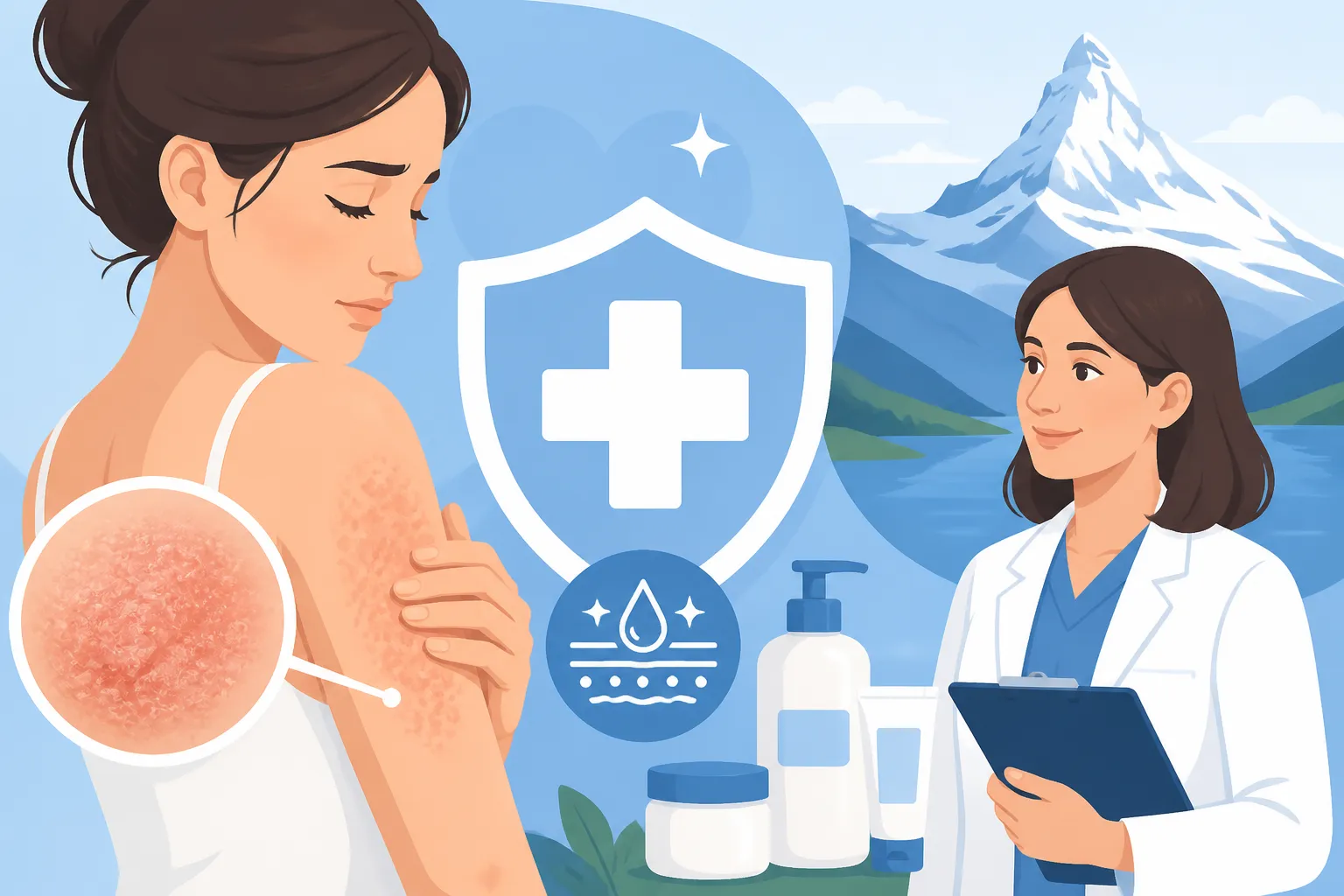
Eczema, often known as atopic dermatitis, is incredibly common. But there are also contact dermatitis, psoriasis, rosacea, and a myriad of other conditions that can affect your skin. The symptoms are often tell-tale: persistent itching, redness, dryness, flaky patches, or even small bumps and blisters. It might be exacerbated by certain foods, environmental factors, stress, or even the incredibly dry air we sometimes experience here, especially in winter.
When do you know it's time to stop self-treating with pharmacy creams and see a professional? Honestly, if a rash or irritation persists for more than a few days, spreads, becomes intensely itchy or painful, or starts to interfere with your sleep or daily life, it's absolutely time to seek medical advice. Don't fall into the trap of thinking "it will go away on its own" if it's already causing significant discomfort. What might seem like a simple dry patch could be something requiring specific medical intervention, and delaying treatment can sometimes make conditions harder to manage in the long run. Even if you're traveling outside of Switzerland for a bit, perhaps on a trip that your SafetyWing travel insurance helps cover, it's wise to have a treatment plan in place from your Swiss doctor before you go, ensuring continuity of care.
The Role of Your General Practitioner Hausarzt Médecin de Famille
In Switzerland, your general practitioner, or Hausarzt (German-speaking Switzerland) / Médecin de Famille (French-speaking Switzerland), is usually your first port of call for any health concern. This person is your medical gatekeeper, your initial point of contact for almost everything, including skin conditions. Even if you're convinced you need a dermatologist, your GP will typically be the one to assess your condition first.
Your GP can handle many common and less severe skin issues. They can prescribe basic topical treatments like steroid creams, emollients, or antihistamines to alleviate itching. They'll also be able to rule out common culprits such as fungal infections or simple allergies. They're often excellent at providing initial advice on lifestyle changes, skincare routines, and avoiding potential triggers. For many minor or newly appearing skin conditions, your GP’s expertise is often sufficient. They can offer valuable insights and prescribe the necessary remedies. If you're wondering how to find a good one who speaks your language, you'll find some great tips in our guide on Finding an English-Speaking Family Doctor (Hausarzt) in Major Cantons.
However, if your skin condition is chronic, severe, doesn't respond to initial treatments, or if your GP suspects a more complex underlying issue, they will refer you to a specialist. This referral system ensures that specialists' time is used effectively for more intricate cases, and it's a standard part of how the Swiss healthcare system operates.
Navigating Specialist Care: Dermatologists and Beyond
Once your GP determines that your skin condition requires a specialist's eye, the next step is finding that expert. This can sometimes feel like a mini-quest, especially if you're looking for an English-speaking dermatologist in a busy canton.
Getting a Referral and Finding a Dermatologist
For many basic health insurance models (especially the HMO or family doctor models), you'll need a referral from your GP to see a dermatologist. If you have a standard basic insurance model, you might be able to bypass your GP, but it's generally still recommended to start there. Your GP often has a network of specialists they trust and can recommend someone reliable. This also ensures your medical records are centralized, which is incredibly helpful for long-term care. Our article on Accessing Specialists Without a Referral: What Your Insurance Model Allows delves into this in more detail, depending on your chosen insurance plan.
Finding an available dermatologist can sometimes involve a waiting period. Switzerland has excellent medical professionals, but demand, especially in urban centers, can be high. It’s not uncommon to wait a few weeks or even months for a non-urgent appointment. Don't be shy about asking your GP if they know of any dermatologists with shorter wait times or if they can specifically recommend someone who is used to treating expats and speaks English. Online platforms like OneDoc or Doctena can be useful for searching and booking appointments, often allowing you to filter by language. Expat forums are also a goldmine for personal recommendations.
What to Expect at a Dermatologist Appointment
When you finally get to your dermatologist appointment, expect a thorough examination. They'll likely ask detailed questions about your medical history, your skin condition's progression, any known triggers, and previous treatments you've tried. Don't forget to mention any products you've been using, even over-the-counter ones. It's a good idea to come prepared with a list of questions or concerns you have.
Treatment plans for chronic skin conditions like eczema are highly individualized. The dermatologist might prescribe stronger topical corticosteroids, calcineurin inhibitors, or barrier repair creams. For more severe cases, they might discuss phototherapy (light therapy), systemic medications (oral drugs that affect the whole body), or even newer biological treatments which can be incredibly effective for conditions like severe atopic dermatitis or psoriasis. These are often costly and require careful monitoring. Remember that obtaining these specialized medications will involve a trip to the pharmacy, so understanding Pharmacies and Medication: Prescriptions, Costs, and OTC Regulations can be very helpful.
Follow-up appointments are crucial for chronic conditions. Your dermatologist will want to monitor your response to treatment, adjust dosages if necessary, and ensure your skin is improving. Adherence to the prescribed regimen is key; consistency truly makes a difference in managing flare-ups and maintaining healthier skin.
Costs, Insurance, and Managing Your Treatment
Swiss healthcare is world-class, but it comes at a price. Understanding how your health insurance interacts with chronic conditions like eczema is vital to managing both your health and your budget.
Basic Health Insurance KVG LAMal Coverage
Your mandatory basic health insurance (KVG/LAMal) will cover all medically necessary diagnostics and treatments for your skin condition. This includes your GP visits, specialist consultations, laboratory tests, and prescription medications listed on the official specialties list (SL). So, yes, your eczema treatment, from initial diagnosis to prescribed creams and even systemic medications for severe cases, is covered. If you need a refresher on the basics, our guide to Understanding KVG/LAMal: Mandatory Basic Health Insurance Explained is a must-read.
However, "covered" doesn't mean "free." You are responsible for your chosen annual deductible (Franchise). This is the amount you pay out of pocket before your insurance starts contributing. After your deductible is met, you'll still pay a 10% co-pay (Selbstbehalt) on costs, up to a maximum of CHF 700 per year for adults. This means if you have a chronic condition requiring regular doctor visits, specialist appointments, and expensive prescriptions, you will likely hit both your deductible and your co-pay maximum each year. Our article on The Swiss Franchise System: How Deductibles and Copays Work goes into detail on how this affects your wallet.
This financial structure can be a shock to new expats, especially those accustomed to healthcare systems with lower out-of-pocket expenses. It's essential to factor these potential costs into your annual budget if you're managing a chronic skin condition.
Supplementary Insurance VVG and Alternative Therapies
Supplementary health insurance (Zusatzversicherung or VVG) can offer additional coverage beyond the basic KVG, but it rarely covers treatments that KVG deems "medically necessary" but doesn't cover for basic reasons. Instead, VVG often covers things like specific alternative therapies, higher comfort in hospitals (private or semi-private rooms), or certain preventative measures.
For skin conditions, some VVG policies might offer contributions towards things like naturopathic treatments, certain types of massage, or dietary advice if these are part of a holistic approach to your condition and prescribed by a recognized practitioner. It's really a case-by-case basis and depends heavily on the specific policy you choose. Always check the fine print! If you're interested in exploring these options, you'll want to read up on Supplementary Health Insurance (VVG): What It Covers and When to Buy It.
Here's a quick overview of how KVG and VVG generally stack up for skin condition treatments:
| Feature | Basic Insurance (KVG/LAMal) | Supplementary Insurance (VVG) |
|---|---|---|
| GP Consultations | Covered (minus Franchise/Selbstbehalt) | No additional coverage, basic already covers |
| Dermatologist Visits | Covered (minus Franchise/Selbstbehalt) | No additional coverage, basic already covers |
| Prescription Meds | Covered if on official list (minus Franchise/Selbstbehalt) | No additional coverage for KVG-listed meds |
| Lab Tests/Biopsies | Covered (minus Franchise/Selbstbehalt) | No additional coverage |
| Phototherapy | Covered if medically prescribed (minus Franchise/Selbstbehalt) | May contribute to broader range if KVG limitations exist |
| Acupuncture | Covered if prescribed by KVG-recognised doctor (limited) | Often covers more sessions or different practitioners |
| Homeopathy | Covered if prescribed by KVG-recognised doctor (limited) | Often covers more extensive treatments from wider practitioner list |
| Private Hospital Room | Not covered | Covers semi-private or private room upgrades |
| Preventative Skincare | Not covered | May offer small contributions for specific programs |
| Overseas Emergency Care | Covers up to double the cost of Swiss treatment | Often provides higher coverage limits and repatriation (e.g., SafetyWing for travel) |
Practical Tips for Managing Your Condition and Costs
Managing a chronic skin condition is a marathon, not a sprint. Consistency with your prescribed treatment is paramount. Skipping doses of creams or medications can lead to frustrating flare-ups.
Pharmacies in Switzerland are fantastic resources. Your local pharmacist isn't just there to dispense prescriptions; they can offer excellent advice on over-the-counter emollients, gentle cleansers, and hypoallergenic products suitable for sensitive or eczema-prone skin. Many pharmacies carry a range of reputable dermocosmetic brands. They can also explain how to properly apply your prescribed creams, which is surprisingly important!
For long-term support and information, consider checking out patient associations like aha! Allergiezentrum Schweiz. They offer resources, support groups, and up-to-date information on allergies, asthma, and skin conditions in Switzerland. Connecting with others who understand your struggles can be incredibly validating.
When it comes to budgeting, remember that your health insurance premiums are a fixed monthly cost, but the Franchise and Selbstbehalt are variable and depend on your healthcare usage. If you anticipate frequent doctor visits or costly prescriptions due to your skin condition, choosing a lower Franchise might make financial sense, even if it means higher monthly premiums. This is a common decision point, especially for those with chronic ailments, and worth exploring when you first register for your health insurance, a mandatory step covered in Mandatory Registration: How to Sign Up for Health Insurance Within 90 Days.
Lastly, if you're an expat, you likely travel! Whether it's weekend trips or visiting family back home, ensure your health insurance covers you adequately when outside Switzerland. While your KVG provides some emergency coverage abroad (usually up to double the cost of treatment in Switzerland), this might not be sufficient for complex issues. Travel insurance, like SafetyWing, can be a smart addition, offering more comprehensive coverage and peace of mind, especially if you need ongoing medication or specific care that might be difficult to access or extremely expensive overseas. It's always better to be over-prepared when managing a chronic condition, and SafetyWing can bridge potential gaps your basic Swiss insurance might leave when you're exploring beyond the borders.
Living with Eczema in Switzerland: Environmental and Lifestyle Factors
Switzerland is beautiful, but its environment can have a unique impact on sensitive skin. Understanding these factors and adapting your lifestyle can significantly help in managing eczema and other skin conditions.
Climate and Environmental Triggers
The Swiss climate, while stunning, can be a double-edged sword for skin conditions. Winters, especially at higher altitudes, can be incredibly dry, leading to moisture loss from the skin and potential flare-ups. The harsh cold can also strip the skin's natural oils. Conversely, humid summers can sometimes also trigger sweat-related irritation in certain individuals.
Then there's the infamous hard water. Many areas in Switzerland have very hard water, meaning it contains high levels of minerals like calcium and magnesium. For some people with eczema, hard water can exacerbate dryness and irritation, as the minerals can dry out the skin and potentially leave a residue that clogs pores or irritates sensitive skin. Investing in a shower filter might be a worthwhile consideration if you find your skin reacts poorly to the local water. Humidifiers for your home, especially during the dry winter months, can also make a noticeable difference in preventing skin dryness.
Products and Skincare Available Locally
Thankfully, Swiss pharmacies and drugstores (like Coop Vitality, Amavita, Sun Store, and Müller) are well-stocked with a wide range of high-quality skincare products suitable for sensitive and eczema-prone skin. You'll find many of the well-known international brands that dermatologists often recommend, such as Avène, La Roche-Posay, Eucerin, Cetaphil, and Cerave. These brands often offer gentle cleansers, rich emollients, and soothing balms specifically formulated to repair the skin barrier.
Don't underestimate the expertise of the staff at these pharmacies. They are highly trained and can provide excellent recommendations for over-the-counter products, often having samples or smaller sizes you can try. Explain your condition and what you're looking for, and they will guide you towards suitable options. It's a fantastic resource, whether you're topping up your regular creams or looking for something new to try. Sometimes, a well-chosen, non-prescription product can make all the difference in preventing flare-ups and maintaining skin comfort.
Disclaimer
Please remember that I am a lifestyle blogger and not a medical professional. The information provided in this guide is for general informational purposes only and does not constitute medical advice. Always consult with a qualified healthcare professional, such as your general practitioner or a dermatologist, for any health concerns or before making any decisions related to your medical care. The Swiss healthcare system and its regulations can change, so it's always wise to verify current policies with official sources or your insurance provider.