Retiring in Switzerland: Proving Passive Income for Non-EU Seniors
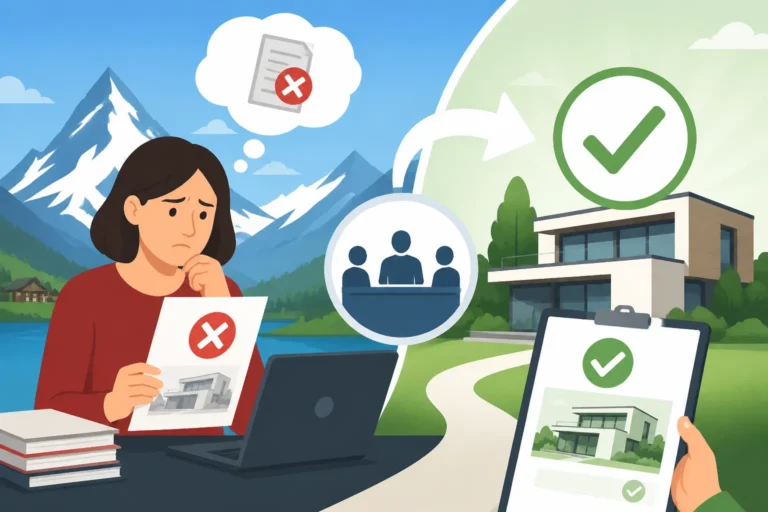
Many non-EU seniors assume that a robust savings account is the only ticket needed to spend their golden years overlooking Lake Geneva or the peaks of the Engadin. I personally helped a retired couple from Canada realize that the financial bar is only half the battle; the administrative "special ties" requirement is often the real gatekeeper. This guide breaks down exactly how to prove your passive income and navigate the unique hurdles of the Swiss retirement permit.
The Reality of the Swiss Retirement Visa for Non-EU Citizens
Retiring in Switzerland as a "Third-Country National"—anyone not from the EU or EFTA—is governed by the Federal Act on Foreign Nationals and Integration. Unlike some neighboring countries that offer relatively straightforward "Golden Visas" based solely on property investment, Switzerland views residency as a privilege granted to those who can prove they will not be a burden on the state and have a genuine, non-economic reason to be there.
The Over-55 Rule and Close Ties to Switzerland
The first hurdle is age. You must be at least 55 years old to apply for a retirement permit. However, being 55 and wealthy is not enough. The Swiss authorities require you to demonstrate "close personal ties" to the country. This is the most subjective part of the application and the one where most people stumble.
Close personal ties can manifest in several ways. Perhaps you have spent significant time in Switzerland in the past for holidays, or you have children or siblings who are already residents. It is not sufficient to simply say you like the mountains; you need to provide a narrative of your history with the country. I have seen successful applicants provide old hotel receipts from twenty years of annual visits or proof of membership in Swiss cultural organizations in their home country. If you cannot prove why Switzerland is uniquely important to you compared to, say, Austria or France, the canton may reject the application before even looking at your bank balance. This is a critical component of Residence Permits in Switzerland: L, B, C, and G Permits Explained for those looking at the long-term B permit for retirees.
Demonstrating Financial Independence Without Working
The defining characteristic of a retirement permit is the total prohibition of gainful employment. This includes remote work for a company back in your home country or "consulting" on the side. You are moving to Switzerland to be a consumer, not a producer. Therefore, you must prove that your existing wealth is sufficient to cover your lifestyle for the rest of your life.
The authorities will look for a lifestyle that matches the local standard of living in your chosen canton. If you choose to live in Zurich or Geneva, the expected income levels will be significantly higher than if you choose a rural village in Glarus. You must show that your funds are "sustainable." One-off windfalls, like an inheritance or the sale of a business, are looked at less favorably than recurring, reliable income streams. When planning your move, understanding the Cost of Living in Switzerland 2026: Budgeting for Singles and Families is essential to ensure your proof of income actually matches the reality of Swiss prices.
How to Prove Passive Income and Financial Assets
Proving passive income to a Swiss cantonal migration office requires a level of transparency that many expats find uncomfortable. You are essentially opening your entire financial life for inspection. The goal is to show a "clean" and consistent flow of funds that does not rely on your active labor.
What Qualifies as Passive Income
The Swiss authorities generally accept a few specific categories of income as "passive." These include state or private pensions, social security payments, distributions from trusts, dividends from stock portfolios, and rental income from real estate owned outside of Switzerland.
When presenting these to the authorities, consistency is key. A pension statement showing a guaranteed monthly payout is the gold standard. For those relying on investment portfolios, the migration office will want to see at least three years of history to ensure the income isn't an anomaly. If you are drawing from a trust, you will need to provide the trust deed and a letter from the trustee confirming the regularity of distributions. Note that the tax implications of these income sources are significant, so you should consult our guide on Swiss Taxes Explained: Federal, Cantonal, and Municipal Rates to understand how much of your passive income you will actually get to keep.
The Sufficient Financial Means Threshold
There is no "official" federal number for how much money you need to retire in Switzerland. Each canton has its own internal benchmarks. However, a common rule of thumb is that your annual income should significantly exceed the amount that would qualify a local for social assistance. For a retired couple, this usually means a guaranteed annual income of at least CHF 100,000 to CHF 150,000, depending on the canton.
In addition to annual income, the authorities often look for a "security cushion" of liquid assets. This might be several hundred thousand francs held in a Swiss Bank Account or a globally recognized institution. The idea is that if your primary income stream (like a rental property) fails, you have enough to support yourself for several years without turning to the Swiss social system.
Documentation and the Role of Certified Translations
The paperwork for a retirement visa is exhaustive. You will need bank statements, tax returns from the last three to five years, pension award letters, and property deeds. Every single one of these documents must be clear and, if not in a Swiss national language (German, French, or Italian), professionally translated.
This is where the process often gets delayed. Swiss bureaucrats are notoriously meticulous; a poorly translated bank statement or a "summary" of a trust deed will not suffice. I always recommend using a service like RushTranslate to ensure that your financial proofs meet the formal requirements of the cantonal offices. They handle the legal terminology correctly, which is vital when you are explaining complex investment vehicles or foreign pension structures. Using RushTranslate for your "Bewerbungsmappe" (application dossier) ensures that the migration officer doesn't reject your file simply because they couldn't understand your 401(k) statement.
Navigating the Application Process and Mandatory Requirements
Once you have your financial proofs and your "narrative of ties" ready, the application process follows a two-tiered path: the Cantonal Migration Office and then the State Secretariat for Migration (SEM) in Bern.
The Cantonal vs. Federal Approval Maze
You apply first to the canton where you intend to live. If the canton likes your file, they give a "pre-approval." However, for non-EU retirees, the final decision rests with the federal authorities (SEM). The SEM checks if your residency is in the "general interest" of Switzerland. While this sounds daunting, for retirees, "general interest" usually translates to "will spend a lot of money here and won't cause trouble."
Choosing the right canton is a strategic decision. Some cantons are more "wealthy-senior friendly" than others. For instance, the Vaud Expat Healthcare Guide: CHUV and Riviera Medical Centers highlights why many retirees flock to the shores of Lake Geneva—not just for the views, but for the world-class medical infrastructure that caters specifically to an aging, affluent population.
Mandatory Health Insurance and Healthcare Planning
You cannot live in Switzerland without health insurance; it is a legal requirement that is checked within the first 90 days of arrival. For retirees, this is often the most significant line item in the budget. Because you are not working, you do not have employer-sponsored accident insurance, so you must ensure your private policy covers everything from basic doctor visits to emergency mountain rescue.
Before you can transition into the local Swiss KVG system, you often need to show proof of coverage during the application phase. Many expats use Cigna Global during this transition or as a long-term solution if they plan to travel frequently outside of Switzerland. Cigna Global provides the kind of comprehensive international coverage that Swiss authorities recognize as "sufficient means" because it ensures the state will never have to pay for your medical evacuation or long-term care. Once resident, you will need to understand Understanding KVG/LAMal: Mandatory Basic Health Insurance Explained to stay compliant with local laws.
Living in Switzerland: Housing and Integration
The migration office will also check your housing situation. You must have "adequate" housing, which usually means you cannot live in a studio apartment if you are a couple. The authorities look at the size of the property to ensure it meets the local standards for a dignified retirement. You can find more about these specific requirements in our guide on Apartment Size Requirements (Rooms per Person) for Family Visas.
Integration is the final, often overlooked, pillar. While retirees aren't expected to join the workforce, you are expected to respect local customs, such as Swiss Everyday Rules: Recycling, Quiet Hours, and Neighborhood Etiquette. Showing that you have signed up for a local language class or joined a "Verein" (local club) can go a long way in proving to the authorities that you intend to be a productive member of the community, even if you aren't working.
Financial Requirements Overview for Retirees
The following table provides a general estimate of the financial expectations across different types of Swiss cantons. Note that these are not official figures but are based on observed successful applications for non-EU seniors.
| Requirement Type | High-Cost Cantons (Zurich, Geneva, Zug) | Mid-Range Cantons (Vaud, Basel, Lucerne) | Rural/Low-Cost Cantons (Glarus, Jura, Appenzell) |
|---|---|---|---|
| Est. Min. Annual Income | CHF 150,000+ | CHF 100,000 – 120,000 | CHF 80,000 – 90,000 |
| Liquidity Cushion | High (Min. CHF 500k+) | Moderate (Min. CHF 300k+) | Low (Min. CHF 200k+) |
| Proof of Ties | Very Strict | Strict | Moderate |
| Housing Expectation | High Market Rent/Purchase | Standard Market Rate | Standard Market Rate |
| Healthcare Cost Profile | Very High | High | Moderate |
Managing the Transition to Swiss Retirement
Moving your financial life to Switzerland is a marathon. You will need to deal with Banking and Finance for Expats in Switzerland: The 2027 Guide to ensure your foreign income can be efficiently transferred and converted to CHF. Using Cigna Global helps bridge the gap in healthcare, but you must also consider other protections like Private Liability Insurance (Privathaftpflicht): Why Expats Need It, which is practically mandatory for renting any property in Switzerland.
Finally, remember that the "Three-Pillar" system you might see locals talking about in The Three-Pillar Pension System: AHV, BVG, and Private Savings generally won't apply to you as a retiree who never worked in Switzerland. You are relying entirely on your "Pillar 4"—your own private global wealth. Keeping this wealth organized and clearly documented via RushTranslate is the best way to ensure your Swiss residency remains secure year after year.
Disclaimer
The information provided in this guide is for informational purposes only and does not constitute legal or financial advice. Swiss immigration laws and cantonal practices are subject to frequent change. Always consult with a qualified Swiss immigration lawyer or a professional relocation specialist before making significant financial or life decisions regarding your residency.