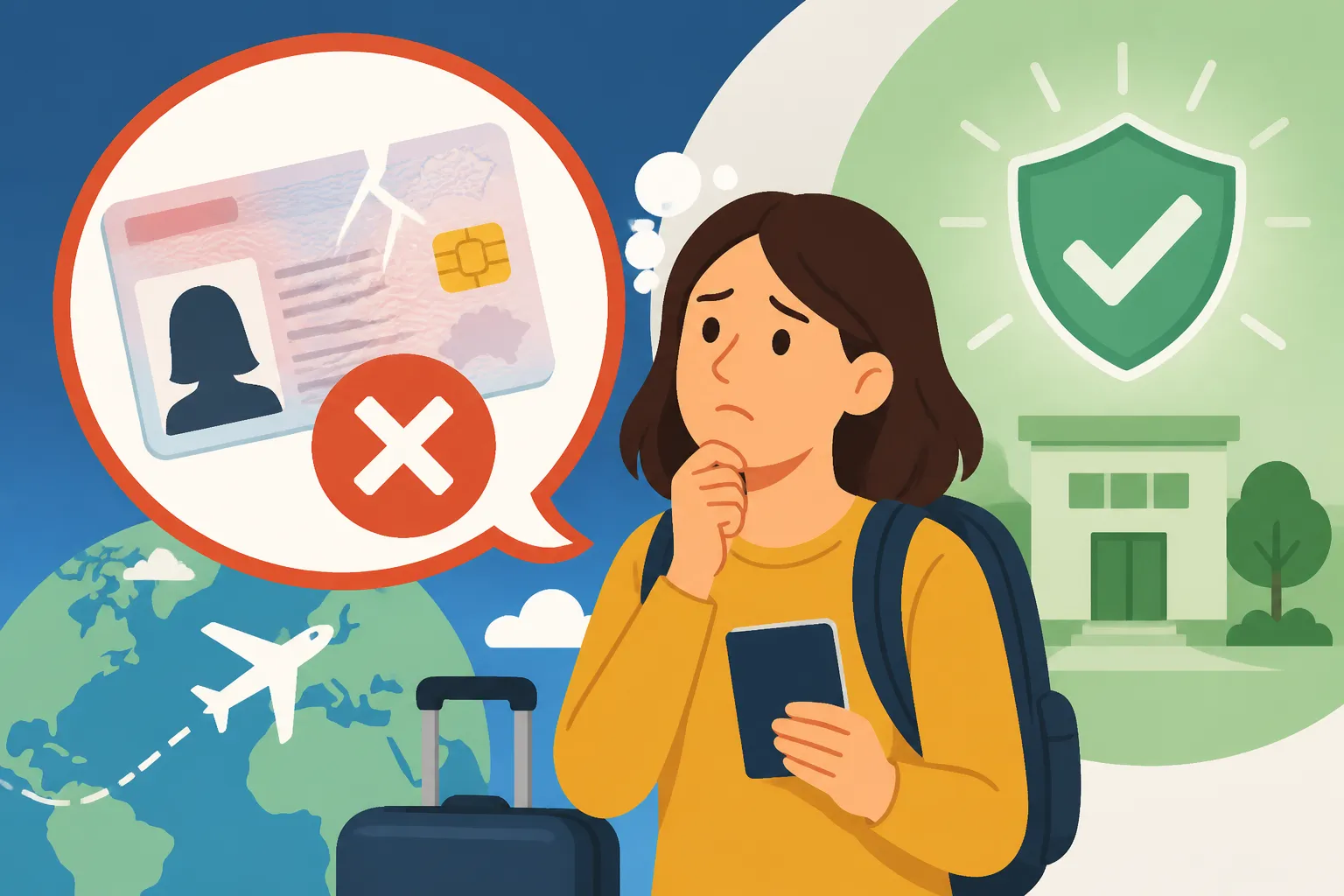
What to Do When Your Swiss Permit Card Expires While Abroad
Oh, the sheer, heart-stopping moment when you're happily exploring a new city or visiting family abroad, reach for your wallet, and suddenly realize: your Swiss residence permit, your precious Ausländerausweis, has quietly slipped past its expiry date. The cold sweat, the immediate knot in your stomach – it’s a terrifying, all-too-common expat nightmare. You’re left wondering how on earth you'll get back into the country you now call home. Don't panic! This guide is here to walk you through the precise steps to take, the documents you'll need, and how to navigate the Swiss bureaucracy from afar to ensure you can return to Switzerland without undue stress.
The Initial Panic and Why It Happens: It's Not Just You!
That sudden jolt of realization that your Swiss permit card has expired while you're miles away from the Helvetic Confederation? It's a feeling many expats can intimately relate to. It’s a moment of pure dread, imagining yourself stuck, unable to return to your life, your job, your apartment. But let's take a deep breath. You're not the first, and you certainly won't be the last. Understanding the nuances of Swiss permits and why these situations arise is the first step to resolving them.
Understanding Swiss Permit Validity: It's Not a Passport!
First and foremost, it's crucial to grasp that your Swiss residence permit (be it a B, C, L, or G permit) is not a travel document in the same way your passport is. Your passport confirms your identity and nationality, allowing you to enter and exit countries. Your Swiss permit, on the other hand, grants you the right to reside and work in Switzerland. When you travel within the Schengen Area, often your permit and passport together are sufficient. However, when you cross the external borders of the Schengen zone or return to Switzerland after your permit has expired, its status as a valid re-entry document changes dramatically.
This distinction is often lost on newcomers, and even seasoned expats can sometimes forget. The Swiss system is incredibly precise, and an expired permit is, quite simply, an expired permit. It’s like having an expired driver’s license; you can still prove who you are with your passport, but you no longer have the right to drive. Similarly, an expired permit means you no longer have the right to enter Switzerland as a resident, even if your intention is to simply renew it upon arrival.
Common Scenarios Leading to Expiry Abroad
It’s easy to beat yourself up over this, but let's be realistic. Life happens, and these things slip through the cracks for a multitude of reasons. One of the most frequent scenarios is travelling during the permit renewal process. You sent in your renewal application, you’re waiting for the new card, and you think, "Surely it'll be fine for this short trip!" Only, the new card gets delayed, or your trip gets unexpectedly extended, and boom – expiry.
Another common pitfall is simply misunderstanding the renewal timelines. In Switzerland, you're usually expected to initiate the renewal process several months before your permit expires. Forgetting this, or simply having a packed schedule, can mean you leave Switzerland for a holiday with a permit that’s on the verge of expiring, or worse, already past its prime. Sometimes, it's just plain old human error – a quick glance at the expiry date on your card that registers as "next year" but was actually "next month." Don't fret, it’s a lesson learned the hard way for many.
The Immediate Implications: Re-entry, Employment, and Your Status
An expired permit while abroad has significant implications. The most immediate and pressing concern is your ability to re-enter Switzerland. Without a valid permit, airlines might refuse to board you, or border control officers might deny you entry. You effectively become a visitor (or an overstayer, depending on your visa situation), rather than a returning resident. This can lead to lengthy interviews, stress, and potential delays at the border.
Furthermore, your employment in Switzerland is tied to your valid permit. While your employer likely initiated the renewal, the legal right to work is contingent on having a valid permit. And beyond work, all aspects of your life in Switzerland—your bank accounts, rental agreements, even your health insurance like Cigna Global if they needed current permit info—are predicated on your legal residency. An expired permit, even if you’re abroad, complicates all of this. It's a domino effect, so swift action is key.
Your First Steps: Crisis Management from Afar
Okay, the panic has subsided slightly, and you've accepted the situation. Now, it's time for action. This isn't the moment for self-reproach; it's the moment for methodical problem-solving. Your immediate focus must be on securing the necessary travel documents to get back to Switzerland.
Contacting the Swiss Embassy or Consulate: Your Lifeline
This is, without a doubt, your absolute first and most critical step. Forget calling your airline, your friend in Zurich, or your cat sitter. Your direct line to solving this is the nearest Swiss embassy or consulate in the country where you are currently located. Why? Because they are the only authority abroad that can issue you an emergency travel document or a "return visa" (often a D visa) specifically for re-entry into Switzerland.
How to do it:
- Find them: Go to the official website of the Swiss Federal Department of Foreign Affairs (FDFA) or simply Google "Swiss Embassy [Country you are in]" or "Swiss Consulate [City you are in]".
- Check their hours and emergency contact: Most embassies have specific consular sections and sometimes emergency hotlines for Swiss citizens or residents in distress.
- Explain your situation clearly: When you call or email, be precise. "My Swiss B permit expired on [Date] while I am in [Country], and I need to return to Switzerland on [Desired Travel Date]."
- Ask about a "Return Visa" or "Emergency Travel Document": These are the key terms. You need a visa for re-entry as a resident, not a tourist visa. They will guide you on the specific requirements for your nationality and situation.
Remember, every embassy or consulate might have slightly different procedures and processing times. Be patient, but also be persistent. They are there to help with these specific types of issues.
Gathering Essential Documents for Your Return
While you wait to hear back from the embassy, start compiling everything you might possibly need. The more prepared you are, the smoother the process will be.
- Your Valid Passport: This is non-negotiable. Ensure it has enough validity for your return journey and any potential delays.
- A Copy of Your Expired Swiss Residence Permit: Crucial proof of your former residency status. If you don't have a physical copy, a clear photo on your phone or a scanned PDF will help.
- Proof of Your Continued Residency/Employment in Switzerland:
- Employment Contract: A copy of your current work contract.
- Confirmation from Employer: A letter from your HR department confirming your employment status and that your permit renewal is initiated/pending.
- Rental Agreement: Your apartment lease.
- Payslips: Recent payslips to show active employment.
- Proof of Health Insurance: Documentation from your Swiss health insurance provider. This is where a global policy like Cigna Global can be really helpful, as they're often used to providing documentation for international travel and residency.
- Flight/Travel Itinerary: Proof of your intended return to Switzerland.
- Passport Photos: Always have a few recent, biometric passport-sized photos on hand. Requirements can be very specific, so check the embassy's website.
- Any Correspondence from the Swiss Migration Office (SEM): If you received a letter confirming your renewal application, bring that along.
Having these documents readily available, either digitally or physically, will expedite the process significantly when you interact with the consular staff.
Notifying Your Employer and Landlord
While the immediate priority is getting you back into Switzerland, don't forget to keep your employer and landlord in the loop. This proactive communication can prevent bigger headaches down the line. Your employer, especially your HR department, needs to know about your situation. They might be able to provide the necessary letters of confirmation or even intervene with the cantonal migration authorities on your behalf, especially if your job is critical.
Similarly, if your landlord requires proof of residency, or if this situation might affect your ability to pay rent on time, it's always best to be transparent. In Switzerland, honesty and direct communication, even about difficult situations, are usually appreciated.
Considering Travel Insurance Implications
This situation can be a real curveball for your travel plans. If you have comprehensive travel insurance, it's worth checking your policy. An expired permit might mean an extended stay abroad, cancelled flights, or additional accommodation costs. While most standard travel insurance policies won't cover the cause of your permit expiry, they might cover related expenses due to travel delays or cancellations, if these weren't a direct result of your expired document. Be prepared for potential complications, as some policies might have clauses excluding issues arising from invalid travel documents. Companies like Cigna Global, which offer comprehensive international health and travel insurance, might have specific advice or coverages for expats facing such unique dilemmas, but it's crucial to read your policy details carefully.
The "Return Visa" (Visa D) or Emergency Travel Document
Now that you've gathered your thoughts and documents, let's talk about the specific piece of paper that will get you back home: the return visa.
What is a Return Visa and Who Needs It?
A "return visa" is essentially a special type of visa (often issued as a Type D national visa) that allows a foreign national who is a bona fide resident of Switzerland to re-enter the country when their original residence permit has expired or been lost while abroad. It's a temporary stamp or sticker in your passport that explicitly grants you permission to return to Switzerland to regularize your residency status.
Who needs it? Generally, all third-country nationals (non-EU/EFTA citizens) whose Swiss residence permit has expired while outside the Schengen Area will need this. If you are an EU/EFTA citizen, the process might be slightly less formal, as your right to free movement is protected, but you will still need to demonstrate your residency in Switzerland and explain the expiry. The embassy will advise you on the exact procedure for your specific nationality. For Travelling to the UK with a Swiss C Permit: Visa Requirements or Travelling to the US with a Swiss B Permit: ESTA Eligibility, remember these are separate considerations for entering other countries, not for returning to Switzerland.
The Application Process at the Embassy/Consulate
This is where your earlier preparation pays off.
- Schedule an Appointment: Once you've made contact, the embassy or consulate will likely require you to schedule an in-person appointment. Do this as soon as possible, as slots can fill up quickly.
- Submit Required Documents: Bring all the documents you gathered (originals and several copies of each). They will review everything to confirm your identity and your status as a Swiss resident. This will include:
- Your valid passport.
- The expired permit card (if you still have it).
- Proof of ongoing residency/employment (as detailed above).
- Passport photos (ensure they meet Swiss biometric standards, often 35x45mm).
- Your return flight itinerary.
- Be Prepared for Questions: Expect to be asked about why your permit expired, your travel plans, and your intentions upon returning to Switzerland. Be honest and straightforward.
- Pay the Fee: There will be an administrative fee for issuing the return visa. Check the embassy's website or ask during your initial contact for the exact amount and accepted payment methods.
- Processing Times: This is the variable part. Depending on the embassy, the complexity of your case, and the workload, a return visa can sometimes be issued within a few days, but it might take longer. Emphasize the urgency if your return flight is imminent. Always be realistic with your expectations and have contingency plans for accommodation.
Special Cases: EU/EFTA Citizens vs. Third-Country Nationals
For EU/EFTA citizens, the situation is often less dire. While your residence card might be expired, your underlying right to reside in Switzerland (if you meet the conditions) often remains. You might still need to contact the embassy or the cantonal migration office to get some form of confirmation or a temporary travel document, but the process for re-entry tends to be simpler than for third-country nationals, who absolutely require the "return visa" to re-enter the Schengen zone.
For Third-Country Nationals (TCNs), the "return visa" is typically non-negotiable if your permit has expired and you've left the Schengen area. The Swiss permit is your legal entry document as a resident, and without it, you are treated as any other visa-required traveler. The embassy acts as the gatekeeper to confirm your status and issue the necessary temporary right to re-enter.
Alternative: Provisional Travel Document
In rare cases, if a full return visa isn't feasible or time-critical, an embassy might issue a provisional travel document (Laissez-passer) under exceptional circumstances. This is less common for expired residence permits and more for lost passports or extreme emergencies. It's usually a short-term, single-journey document designed to get you back to Switzerland or your country of origin. Always aim for the proper return visa if possible, as it provides clearer authorization for your re-entry.
Here's a quick comparison of the return visa process versus a standard renewal:
| Feature | Expired Permit Abroad: "Return Visa" Process | Standard Permit Renewal (In Switzerland) |
|---|---|---|
| Location | Swiss Embassy/Consulate abroad | Cantonal Migration Office (Migrationsamt) in Switzerland |
| Purpose | Re-entry to Switzerland as a resident to regularize status | Extension of residency rights |
| Documents Required | Valid Passport, Expired Permit Copy, Proof of ongoing Swiss residency/employment, Flight itinerary, Passport photos | Valid Passport, Expired Permit Card, Renewal form, Proof of funds/employment, Passport photos |
| Urgency | High, linked to immediate travel needs | Moderate, planned several months in advance |
| Potential Hurdles | Coordinating from abroad, embassy appointment availability, varied processing times, proving continued residency from distance | Timeliness of application, possible follow-up questions from Migration Office |
| Outcome | Temporary visa stamp for re-entry | New physical permit card (B, C, L, G) |
| Costs | Visa application fees (vary by embassy) | Renewal fees (cantonally specific) |
Back in Switzerland: What to Expect and Next Steps
Congratulations! You’ve navigated the international bureaucracy, secured your return visa, and are now back on Swiss soil. The feeling of relief must be immense. But the journey isn't quite over. There are still a few crucial steps to take upon your return to fully regularize your status.
Border Control Experience
Even with a return visa, expect a little extra scrutiny at Swiss border control. The officers are simply doing their job to verify your documents and ensure everything is in order. Have your passport, the return visa, and all the supporting documents you used for your embassy application readily accessible. Be polite, answer all questions truthfully, and you should be waved through without major incident. They might ask for your original expired permit, or details about why you needed the return visa, but as long as you have the documentation, it should be a relatively quick process.
For instance, if you were travelling back through Zurich Airport, you'd go through the standard passport control, present your documents, and expect a brief conversation. Don't be surprised if they take a moment longer to check the specific code on your return visa. This is normal procedure.
Immediate Registration at the Migration Office
Once you’re safely back home, your very next priority is to go to your local cantonal migration office (Migrationsamt or Office Cantonal de la Population et des Migrations) as soon as possible. This is where you’ll complete the actual permit renewal process that was pending or rectify your expired status.
They will require you to submit your renewal application, typically already initiated by your employer or yourself before you left, and process it. Explain that you had to obtain a return visa due to being abroad when your previous permit expired. Be prepared to fill out forms, possibly provide more documents, and pay any outstanding fees. The goal here is to get your new physical permit card issued, which is your long-term proof of residency. They'll also update your official record, erasing any administrative anomalies caused by the expiry abroad. Remember, in Switzerland, timely registration of changes, including a new permit, is expected. You can refer to guides like Mandatory Registration: How to Sign Up for Health Insurance Within 90 Days to understand the Swiss emphasis on timely administrative tasks.
Potential Fines or Administrative Hurdles
While you acted diligently to get the return visa, there's a slight chance you might face a minor administrative fee or a verbal reprimand for allowing your permit to expire. Swiss authorities take administrative deadlines seriously. However, if you can demonstrate that you initiated the renewal process before leaving, or that you immediately contacted the embassy upon realizing the expiry, they are usually understanding. The key is to be proactive and not try to hide the situation. Ignoring the expiry or attempting to re-enter without proper documentation would lead to far more severe consequences.
Think of it this way: better a small, manageable fine for an administrative oversight, than a significant legal problem for attempting to circumvent procedures.
Settling Back In: Practicalities and Reminders
Once your new permit is in hand, take a moment to breathe and get everything else in order:
- Double-check Your New Permit: Ensure all details (name, date of birth, validity period) are correct.
- Update Services: If you had any services or subscriptions that rely on your permit validity (e.g., certain mobile phone contracts, bank accounts, or even if you were planning a big move with a company like Sirelo), make sure they have your updated permit information. This helps avoid future issues.
- Review Your Travel Habits: This experience should serve as a strong reminder to always check your permit expiry date well in advance of any international travel. Set reminders!
- Consider Future Travel Insurance: Reflect on whether your current travel insurance policy adequately covers scenarios like this or if you need to look into more comprehensive expat plans. For instance, REGA Membership: Why Expats Need Air Rescue Insurance in the Alps is often thought of as a local emergency cover, but for larger international incidents, specialized insurance is key.
Preventative Measures: Avoiding a Repeat Scenario
Nobody wants to go through this ordeal twice. The good news is that with a bit of proactive planning, you can easily avoid a repeat of the expired-permit-abroad panic.
Proactive Permit Renewal: Plan Ahead!
The golden rule for Swiss residency: renew your permit well in advance. Most cantonal migration offices send out renewal notices (Verfallanzeige) a few months before your permit expires. Don't ignore these! As soon as you receive it, or even if you don't but notice your permit is approaching its expiry, initiate the process. Typically, this means submitting your application and required documents 3-4 months before the expiry date.
For example, if your B permit expires on December 31st, aim to have your renewal application in by September or October. This gives the authorities ample time to process it and issue your new card, reducing the risk of it expiring while you're away. For more details on this, you might find Renewing Your Swiss Residence Permit: The Verfallanzeige Form Explained very helpful.
Digital Reminders and Calendars
Seriously, use technology to your advantage! Set multiple reminders on your phone, calendar, or preferred digital assistant for when your permit is due for renewal. Set one for 6 months out, another for 4 months, and a final one for 2 months. Treat it like an important appointment you absolutely cannot miss. This simple step can prevent immense stress.
Keeping Copies of Important Documents
Always, always have copies of your essential documents. This includes:
- A scanned PDF of your passport.
- A scanned PDF of your Swiss residence permit (front and back).
- Copies of your employment contract and rental agreement.
Store these securely in the cloud (e.g., Google Drive, Dropbox, iCloud) and perhaps also on a secure USB stick. That way, if your physical card is lost or expired while you're abroad, you have immediate access to proof of your previous status, which is invaluable when dealing with an embassy.
Understanding Travel Restrictions During Renewal
A critical piece of advice: Avoid international travel if your permit is about to expire and your renewal is still pending. While the renewal process is ongoing, you are essentially in administrative limbo. If you absolutely must travel, check with your cantonal migration office before you leave to see if they can provide a temporary confirmation of your pending renewal. This is usually only valid for re-entry, and primarily for EU/EFTA citizens within Schengen. For third-country nationals, it’s best to wait until the new card is in your hand before venturing beyond Swiss borders.
The Importance of a Valid Travel Document
Lastly, always remember: your Swiss residence permit is not a standalone travel document. It must always be accompanied by a valid passport. Before any trip, domestic or international, always check both your passport's expiry date and your residence permit's expiry date. Ensure both are valid for the entire duration of your planned trip, plus a buffer of at least six months for your passport, as many countries require this for entry. This simple check will save you from a world of trouble.
Disclaimer
The information provided in this guide is intended for general informational purposes only and does not constitute legal advice. While we strive to provide accurate and up-to-date information, Swiss immigration laws and procedures are complex and can change. Always consult with the official Swiss authorities, such as the relevant Swiss embassy or consulate, or the cantonal migration office, for advice specific to your individual situation. We recommend verifying all requirements and procedures directly with official sources before making any travel or administrative decisions.