Workplace Bullying (Mobbing): How to Document and Report It to HR
Workplace bullying, or mobbing as it is specifically called here, can feel like a slow-motion car crash that no one else acknowledges. I remember my second year in Zurich, feeling the sudden, icy exclusion from team lunches and the "accidental" omission from critical email chains, wondering if it was just a cultural gap or a targeted effort to make me quit. This guide provides the tactical roadmap you need to identify, document, and report workplace harassment while protecting your residency and career.
Understanding Mobbing in the Swiss Workplace
In Switzerland, the term mobbing is not just office slang; it is a recognized legal concept involving systematic, long-term hostile behavior aimed at isolating or demeaning an employee. This often happens in a "death by a thousand cuts" fashion rather than through explosive arguments. Understanding the nuances of Working in Switzerland as an Expat: Jobs, Culture, and Employment Laws is the first step in realizing that while the Swiss work ethic is rigorous, it does not grant employers a license to mistreat staff.
Under Article 328 of the Swiss Code of Obligations, employers have a "duty of care" to protect the personal integrity of their employees. This means they are legally required to ensure that the work environment is free from harassment. However, the burden of proof rests heavily on the victim. You aren't just dealing with a difficult boss; you are dealing with a breach of contract if the behavior is persistent. For many expats, this is exacerbated by a lack of local language fluency, which can make it harder to interpret whether a comment was a cultural misunderstanding or a pointed jab. Utilizing tools like GermanPod101 or FrenchPod101 to sharpen your understanding of office banter can often help you distinguish between a colleague's bluntness and actual psychological warfare.
Identifying Subtle vs Overt Bullying
Mobbing in a Swiss context is frequently passive-aggressive. It might manifest as "withholding information" (the information boycott), where you are suddenly excluded from meetings necessary for your KPIs. It can also look like "social isolation," where colleagues stop speaking English when you enter the room, despite English being the official office language. More overt forms include assigning "meaningless tasks" that are far below your professional qualification level, effectively trying to bore you into resigning.
The Legal Threshold of Mobbing
To be legally considered mobbing in Switzerland, the behavior usually needs to meet specific criteria: it must occur frequently (at least once a week) and over a prolonged period (usually six months or more). A one-off argument with a manager, however unpleasant, rarely qualifies as mobbing. This is why understanding Swiss Work Contracts and Labor Law: Notice Periods, Leave, and Rights is essential. If you are still within your Employment Probation Periods in Switzerland: What You Need to Know, your protections are significantly lower, and the employer can terminate the contract with just seven days' notice without providing a detailed reason.
Step by Step Guide to Documenting Bullying Behavior
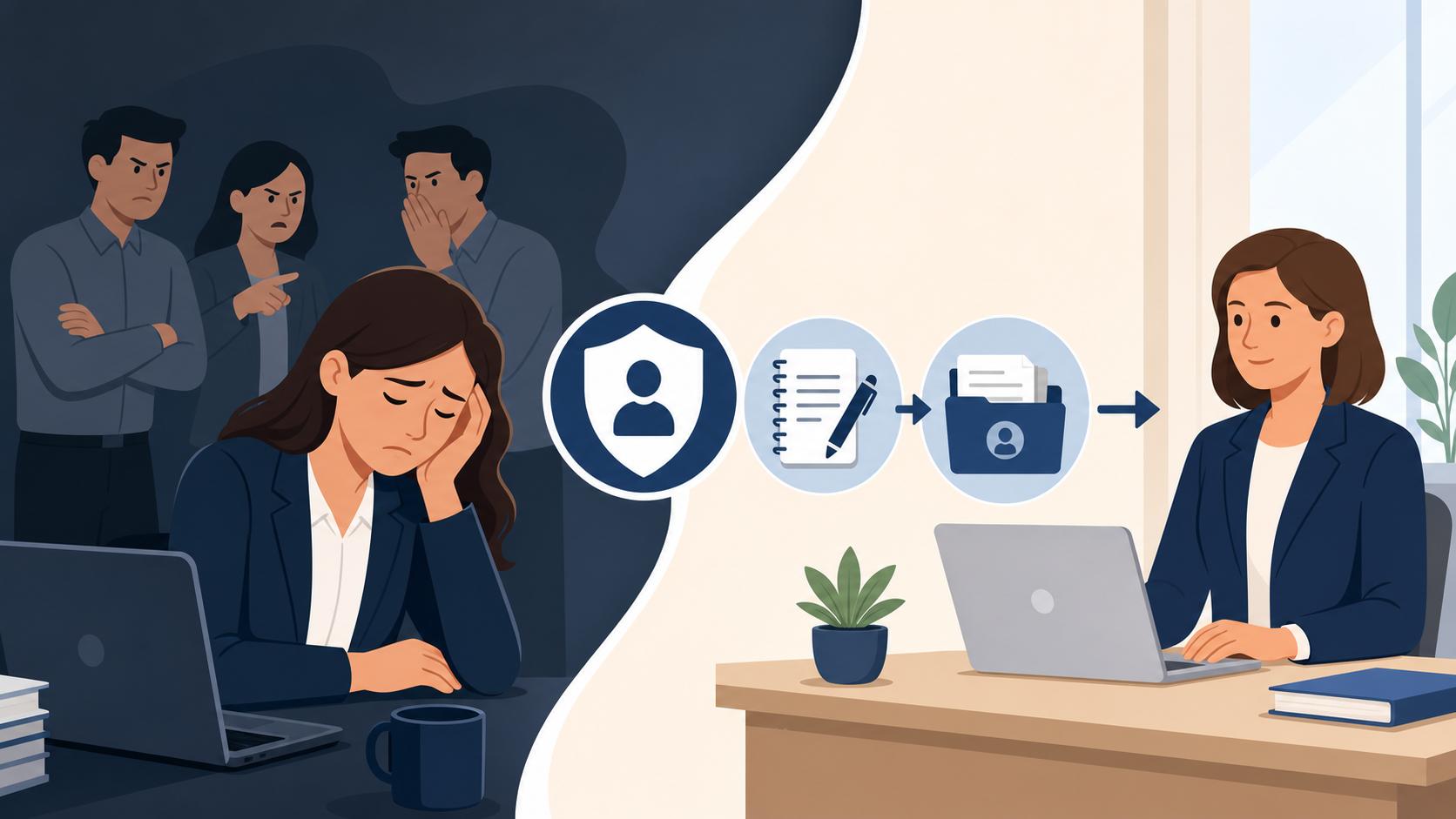
If you feel you are being targeted, you must stop being "polite" and start being a "librarian." Documentation is your only shield in a Swiss court or an HR mediation. The Swiss legal system relies heavily on written evidence and timelines. Without a paper trail, your claim will likely be dismissed as a "personal conflict" or a "failure to integrate."
The Importance of a Mobbing Journal
The "Mobbing-Tagebuch" (Mobbing Journal) is a standard tool used by Swiss labor lawyers. You must record every incident with clinical precision. Do not write, "My boss was mean today." Instead, write: "Tuesday, June 4th, 10:15 AM, Meeting Room B. When I presented the Q2 report, Mr. Müller interrupted me three times, stated my work was 'garbage' in front of the team, and refused to look at the data I provided."
| Date/Time | Incident Type | Witnesses | Impact on Work/Health |
|---|---|---|---|
| 12.05.2026 | Information Boycott | Team A | Excluded from project kickoff email |
| 14.05.2026 | Social Isolation | N/A | Colleagues moved lunch without notice |
| 20.05.2026 | Verbal Aggression | Sarah L. | Publicly mocked my accent during presentation |
| 01.06.2026 | Task Sabotage | Manager | Assigned filing tasks despite Senior Developer role |
Gathering Physical Evidence
Never delete an email that feels off. If you receive a critical or demeaning message, print it or forward it to a private email address immediately. In the Swiss corporate world, "gaslighting" is common; a manager might delete a Slack thread or a Calendar invite to make it look like you simply missed a meeting. Having a timestamped record is vital. If the bullying is happening in a local language you aren't yet fluent in, taking a course with Lingoda to improve your professional communication can help you accurately transcribe and translate these incidents for your records.
How to Report Mobbing to HR and Legal Protections
Reporting mobbing is a high-stakes move. You should only approach HR once you have at least 4-8 weeks of solid documentation. It is important to remember that Swiss HR departments are there to protect the company's interests, not necessarily yours. If the bully is a high-performing "star" executive, HR may try to "solve" the problem by moving you to a different department or suggesting a mutual termination agreement.
Navigating the Internal HR Grievance Process
When you request a meeting with HR, bring your documentation journal. State clearly that you are reporting a breach of Article 328 of the Code of Obligations. This signals to them that you know your rights and are not just "complaining." Ask for a written protocol of the meeting and do not sign anything on the spot. If they offer a "settlement" or a change in your contract, take it home and review it. Often, these situations lead to Getting Fired in Switzerland: Protection Against Unfair Dismissal, where the company tries to frame the termination as "performance-related" to avoid mobbing liability.
External Resources and Legal Insurance
Before things escalate, you should check your insurance policies. Many expats overlook the importance of Do I Need Legal Expenses Insurance (Rechtsschutzversicherung) in Switzerland?. This insurance can cover the costs of a labor lawyer to review your case. Additionally, joining a union (Unia or Syndicom) can provide you with legal counsel. If the stress of the situation is affecting your health, you must see a doctor. In Switzerland, an "Arztzeugnis" (medical certificate) can protect you from termination for a limited period. Be sure to understand Medical Confidentiality Rules (Arztgeheimnis) in the Swiss Workplace so you know exactly what your boss is and isn't allowed to ask about your diagnosis.
Cultural Nuances and Mental Health Support for Expats
The "Expat Bubble" can sometimes make mobbing feel even more isolating. You are away from your home support network, and your residency permit is often tied to your job. This creates a power imbalance that bullies exploit. It is quite common for targetted employees to suffer from burnout or depression as a result of prolonged office harassment.
The Language Barrier and Professional Etiquette
Swiss German office culture values "Directness" but also "Discretion." If you are being bullied, your Swiss colleagues might not step in to help, even if they see it happening. This isn't necessarily because they agree with the bully, but because Swiss culture places a high value on staying out of other people's conflicts (the "neutrality" mindset). Improving your language skills through Lingoda can help you break this barrier and build alliances with "neutral" colleagues who can eventually serve as witnesses. Understanding The Swiss Corporate Culture: Meetings, Hierarchy, and Professional Etiquette is also key to recognizing when a behavior is a cultural norm you just haven't mastered yet, versus when it is a deliberate attempt to undermine you.
Seeking Professional Help
If the situation becomes unbearable, do not wait until you have a total breakdown. Switzerland has excellent resources for psychological support. You can start by Finding Medical Care in Switzerland: Doctors, Specialists, and Referrals to get a referral to a specialist. There are many English-Speaking Therapists: Counseling and Psychological Support Directories available, particularly in hubs like Zurich, Geneva, and Basel. Remember that your health is more important than any B-permit. If you need to take time off to recover, you should familiarize yourself with Sick Leave in Switzerland: Doctor’s Notes and Salary Continuation (KTG) to ensure your salary is protected while you focus on your Mental Health in Switzerland: Accessing Therapists and Psychiatric Care.
Dealing with the Impact on Your Residency Permit
The biggest fear for most foreigners is: "If I report this and lose my job, do I have to leave Switzerland?" This fear often keeps people in abusive work environments far longer than they should stay. If you have a B-permit, your residency is generally safe as long as you are entitled to unemployment benefits (RAV). If you have a C-permit, your residency is almost entirely decoupled from your employment status.
If the mobbing leads to your resignation, be careful. If you quit voluntarily without another job lined up, the RAV may "penalize" you with up to 60 days of no pay. However, if you can prove via your medical journal and doctor's notes that the workplace was a risk to your health (mobbing), these penalties can often be waived. This is why the documentation we discussed earlier is not just for a potential lawsuit—it is for your financial survival during a career transition.
Disclaimer
This guide is intended for informational purposes only and does not constitute legal or medical advice. Swiss labor laws are complex and can vary slightly by canton. Always consult with a qualified legal professional or a labor union representative before taking formal legal action against an employer. For health-related issues, please seek advice from a licensed medical professional.