Making Voluntary AHV Contributions to Bridge Missing Pension Years
Most expats don't realize their Swiss retirement is leaking money until it's too late because of tiny administrative gaps that occur when moving between countries. I spent three frantic mornings at my local Ausgleichskasse just to figure out why my first year in Zurich was marked as incomplete despite me working forty hours a week. This guide solves the mystery of pension gaps and shows you how to buy back those missing years.
The Reality of the Swiss Pension Gap and the 44-Year Rule
In Switzerland, the first pillar of retirement is the Old-Age and Survivors' Insurance, commonly known as AHV (or AVS in French-speaking cantons). To receive a full state pension, the system assumes you have contributed continuously from the age of 21 until your official retirement age. For both men and women in 2026, this standard is set at 44 years of uninterrupted contributions. If you arrive in Switzerland at age 30, 40, or 50, you are already "mathematically" behind.
The math is brutal: for every single year you miss, your future monthly pension is slashed by approximately 2.3%. If you are missing five years of contributions because you were living in London or New York before moving to Basel, your pension will be permanently reduced by more than 11%. This is a significant blow to your retirement income, especially when you consider the high Cost of Living in Switzerland 2026: Budgeting for Singles and Families. Many expats ignore this because the deductions on their monthly salary seem automatic, but the system only tracks what happens while you are a resident.
The most common way these gaps occur isn't just by moving to the country later in life. They happen when someone takes a sabbatical, works as a freelancer without properly registering, or even when a student over the age of 21 fails to pay the minimum "non-working" contribution. Understanding how these gaps appear on your Understanding Swiss Payslips: Deductions for AHV, ALV, and NBU is the first step toward fixing a problem that could cost you tens of thousands of francs in your golden years.
Why Missing Years Matter for Your Long-Term Security
A pension gap isn't just a number on a spreadsheet; it’s a direct reduction in your quality of life once you stop working. The AHV is designed to cover basic living expenses, but if your 1st pillar is compromised, the pressure on your 2nd and 3rd pillars becomes immense. You can read more about how these interact in The Three-Pillar Pension System: AHV, BVG, and Private Savings.
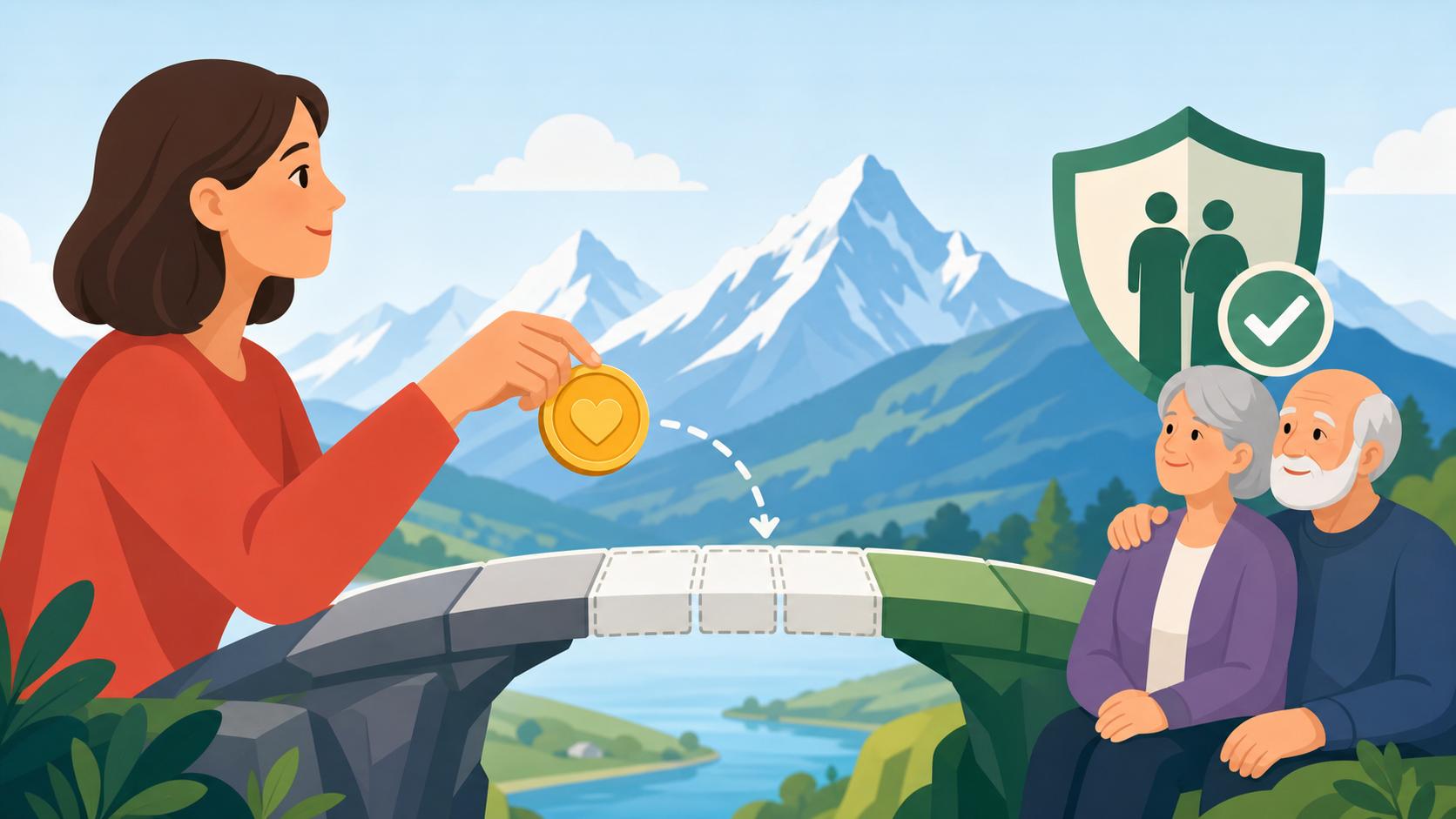
When you have a gap, you aren't just losing the money you would have received; you are losing the compound safety of the Swiss social net. If you were to become disabled or pass away, the benefits for your survivors are also calculated based on these contribution years. Filling these gaps is as much about insurance for your family as it is about your own retirement.
The Problem of the Arriving Expat
Most of us arrive mid-year. If you moved to Switzerland in August, your employer likely paid your AHV for the remainder of the year. However, the Swiss compensation office looks at the calendar year. If you didn't have a Swiss employer from January to July of that year, and you weren't paying into a social security system with a bilateral agreement that "counts" toward Swiss years, that year might be flagged as a gap. While some international treaties help, they often only ensure you get a pension from both countries, not a full pension from Switzerland.
How to Identify Your Missing Years Using the IK Statement
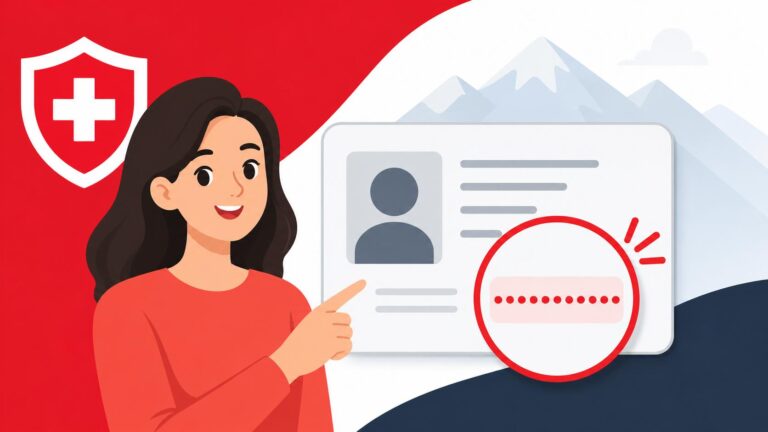
You cannot fix what you cannot see. The Swiss government does not proactively mail you a list of your "missing years" with a friendly reminder to pay. Instead, you must request an "Individual Account" statement, known in German as the Individueller Kontoauszug or IK-Auszug. This document is the holy grail of your Swiss financial history.
Requesting this statement is free and should be done every three to four years. It lists every employer you’ve had, the salary they reported, and the months of contributions recorded. If you see a year where the total contribution doesn't match your expected earnings, or if a year is missing entirely, you have found a gap. This is especially common for those who have moved between cantons or had multiple short-term contracts. Before you can even think about Filing a Swiss Tax Return (C Permit or High Earners on B Permit), you should ensure your IK statement is accurate.
Decoding the Symbols on Your AHV Statement
When you receive your IK-Auszug, it might look like a wall of bureaucratic text. You are looking for the "Contribution Period" column. If there are months missing, or if the income listed is significantly lower than what you actually earned, your employer might have made a reporting error. I’ve seen cases where a startup simply "forgot" to register an employee for the first three months, creating a permanent gap that the employee didn't notice for a decade.
The Difference Between Missing Months and Missing Years
A gap can be a full year or just a few months. However, the Swiss system generally works on an "annual" contribution basis. If you paid the minimum required amount for the year through a high-paying job in only six months, you might not have a "pension-reducing" gap, but you still need to verify this with your specific Ausgleichskasse. Each canton has its own office, and they are surprisingly helpful if you approach them with clear questions.
The Strict 5-Year Window for Retroactive Payments
This is the most critical part of this guide: the "Five-Year Rule." In Switzerland, you can only make voluntary contributions to fill gaps for the past five years. If you moved to Switzerland in 2018 and just realized today in 2026 that your first two years have gaps, you are officially too late to fill them. Those gaps are now permanent.
This strict deadline is why I tell every new expat to check their IK statement in their third year of residency. It gives you enough time to spot errors and make payments before the window slams shut. The five-year clock is relentless. No amount of pleading or "I didn't know" will convince the Swiss authorities to let you pay for a gap from seven years ago.
Exceptions to the Rule
There are almost no exceptions for residents. The only real flexibility exists for those who were living abroad and were part of the "Voluntary AHV" scheme for Swiss or EU/EFTA nationals, but for the average expat living and working in Zurich or Geneva, that five-year limit is absolute. If you are planning on Leaving Switzerland Financially: Closing Accounts and Pension Payouts, you should double-check these gaps before you de-register, as fixing them from abroad becomes exponentially more complicated.
Why the Clock Starts at Age 21
For many expats who came to Switzerland for university, the gaps often start early. If you were a student in Switzerland between the ages of 21 and 25 and didn't have a part-time job that paid at least CHF 2,300 per year, you likely didn't pay the minimum AHV contribution. Students are required to pay a flat fee (roughly CHF 500 per year) to prevent gaps. If you missed these payments, you have five years from the end of each respective year to fix it.
Calculating the Cost of Your Voluntary Contributions
If you find a gap within the five-year window, how much will it cost to fix? The price is not a flat fee. For employees, the contribution is calculated as a percentage of the salary you should have earned during that period. For those who were not working (such as stay-at-home spouses or students), the cost is calculated based on your current wealth and any pension income.
The minimum contribution for a non-working person in 2026 is around CHF 514 per year, plus administrative fees. However, if you have significant assets, that "voluntary" price tag can climb to over CHF 25,000 per year. This is where you have to do a cost-benefit analysis. Is paying CHF 10,000 now worth an extra CHF 50 or CHF 100 per month in 30 years? Usually, the answer is yes, because the AHV is inflation-adjusted and guaranteed for life, unlike private investments.
The Role of the Non-Working Spouse
One of the best "hacks" in the Swiss system is the rule for married couples. If one spouse works and pays at least double the minimum AHV contribution (roughly CHF 1,028), the non-working spouse is considered to have "covered" their contribution years. However, this only works if you are legally married and both residents of Switzerland. If you moved here alone and your spouse followed a year later, that spouse likely has a gap for their first year that needs to be paid manually.
How Wealth Affects Your Buy-in Rate
If you are not employed and want to fill a gap, the Ausgleichskasse will ask for a statement of your global assets. They use a sliding scale to determine your contribution. This is a very "Swiss" way of ensuring fairness, but it can be a shock to expats who have a high net worth but low current income. You might find it more efficient to use a service like Wise to move funds from international accounts to cover these high buy-in costs without losing a fortune in bank spreads.
Strategic Financial Planning: AHV Buy-ins vs. Private Investing
Should you always fill the gap? Not necessarily. If you are 35 years old and find a one-year gap, the "cost" of filling it might be CHF 2,000. If you take that same CHF 2,000 and invest it in a diversified portfolio via Trade Republic or even a small portion into crypto via Binance, you might mathematically come out ahead over 30 years.
However, the AHV is the "floor" of your retirement. It is the only part of your pension that is truly indexed to the Swiss economy and protected by the federal government. Most financial advisors in Switzerland suggest filling AHV gaps first because they are the most "efficient" form of insurance. Once your 1st pillar is secure, you can then look at Pillar 3a in 2026: Tax Deductions, Limits, and Investment Options for more aggressive growth.
| Feature | Voluntary AHV Buy-in | Private Investing (e.g., Trade Republic) |
|---|---|---|
| Risk Level | Extremely Low (State Guaranteed) | Moderate to High (Market Dependent) |
| Returns | Fixed Pension Increase | Variable Capital Growth |
| Tax Impact | Generally not tax-deductible | Potential Capital Gains (usually 0% in CH) |
| Liquidity | Zero (Locked until retirement) | High (Can sell anytime) |
| Family Protection | Includes survivor/disability benefits | Only what is in the account |
Using Neobanks for Pension Management
When you are ready to pay your voluntary contributions, the Ausgleichskasse will send you a QR-bill. I highly recommend using a modern Swiss account to handle these payments to ensure clear tracking. If you are comparing Best Neobanks in Switzerland: Neon, Yuh, and Zak Compared, look for those that offer easy eBill integration. It makes managing these "once-every-five-years" tasks much less painful than dealing with traditional paper mail.
Diversification Beyond the State Pension
While this guide focuses on the 1st pillar, a veteran expat knows that the state pension is only one piece of the puzzle. You also need to keep a close eye on your Pillar 2 (BVG): Understanding Your Swiss Occupational Pension. If you have gaps in your AHV, you likely have "buy-in" opportunities in your Pillar 2 as well. The difference is that Pillar 2 buy-ins are often tax-deductible, whereas voluntary AHV payments for missed years generally are not. This makes the AHV gap-filling an act of "completing the foundation" rather than a tax-optimization strategy.
Step-by-Step Guide to Filling Your Pension Gap
- Request your IK Statement: Go to the official Info-AVS website and find the "Order an IK statement" link. You will need your 13-digit social security number (found on your health insurance card).
- Audit the years: Look for any "0" values or years with significantly lower income than you recall.
- Contact the Canton: Reach out to the Ausgleichskasse of the canton where you resided during the gap year. Explain that you wish to make a "voluntary contribution to close a gap."
- Submit documentation: They will likely ask for your old salary certificates (Lohnausweis) or proof of residency.
- Pay the QR-bill: Once they calculate the amount, pay it promptly. Keep the receipt forever. The Swiss system is great, but paper trails are your best friend if there is a dispute 20 years from now.
- Verify the update: About six months after payment, request another IK statement to ensure the year is now marked as "complete."
If you find yourself overwhelmed by the paperwork, you can always look into Opening a Swiss Bank Account: UBS, ZKB, PostFinance, and Neobanks that offer dedicated wealth management services, though for a simple AHV gap, a little bit of "DIY" effort will save you thousands in consulting fees.
Essential Disclaimer
The information provided in this article is for informational purposes only and does not constitute legal, financial, or social security advice. Swiss pension laws and contribution rates are subject to change. While every effort has been made to ensure accuracy, the specific details of your pension situation can only be determined by your official cantonal Ausgleichskasse. Always consult with a qualified financial advisor or the relevant Swiss authorities before making large voluntary contributions or significant changes to your retirement planning.