Leaving Switzerland Financially: Closing Accounts and Pension Payouts
Leaving Switzerland often feels harder than arriving, especially when you realize that every contract you signed has a hidden trap door or a three-month notice period. I remember sitting in my half-packed apartment in Zurich, staring at a stack of orange QR-bills and wondering if I’d ever actually see my pension money again. This guide solves the administrative nightmare of your departure, ensuring you leave with your finances intact and your bridges unburned.
The Administrative Farewell: Deregistering and the Abmeldung
The very first hurdle you will face isn't at the bank; it’s at your local municipal office. In Switzerland, you cannot simply pack your bags and disappear. The act of leaving is a formal process known as the Abmeldung (deregistration). Without the paper proof of this act, your financial life in Switzerland will remain "active," meaning you will continue to be billed for health insurance, taxes, and the Serafe fee long after you have crossed the border.
Timing Your Departure at the Kreisbüro
You are generally required to deregister at your local Gemeinde or Kreisbüro no earlier than 30 days before your departure and no later than your last day of residency. If you are a veteran expat, you know the Swiss love for appointments. Don't leave this until the Friday afternoon before a Monday flight. When I left, I walked into the Kreisbüro with my passport and my residence permit, feeling a strange mix of relief and anxiety.
The clerk will ask for your departure date and your new address abroad. This is a critical moment because the date you provide will be the official "end" of your Swiss life. It determines the pro-rata calculation of your final taxes and the termination date of your mandatory health insurance. If you have been living here on a B permit, this is also when you will settle the final details of your Withholding Tax (Quellensteuer) vs Standard Taxation for Foreigners.
The Critical Abmeldebescheinigung Document
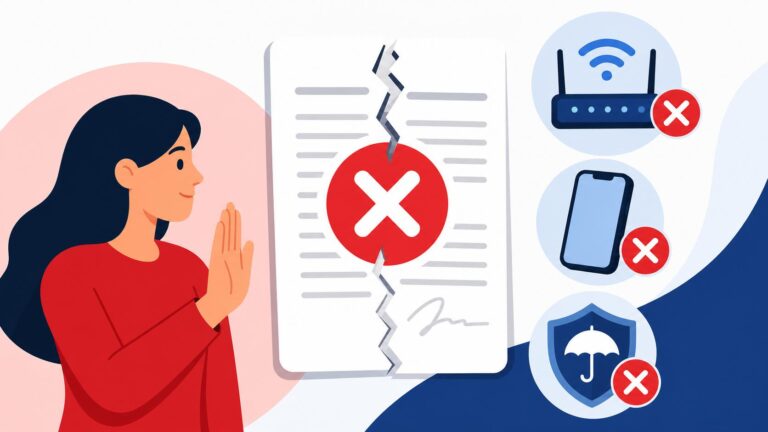
Once you pay a small fee (usually between CHF 20 and CHF 40), you will receive a stamped document called the Abmeldebescheinigung (Deregistration Certificate). Guard this document with your life. It is the "golden key" that unlocks every other door. You will need to scan and send this to your health insurance provider, your internet company, and your gym to prove that you are legally leaving the country and are therefore entitled to break your contracts outside of the standard notice periods.
Without this certificate, companies are legally allowed to keep charging you until the next official "termination window," which in some cases could be six months away. Expats can lose thousands of francs because they thought a simple email saying "I'm moving" was enough. It isn't. You need that stamp.
Handling the Last Taxes
Taxes in Switzerland are usually paid in arrears or via monthly deductions from your salary. However, when you leave, the tax office wants to settle the score immediately. If you are taxed at source, your employer will do a final calculation on your last paycheck. However, if you are a high earner or hold a C permit, you will likely need to file a final tax return before you leave.
The tax office may ask for a "representative" in Switzerland—someone they can contact if there are issues after you’ve gone. This can be a trusted friend or a professional tax advisor. It is also wise to check your Tax Allowances and Deductions: Commuting, Meals, and Childcare one last time to ensure you aren't leaving money on the table in your final partial year. The Swiss tax authorities are incredibly efficient, and if you owe them money, they will find you abroad, so it's best to leave with a clean slate.
Navigating the Three Pillars: What Happens to Your Pension?
The most significant financial windfall—or headache—when leaving Switzerland is your pension. The Swiss system is built on three "pillars," and each has its own set of rules for when you decide to say goodbye to the Alps. Understanding these rules is the difference between a massive cash payout and money that stays locked in a Swiss vault until you are 65.
Pillar 1 (AHV): Refunds for Non-EU Residents
The first pillar is the state pension (AHV). If you are a citizen of an EU/EFTA country, you generally cannot get this money paid out in cash. Instead, your contributions remain in Switzerland, and you will receive a partial Swiss pension when you reach retirement age, regardless of where you are living.
However, if you are a "Third-Country National" (e.g., from the USA, India, or Australia), you might be eligible for a refund of your AHV contributions. There are conditions: you must have contributed for at least one year, and you must be moving to a country that does not have a bilateral social security agreement with Switzerland that precludes refunds. For many, this is a significant sum of money. You can find more details in the guide on The 5-Year Rule: Claiming an AHV Refund for Non-EU/EFTA Citizens.
Pillar 2 (BVG): The Vested Benefits Account vs. Cash Payout
The second pillar, your occupational pension, is where the real money usually sits. This is the part funded by both you and your employer. When you leave Switzerland, what happens to this money depends on where you are going.
- Moving to an EU/EFTA Country: You generally cannot withdraw the "mandatory" portion of your Pillar 2 in cash if you will be covered by the social security system in your new country. That money must be transferred to a Freizügigkeitskonto (Vested Benefits Account) in Switzerland. You can, however, withdraw the "extra-mandatory" portion (anything you or your employer contributed above the legal minimum).
- Moving Outside the EU/EFTA: You can usually withdraw the entire amount in cash, minus a significant withholding tax.
When you receive this payout, you will need a reliable way to move it. Using a service like Wise is often the smartest move here, as traditional Swiss banks will hit you with poor exchange rates when moving six-figure pension sums into your new local currency.
Pillar 3a: Private Pension Withdrawal Strategies
The third pillar (3a) is your private, tax-advantaged savings. The good news here is that leaving Switzerland permanently is one of the few "valid" reasons to withdraw this money in full, regardless of your destination or nationality.
To do this, you will need to provide your 3a provider with your Abmeldebescheinigung and proof of your new residence abroad. Note that the payout is subject to a "withholding tax" (Quellensteuer), which varies depending on which canton the pension foundation is based in. This is why many savvy expats move their 3a funds to a foundation based in Canton Schwyz (which has the lowest payout tax rates) just before they leave. This is a classic "pro-tip" that can save you thousands. For a deeper look at your options, check out Pillar 3a in 2026: Tax Deductions, Limits, and Investment Options.
| Pension Component | Moving to EU/EFTA | Moving Outside EU/EFTA | Withdrawal Type |
|---|---|---|---|
| Pillar 1 (AHV) | Stays in CH | Possible Refund (TCNs only) | Life-long Pension or Lump Sum |
| Pillar 2 (Mandatory) | To Vested Benefits Account | Cash Payout Possible | Lump Sum |
| Pillar 2 (Extra-Mandatory) | Cash Payout Possible | Cash Payout Possible | Lump Sum |
| Pillar 3a (Private) | Cash Payout Possible | Cash Payout Possible | Lump Sum |
Banking and Financial Cleanup
Closing a bank account in Switzerland should be simple, but it rarely is. The banks want to ensure all pending transactions are cleared, and they often charge "account closing fees" or high fees for international transfers.
Closing Your Swiss Bank Accounts
I recommend keeping one Swiss bank account open for at least six months after you leave. Why? Because you will almost certainly receive a surprise refund from an insurance company or a final utility bill that needs to be paid via TWINT or a Swiss IBAN. Most banks, like UBS or Credit Suisse, will allow you to keep an account as a non-resident, but be warned: the monthly maintenance fees will skyrocket. It is common for a "free" or cheap account to suddenly cost CHF 30-50 per month once you no longer live in the country.
When you are ready to shut it all down, make sure you have downloaded all your bank statements and your Understanding Your Swiss Salary Certificate (Lohnausweis) for Tax Season from your employer's portal. Once the account is closed, getting these documents is a bureaucratic nightmare. If you hold crypto assets, ensure you have moved them to a private wallet or an exchange like Binance before you lose access to your Swiss-linked mobile phone number for 2FA.
Moving Wealth Out of the Country: Currency Exchange
The Swiss Franc (CHF) is a strong currency, but when you move your life savings to a new country, the "hidden" exchange rate margins at big banks can eat up to 3% of your total wealth. For an expat with CHF 200,000 in pension and savings, that’s a loss of CHF 6,000 just for the privilege of moving your own money.
This is where Wise becomes an essential tool. By using a specialized mid-market rate provider, you can save enough to pay for your international moving company. If you are moving to the Eurozone and looking for a place to park your funds while they earn interest, platforms like Trade Republic offer competitive rates and easy access, which is often better than leaving the money in a zero-interest Swiss checking account.
Settlement of Debts and the Betreibungsauszug
Before you leave, you should pull a final Checking Your Debt Register Extract (Betreibungsauszug) for Loans. This document proves you have no outstanding debts in Switzerland. While you might think "I'm leaving, why do I care?", Switzerland has a long memory. If you ever decide to return, or even if you just want to rent a car in Europe, an unpaid debt in the Swiss system (a Betreibung) can haunt your credit score across borders. Ensure every last bill—from the dentist to the local library—is paid.
Handling Insurance and Subscriptions
The Swiss love insurance, and as an expat, you likely have at least three or four policies. Canceling them requires precision and, again, that deregistration certificate.
Health Insurance Cancellation Rules
Your mandatory health insurance (KVG) does not end when you stop working; it ends when you are no longer a resident. Once you have your Abmeldebescheinigung, you must send a copy to your insurer. They will then calculate your final premium to the exact day of your departure.
If you have supplementary insurance (VVG), the rules are different. These are private contracts and might have different notice periods. However, most insurers will allow you to cancel if you are moving to a country where they cannot provide coverage. If you’re worried about coverage gaps during the move, looking into Healthcare in Switzerland for Expats: The Complete System Overview (2027) can help you understand where your Swiss coverage stops.
Household and Liability Insurance Termination
Your Privathaftpflicht (personal liability) and Hausratversicherung (household contents) insurance are usually linked to your Swiss address. When you move, these should be canceled. Interestingly, if you have been happy with your Swiss provider, some offer "international" extensions for a limited time, but it’s usually cheaper to get local insurance in your new home. For many expats, the most important part of this is the "key insurance"—if you lose your apartment keys during the move-out, you want this policy active until the minute you hand over the keys. You can read more about this in Does Swiss Liability Insurance Cover Losing the Apartment Key?.
The Final Serafe Bill and Media Fees
Ah, the Serafe bill. The CHF 335 annual fee that every household pays for public broadcasting. When you leave, you are entitled to a pro-rata refund if you have paid for the full year in advance. You must inform Serafe of your departure date and provide a Swiss bank account for the refund (another reason to keep that bank account open for a few months!). For the specific steps, see How to Cancel the Serafe Fee When Leaving Switzerland Permanently.
Housing and the Final Handover
If you have been renting, the "exit" from your apartment will likely be the most stressful day of your relocation. Swiss landlords are notoriously meticulous—some might say "obsessive"—about the condition of the flat upon departure.
Terminating Your Lease and the Nachmieter Quest
Most Swiss leases have specific "move-out dates" (often end of March, June, and September). If you want to leave outside of these dates, you are legally required to find a "Nachmieter"—a replacement tenant who is solvent and willing to take over your lease on the same terms.
This process is a part-time job in itself. You will need to host viewings and collect application dossiers. If you don't find someone, you are legally liable for the rent until the next official termination date. This is a common trap for expats who get a job offer abroad and need to leave in 30 days. For strategies on how to handle this, refer to Can You End a Swiss Lease Early? Finding a Nachmieter (Replacement Tenant).
The Apartment Handover (Wohnungsübergabe) Protocol
On your final day, you will meet the landlord or the property management (Verwaltung) for the Wohnungsübergabe. They will walk through the apartment with a clipboard, checking everything from the lime scale on the faucets to the tiny scratches on the parquet floor.
If you don't want to spend three days scrubbing the oven with a toothbrush, hire a professional cleaning company that offers an Abgabegarantie (handover guarantee). If the landlord isn't happy, the cleaners have to come back for free. It is the best CHF 800-1,200 you will ever spend. Landlords often insist on the Grundreinigung Requirements: Cleaning Shutters, Ovens, and Vents being met to a surgical standard.
Recovering Your Rental Deposit
Once the handover is complete and the protocol is signed, the landlord should release your rental deposit (Mietkautionskonto). This can take anywhere from a few weeks to—infuriatingly—a full year if there are disputed damages.
If you used a service like SwissCaution instead of a cash deposit, you need to ensure the policy is formally canceled, or they will keep billing you for the annual premium. If the landlord is being difficult about releasing your cash, remember that you have rights. Joining The ASLOCA / Mieterverband: Why Every Swiss Tenant Must Join before you leave can provide you with the legal muscle needed to get your money back.
Relocation Logistics and Tax Planning
The final piece of the puzzle is the physical move and the long-term tax implications of leaving a high-salary, low-tax environment.
Moving Your Belongings: Customs and VAT
If you are moving your household goods out of Switzerland, you generally don't have to pay export duties, but you must declare the goods at the border of your destination country. If you are moving back to the EU, you usually won't pay VAT on your "used" personal belongings if you have owned them for more than six months.
However, if you bought a brand-new Rolex or a high-end e-bike just before leaving, be prepared to pay import duties. The customs officers at the borders are very good at spotting "relocation" trucks filled with brand-new luxury items.
Double Taxation and Reporting Overseas Income
Leaving Switzerland doesn't always mean you are finished with the Swiss tax office. If you still own property here, or if you receive a Swiss pension payout after you’ve left, you may still have tax obligations. Conversely, your new home country will likely want to tax you on your global income, which may include the pension money you just withdrew.
Switzerland has Double Taxation Agreements with most countries, which prevents you from being taxed twice on the same money, but you must file the paperwork correctly. This is especially true for US citizens, who are taxed based on citizenship rather than residency.
Keeping a Foot in the Door: Maintaining a Correspondence Address
Finally, it is advisable to set up a mail forwarding service with Die Post for at least one year. Even with the best planning, a document will be sent to your old address. Having it forwarded to your new home abroad—or to a friend in Switzerland—is a lifesaver. You can manage this easily online, as explained in Forwarding Mail with Swiss Post When Changing Apartments or Cantons.
Leaving Switzerland is an emotional journey, but by checking these financial boxes, you can ensure that the only thing you’re taking with you are the fond memories of fondue and mountain air—and a very healthy bank balance.
Disclaimer
This guide is for informational purposes only and does not constitute professional financial, legal, or tax advice. Swiss laws and cantonal regulations are subject to change, and individual circumstances can vary significantly. Always consult with a qualified specialist or the relevant Swiss authorities before making major financial decisions or terminating legal contracts.