The 5-Year Rule: Claiming an AHV Refund for Non-EU/EFTA Citizens
Leaving Switzerland after a few years feels like a frantic race against administrative paperwork, especially when you realize thousands of francs are sitting in a pension pot you might never see again. I remember the panic of trying to figure out if my AHV contributions were just a "donation" to the Swiss state or a refundable asset. This guide breaks down the complex 5-year rule and how non-EU/EFTA citizens can reclaim their hard-earned money when moving abroad.
Understanding the First Pillar and Why the 5-Year Rule Matters
The Swiss social security system is often described as a three-legged stool, and the First Pillar, known as AHV (Alters- und Hinterlassenenversicherung), is the foundational leg. For many expats, this is the most confusing part of their monthly payslip. You see a significant chunk of your salary disappear every month under the label OASI/DI/APG, and while you are told it is for your retirement, the reality of ever seeing that money if you move back to a non-European country feels slim. Understanding how this system works is the first step in ensuring you don't leave a small fortune behind when you pack your bags.
What Exactly is AHV and Where Does Your Money Go
AHV is the mandatory state old-age and survivors' insurance. It is a "pay-as-you-go" system, meaning the money being deducted from your current paycheck is essentially paying for the pensions of people currently retired. However, the Swiss government keeps a meticulous record of every franc you contribute. This record is tied to your 13-digit Swiss AHV social security number. Unlike a private savings account, you don't have a "pot" of cash sitting in a vault; instead, you have a legal claim to a future pension based on the number of years you contributed and your average income.
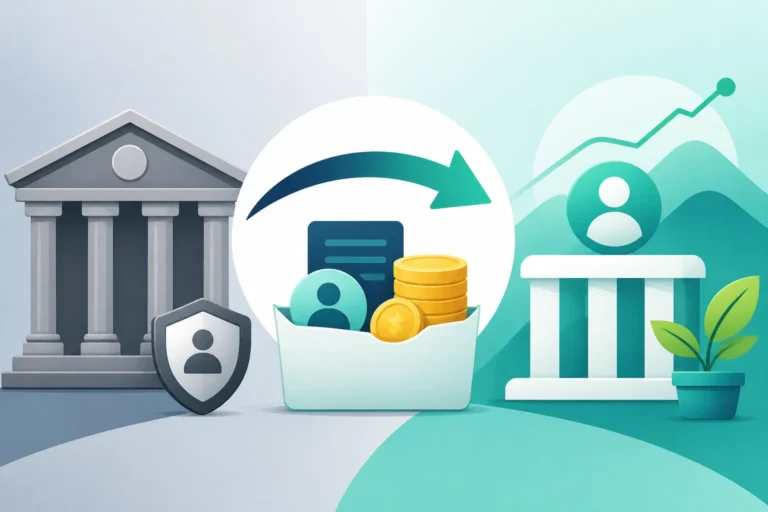
For a non-EU/EFTA citizen, this legal claim can be problematic. If you move to a country that does not have a social security agreement with Switzerland, you might find it difficult to claim a monthly pension once you hit 65. This is where the concept of a lump-sum refund comes into play. Instead of waiting decades for a small monthly check that might be eaten up by international bank fees, the Swiss system allows certain foreigners to "cash out" their contributions when they leave the country permanently.
The Fundamental Logic of the 5-Year Threshold
The "5-year rule" is a term often used by the expat community to describe the threshold of integration and permanent residency. While the rules for AHV refunds are primarily governed by the social security agreements between Switzerland and your home country, the five-year mark is a critical milestone. In many cantons, reaching five years of residency allows you to apply for The Swiss C Permit (Permanent Residency): Fast-Track and Standard Routes, which fundamentally changes your tax and social security standing.
If you leave Switzerland before reaching a point of permanent "vested" interest—which for many countries is a five-year contribution period—the Swiss authorities are often more willing to settle your account with a one-time payment. They would rather pay you out now than manage a tiny pension for someone living in a non-agreement country forty years from now. However, you must have contributed for at least one full year to even be considered for a refund. Anything less than 12 months of contributions is generally lost to the system.
Why EU and EFTA Citizens are Excluded
If you are a citizen of an EU or EFTA country, I have some tough news: you are generally ineligible for an AHV refund. Because of the Agreement on the Free Movement of Persons, your Swiss contributions are "portable." This means that when you retire in France, Germany, or Italy, your years of work in Switzerland will be factored into your European pension. The systems "talk" to each other, ensuring you don't lose coverage.
For Third-Country Nationals (TCNs), the situation is different. If your home country doesn't have a reciprocal agreement, your Swiss years might not count toward your home country's pension at all. This creates a "social security gap." The refund mechanism exists to bridge this gap, giving you back your contributions so you can invest them in your own retirement plan elsewhere. If you're wondering about your specific status, it's worth Understanding the Swiss Job Market Quota System for Non-EU/EFTA Nationals to see how your permit type influences your long-term rights.
Eligibility Criteria for an AHV Refund
Determining if you can actually get your money back requires looking at three specific factors: your nationality, where you are moving to, and how long you worked in the land of chocolate and cheese. It is not as simple as just "leaving." The Swiss Central Compensation Office (ZAS) in Geneva is very strict about these requirements, and a single missing document can stall your application for months.
The Non-EU/EFTA Requirement and Third-Country Status
The first hurdle is your passport. This refund is specifically designed for those who are considered "Third-Country Nationals." This includes citizens of the USA, Canada, India, Australia, and most other non-European nations. However, even within this group, the rules shift depending on whether Switzerland has a bilateral social security agreement with your nation.
If you are a US citizen, for example, there is a very specific agreement in place. You can usually choose between a refund or a future pension, but there are catches. If you choose the refund, you are essentially telling the Swiss government that you waive all future rights. This is a massive decision. If you later decide to return to Switzerland on The Swiss B Permit: Eligibility, Renewal, and Restrictions, you start your contribution years back at zero.
The Waiting Period and Contribution Minimums
You cannot apply for your AHV refund while you are still living in Switzerland. You must have officially "deregistered" from your commune. I remember the stress of the Leaving Switzerland Permanently: The Abmeldung Process at City Hall, where you get that final piece of paper proving you are no longer a resident. Only with this document can the refund process begin.
Furthermore, you must have contributed to the AHV for at least 12 months. These don't necessarily have to be consecutive months, but they must total a full year of OASI deductions. If you worked a short-term contract on an L permit for nine months and then left, those contributions stay in the Swiss collective pot. It feels unfair, but it’s the price of entry into the Swiss labor market for short-term stays.
Bilateral Social Security Agreements and Exceptions
Switzerland has signed social security agreements with many countries, including Australia, Brazil, Canada, Chile, India, Israel, Japan, San Marino, South Korea, the USA, and several others. These agreements are designed to prevent double taxation and ensure that workers don't lose their benefits. However, each agreement is slightly different.
For instance, Indian citizens working in Switzerland have a specific set of rules. Under the Swiss-Indian Social Security Agreement, you can often claim a refund of your contributions regardless of how many years you worked, provided you are leaving Switzerland permanently. On the other hand, some agreements might prioritize the "totalization" of years, where your Swiss years help you qualify for a pension in your home country. You need to check the specific treaty for your nationality.
| Feature | EU/EFTA Citizens | Non-EU/EFTA (With Agreement) | Non-EU/EFTA (No Agreement) |
|---|---|---|---|
| Refund Possible? | No (Usually) | Yes (Depending on Treaty) | Yes |
| Min. Contribution | N/A (Portable) | 12 Months | 12 Months |
| Future Pension | Guaranteed | Optional/Totalized | Difficult to Claim |
| Typical Wait Time | N/A | 6 – 9 Months | 6 – 9 Months |
The Financial Trade-Off: Refund vs. Future Pension
Before you rush to fill out the forms, you need to do some serious math. Getting a lump sum of 30,000 or 50,000 CHF feels like winning the lottery, but you are trading away a guaranteed, inflation-indexed monthly payment that would last until the day you die. For many, the refund is the right choice, but for others, it is a significant financial mistake.
Calculating the Refund Value
Many expats mistakenly believe they will get back everything they saw deducted on their Understanding Your Swiss Payslip: Deductions for AHV, ALV, and NBU. This is not the case. You only receive the "employee" portion of the AHV contributions (roughly 4.35% of your gross salary). You do not get the employer's matching contribution, nor do you get the portions dedicated to Disability Insurance (IV) or the Loss of Earnings Compensation (EO).
Furthermore, the refund is paid out net of a specific withholding tax. This tax varies depending on the amount and your home country's tax treaty with Switzerland. However, compared to the Cost of Living in Switzerland 2026: Budgeting for Singles and Families, this lump sum can go a long way in a country with a lower cost of living. You are essentially getting back your "savings," minus the insurance premiums you paid for the "risk" of disability or death while you were a resident.
The Permanent Loss of Swiss Pension Rights
Taking the refund is an "all-or-nothing" deal. Once the money hits your bank account, your insurance record in Switzerland is deleted. If you were to pass away later, your spouse and children would not be entitled to any survivors' benefits from the Swiss state. This is a heavy consideration if you have a family.
I've talked to expats who cashed out their AHV in their 30s, only to find themselves back in Zurich in their 40s on a new job. They regretted the decision because they "lost" those early years of contributions which are heavily weighted in the pension calculation. If there is even a 20% chance you might return to Switzerland to work, I usually advise clients to leave the money where it is. It's the ultimate "safe haven" asset.
Scenarios Where Keeping the Pension Makes Sense
If you have worked in Switzerland for a long time—say, 10 or 15 years—and you are already in your late 40s or 50s, the "present value" of a future monthly Swiss pension is likely much higher than the lump-sum refund you would get today. Switzerland is one of the few countries with a currency that consistently holds its value against the Dollar and the Euro.
A monthly pension of 1,000 CHF in twenty years might be worth significantly more in "purchasing power" than taking 40,000 CHF today and investing it poorly. If you plan to retire in a high-stability country or if you already have significant Wealth Tax in Switzerland: How Global Assets Are Assessed considerations, keeping the Swiss pension as a diversified "annuity" in your portfolio is a sophisticated move.
Step-by-Step Guide to Filing Your Refund Claim
The process is bureaucratic, but it is logical. You won't get the money the day you leave. In fact, most people have to wait at least six months after their departure date before the ZAS will even process the payment. This is to ensure that you have truly left and aren't just "resetting" your permit status.
Necessary Documentation and Identity Proof
To start the process, you need to download Form 10.1 from the ZAS website. You will need your AHV card (the little grey or blue plastic card with your number), your passport, and most importantly, your certificate of deregistration from your last Swiss municipality.
You also need to provide "proof of residence" in your new country. This can be tricky. Some countries don't have a formal registration system like Switzerland. In these cases, a long-term lease agreement or a utility bill in your name, combined with a local tax ID, usually suffices. If you are struggling with translation requirements for these documents, you might need to look into Translating Medical Records from English to German/French for Your Hausarzt services, as the ZAS requires documents in one of the official Swiss languages or English.
Dealing with the Central Compensation Office (ZAS)
The ZAS is located in Geneva and handles all international social security matters. You can mail your application or, in some cases, submit it through the Swiss embassy in your new home country. I always recommend sending it via registered mail with a tracking number.
Don't expect an immediate confirmation. It usually takes 2–3 months for them to acknowledge the file and another 3–4 months to calculate the final amount. If you have gaps in your record—perhaps because you were Changing Your Swiss Health Insurance Provider: Deadlines and Notice Periods and didn't realize your employer hadn't updated your status—this can take even longer as they verify your contributions with the various cantonal compensation funds.
Receiving Your Funds in a Foreign Account
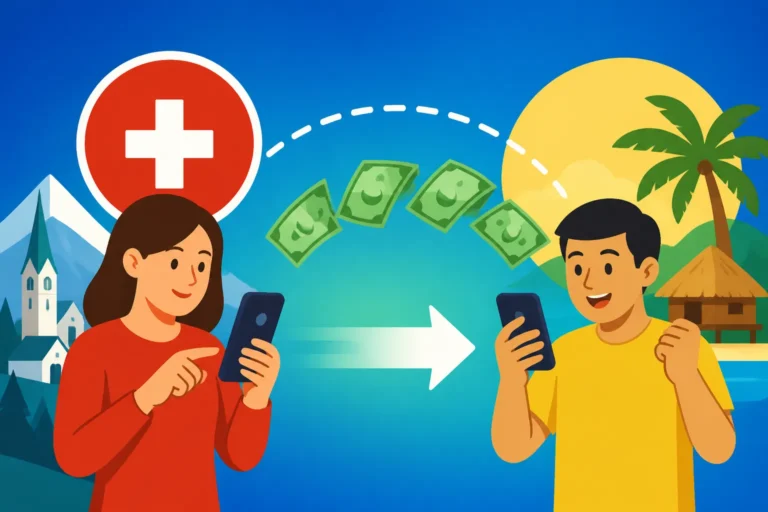
This is a critical financial step. The ZAS will ask for your bank details. If you provide a traditional bank account in India, the US, or Brazil, the Swiss bank will convert your CHF into the local currency at a terrible exchange rate. On a 50,000 CHF refund, you could lose 1,500 CHF just in currency margins.
Instead, I recommend using a service like Wise. You can open a CHF "borderless" account and provide those IBAN details to the ZAS. This allows you to receive the full amount in Swiss Francs. Once the money is in your Wise account, you can choose when to convert it to your local currency when the rates are favorable, potentially saving you thousands. It’s one of the most effective Cheapest Ways to Transfer CHF Abroad: Wise vs Revolut vs Swiss Banks for large lump sums.
Reinvesting Your AHV Refund for Long-Term Wealth
Once that refund lands, the temptation to spend it on a new car or a house renovation is huge. But remember: this money was your retirement fund. If you don't reinvest it, you are effectively "spending" your future. You need a strategy to make that money grow in your new environment.
Traditional Markets and ETFs
If you are moving back to a country with a stable financial market, putting that lump sum into a diversified ETF (Exchange Traded Fund) is the most logical step. In Europe, platforms like Trade Republic offer a very low-cost way to invest in global markets. Since you are likely no longer subject to the Swiss Three-Pillar Pension System: AHV, BVG, and Private Savings rules, you have more freedom in how you allocate your assets.
By using Trade Republic, you can set up a recurring investment plan. If your AHV refund was 40,000 CHF, you could put it into a high-yield savings account or a money market fund and slowly move it into the S&P 500 or a World Index. This "dollar-cost averaging" helps protect you from market volatility, especially if you are concerned about the current global economic climate.
Alternative Assets and Diversification
For those who are more tech-savvy or moving to regions where traditional banking is less reliable, cryptocurrency has become a popular "exit" strategy for expat funds. While I would never suggest putting your entire pension into Bitcoin, allocating a small percentage (say 5%) through a platform like Binance can provide a hedge against local currency inflation.
Using Binance allows you to keep some of your wealth in stablecoins pegged to the USD or Euro, which can be useful if your new home country has a volatile local currency. However, you must be careful about the Crypto Taxation in Switzerland: Declaring Bitcoin and Staking Rewards rules if you have any lingering tax liabilities in Switzerland. Always keep a clean paper trail of where your AHV refund went for future tax audits.
Tax Implications of the Payout
Switzerland will almost certainly deduct a withholding tax (Quellensteuer) before sending you the money. The rate depends on the canton where you last worked. However, if your home country has a Double Taxation Agreement (DTA) with Switzerland, you may be able to claim some or all of that tax back once you prove that you have declared the income in your new country.
This is a complex area, and I often suggest people read up on Filing a Swiss Tax Return (C Permit or High Earners on B Permit) to understand how the Swiss tax office views "exit" payments. You don't want to be surprised by a tax bill in your new country a year later because you forgot to declare the AHV refund as income.
Common Pitfalls and Frequently Asked Questions
Even with the best intentions, the "5-year rule" can trip you up. There are specific timelines and family implications that many expats don't realize until it's too late. Being proactive is the only way to ensure the ZAS doesn't keep your money indefinitely.
Missing the Application Deadline
You generally have up to five years after leaving Switzerland to claim your AHV refund. If you wait longer than that, the statute of limitations may kick in, and the money becomes a permanent part of the Swiss state fund. I’ve met people who moved back to Australia, forgot about their Swiss years, and tried to claim them ten years later—only to be met with a firm "No" from Geneva.
Set a calendar reminder for six months after your Registering Your Address at the Kreisbüro Within 14 Days of Moving date in your new country. That is the "sweet spot" for starting the application. Any earlier and it might be rejected; any later and you risk forgetting the process entirely as you settle into your new life.
Handling Missing Contribution Years
If you look at your "Individual Account" (IK-Auszug) and notice years where no contributions were made, your refund will be significantly smaller. This often happens to trailing spouses or those who spent time Studying in Switzerland: University Admissions and Visa Guide without working.
You can sometimes make "voluntary" contributions to bridge these gaps before you leave, but this is usually only allowed for Swiss or EU/EFTA citizens living abroad. For Third-Country Nationals, once you leave, you generally cannot "top up" your account to get a higher refund. What you see on your record is what you get.
The Impact on Your Spouse and Children
If you take the refund, you are also cancelling the "survivor" insurance for your family. In the Swiss system, if a worker dies, their widow/widower and children receive a monthly pension. By cashing out, you are taking on the full responsibility of providing for them in the event of your death.
Make sure you have a solid private life insurance policy in place before you cash out your AHV. You are essentially moving from a "socialist" safety net to a "capitalist" one. It’s a move that requires discipline. If you’re not sure about the risks, looking into Mandatory and Optional Insurance: Liability, Legal, and Household can give you a better sense of how the Swiss value risk management.
Disclaimer
This guide is for informational purposes only and does not constitute official legal or financial advice. The rules regarding Swiss social security (AHV/IV) are subject to change and vary significantly based on individual bilateral treaties between Switzerland and other nations. Always verify your specific eligibility with the Swiss Central Compensation Office (ZAS) or a qualified pension consultant before making decisions regarding your retirement funds.