How to Celebrate Swiss National Day as a Newcomer
Alright, my fellow expats and soon-to-be Swiss enthusiasts! You've navigated the tricky waters of Swiss bureaucracy, probably mastered the art of ordering a coffee in three languages, and now you're facing a distinctly Swiss phenomenon: August 1st. It's the National Day, and if you're anything like I was when I first moved here, you're probably wondering what all the fuss is about, what exactly you should be doing, and how not to stick out like a sore thumb. Don't worry, this guide is here to walk you through how to truly celebrate Swiss National Day as a newcomer, from understanding its deep roots to finding the perfect spot for fireworks.
Understanding the Significance of August 1st
Let's be honest, Switzerland often gets a reputation for being a bit reserved, a bit orderly, perhaps even a touch… well, quiet. So when August 1st rolls around and suddenly the entire country erupts in a symphony of cowbells, bonfires, and fireworks, it can feel like a total culture shock! But there's a profound history behind this national outpouring of patriotism, a story that grounds the Swiss identity.
A Deep Dive into Swiss History and Myth
The Swiss Confederation, as we know it today, didn't just appear overnight. Its roots trace back to August 1, 1291, when representatives from the three original "Forest Cantons" – Uri, Schwyz, and Unterwalden – gathered on the Rütli Meadow. This legendary event, known as the Rütlischwur (Rütli Oath), saw them pledge mutual support against external threats, specifically the Habsburg rulers. They signed the Federal Charter of 1291, a document often considered the birth certificate of Switzerland. It wasn't a formal constitution in the modern sense, but a pact of alliance, focusing on defense and legal assistance.
Now, it's important to remember that history, especially ancient history, often blends with legend. The Rütlischwur, while historically significant, has also been romanticized over the centuries, becoming a powerful symbol of Swiss independence and unity. It represents the idea that the Swiss formed their nation from the ground up, based on shared values of freedom and self-determination, rather than being imposed by a monarch or external power. This spirit of mutual support and self-governance is something you’ll still feel bubbling beneath the surface of Swiss society, even if it’s usually expressed with a quiet efficiency rather than grand gestures. On August 1st, however, those quiet gestures give way to genuine, widespread celebration.
How the Swiss Celebrate Their Identity
For a country often perceived as reserved, the Swiss sure know how to let loose on their National Day! It’s a fascinating contrast to witness. While daily life here might be all about punctuality and following the rules, August 1st allows for a collective exhaling and a proud display of national identity. You won't see massive military parades like in some other countries; instead, the celebrations are far more decentralized and community-focused.
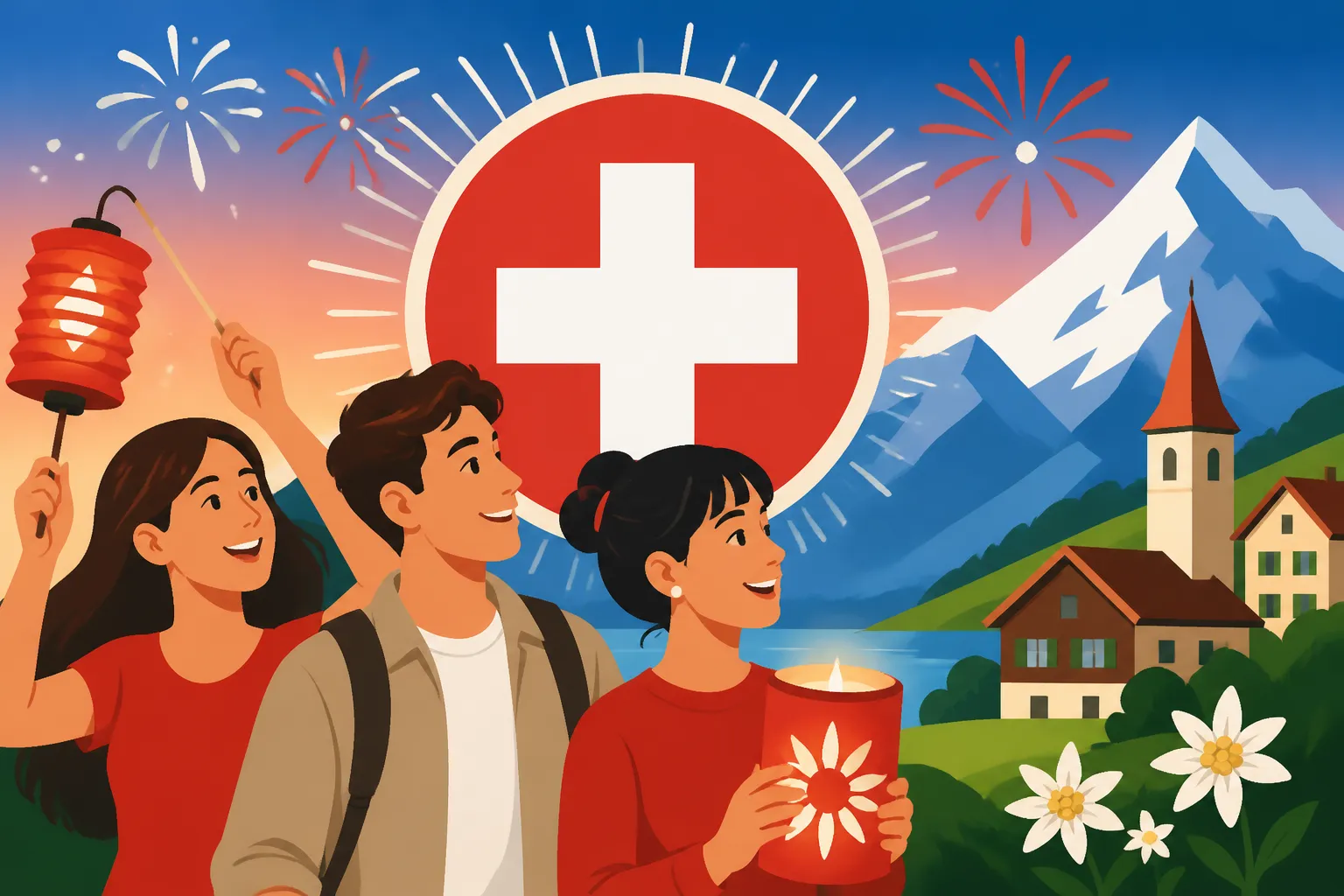
Picture this: every village, town, and city across the country lights up. Farmers hoist huge Swiss flags in their fields. Children carry paper lanterns, their faces glowing with excitement as they participate in local parades. The air fills with the deep, resonant tones of alphorns, playing traditional melodies that echo through the valleys, reminding everyone of Switzerland's alpine heritage. And, of course, there are the bonfires – huge stacks of wood set ablaze on hillsides, symbolizing the old custom of sending smoke signals to warn of danger, but now a beacon of joy and unity. These fires are often visible for miles, creating a magical glow across the landscape as dusk falls. And then, the grand finale: fireworks. From organized cantonal displays over lakes and cities to countless private rockets launched from gardens, the sky becomes a canvas of light and noise. It’s loud, it’s vibrant, and it’s a beautiful, if sometimes overwhelming, way for the Swiss to celebrate their enduring identity. It’s a day when even the most stoic Swiss neighbor will crack a smile and share a Prost! with you.
Planning Your First Swiss National Day Experience
So, you're ready to dive in and experience August 1st for yourself. Great! The key to a fantastic first experience is a little bit of planning, especially knowing where to go and what to expect. This isn't a day for spontaneity if you want to catch the best fireworks or enjoy a traditional Buurezmorge.
Where to Go: Major City vs. Local Village Celebrations
Deciding where to spend August 1st is probably your biggest decision. Do you want the grand spectacle or a charming, intimate local vibe?
Major City Celebrations:
Cities like Zurich, Geneva, and Basel often host the largest, most spectacular public fireworks displays. For example, the fireworks over Lake Zurich or Lake Geneva are truly breathtaking, attracting thousands of spectators. These cities will have organized events, food stalls, and a vibrant, festive atmosphere. However, they also come with huge crowds, especially around the prime viewing spots. You'll need to arrive early, possibly hours in advance, to secure a good spot. Public transport will be running extra services, but it will be packed.
- Zurich: Expect a massive celebration around the lake basin. Many restaurants will offer special dinners with lake views, but book well in advance. The fireworks are usually launched from boats on the lake. You might also want to explore some of the Day Trips from Zurich: Rhine Falls, Rapperswil, and Lucerne leading up to the main event.
- Geneva: The city often combines its August 1st celebrations with its annual Fêtes de Genève, extending the party over several days. The fireworks over Lake Geneva (Lac Léman): Towns, Boats, and Vineyard Walks are renowned.
- Basel: While known for its Fasnacht, Basel also puts on a decent National Day show, often along the Rhine.
Local Village Celebrations:
This is where the true heart of Swiss National Day lies, in my opinion. Almost every Gemeinde (municipality) or small village will have its own celebration. These are often more traditional, more intimate, and incredibly charming. You'll find a strong sense of community, with locals gathering in a town square or on a hill overlooking the village.
- What to expect: Usually, a local brass band, speeches by local dignitaries (often in Swiss German, French, or Italian, depending on the region), children's lantern parades, small bonfires, and a modest but heartfelt fireworks display. These events often include a communal meal, sometimes a BBQ, or a chance to sample local delicacies. It's a fantastic opportunity to see Swiss culture up close and meet some locals. These are definitely less overwhelming for a newcomer.
- How to find them: Check the official website of your local Gemeinde or canton – they usually publish programs in mid-July. Tourist information offices are also a great resource.
For getting to these places, especially if you're venturing out of your immediate area, public transport is your best friend. The Swiss Federal Railways (SBB) runs an excellent network, and services are often beefed up for national holidays. Websites like Omio can be really helpful for comparing train and bus options and booking tickets in advance, which is crucial for a busy day like August 1st. You’ll want to check out Switzerland by Train: The SBB Network, Scenic Routes, and Day Trips for general tips on navigating the system.
Essential Gear and Etiquette for Newcomers
Okay, you've picked your spot. Now, what do you need to bring, and how do you blend in?
What to Wear & Bring:
- Layers are key: August evenings can be surprisingly cool, especially if you’re up on a hill for a bonfire or by a lake for fireworks. A light jacket or sweater is a must.
- Comfortable shoes: You'll likely be doing a fair bit of walking, whether to a viewing spot or around a village.
- Picnic blanket or folding chairs: Especially if you're settling in for a long wait for fireworks.
- Snacks and drinks: Many places will have food stalls, but bringing your own supplies (especially drinks) can save you money and hassle. Just remember to pack out everything you pack in!
- Small Swiss flag: Not mandatory, but a nice touch. You’ll see them everywhere.
- Earplugs: If you or your children are sensitive to loud noises, the fireworks can be very intense.
- Cash: Smaller village events might still prefer cash for food and drink stalls.
August 1st Etiquette (and what to expect):
- Be prepared for closures: August 1st is a federal public holiday. This means most shops, supermarkets (including your beloved Coop, Migros, Aldi, and Denner), banks, and government offices will be closed. Plan your Grocery Shopping: Coop, Migros, Aldi, Lidl, and Denner Compared for a day or two before. Pharmacies might have emergency services, but don't count on casual shopping.
- "Ruhezeiten" (Quiet Hours) still apply, mostly: While fireworks will be loud and plentiful, the general understanding of Swiss Everyday Rules: Recycling, Quiet Hours, and Neighborhood Etiquette might still subtly linger. Don't be obnoxiously loud or disruptive outside designated celebration areas.
- Firework Safety: While private fireworks are a big part of the celebration, be mindful. Only set them off in designated safe areas, away from dry fields or forests. Keep children at a safe distance.
- Community Spirit: Embrace it! Engage with locals, try the traditional food, and enjoy the relaxed atmosphere. Don't be afraid to strike up a conversation, even if it's just a simple "Happy National Day!"
Experiencing the Celebrations: Daytime and Evening
Once you've got your plan and your gear, it's time to immerse yourself. August 1st is a day-long affair, starting with a leisurely morning and building to a spectacular evening crescendo.
Daytime Festivities: Brunch, Farmers' Markets, and Alpine Horns
The daytime hours of August 1st often have a distinctly rustic and charming feel. It's a time for families and friends to gather, often in more serene settings before the evening's excitement.
The Traditional "Buurezmorge" (Farmer's Brunch):
This is an absolute must-do if you want an authentic Swiss National Day experience. Many farms across the country open their doors for a special "Buurezmorge" (literally, farmer's breakfast/brunch). Imagine sitting at long communal tables, often outdoors with stunning views of the countryside or mountains, enjoying a huge spread of local produce: fresh-baked Zopf bread, artisanal cheeses, homemade jams, farm-fresh eggs, Rösti, local sausages, Birchermüesli, and plenty of strong Swiss coffee or milk. The atmosphere is usually lively, with kids running around, and often accompanied by traditional music like alphorns or accordion players.
- How to find and book: These brunches are incredibly popular and often require reservations weeks, if not months, in advance. Check the official August 1st website (1. August-Brunch) or local tourism sites like MySwitzerland.ch in late spring/early summer. You’ll want to be proactive about this.
- Embrace the experience: It's more than just a meal; it’s a cultural event. Enjoy the slower pace, the rural charm, and the sheer abundance of delicious, locally sourced Swiss Food and Drink Culture: Regional Specialties and Dining Etiquette.
While some major city markets might be closed, you might still find smaller, dedicated August 1st stalls or events in town centers, especially in larger communes. But the Buurezmorge really is the star of the daytime show. It's a chance to connect with the agricultural heart of Switzerland, which is still very much alive and integral to its identity. You might even stumble upon some unexpected alphorn players practicing their craft in a picturesque setting. Listening to the melancholic, resonant sound of the alphorn echoing through the hills truly transports you to the Swiss heartland, reminding you that this day is deeply rooted in the country's alpine and farming heritage.
Evening Spectacles: Bonfires, Lantern Parades, and Fireworks
As dusk settles, the real magic begins. The Swiss countryside and cityscapes transform into a celebratory canvas of light and sound.
Bonfires (1. August-Feuer):
These are one of the most iconic parts of the August 1st celebrations. As mentioned, bonfires are lit on hillsides and mountains all over Switzerland. Historically, they were used for communication and to signal defense. Today, they're a symbol of unity and a spectacular sight. The scale varies widely: some are massive, meticulously built pyres that burn for hours, while others are smaller, community-run fires.
- Where to see them: You can often see multiple bonfires twinkling on surrounding hills if you're in a valley. Many local communities will have a designated bonfire spot, often accompanied by a small festival area.
Children's Lantern Parades (Lampionumzüge):
Before the main fireworks, especially in smaller towns and villages, you'll see children participating in "Lampionumzüge." Kids, often accompanied by their parents, march through the streets carrying homemade or store-bought paper lanterns, sometimes singing traditional songs. It's an incredibly sweet and charming part of the evening, full of anticipation for the grander displays to come. If you have children, this is a wonderful way for them to participate actively in a very Swiss tradition.
Fireworks (Feuerwerk):
This is undoubtedly the highlight for many. Switzerland does not disappoint with its fireworks.
- Official Displays: Major cities and popular tourist spots like the Rhine Falls (Neuhausen am Rheinfall) host large, professional fireworks shows. The Rhine Falls spectacle is particularly famous, with the cascading water illuminated by the pyrotechnics. Similarly, the fireworks over the major lakes, such as Lake Geneva or Lake Lucerne (where you might have been on a cruise while Exploring Lucerne: Old Town, Lake Cruises, and Mount Excursions), are incredible. These are often synchronized to music and are truly a sight to behold.
- Private Fireworks: In addition to the official displays, you'll hear and see countless private fireworks being launched from gardens, fields, and balconies. It's a chaotic but exhilarating symphony of light and sound that can last for hours. The air fills with the smell of gunpowder and the excited shouts of onlookers.
For those looking for a unique vantage point or a hassle-free experience of the evening fireworks, consider options from tour providers. Platforms like GetYourGuide sometimes offer specific August 1st boat cruises on lakes (like Zurich or Lucerne) that provide prime viewing spots away from the crowds on land, often with dinner included. These can be pricier but offer a memorable, comfortable experience. Remember, these also book up incredibly fast!
Practical Tips for a Smooth August 1st
Navigating a major public holiday in a foreign country can be a little tricky. A few practical considerations will ensure your first Swiss National Day is memorable for all the right reasons.
Navigating Public Transport and Road Closures
You've probably already realized that the SBB (Swiss Federal Railways) is the backbone of Swiss travel. On August 1st, it's even more vital.
- SBB Special Schedules: The SBB, along with local transport networks (trams, buses), often operates enhanced services for August 1st, especially in the evenings to handle crowds returning from firework displays. However, "enhanced" doesn't mean "empty." Trains will be very full, especially on popular routes to major firework viewing locations or from smaller villages after their festivities.
- Book in Advance: If you're traveling a significant distance, particularly to a major city or a popular tourist destination like the Rhine Falls, buying your train tickets in advance is highly recommended. You can use the SBB Mobile app or website. Even with your SBB Travelcards: Is the Generalabonnement (GA) Worth the CHF 4000+ Cost? or The Half-Fare Travelcard (Halbtax): The Must-Have Pass for Swiss Residents, it's good to have your specific journey planned.
- Road Closures: Many cities and villages will implement temporary road closures, especially in town centers or around parade routes and firework viewing areas. If you're planning to drive, check local municipality websites for traffic advisories. Frankly, driving on August 1st, particularly in the evening, is best avoided unless absolutely necessary. Parking will be a nightmare, and traffic jams are almost guaranteed. Stick to public transport!
- Timetables: Always double-check the exact timetables for your chosen route on the SBB website or app on the day itself, as unforeseen changes can occur.
Dining, Groceries, and Making Reservations
As mentioned earlier, August 1st is a public holiday, and that means most things are shut.
- Grocery Stores: Supermarkets are generally closed. A few exceptions might be smaller shops at major train stations or airports, but don't rely on them for your main grocery run. Stock up on July 31st! This is important for managing your Cost of Living in Switzerland 2026: Budgeting for Singles and Families.
- Restaurants: While many restaurants will be open, especially in tourist areas or places with good firework views, they will be extremely busy. Making reservations is essential if you plan to eat out, particularly for dinner. Without a reservation, you might find yourself wandering for a while.
- Picnics are Your Friend: Given the closures and crowds, packing a picnic with food and drinks is often the easiest and most enjoyable option, especially if you're heading to a park, lake shore, or hillside for the evening entertainment.
- Accommodation: If you're planning to travel and stay overnight somewhere, especially in a popular spot, book your accommodation well in advance. Sites like Booking.com can help you find hotels, B&Bs, or apartments, but expect prices to be higher and availability lower around August 1st.
More Ways to Embrace Swiss Culture
Experiencing Swiss National Day is a fantastic step, but it's just one piece of the puzzle. Integrating into Swiss life and understanding its rich tapestry is an ongoing journey.
Beyond the Big Day: Continuing Your Integration Journey
August 1st is a great start, but Swiss culture is celebrated year-round in various forms, often in quieter, yet equally significant ways.
- Explore Local Festivals: Switzerland has a plethora of Swiss Festivals and Traditions: A Year-Round Cultural Calendar. From traditional wrestling (Schwingen) festivals in summer to colorful Fasnacht carnivals in late winter, and the charming Christmas markets, there’s always something happening. These events offer deep insights into regional customs and are fantastic opportunities to mingle with locals.
- Join Local Clubs (Vereine): This is a tip I give to all newcomers. Swiss social life often revolves around clubs – sports clubs, hiking clubs, choral societies, local volunteer groups. Joining a Verein is hands down one of the best ways to meet Swiss people, practice your German, French, or Italian, and truly integrate into the community. You’ll be surprised at how welcoming these groups can be once you take the plunge.
- Delve into Nature: Switzerland's natural beauty is a massive part of its identity. Embrace hiking, skiing, or simply exploring the many lakes and mountains. The Swiss love their outdoors, and sharing that passion is a great connector.
Resources for Cultural Understanding
Don't feel like you have to figure it all out alone. There are plenty of resources to help you deepen your understanding of Swiss culture.
- Local Tourism Offices: Your local tourist information office (e.g., in Zurich, Geneva, or Lucerne) is a treasure trove of information. They can provide brochures on local customs, upcoming events, and even language courses. Don't underestimate their value.
- Expat Groups and Forums: Online and in-person expat communities are excellent for sharing experiences and getting advice from others who have gone through similar integration journeys. They often organize meetups and social events, providing a comfortable space to ask "silly" questions about Swiss life.
- Language Learning: While many Swiss speak excellent English, learning the local language (whether it's Swiss German, French, or Italian) will unlock so many doors. It shows respect for your new home and allows for much deeper connections. Even a few basic phrases can make a huge difference.
Remember, cultural integration is a marathon, not a sprint. Enjoy the fireworks, embrace the Buurezmorge, and use August 1st as a springboard to explore more of what makes Switzerland so unique.
Swiss National Day: City vs. Village Celebrations
| Feature | Major City Celebration (e.g., Zurich, Geneva) | Local Village Celebration (e.g., Appenzell, specific Gemeinde) |
|---|---|---|
| Crowd Size | Very Large | Small to Medium, community-focused |
| Fireworks | Grand, professional displays (often over lakes/rivers), synchronized to music | Modest to large, local displays, often accompanied by private fireworks |
| Atmosphere | Festive, cosmopolitan, lively | Traditional, intimate, strong community feel, family-oriented |
| Bonfires | Less common in city centers, more visible on surrounding hillsides | Very common on hills overlooking the village, often central to the event |
| Food & Drink | Numerous food stalls, pop-up bars, restaurants (reservations essential) | Communal BBQs, local food stalls, traditional Buurezmorge (reservations essential) |
| Entertainment | Bands, street performers, public speeches, sometimes extended festivals | Local brass bands, alphorn players, children's lantern parades, official speeches |
| Accessibility (PT) | Extra public transport services, but highly crowded; road closures | Public transport may have slightly extended hours; easier to navigate by foot/bike |
| Best For Newcomers | Grand spectacle, exciting if you don't mind crowds | Authentic cultural immersion, less overwhelming, easier to interact with locals |
Disclaimer
The information provided in this guide is for general informational purposes only and is subject to change. While we strive to provide accurate and up-to-date content, circumstances in Switzerland, including public holiday regulations, event schedules, and transport arrangements, can vary by canton and municipality and may be updated. It is always recommended to check official government websites, local tourism boards, and transportation provider schedules (e.g., SBB) closer to the date for the most current information regarding August 1st celebrations, opening hours, and public transport services. We do not assume any liability for decisions made based on this information.