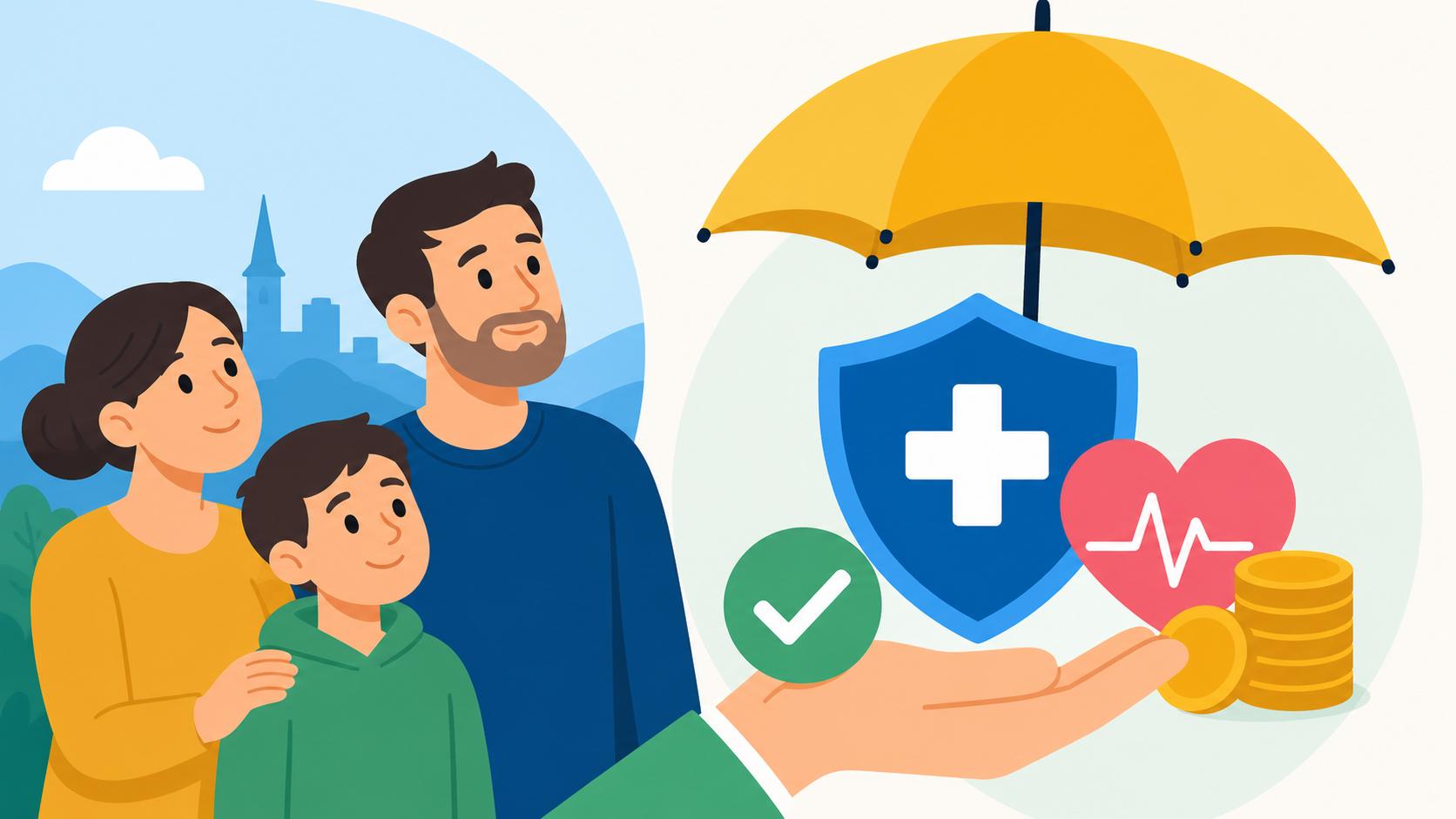
How to Apply for Cantonal Premium Reductions if You Have a Low Income
One of the most jarring experiences for any new arrival in Switzerland is opening that first monthly health insurance bill and realizing it costs more than a car payment in most other countries. I still remember the sinking feeling in my stomach when I saw my first premium invoice, wondering how anyone on a modest salary manages to stay afloat here. This guide will walk you through the process of applying for the Prämienverbilligung, the essential cantonal subsidy that helps low and middle-income residents lower their monthly healthcare costs.
Understanding the Cantonal Premium Reduction System
The Swiss healthcare system is famously high-quality, but it operates on a per-capita premium basis rather than a percentage of your income. This means a CEO and a barista might pay the exact same amount for their Understanding KVG/LAMal: Mandatory Basic Health Insurance Explained coverage. To prevent this from becoming an impossible financial burden for lower earners, the government provides "Premium Reductions" (Prämienverbilligung). These are subsidies paid by the cantons, partially funded by the federal government, to help those who cannot afford the full cost of the mandatory insurance.
It is important to understand that because Switzerland is a federalist country, there is no single national rule for who qualifies. Each of the 26 cantons sets its own income and wealth thresholds, and even its own application procedures. While the system is designed to be a safety net, it is also a bureaucratic maze that requires a bit of patience and a lot of paperwork. Many expats mistakenly believe that as foreign residents, they aren't eligible, but if you are paying into the Swiss system, you are generally entitled to the same subsidies as Swiss nationals, provided you meet the financial criteria.
If you are just starting your journey here and are still confused about the mandatory nature of these costs, I highly recommend reading up on whether Is Basic Health Insurance (KVG) Mandatory for Expats? A Plain-English Guide to see how you fit into the local requirements. For those who travel frequently or have very specific international needs, some expats supplement their local plan with Cigna Global to cover gaps, but for the basic KVG premiums, the cantonal reduction is your primary tool for financial relief.
Who Exactly Qualifies for a Reduction
Generally, qualification is based on your "taxable income" and your "taxable wealth" from the previous year. However, if your situation has changed significantly—for example, if you have just moved to Switzerland or have recently lost your job—you can often apply based on your current estimated income. The thresholds are often higher than people expect. In some cantons, a single person earning up to CHF 50,000 or a family earning up to CHF 90,000 might still qualify for at least a partial reduction.
The calculation also takes into account the number of children in your household. Children and young adults in education usually receive much higher percentage reductions than adults. If you are currently receiving unemployment benefits, you should also look into RAV and Unemployment Benefits: How to Register and What You Get as your advisor there may have specific advice on how your insurance premiums are handled during your period of job seeking.
How the Money is Distributed
One of the most common points of confusion for my fellow expats is where the money actually goes. In almost all cantons, the subsidy is not paid into your personal bank account. Instead, the canton sends the money directly to your health insurance provider. Your insurance company then reduces your monthly bill by that amount. If you have already paid the full price for several months before your reduction was approved, you will usually receive a credit on your next statement or a refund from the insurance company.
This direct-to-provider system is actually a blessing because it means one less thing for you to manage, but it does make it harder to track if you aren't checking your insurance portals regularly. It’s also worth noting that while you’re waiting for an approval, you must continue to pay your full premiums to avoid getting a debt register entry, which can be devastating for your future in the country.
The Step-by-Step Application Process
The application process varies wildly depending on where you live. In some "proactive" cantons like Zurich or Thurgau, the tax office automatically identifies people who might be eligible based on their tax returns and sends them a pre-filled form or an access code for an online portal. In "reactive" cantons, the burden is entirely on you to realize you are eligible and to request the forms yourself.
Regardless of the canton, you must pay attention to the Mandatory Registration: How to Sign Up for Health Insurance Within 90 Days rules when you first arrive, as you cannot apply for a reduction until you are officially registered with a provider.
Gathering Your Documentation
To have any hope of a smooth application, you need to have your "dossier" ready. The authorities will look at your Understanding Your Swiss Salary Certificate (Lohnausweis) for Tax Season to verify your earnings. If you are a B-permit holder who is taxed at source, the process can be slightly different because you don't file a traditional tax return in your first few years unless you earn over a certain threshold. In these cases, you will likely need to provide your monthly salary slips for the entire year.
You will also need:
- Your health insurance policy document (Versicherungspolice).
- Your Swiss social security number (AHV number).
- Proof of any debts or specific financial burdens if the canton allows for these deductions.
- A copy of your residence permit.
Navigating the Deadlines
Deadlines are the "hidden boss" of the Swiss administrative system. In many cantons, the deadline to apply for a premium reduction for the current year is the end of August or the end of December. If you miss this date by even twenty-four hours, you lose the entire subsidy for that year. There are very few exceptions, and "I didn't know the law" is never one of them.
I have seen people lose out on thousands of francs because they waited until January to look into their options for the previous year. If you have recently changed providers during the November 30 Deadline: The Exact Steps to Switch Your Swiss Health Insurance window, make sure you notify the cantonal office so they can transfer the subsidy to your new insurer.
Cantonal Process Comparison
To give you a better idea of how much this varies, here is a breakdown of the process in some of the most popular expat hubs.
| Canton | Method | Automation Level | Key Office Name |
|---|---|---|---|
| Zurich | Online Portal | High (Sent via post) | SVA Zürich |
| Geneva | Manual/Online | Medium | Service de l'assurance-maladie (SAM) |
| Vaud | Manual/Online | Medium | Office vaudois de l'assurance-maladie (OVAM) |
| Basel-Stadt | Online | High | Amt für Sozialbeiträge |
| Zug | Manual | Low | Ausgleichskasse Zug |
Managing Health Costs Beyond Subsidies
While the Cantonal Premium Reductions (Prämienverbilligung) for Low-Income Households are the most direct way to lower your costs, they are only one part of the puzzle. If your income is just slightly above the threshold for a reduction, you find yourself in the "squeezed middle" where you pay full price but don't have a high enough salary to feel comfortable doing so. In this scenario, you have to get creative with your insurance choices.
Strategic Deductible Selection
The biggest lever you have to pull is your "Franchise" or deductible. I always tell newcomers to be very honest about their health. If you are young, fit, and rarely see a doctor, choosing the CHF 2,500 deductible is almost always the mathematically superior choice. It lowers your monthly premium significantly. However, if you have a chronic condition, that high deductible can be a trap. Check out this guide on How to Choose the Right Deductible (Franchise) for Your First Year to run the numbers for your specific situation.
Using Alternative Insurance Models
Don't just stick with the "Standard" model because it's what your HR department mentioned. Most expats can save 15-20% by switching to a Telmed, HMO, or Family Doctor model. These models require you to call a medical hotline or see a specific doctor first before going to a specialist. For most of us, this is a minor inconvenience that pays for itself within a few months. You can compare the trade-offs in detail by looking at Comparing Health Insurance Models: Telmed, HMO, Family Doctor, and Standard.
Reducing Out-of-Pocket Expenses
Even with insurance and a reduction, the costs of supplements and over-the-counter medications in Switzerland are eye-watering. A bottle of Vitamin D that costs five francs in Germany can easily cost twenty-five in Zurich. To keep my "health tax" low, I personally order many of my non-prescription wellness products and supplements from iHerb, as they ship to Switzerland and often work out much cheaper even after customs fees.
Furthermore, if you are a B-permit holder, don't forget to look into Tax Corrections (Tarifkorrektur): Claiming Deductions on Withholding Tax. You can sometimes deduct your actual insurance premiums (up to a certain limit) from your taxable income, which can result in a nice tax refund at the end of the year, effectively serving as a secondary "reduction."
Common Pitfalls and Frequently Asked Questions
When I first applied, I made the mistake of thinking my "gross" salary was what mattered. In Switzerland, it’s all about the "Netto" and the taxable deductions. If you are struggling to make ends meet, don't be ashamed to visit your local communal office (Gemeinde/Commune). They often have social counselors whose job is to help residents—including expats—apply for these benefits.
What if I am a Student?
International students are in a unique position. Often, they are exempt from the standard Swiss KVG if they have equivalent insurance from their home country or a specialized student plan like Swisscare. However, if you are a student who is in the KVG system and you are working part-time, you are absolutely eligible for premium reductions. Since student incomes are typically very low, the reduction can often cover 50% to 80% of the premium.
Does it Affect My Permit?
This is the number one fear for expats: "Will taking this money hurt my chances for a C-permit or citizenship?" The answer is generally no. Premium reductions are considered a social insurance benefit, not "social assistance" (Sozialhilfe). In most cantons, receiving Prämienverbilligung does not count against you in immigration proceedings. However, always check the specific rules for your canton, as Swiss law is a living thing and local practices can vary.
What if my Income Changes Mid-Year?
If you lose your job or your hours are cut, you should apply for a reduction immediately, even if the "official" window has passed. Most cantons allow for an "interim review" if your financial situation changes by more than 20%. This proactive approach saved a friend of mine from a massive debt spiral when his startup folded unexpectedly.
Disclaimer
The information provided in this guide is for educational and informational purposes only and does not constitute legal or financial advice. Swiss laws regarding health insurance and cantonal subsidies are subject to change, and specific eligibility criteria vary by canton. You should always consult with your local cantonal social insurance office (SVA/SAM/OVAM) or a qualified tax professional to discuss your specific circumstances before making financial decisions. Be aware that deadlines for premium reductions are strict and missing them can result in the loss of benefits for the entire calendar year.