Dental Hygienist Costs in Zurich vs. Geneva: What to Expect
Walking into a Swiss dental office for the first time often feels more like entering a high-end spa than a medical clinic, until you see the bill. I distinctly remember my first cleaning in Zurich; I spent forty-five minutes in the chair and left feeling like I’d just financed a small car. This guide breaks down exactly what you’ll pay for dental hygiene in Zurich versus Geneva so you can avoid the "Swiss sticker shock."
Understanding the Swiss Dental System for Expats
The most important thing to wrap your head around is that dental care in Switzerland is almost entirely a private affair. Unlike your doctor visits, which fall under Understanding KVG/LAMal: Mandatory Basic Health Insurance Explained, dental hygiene is generally not covered by the mandatory basic insurance. This means every time you get your teeth scaled and polished, the money is coming directly out of your pocket unless you have specific add-ons.
Because it is a private market, prices are not fixed. However, they are regulated by a "point system" known as Dentotar. Each dental service is assigned a certain number of points, and each clinic decides its own "point value" (Taxpunktwert). In high-cost areas like Zurich and Geneva, these point values tend to be at the upper end of the legal limit. When you are Finding Medical Care in Switzerland: Doctors, Specialists, and Referrals, you should always ask a clinic what their specific point value is for dental hygiene.
For many expats, the realization that basic insurance doesn't cover these costs leads them to look into Supplementary Health Insurance (VVG): What It Covers and When to Buy It. Without it, you are looking at a significant annual expense, especially if you have a family. To keep costs down between professional visits, many of us rely on high-quality oral care products from iHerb, which stocks international brands of floss and electric toothbrush heads that can be much cheaper than local Swiss pharmacies.
Dental Hygienist Costs in Zurich: The High-End Reality
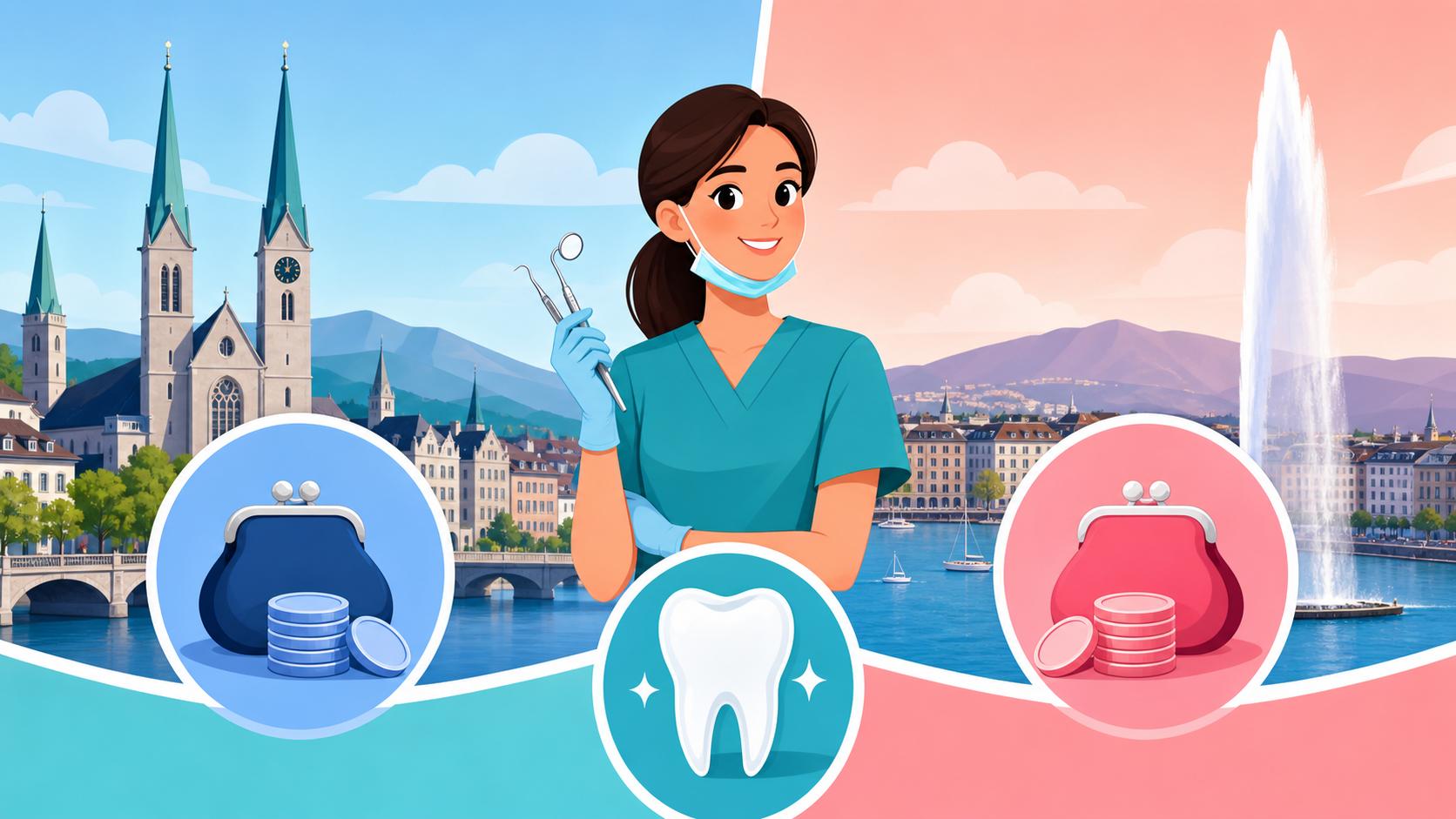
Zurich is consistently ranked as one of the most expensive cities in the world, and its dental hygiene prices reflect that status. In the city center, especially around Paradeplatz or Enge, you are paying for the convenience, the multi-lingual staff, and the state-of-the-art technology. A standard 45-to-60-minute appointment with a dental hygienist in Zurich typically ranges from CHF 160 to CHF 220.
If you are looking at the Zurich Expat Healthcare Guide: Hospitals, Clinics, and Emergency Contacts, you’ll find that many clinics cater specifically to the international community. This "expat premium" often means the clinic has invested in Airflow technology—a pressurized spray of water, air, and fine powder that removes stains more comfortably than traditional scraping. While effective, it often adds another 20 to 30 francs to your total.
In my experience, moving just a few tram stops away from the city center can save you money. Clinics in Oerlikon or Altstetten often have slightly lower point values than those on the Bahnhofstrasse. However, even in the suburbs, Zurich prices rarely drop below CHF 150 for a full session. If you have a complex dental history, the costs can escalate quickly if the hygienist decides you need X-rays or a consultation with the dentist on top of the cleaning.
Dental Hygienist Costs in Geneva: The International Hub Pricing
Geneva’s pricing structure is remarkably similar to Zurich’s, but it is influenced by the city’s unique "international" tax point system. In Geneva, many clinics operate with a point value that hovers around 1.0 to 1.15 for social insurance cases, but for private patients (which includes most expats), it can climb higher. A typical session in Geneva will cost you between CHF 155 and CHF 210.
When navigating the Geneva Expat Healthcare Guide: International Clinics and Public Hospitals, you will notice that clinics in Eaux-Vives or near the United Nations quartier are very accustomed to foreign insurance plans. If you are covered by a provider like Cigna Global, these clinics are usually very efficient at providing the necessary itemized receipts. Cigna Global is a popular choice for expats in Geneva because it offers international dental modules that can take the sting out of these high local prices.
Geneva also has a high density of independent dental hygienists who operate their own small studios. These can sometimes be 10% cheaper than the large, multi-room dental centers. However, the trade-off is that if they find a cavity during the cleaning, you’ll have to book a separate appointment at a different clinic to see a dentist, whereas the larger centers offer everything under one roof.
Comparing Zurich vs. Geneva: A Financial Breakdown
While both cities are expensive, the "vibe" of the billing can differ. Zurich clinics are often very transparent, providing a printed estimate if you ask. Geneva clinics are equally professional but sometimes follow the French-style billing tradition which can feel a bit more opaque until the final invoice arrives.
| Service Item | Zurich Average (CHF) | Geneva Average (CHF) |
|---|---|---|
| Standard Hygiene (45 min) | 175 – 195 | 170 – 190 |
| Intensive Cleaning (60 min) | 210 – 240 | 205 – 235 |
| X-Rays (Bitewings) | 40 – 60 | 45 – 65 |
| Fluoridation Treatment | 25 – 40 | 20 – 35 |
| New Patient Admin Fee | 20 – 30 | 15 – 25 |
These figures are estimates for 2026. Keep in mind that Cost of Living in Switzerland 2026: Budgeting for Singles and Families must account for these "hidden" medical costs that aren't part of your monthly insurance premium. If you have children, the prices are slightly lower, but you should still check our guide on Orthodontics for Children in Switzerland: Insurance and Financial Planning because hygiene is just the tip of the iceberg when it comes to pediatric dental costs.
How to Save Money on Dental Hygiene in Switzerland
If those numbers made your eyes water, you aren't alone. Many expats (and locals) have developed strategies to manage these costs. The most common "Swiss secret" is the dental school. Both Zurich and Geneva have university dental programs where students perform cleanings under the strict supervision of professors. The appointments take twice as long, but the cost can be as much as 50% lower.
Another strategy is the "Border Run." This is so common it has its own name: Dental Tourism. People living in Zurich often take a 40-minute train to Waldshut or Konstanz in Germany, while those in Geneva simply cross the border into Annemasse or Ferney-Voltaire in France. You can read more about the pros and cons of this in our deep dive into Dental Costs in Switzerland vs. Border Countries: A Price Comparison. Generally, a cleaning in Germany or France will cost around EUR 80 to EUR 110, which is a massive saving.
Prevention is the most effective way to save. Investing in premium electric toothbrushes and specialized interdental brushes from iHerb can reduce the time you spend in the hygienist’s chair. If your teeth are easy to clean, the hygienist might only charge you for a 30-minute session instead of the full hour. Always ask if they charge by the "unit of time" (usually 5 or 15-minute increments).
Practical Tips for Your First Appointment
When you book your appointment, mention that you are an expat and ask if they can provide a How to Read a Swiss Medical Bill (Rückforderungsbeleg) and Claim Refunds document. Even if you are paying out of pocket, you may need this for tax purposes or if you have international insurance like Cigna Global.
Don't be surprised if the hygienist is very firm about your flossing habits. The Swiss "Prophylaxis" culture is intense. They don't just want to clean your teeth; they want to educate you so you never have a cavity. This focus on prevention is why Dental Care in Switzerland: Costs, Insurance Reality, and Alternative Options is considered some of the best in the world, even if it is some of the most expensive.
Finally, remember the cancellation policy. In both Zurich and Geneva, failing to show up or canceling less than 24 hours in advance will almost always result in a bill for the full amount of the appointment. The Swiss take their scheduling very seriously, and a "no-show" is a guaranteed way to lose 200 francs.
Disclaimer
The information provided in this article is for informational purposes only and does not constitute professional medical or financial advice. Prices and regulations regarding dental care in Switzerland are subject to change and may vary significantly between individual clinics and cantons. Always consult with a licensed dental professional or insurance provider for specific advice related to your personal situation.