Advent and St. Nicholas (Samichlaus) Traditions in Switzerland
When you first move to Switzerland, the holiday season can feel a little… different. You might be expecting the full-blown, commercialized Christmas rush you know from back home, only to find a quieter, more reflective build-up rooted deeply in tradition. Navigating the unique customs of Advent and the enigmatic visit of Samichlaus can be confusing, but don't worry, this guide is here to shed light on these charming Swiss holiday rites, helping you embrace the local festive spirit.
The Magic of Advent: A Season of Anticipation
The Advent season in Switzerland isn't just a countdown; it's a slow, deliberate embrace of winter's charm and the quiet anticipation of Christmas. Unlike some cultures where Christmas decorations burst forth immediately after Halloween, here, things tend to unfold more gradually, allowing for a deeper appreciation of each stage. It's a time for cozy evenings, warm drinks, and a sense of community that truly shines through the frosty air. You might find yourself initially missing the immediate "holiday cheer," but soon, the understated elegance of Swiss Advent will win you over.
The Advent Calendar Tradition
One of the most heartwarming traditions you'll encounter is the Advent calendar. Now, this isn't always about the mass-produced cardboard versions with flimsy chocolate you might find elsewhere. Here, Advent calendars often take on a much more personal and cherished form. Many families, especially those with young children, will have beautifully crafted, often handmade calendars – intricate fabric pockets, small wooden houses, or personalized envelopes that hold tiny surprises.
Each day, from December 1st until Christmas Eve, a little door is opened, revealing a small treat, a piece of quality chocolate, a miniature toy, or even a handwritten note. It's a daily ritual that builds excitement without overwhelming the senses. For an expat family, adopting this tradition can be a wonderful way to connect with local customs and create new, meaningful memories for your children, integrating a touch of Swiss charm into your own holiday preparations. It's less about the grand gesture and more about the consistent, quiet joy.
The Advent Wreath and Candles
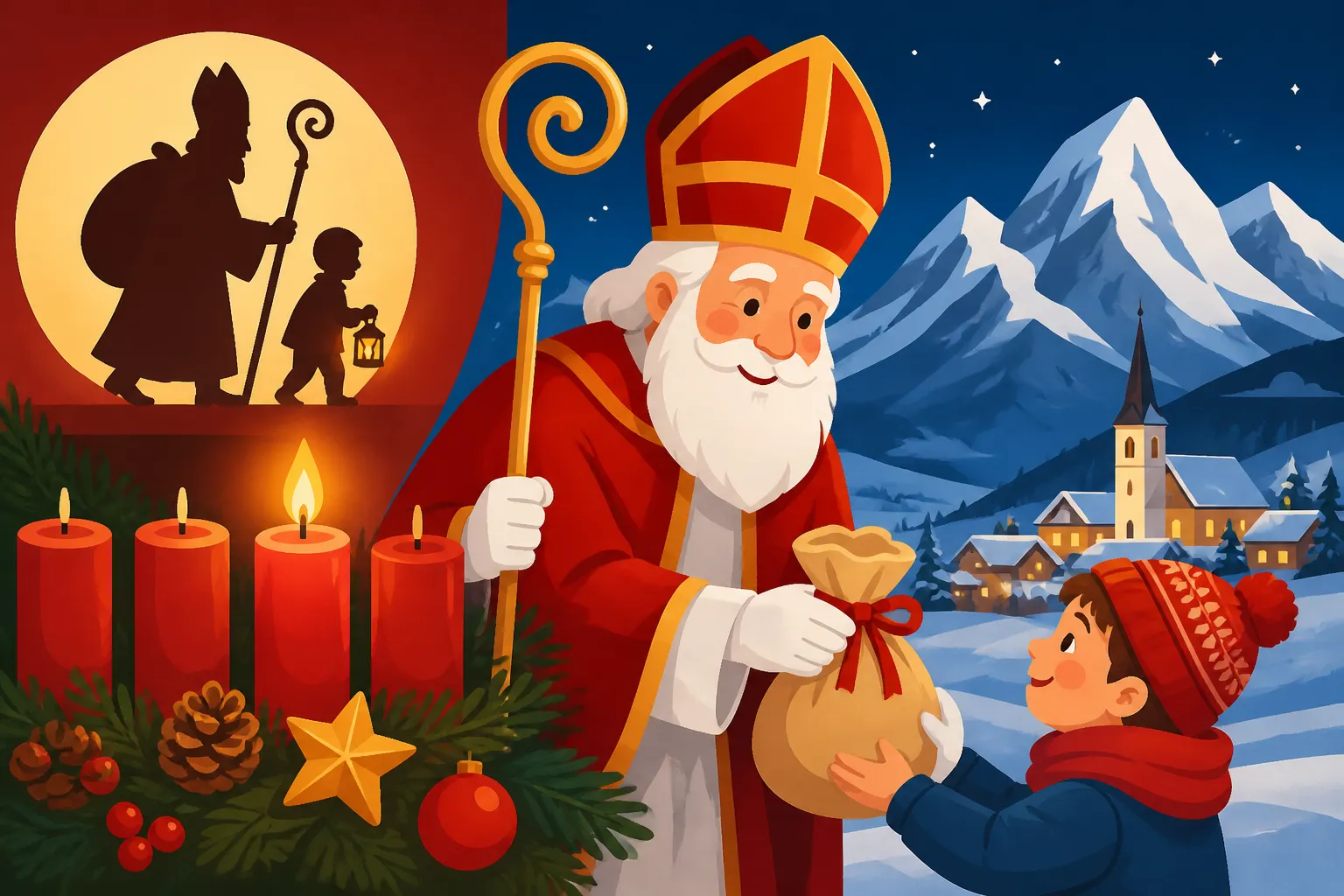
Another cornerstone of the Swiss Advent season is the Adventskranz, or Advent wreath. This beautiful evergreen wreath, typically adorned with pinecones, dried oranges, and ribbons, holds four candles. Each Sunday of Advent, one more candle is lit, progressively brightening the room and marking the passage of time. The lighting of the candles isn't just decorative; it’s a moment for families to gather, often sharing a meal, singing carols, or simply enjoying the tranquil glow.
The candles themselves carry symbolic meaning, often representing hope, peace, joy, and love. As an expat, this might feel like a very traditional, almost old-world practice, a stark contrast to the modern hustle and bustle. However, it offers a grounding sense of peace and a chance to pause amidst the holiday rush. You'll see these wreaths in homes, shop windows, and public spaces, their gentle light a constant reminder of the season's reflective nature. Finding the perfect wreath or creating your own can be a delightful activity, easily found at local florists or even supermarkets during November.
Samichlaus and Schmutzli: Switzerland's Endearing Duo
Forget the plump, red-suited Santa Claus with his reindeer; Switzerland has its own distinctive benevolent figure: Samichlaus. He's an integral part of the early December festivities, bringing a unique blend of tradition, a touch of gentle admonition, and pure joy to Swiss children. This tradition really highlights the cultural nuances you’ll discover as an expat here. It's not a federal public holiday, but December 6th, or Samichlaustag, holds immense importance, especially for families with young ones.
The Visit of Samichlaus and Schmutzli
The main event unfolds on December 6th, Samichlaustag, or sometimes on the evening of December 5th. Samichlaus himself is a far cry from the modern Santa. He typically dresses in a long red or brown hooded robe, resembling a bishop, complete with a mitre (bishop's hat) and a staff. He's often depicted with a long white beard and a kindly, but firm, demeanor. He doesn't arrive by sleigh; instead, he walks, often accompanied by his rather intriguing companion, Schmutzli.
Schmutzli is usually dressed in a dark brown cowl, with a dark face, and carries a broom or a bundle of sticks (ruten). Historically, Schmutzli was the "scary" part of the duo, there to gently remind children about good behavior. In modern times, his role is much softer, more of a loyal assistant and less of a disciplinarian. When Samichlaus visits, whether at home, in schools, or at local events, children are expected to recite a poem, sing a song, or answer questions about their behavior over the past year. Samichlaus consults his "golden book," a ledger of good and not-so-good deeds, before distributing gifts. It's a moment of both anticipation and a little bit of playful nervousness!
Gifts, Treats, and the "Naughty" List
The gifts from Samichlaus are typically not large, extravagant toys. Instead, they are traditional, wholesome treats that reflect the season's bounty. Expect to find a generous assortment of mandarins, nuts (especially walnuts and hazelnuts), gingerbread cookies (Lebkuchen), and various chocolates. These goodies are often left in a child's shoe or a small basket, which was put out the night before. It’s a simple, yet deeply satisfying, treasure trove for the little ones.
The mention of the "naughty list" and Schmutzli's symbolic switches is often more theatrical than threatening today. While Schmutzli used to be quite stern, contemporary Samichlaus visits focus on encouragement and gentle reminders rather than actual punishment. The children are usually reassured that if they continue to be good, Schmutzli’s switches won't be necessary. It’s a wonderful example of how Swiss Customs and Etiquette: Social Norms Every Newcomer Should Know subtly blend tradition with modern sensibilities, teaching values without being overly harsh. The overwhelming feeling after Samichlaus and Schmutzli leave is one of warmth, relief, and gratitude for the simple pleasures received.
Embracing Festive Family Traditions
Beyond the specific figures of Advent and Samichlaus, the entire month of December in Switzerland is brimming with opportunities for families to create lasting holiday memories. As an expat, participating in these local traditions is a fantastic way to immerse yourself in the culture and feel truly at home. From the bustling market squares to the cozy warmth of home baking, there's an atmosphere of joy and togetherness that is truly infectious. If you're looking for more inspiration on how to make the most of your time here, our comprehensive guide to Exploring Switzerland: The Complete Travel Guide for Residents (2027) has plenty of ideas.
Swiss Christmas Markets: A Feast for the Senses
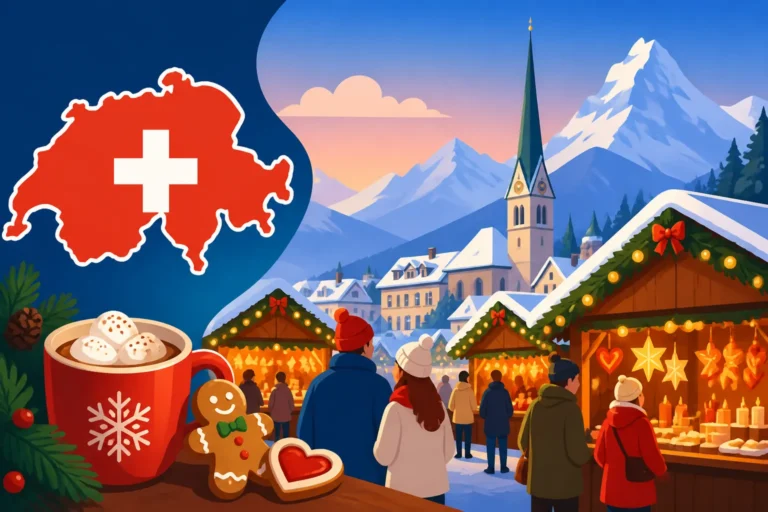
No Advent season in Switzerland is complete without a visit to a Christmas market, or Weihnachtsmarkt. These markets are truly magical, transforming town squares into twinkling wonderlands filled with wooden chalets, festive aromas, and the buzz of happy chatter. You'll find everything from handcrafted gifts and artisan goods to local delicacies that are perfect for warming you up on a cold winter's night.
Stroll through the market, sip on a steaming cup of Glühwein (mulled wine) – a staple of Glühwein and Winter Market Food in Switzerland – and perhaps grab a plate of gooey raclette or a tasty Bratwurst. Major cities like Zurich, Basel, and Montreux host some of the most famous markets, each with its unique charm. Zurich's Christkindlimarkt at the Main Station, for example, is famous for its massive indoor tree adorned with Swarovski crystals, while Basel boasts a particularly picturesque market in the historic Barfüsserplatz and Münsterplatz. For those further west, the Montreux Noël market on the shores of Lake Geneva offers stunning views and a charming atmosphere. To truly make a day of it, consider checking out available tours or experiences through platforms like GetYourGuide, which often offer curated experiences for first-timers. Getting to these markets by train is often the easiest option, and if you plan to visit several, consider how The Half-Fare Travelcard (Halbtax): The Must-Have Pass for Swiss Residents can save you money on your journeys.
Baking, Crafting, and Festive Outings
The Advent season is also a prime time for cozy, family-focused activities at home. Swiss kitchens come alive with the scent of freshly baked cookies, known as Grittibänz (a bread man figure), Mailänderli (lemon cookies), and Zimtsterne (cinnamon stars). These are not just treats; they are often baked in large batches and shared with friends, neighbors, and colleagues. Setting aside an afternoon for baking with your kids can be a delightful way to introduce them to these local flavors and traditions.
Beyond baking, crafting festive decorations for the home is a popular pastime. Whether it's cutting out paper snowflakes, making ornaments, or simply arranging some winter foliage, these activities contribute to the growing anticipation of Christmas. For families, winter outings become even more special. Many towns set up temporary ice-skating rinks, offering a chance to glide under twinkling lights. Scenic winter walks, perhaps in a snowy forest or along a quiet lakeside, can be incredibly restorative. If you're looking for Family Travel in Switzerland: Kid-Friendly Destinations and Tips, many villages offer special Advent-themed events, lantern walks, or even visits from local Samichlaus figures in person. Platforms like Booking.com can be invaluable if you're planning an overnight stay to fully experience a market or a festive region away from your home canton.
Regional Nuances and Modern Adaptations
While the core spirit of Advent and the excitement surrounding Samichlaus are widely shared across Switzerland, it's a country of subtle, yet significant, regional differences. As an expat, understanding these nuances not only enriches your experience but also helps you navigate conversations and expectations with local friends and colleagues. Switzerland's linguistic and cultural diversity truly shines during this festive period, making it all the more fascinating to explore.
German-Speaking vs. Romandie/Ticino Customs
In the German-speaking parts of Switzerland, Samichlaus and Schmutzli are the undisputed stars of early December. Their visit on the 6th is a deeply ingrained part of childhood. However, as you venture into the French-speaking regions (Romandie) or the Italian-speaking canton of Ticino, the traditions begin to shift.
In Romandie, while a version of Saint-Nicolas exists on December 6th, it's often a much quieter affair, and the focus quickly shifts to Père Noël (Father Christmas) on December 24th/25th as the main gift-giver. There's less emphasis on a companion figure like Schmutzli, though sometimes a "Père Fouettard" (Whipping Father) might appear, a much milder presence than his German-Swiss counterpart. Similarly, in Ticino, San Nicolao (Saint Nicholas) is recognized on December 6th, but Babbo Natale (Father Christmas) is the primary figure for Christmas Eve. Advent calendars and wreaths are common across all regions, reflecting the broader Christian influence, but the personal visit and cultural weight of Samichlaus are strongest in the German cantons. If you're considering Day Trips from Zurich: Rhine Falls, Rapperswil, and Lucerne or Day Trips from Geneva: Montreux, Gruyères, and the Lavaux Vineyards, you'll experience these regional differences firsthand, even in the way markets are styled or the foods offered. You can easily plan your train travel with Omio, finding the best routes and times to explore these varied traditions.
Blending Old and New: An Expat's Approach
For expats, the festive season in Switzerland presents a unique opportunity to blend your own heritage with these charming local customs. It can feel a little disorienting at first when your "normal" Christmas traditions don't quite align with what you see around you. Perhaps you miss the strong emphasis on Christmas Eve that's common in some European countries, or the big present-giving on Christmas morning that's typical of North America. However, this is where the magic of expat life truly comes to life.
Don't feel pressured to abandon your own cherished traditions. Instead, consider creating a beautiful hybrid. You can wholeheartedly embrace the Swiss Advent calendar and the Samichlaus visit on December 6th, perhaps treating it as a fun, bonus celebration. Then, you can revert to your family's personal Christmas customs for the main Christmas Eve or Christmas Day celebrations. Many expat families find joy in adopting the festive atmosphere of the Swiss Christmas markets, incorporating Glühwein and Raclette into their December rituals. Traveling by Switzerland by Train: The SBB Network, Scenic Routes, and Day Trips makes it incredibly easy to experience different cantonal traditions. The key is to participate, observe, and enjoy, allowing yourself the flexibility to create new, meaningful traditions that reflect your unique journey in this beautiful country.
Disclaimer
Please note that while this guide aims to provide accurate and up-to-date information based on general Swiss practices, traditions can vary significantly from one canton to another, and even from one family to the next. The information provided is for general guidance and informational purposes only, and does not constitute professional advice. We recommend verifying specific details for events and local customs with official local sources.