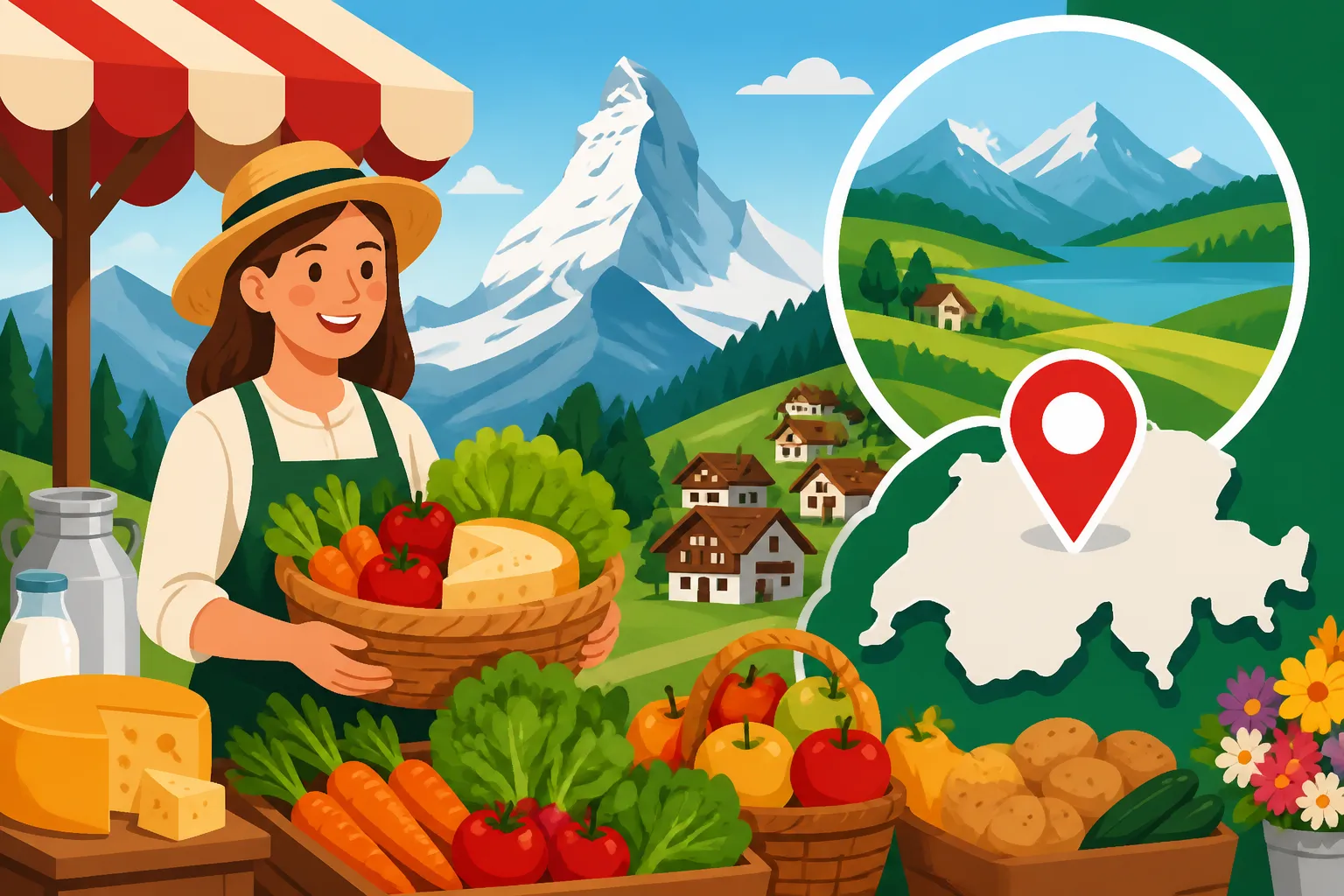
Swiss Farmers’ Markets: Where and When to Shop Local
Let's be honest, when you first move to Switzerland, grocery shopping can feel like a bit of a bewildering chore. The price tags can induce a small heart attack, the sheer variety might not be what you're used to, and sometimes, you just long for that connection to where your food truly comes from. That's where Swiss farmers' markets step in, offering not just fresh produce, but a slice of authentic Swiss life and a real antidote to supermarket blues. This guide is your go-to for discovering where and when to find these local treasures, and how to make the most of your market experience.
Why Embrace Swiss Farmers' Markets? More Than Just Produce
Stepping into a Swiss farmers' market isn't just about ticking off items on your shopping list; it's an immersive experience that touches on quality, community, and the very essence of Swiss culture. Forget the sterile aisles and pre-packaged goods; here, you're buying directly from the heart of the land.
The Authenticity and Quality Difference
The first thing you'll notice at a farmers' market is the sheer freshness. Produce here often comes straight from the farm to the market, sometimes picked just hours before you buy it. This means fruits and vegetables that burst with flavor, unlike their mass-produced supermarket counterparts which might have traveled hundreds, if not thousands, of kilometers. Think about biting into a perfectly ripe, locally grown heirloom tomato in summer – the kind that actually tastes like a tomato, with that complex balance of sweet and tart that you rarely find elsewhere.
It’s not just about fruits and vegetables, either. You’ll find stalls laden with artisanal cheeses, still warm from the morning’s baking bread, local honey with distinct floral notes depending on the region, and even freshly pressed apple juice that puts bottled versions to shame. These are products crafted with care, often using traditional methods passed down through generations. The quality isn't just a claim; it's evident in the vibrant colors, the rich aromas, and the unparalleled taste. When you buy from these markets, you're bringing home food that hasn't spent days in transit or storage, ensuring it retains its nutritional value and, crucially, its amazing flavor. This direct connection to the producer often means a higher standard of care and attention to detail that is hard to replicate in larger retail operations.
Supporting Local Economy and Sustainability
Shopping at farmers' markets is a conscious choice to support the backbone of Swiss agriculture – the small and medium-sized local farms. Every franc you spend goes directly to these hardworking individuals and families, helping them sustain their livelihoods and continue their invaluable work. This direct financial injection helps local economies thrive, creating a ripple effect that benefits entire communities. It's a stark contrast to sending your money to large, often international, corporations.
Beyond economics, there's a significant environmental benefit. When you buy locally, you're drastically reducing "food miles" – the distance food travels from farm to plate. This translates to lower carbon emissions from transportation, a reduced reliance on refrigeration, and often, more sustainable farming practices. Many market vendors prioritize organic or biodynamic farming, even if they don't have official certifications, ensuring fewer pesticides and chemicals in your food and less harm to the environment. This commitment to sustainability extends to the products themselves; you might find unique regional varieties of produce that are adapted to the local climate, promoting biodiversity rather than monoculture. It's all part of a larger ecosystem of responsible consumption, which is something many expats moving to Switzerland increasingly prioritize as they delve into the local way of life. For a broader understanding of how these smaller choices contribute to the larger picture of living here, consider reading our guide on the Cost of Living in Switzerland 2026: Budgeting for Singles and Families.
A True Cultural Experience
Perhaps the most delightful aspect of Swiss farmers' markets is the vibrant cultural immersion they offer. They are bustling hubs of community life, where locals gather not just to shop, but to socialize, chat, and soak in the atmosphere. The air is often filled with the cheerful chatter of Swiss German, French, or Italian, mingled with the aroma of fresh bread, sizzling sausages, and seasonal flowers. You'll hear the bells of a nearby church, perhaps a street musician playing a folk tune, and see children darting between stalls, samples in hand.
It’s an opportunity to connect with Swiss people, even if your German, French, or Italian is still a work in progress. Vendors are usually friendly and eager to share stories about their produce, offering samples with a warm smile. You might stumble upon a stall selling traditional Swiss treats you've never encountered before, or a local artisan showcasing beautiful handmade goods. This human connection is what sets markets apart from the often-anonymous experience of large supermarkets. It's a place where you can learn about local customs, discover new ingredients, and truly feel like you're part of the fabric of your new home. Whether it's the weekly market in the Bundesplatz in Bern or the lively Marché de Plainpalais in Geneva, these markets are celebrations of regional identity. If you’re ever curious about the wider context of Swiss cultural events, our post on Swiss Festivals and Traditions: A Year-Round Cultural Calendar might pique your interest.
Finding Your Local Bounty: Key Markets Across Switzerland
Switzerland's farmers' markets are as diverse as its landscapes, each offering a unique flavor of its region. From the bustling city squares to charming lakeside promenades, you're never too far from a place to discover local gems.
Zurich's Vibrant Market Scene
Zurich, being the largest city, boasts a fantastic array of farmers' markets, each with its own character. One of the most iconic is the Bürkliplatz Markt, held on Tuesdays and Fridays mornings (typically 6 AM to 11 AM) right on the shores of Lake Zurich. Here, you'll find an abundance of fresh flowers, regional produce, and artisanal food products. It's a feast for the senses, with the Alps providing a stunning backdrop. It's not just food; you can also pick up beautiful bouquets or even small craft items, making it a wonderful destination for a leisurely morning stroll.
Another absolute must-visit is the Helvetiaplatz Markt, which sets up shop on Tuesdays and Fridays afternoons (usually 4 PM to 8 PM) and on Saturday mornings (7 AM to 1 PM). This market is known for its incredible variety of organic and conventional fruits, vegetables, cheeses, meats, and baked goods. What's special about Helvetiaplatz is its lively, almost bohemian vibe, reflecting the diverse Kreis 4 district it calls home. You'll often find food trucks and street vendors selling prepared foods, making it a popular spot for an after-work snack or a Saturday morning brunch ingredient hunt. For those keen on expanding their culinary horizons, this market is a treasure trove.
You can also find smaller neighborhood markets like the one in Oerlikon on Wednesdays and Saturdays, or the market at Lindenhof on Thursdays, which offers a more intimate experience. These markets are fantastic resources for connecting with your community and truly shopping local. When planning a visit to Zurich, especially if you're coming from another part of Switzerland, checking train schedules on Omio can help you easily reach these market destinations.
Geneva's Charm and French Influence
In the French-speaking part of Switzerland, Geneva offers delightful markets with a distinct continental flair. The most famous is undoubtedly the Marché de Plainpalais, held on Tuesdays, Fridays (7 AM to 2 PM), and Saturdays (8 AM to 6 PM). This is one of the largest open-air markets in Switzerland, renowned for its incredible selection of organic and conventional produce, cheeses, cured meats, fresh fish, and flowers. On Saturdays, it also transforms into a huge flea market, adding another layer of charm and discovery. You'll hear plenty of French spoken, and many vendors come from the surrounding Vaud and Valais cantons, bringing their regional specialties.
Another lovely option is the Marché de la Fusterie, located in the heart of the city, which is a bit smaller and more focused on fresh produce. It’s open on Wednesdays and Saturdays (7 AM to 2 PM). This market is perfect for picking up fresh fruits, vegetables, and flowers for your weekly needs without the bustling crowds of Plainpalais. The proximity to Lake Geneva also makes for a picturesque shopping trip. Exploring these markets really highlights the difference between supermarket giants and local vendors, a contrast you can delve into further by reading Grocery Shopping: Coop, Migros, Aldi, Lidl, and Denner Compared.
Basel's Traditional Offerings
Basel, at the crossroads of Switzerland, France, and Germany, has a rich market tradition. The Marktplatz, right in front of the Rathaus (Town Hall), is home to a daily market from Monday to Saturday, usually from 7 AM to 2 PM. This is where you’ll find fresh fruit, vegetables, flowers, and local delicacies. It’s smaller than Zurich or Geneva’s main markets, but its central location and historic backdrop make it incredibly charming. You can often find traditional Basler Läckerli cookies and other regional treats perfect for a souvenir or an afternoon snack.
For an even more local experience, the Petersplatz market on Saturdays (7 AM to 1 PM) is a local favorite. It's known for its organic produce, often from small farms in the Basel region and nearby German and French areas. It has a relaxed, friendly atmosphere, and you'll find a strong emphasis on seasonal and sustainable products. This market is also a good place to find artisan bread and sometimes even regional crafts. Basel’s unique position means its markets often feature cross-border influences, reflecting its rich cultural tapestry. If you're planning a trip to Basel, perhaps after visiting the market, you might want to look up Basel Expat Healthcare Guide: Medical Networks and Cross-Border Options for general city information.
Bern, Lausanne, and Beyond: Regional Gems
Beyond the big three, many other Swiss cities and towns host wonderful farmers' markets. Bern’s Bundesplatz market is a sight to behold, especially on Tuesdays and Saturdays (usually 7 AM to 12:30 PM), directly in front of the majestic Parliament building. The sheer scale and quality of produce, coupled with the impressive architecture, make it a memorable experience. You’ll find everything from fresh cheeses to seasonal berries and flowers, often with vendors dressed in traditional attire.
Lausanne, perched above Lake Geneva, offers the lively Marché de la Riponne on Wednesdays and Saturdays (8 AM to 2 PM). This market is a vibrant mix of fresh produce, food stalls, and sometimes second-hand goods, reflecting the city’s youthful energy. It’s a great spot to grab a coffee and people-watch while picking up your week’s groceries.
And let's not forget the smaller, more intimate markets found in various regions. In the charming Appenzell region, many villages host weekly markets, often on Saturday mornings, where you can find delicious Appenzeller cheese, local sausages, and traditional textiles. Similarly, the Valais canton, famous for its wines, has markets featuring a bounty of apricots, raclette cheese, and cured meats. These regional markets often provide an even deeper insight into the local Swiss culture and culinary traditions. To fully appreciate these regional specialties, you might enjoy diving into Swiss Wine and Cheese Regions: A Resident’s Tasting Guide.
Table: Overview of Key Swiss Farmers' Markets
| City | Market Name | Typical Days | Typical Times | Key Offerings | Vibe |
|---|---|---|---|---|---|
| Zurich | Bürkliplatz Markt | Tue, Fri | 6:00 AM – 11:00 AM | Flowers, regional produce, artisan foods | Picturesque, bustling, lakeside |
| Zurich | Helvetiaplatz Markt | Tue, Fri, Sat | 4:00 PM – 8:00 PM (T/F), 7:00 AM – 1:00 PM (Sat) | Organic & conventional produce, meats, baked goods | Lively, diverse, foodie-focused |
| Geneva | Marché de Plainpalais | Tue, Fri, Sat | 7:00 AM – 2:00 PM (T/F), 8:00 AM – 6:00 PM (Sat) | Huge variety of produce, cheeses, fish, flea market on Sat | Large, energetic, French influence |
| Basel | Marktplatz | Mon-Sat | 7:00 AM – 2:00 PM | Fresh fruit, vegetables, flowers, local treats | Central, historic, charming |
| Bern | Bundesplatz Markt | Tue, Sat | 7:00 AM – 12:30 PM | Extensive produce, cheeses, meat, traditional goods | Grand, impressive, government backdrop |
| Lausanne | Marché de la Riponne | Wed, Sat | 8:00 AM – 2:00 PM | Produce, food stalls, sometimes second-hand | Youthful, lively, central |
Note: Market times can vary slightly with seasons or public holidays. Always check local municipality websites for the most current information.
Navigating the Market: Tips for a Seamless Experience
Visiting a Swiss farmers' market should be a joyful experience, not a stressful one. A little preparation and understanding of local customs will go a long way in making your trip smooth and enjoyable.
Timing is Everything: Best Days and Hours
Just like with anything in Switzerland, timing can make a big difference at a farmers' market. If you’re an early bird, arriving shortly after the market opens is your best bet for the freshest selection and often, the widest variety of unique products. Early mornings mean fewer crowds, allowing you to browse at your leisure and chat with vendors without feeling rushed. You'll get the pick of the litter, especially for popular items like seasonal berries, specialty cheeses, or freshly baked bread that sells out quickly.
However, if you're looking for a bargain, sometimes arriving an hour or so before closing can yield some unexpected discounts, especially on perishable items like fruit and vegetables that vendors want to clear out. It’s a bit of a gamble, as the selection will be more limited, but it can be a way to save a few francs. Keep in mind that Swiss markets, particularly the smaller ones, often pack up promptly at their advertised closing time. Don't expect stragglers or late-night deals; punctuality is a Swiss trait, even at the market.
Cash, Bags, and Language: Practical Essentials
While Switzerland is generally very modern, many farmers' market stalls operate on a cash-only basis, especially the smaller vendors. While some might accept Twint or card payments, it's always safest to bring a good amount of small denomination Swiss Francs (CHF) – 10s and 20s are preferred. You don't want to hold up the line trying to pay for a few apples with a 100-franc note.
Reusable shopping bags are an absolute must. Vendors typically don't provide plastic bags, or if they do, they might charge a small fee. Bring several sturdy bags, maybe even a basket or a trolley, especially if you plan on a substantial haul.
Regarding language, a little effort goes a long way. In German-speaking regions, a simple "Guten Tag," "Danke schön," and "Bitte" (Hello, Thank you, Please) will be much appreciated. In French-speaking parts, "Bonjour," "Merci," and "S'il vous plaît" are your friends. Even if your conversation is limited, showing respect for the local language creates a warmer interaction. Most vendors, especially in larger cities, will likely speak some English, but starting in their native tongue shows you're making an effort to integrate into Swiss customs and etiquette. Remember, politeness and a friendly demeanor are universal currencies that really open doors.
Engaging with Vendors: Ask, Taste, and Learn
One of the greatest joys of a farmers' market is the opportunity to interact directly with the people who grow and make your food. Don't be shy! Ask questions about their products: "Where is this grown?" "What variety of apple is this?" "How do you make this cheese?" Vendors are usually passionate about their craft and eager to share their knowledge. This is where you learn about the true provenance of your food, the specific farming practices, and even tips for how to best prepare their offerings.
Many stalls will offer samples, especially for cheeses, cured meats, or baked goods. This is a wonderful way to try something new without commitment. Just politely ask, "Darf ich probieren?" (May I taste? – German) or "Puis-je goûter?" (French). Tasting is part of the experience and helps you discover new favorites.
Beyond the transaction, engaging with vendors fosters a sense of community. You might discover a new recipe, learn about a local festival, or even hear about a charming village you'd like to visit for a day trip. These interactions enrich your entire expat experience and help you feel more connected to Switzerland. If you're keen to explore Switzerland more broadly, whether for markets or other adventures, services like GetYourGuide can sometimes offer curated market tours or food experiences that help you dive deeper.
Making the Most of Your Market Haul: Seasonal Eating and Storage
A successful trip to the farmers' market extends beyond the purchases; it’s about knowing what to buy when, and how to preserve its freshness once you get it home.
Seasonal Delights: What to Expect When
Eating seasonally is not only more sustainable but also ensures you're enjoying produce at its peak flavor and nutritional value. Switzerland's distinct seasons offer a continuously changing bounty at the markets:
- Spring (March-May): This is the time for delicate greens, asparagus (Spargel), radishes, rhubarb, and early strawberries. You'll see vibrant bunches of wild garlic (Bärlauch) and fresh herbs, perfect for light, fresh meals after a long winter.
- Summer (June-August): The markets explode with color! This is berry season (strawberries, raspberries, blueberries), sweet cherries, apricots, and peaches. Tomatoes, cucumbers, zucchini, bell peppers, and all sorts of salad greens are in abundance. It’s the ideal time for fresh, vibrant salads and fruit-based desserts.
- Autumn (September-November): As the leaves turn golden, the markets showcase apples, pears, plums, and grapes. Root vegetables like carrots, potatoes, parsnips, and various types of squash become prominent. Heartier greens like cabbage and leeks appear, along with a mushroom bounty. It's the perfect season for comforting stews, roasted vegetables, and hearty fruit tarts. For more on the delicious aspects of this season, don't miss our article on Swiss Food and Drink Culture: Regional Specialties and Dining Etiquette.
- Winter (December-February): While less diverse, winter markets still offer plenty of hearty options. Various cabbages, potatoes, onions, leeks, and stored apples and pears are common. You'll find a greater emphasis on cured meats, smoked cheeses, and preserves, reflecting the traditional Swiss approach to winter sustenance. This is also a fantastic time to stock up on ingredients for a classic fondue or raclette, dishes you can learn more about in Fondue and Raclette Culture: How and When the Swiss Eat Them.
Understanding these cycles not only helps you plan your meals but also connects you more deeply with the rhythm of Swiss agriculture.
Storing Your Fresh Finds
Bringing home a market haul is one thing, but keeping it fresh is another. Here are a few tips to maximize the life of your seasonal purchases:
- Berries: Store unwashed berries in a single layer on a paper towel-lined container in the fridge. Wash just before eating.
- Leafy Greens: Wash, dry thoroughly, and store in an airtight container or a bag with a damp paper towel in the crisper drawer.
- Tomatoes: Keep them at room temperature, away from direct sunlight, until ripe. Refrigerate only if they're very ripe and you want to slow down further ripening.
- Root Vegetables: Store in a cool, dark, and dry place. For example, potatoes and onions like a pantry, while carrots and beets do well in the fridge crisper drawer.
- Herbs: Treat them like flowers! Snip the ends, place them in a glass of water, and cover loosely with a plastic bag before refrigerating.
- Bread: Store in a bread box or paper bag at room temperature. For longer storage, slice and freeze.
- Cheeses: Wrap in wax paper or parchment paper, then in plastic wrap, and store in the warmest part of your fridge. Avoid airtight plastic containers for hard cheeses as they need to breathe.
Proper storage reduces food waste and ensures you enjoy every bit of your fresh, high-quality ingredients.
Beyond Produce: Artisan Goods and Specialties
Swiss farmers' markets are far more than just fruit and veggie stands. They are a celebration of local craftsmanship and culinary tradition. You'll often find a remarkable selection of artisan goods that reflect the rich regional diversity of Switzerland.
Expect to discover an array of incredible cheeses – from creamy, pungent alp cheeses made high in the mountains to firm, nutty varieties perfect for grating. Each region, even each farmer, might have a unique recipe or aging process. You’ll find fresh goat and sheep cheeses, aged hard cheeses, and even some that are flavored with herbs. Don't be afraid to ask for samples and find your new favorite.
Baked goods are another highlight. Think crusty, artisanal breads, often made with locally milled flour and traditional sourdough starters. You might find regional specialties like Zopf (a braided bread), Grittibänz (a bread man figure), or various fruit tarts and cakes. These are a far cry from factory-produced items, offering deep flavor and satisfying textures.
Many markets also feature stalls selling cured meats and sausages, particularly in regions like Valais or Ticino. These can range from air-dried hams to spicy regional sausages, perfect for an Apéro or a hearty snack. Local honey is another popular item, with its flavor profile subtly changing depending on the flowers the bees have visited. You might also find homemade jams, fruit syrups, and vinegars.
Beyond edibles, some markets incorporate local crafts such as handmade soaps, woolen products, pottery, or intricate wooden carvings. And, of course, the vibrant stalls overflowing with fresh-cut flowers are always a delight, bringing color and fragrance to your home.
When you make a market visit a central part of a trip, whether it’s a day outing or a weekend adventure, remember to factor in these local artisanal finds. If you are planning a trip to a market in another city, checking Omio for train tickets or finding a local guide on GetYourGuide for a specialized market tour could truly enhance your experience. For those who want to extend their market visit into a weekend getaway, finding charming local accommodations on Booking.com near the market district makes for a delightful trip. This holistic approach to exploring local markets is one of the joys of being an expat in Switzerland.
Disclaimer
Please note that while this guide provides general information about Swiss farmers' markets, operating hours, specific offerings, and vendor presence can vary. It is always recommended to check local municipality websites or market-specific online resources for the most up-to-date schedules and details before planning your visit.