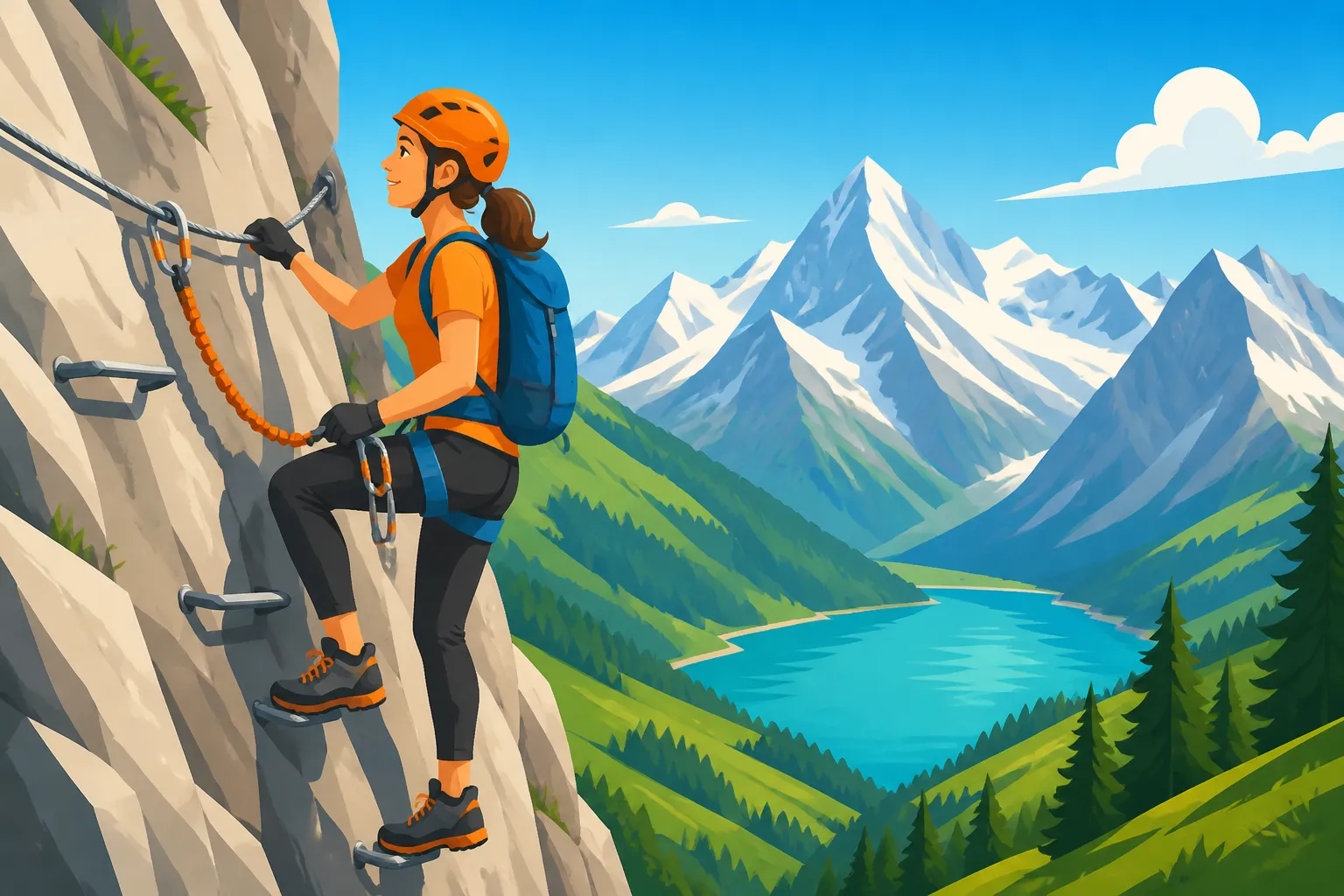
Via Ferrata Routes in Switzerland for First-Timers
Stepping into the Swiss Alps can be incredibly intimidating for newcomers. You see images of seasoned mountaineers tackling treacherous peaks and wonder if you could ever experience that thrill without years of training or a death wish. But what if I told you there's an exhilarating middle ground, a way to scale dizzying heights and traverse breathtaking rock faces with a level of security that makes it accessible even for first-timers? This comprehensive guide will introduce you to the wonderful world of via ferratas in Switzerland, demystifying these "iron paths" and pointing you towards the perfect routes to begin your alpine adventure.
What Exactly is a Via Ferrata? And Why Switzerland is Perfect for Beginners
When you first hear "via ferrata," your mind might jump to extreme sports, but it's actually a fantastic way to bridge the gap between hiking and full-blown rock climbing. Imagine a vertical hiking trail, but instead of just a path, you're clipping yourself into a steel cable that runs along the rock face, using strategically placed ladders, rungs, and even suspension bridges to navigate the terrain. It's a truly unique way to experience the majesty of the Swiss mountains, offering views and sensations usually reserved for experienced climbers, all within a relatively safe and controlled environment. And Switzerland, with its meticulous engineering and stunning landscapes, has some of the best, most well-maintained, and surprisingly beginner-friendly via ferrata routes in the world.
The Basic Concept and Essential Equipment Needed
At its core, a via ferrata, or Klettersteig as it's known in German-speaking Switzerland, is a protected climbing path. The "protection" comes from a continuous steel cable fixed to the rock, along with iron rungs, steps, ladders, and sometimes even carved footholds. Your job is to move along this route, always staying clipped into the safety cable. It's less about traditional climbing technique and more about balance, strength (especially in your legs and core), and a healthy dose of nerve.
Now, let's talk gear, because this is non-negotiable. You absolutely cannot attempt a via ferrata without the correct equipment, and trying to do so would be incredibly dangerous.
First, you'll need a climbing harness. This fits around your waist and thighs, similar to what rock climbers use. It's where you'll attach your safety system.
Second, and perhaps the most crucial item, is a via ferrata lanyard (or set). This isn't just a regular carabiner and rope. A certified via ferrata set is designed with an energy-absorbing system that protects you in case of a fall. It consists of two lanyards with special carabiners that you clip onto the steel cable. The genius of the design is that you always keep at least one carabiner clipped to the cable, even when you're passing anchor points. This "always clipped in" rule is the golden safety principle of via ferratas.
Third, a climbing helmet is essential. The Alps are dynamic, and falling rocks are a real hazard, even on well-maintained paths. Plus, if you slip and swing into the rock, that helmet could literally save your life.
Finally, a good pair of via ferrata gloves will save your hands from blisters and scrapes on the steel cable and rock. Regular cycling gloves or even sturdy gardening gloves can work for easier routes, but specialized gloves offer better grip and protection.
You'll also need sturdy hiking boots, comfortable clothing, a backpack with water, snacks, and a waterproof layer. Remember, the weather in the mountains can change in an instant, so being prepared is key. For more general advice on what to bring, check out our guide on What to Pack for a Day Trip to the Swiss Alps.
Many local sports shops, especially in popular mountain regions like Interlaken, Engelberg, or Zermatt, offer via ferrata equipment for rent. This is a fantastic option for first-timers who aren't ready to invest in a full set of gear. They'll ensure you get properly fitted and understand the basics of use.
Grading System and Choosing Your First Route
Navigating the various difficulty ratings for via ferratas can feel like learning a new language. Switzerland primarily uses a scale from K1 (easy) to K6 (extremely difficult), though you might also encounter the French system (F=Facile, PD=Peu Difficile, AD=Assez Difficile, D=Difficile, TD=Très Difficile, ED=Extrêmement Difficile). For your very first experience, you should be looking exclusively at K1 or K2 (F or PD) routes. These are typically routes with minimal exposure, ample iron aids, and are more akin to a challenging hike with extra security than a climb.
Here's a rough breakdown to help you choose wisely for your inaugural ascent:
- K1 / F (Facile – Easy): These are like very steep hiking trails, often in exposed terrain, but with continuous safety cables to clip into. They usually have ladders or sturdy rungs for assistance and offer minimal vertical climbing. Good for absolute beginners with no fear of heights and basic fitness.
- K2 / PD (Peu Difficile – Slightly Difficult): These routes introduce more vertical sections and potentially some short, exposed traverses. While still very manageable, they require a bit more arm strength and confidence. Many excellent beginner-friendly routes fall into this category, especially if taken with a guide.
- K3 / AD (Assez Difficile – Fairly Difficult): Now we're getting into more exposed and sustained vertical sections. You'll need good arm and leg strength, and a comfortable familiarity with heights. Some K3 routes are considered "beginner-friendly" when done with an experienced guide, but for true first-timers on their own, they can be a big step up.
When picking your route, it's crucial to be honest with yourself about your fitness level and, most importantly, your comfort with heights. Some routes might technically be easy but feature spectacular exposure, which can be unsettling. Don't be a hero on your first go; start easy, build confidence, and remember that the goal is enjoyment and a safe return. Websites like klettersteig.de or viaferrata-info.com are excellent resources for detailed route descriptions, photos, and up-to-date difficulty ratings.
Top Via Ferrata Routes for First-Timers in Switzerland
Switzerland truly offers a diverse range of via ferratas, from gentle strolls with a safety cable to adrenaline-pumping vertical challenges. For your first time, the key is to choose routes that prioritize safety, accessibility, and manageable difficulty, allowing you to focus on the incredible experience rather than overwhelming fear. Many of these routes are easily reachable by Switzerland's fantastic public transport system, making them perfect for a day trip. If you're planning your journey, consider using platforms like Omio to compare train and bus options.
Accessible Routes in German-Speaking Switzerland
The German-speaking cantons boast some fantastic introductory via ferratas that are perfect for getting your feet wet.
- Klettersteig Brunni Engelberg (K2): This route is arguably one of the best choices for first-timers. Located in the picturesque Engelberg valley, the Brunni via ferrata offers breathtaking views of the surrounding mountains without being overly demanding. It’s well-equipped with continuous safety cables, metal rungs, and ladders, making the ascent feel secure. What makes it particularly welcoming is its clear signage and the overall infrastructure of the Brunni area, which is very family-friendly. You take a cable car up to Ristis, then a chairlift to Brunnihütte, and the via ferrata starts nearby. The route itself takes about 1.5 to 2 hours, offering just enough challenge to feel adventurous but not overwhelming. There’s even a small "children's via ferrata" nearby, making it a great place to learn the ropes. The views of the Titlis glacier and the surrounding peaks are simply spectacular.
- Klettersteig Pinut Flims (K2-K3): For a touch of history and a truly unique experience, the Pinut via ferrata near Flims is a fantastic option. This is Switzerland's oldest known via ferrata, with its first recorded "tourists" dating back to 1733! The route navigates a natural weakness in the massive Flimserstein rock face, using three distinct sections. The lower parts are relatively easy (K2), with some fantastic exposure as you traverse ledges carved into the rock. The final section, leading to the plateau, is a bit steeper (K3) but still very manageable with good fitness. The highlights are the natural caves and overhangs you pass through, and the stunning views over the Rhine Gorge, often called the "Swiss Grand Canyon." Access involves a scenic hike from Flims-Dorf or a bus ride, and then a return via a longer hiking trail through forests. It’s a full day out, usually taking 4-5 hours total including approaches and descent.
- Klettersteig Fürenalp (K2): Also in the Engelberg region, the Fürenalp via ferrata offers another excellent choice. While slightly less known than Brunni, it provides a beautiful and varied route with stunning views of the Fürenalp waterfall and the Titlis massif. It’s a bit more exposed than Brunni in places but remains firmly in the K2 category, making it very suitable for beginners who are comfortable with heights. The route is well-maintained and takes about 1.5 hours to complete. A cable car takes you directly to Fürenalp, where the via ferrata starts, and a gentle hike brings you back down. It's often less crowded than Brunni, offering a more serene experience.
Beginner-Friendly Klettersteige in Romandie and Ticino
The French and Italian-speaking regions of Switzerland also offer some gems for those just starting their via ferrata journey, often combining the alpine thrill with stunning lake or valley views.
- Via Ferrata des Diablerets (PD/K3 sections): This extensive network near Les Diablerets in Canton Vaud offers a few options, some of which are quite challenging, but there are sections that can be approached by beginners, especially with a guide. The "classic" route (Miroir de l'Argentine) has varying difficulties. The key here is to go with a certified mountain guide who can select the most appropriate sections or lead you safely through the entire route, providing invaluable instruction. You get truly stunning views of the surrounding peaks and glaciers. Access is via cable car to Isenau, then a hike to the base. For an organized excursion, checking sites like GetYourGuide for local tours can be incredibly helpful.
- Via Ferrata San Salvatore, Lugano (K2): If you find yourself in the sunny Ticino region, the Monte San Salvatore via ferrata offers a spectacular experience overlooking Lake Lugano. While short (only about 30 minutes of actual climbing), it packs a punch with some exposed sections and fantastic views. It's a great option for those who want a taste of via ferrata without committing to a full-day endeavor. You take the funicular up Monte San Salvatore, hike a short distance to the start, enjoy the climb, and then descend back to the top station. It’s a perfect half-day activity combined with exploring Lugano itself.
- Via Ferrata Pont du Diable, Andermatt (K2-K3): Near the historic Gotthard Pass, the "Devil's Bridge" via ferrata is a well-secured route that provides a unique perspective on the famous gorge. It's known for its exposed traverses and a slightly more strenuous feel than Brunni, but it's still very popular with beginners seeking a bit more challenge. The route takes about 1.5-2 hours and features several bridges, including one that traverses directly over the roaring Reuss River. The history of the area, combined with the exciting climb, makes for a memorable experience. Getting to Andermatt is easy by train, which you can research and book on Omio for convenience.
Essential Safety, Planning, and Guided Options
While via ferratas are designed to be safer than traditional climbing, they are still alpine activities that carry inherent risks. Proper preparation, understanding your limits, and prioritizing safety are paramount. Rushing into a route you're not ready for or neglecting safety protocols can lead to serious consequences.
Gear, Guides, and Self-Assessment
We've already touched on the essential gear – a certified via ferrata set, harness, helmet, and gloves. I cannot stress enough how critical it is to use the correct equipment and ensure it's in good condition. Don't skimp on this! If you're renting, the rental shop should check everything for you. But beyond the gear, your most important safety tool is your brain.
For your very first via ferrata, I strongly recommend hiring a certified mountain guide. This isn't about being weak or inexperienced; it's about learning the ropes from a professional, understanding the nuances of the equipment, and building confidence in a controlled environment. A guide will teach you:
- Proper clipping technique: How to manage your two carabiners, always ensuring one is clipped.
- Rest positions: How to safely rest on the cable or rungs.
- Movement techniques: Efficient ways to use your feet and arms to conserve energy.
- Risk awareness: How to assess potential hazards like falling rocks or unexpected weather changes.
A guide also provides an extra layer of security, often using a rope to belay you on particularly exposed sections, especially if you're feeling nervous. You can find local mountain guide associations in regions like Interlaken or Engelberg, or search for guided via ferrata tours on platforms like GetYourGuide. Many outfitters offer half-day or full-day tours specifically for beginners.
Self-assessment is also key. Be honest about your fear of heights. A via ferrata will have exposed sections. If you're paralyzed by heights on a stable mountain trail, a via ferrata might be too much too soon. Start with gentler hikes to get accustomed to alpine exposure first. Also, consider your physical fitness. While not requiring extreme strength, you'll be using your arms and legs continuously, often in awkward positions. Good general fitness will make the experience far more enjoyable.
Weather, Seasonality, and Preparation
The weather in the Swiss Alps is famously fickle. A sunny morning can quickly turn into a stormy afternoon. Always check the weather forecast before heading out. Rain makes the rock slippery and the metal rungs treacherous, significantly increasing the risk. Thunderstorms, with the exposed metal cable acting as a lightning rod, are incredibly dangerous on a via ferrata. If there's any doubt about the weather, postpone your trip. Our guide on Mountain Safety in Switzerland: Weather, Gear, and Emergency Numbers has more detailed advice.
The best season for via ferratas is typically late spring to early autumn (June to October). Earlier in the spring, some routes may still be covered in snow or ice, especially at higher altitudes, making them impassable or dangerous. Later in the autumn, cold temperatures, shorter days, and the increased chance of bad weather can also make routes less enjoyable or risky. Always check local conditions before you go – many mountain tourist offices or cable car stations will have up-to-date information.
Beyond checking the weather, make sure you prepare adequately:
- Hydration and Nutrition: Carry plenty of water and energy-rich snacks. You'll be expending a lot of energy.
- Layered Clothing: Dress in layers so you can adapt to changing temperatures. Even on a warm day, it can be cool and windy on the rock face.
- Sun Protection: Sunscreen, sunglasses, and a hat are vital, as you'll be exposed to intense sun at altitude.
- First-Aid: A small personal first-aid kit is always a good idea, including blister plasters.
- Emergency Plan: Know the emergency numbers (144 for ambulance, 112 for general European emergency). Consider a REGA membership for air rescue; it's a small annual fee that could be invaluable in an emergency, as explained in REGA Membership: Why Expats Need Air Rescue Insurance in the Alps.
Respecting the Environment and Local Rules
Switzerland takes its natural environment very seriously, and that extends to its alpine paths. Always stick to the marked routes – don't try to find shortcuts or deviate from the path. This protects fragile alpine flora and prevents erosion. Leave no trace; carry out everything you carry in, including all your trash. Many via ferratas pass through sensitive ecological zones, so tread lightly and observe any local regulations, such as restrictions on group sizes or protected areas. Respect other users on the route by maintaining a safe distance and not causing rockfall. If you encounter slower climbers, be patient. The mountains are for everyone to enjoy responsibly.
Making Your Via Ferrata Adventure Happen
So, you're convinced and ready to tackle your first via ferrata! Excellent! Now comes the practical stuff: how to plan your trip, get there, and tie it into a broader Swiss adventure. The good news is that Switzerland's world-class infrastructure makes alpine activities remarkably accessible, even for those without a car.
Booking and Logistics
First things first, if you're taking my advice (and I really hope you are!) and opting for a guided tour, start by researching local mountain guide services or adventure companies in the region where you plan to go. For example, if you're eyeing the Brunni via ferrata, search for "via ferrata guide Engelberg." You'll find several reputable providers offering introductory courses or guided trips. Websites like GetYourGuide are also useful for finding and booking these experiences, often allowing you to read reviews from other first-timers. Booking in advance is always a good idea, especially during peak summer months.
Getting to the trailheads in Switzerland is often part of the adventure itself. The Swiss public transport system is incredibly efficient and reaches even remote mountain villages. For example, to reach the Brunni via ferrata, you'd take a train to Engelberg, then a local bus or walk to the cable car station. To plan your train and bus journeys, the SBB website and app are indispensable. You can look up schedules, buy tickets, and even track real-time departures. Remember to consider purchasing a Half-Fare Travelcard (Halbtax) or even a Generalabonnement (GA) if you plan extensive travel, as these can significantly reduce your costs over time, as explored in SBB Travelcards: Is the Generalabonnement (GA) Worth the CHF 4000+ Cost?. For longer journeys, you might even find deals on Omio, which aggregates different transport options.
Before you go, make sure you have all your documents – ID, insurance details, and any confirmation for guides or equipment rentals. Most cable car tickets can be bought on the spot, but check their operating hours, especially for the last descent!
Accommodation and Broader Experience
A via ferrata is often just one incredible highlight of a broader trip to the Swiss Alps. Consider making it part of a weekend getaway or a longer vacation. You’ll find a huge range of accommodation options, from cozy mountain chalets and traditional hotels to more modern resorts. For example, after tackling a via ferrata near Interlaken, you could enjoy a relaxing evening by Lake Thun or Lake Brienz. Or perhaps combine your Ticino via ferrata with some time exploring the charming streets of Lugano.
Platforms like Booking.com are excellent for finding accommodation that suits your budget and preferences. Many hotels in mountain regions are accustomed to hikers and adventurers, often offering drying rooms for wet gear or early breakfast options. If you're planning several days in the mountains, you might even consider staying in an SAC (Swiss Alpine Club) hut for a truly authentic experience, though these require advance booking and usually cater to experienced hikers and climbers.
Thinking about the full experience, a via ferrata can be wonderfully combined with other outdoor activities. You could spend one day on the iron path, another day enjoying some easy day hikes, or even a scenic boat trip on one of Switzerland's stunning lakes. For those who enjoy a bit of culture alongside their adventure, consider exploring the local villages, trying regional cuisine like fondue or raclette, or visiting a historic castle. This blend of adventure, relaxation, and cultural immersion is what makes Switzerland such an unforgettable destination for expats and tourists alike. For more ideas, dive into our guide on Switzerland by Train: The SBB Network, Scenic Routes, and Day Trips.
Disclaimer
The information provided in this guide is for general informational purposes only and is not a substitute for professional advice. Via ferrata climbing carries inherent risks, and conditions in the mountains can change rapidly. Always exercise caution, use appropriate and well-maintained equipment, and consider hiring a certified mountain guide, especially if you are a first-timer. Check local weather forecasts and route conditions before embarking on any via ferrata. The author and publisher are not liable for any injuries, losses, or damages incurred as a result of using this information.