How to Get Snow Tires and Drive Safely in the Alps in Winter
Arriving in Switzerland, many of us expats quickly realize that the picture-perfect snowy landscapes we've seen on postcards often come with a side of driving anxiety, especially when those charming mountain roads are involved. Forget what you think you know about winter driving from back home; the Alps are a different beast entirely. This guide is here to cut through the stress and equip you with the knowledge you need to safely navigate Switzerland's winter wonderland by car, covering everything from mandatory snow tires to mastering those treacherous mountain passes.
Understanding Winter Driving Conditions in the Swiss Alps
The Swiss Alps are stunning in winter, truly breathtaking. But beneath that pristine white blanket lies a network of roads that demand respect, caution, and proper preparation. It's not just a matter of "it's cold and there might be snow"; it's a dynamic, often unforgiving environment that requires specific knowledge and equipment.
The Reality of Alpine Winter Roads
When you picture winter driving, you might think of a gentle snowfall on a relatively flat road. The reality in the Swiss Alps is often far more complex and challenging. You'll encounter steep inclines and declines that twist and turn through valleys and up mountainsides, often with sheer drops on one side. Weather conditions can change in a heartbeat. You might start your journey in a sunny valley, only to find yourself engulfed in a whiteout or dense fog just twenty minutes later as you gain altitude.
Black ice is another silent killer. It's nearly invisible, especially in shaded areas or tunnels, and can catch even experienced drivers off guard. A perfectly clear road can suddenly become a treacherous skating rink. Then there's the sheer volume of snow. While main roads are usually cleared with impressive efficiency, side roads, parking areas, and access routes to smaller villages can remain heavily snow-covered or icy for extended periods. Add to this the sometimes narrow nature of these mountain roads, where passing oncoming traffic, especially PostBuses, can be a tight squeeze, and you begin to understand the unique challenges. It's not about being a bad driver; it's about being prepared for a unique and sometimes unpredictable environment.
Legal Requirements and Recommendations for Winter Tires
Here's a fun Swiss fact that often trips up newcomers: there isn't a federal law explicitly stating that you must have snow tires on your car during winter. Confusing, right? However, this doesn't mean you can just roll through the snowy season on your summer tires. The legal framework operates on a principle of "suitability to conditions." If you're involved in an accident and it's determined that your tires were not appropriate for the road conditions – meaning you could have prevented the accident by having winter tires – you will almost certainly be held liable, at least partially. This can lead to hefty fines, insurance claim denials, and even criminal charges in severe cases. Essentially, while not explicitly mandatory, winter tires are a de facto requirement for safe and legally compliant driving in Switzerland from roughly October/November until Easter.
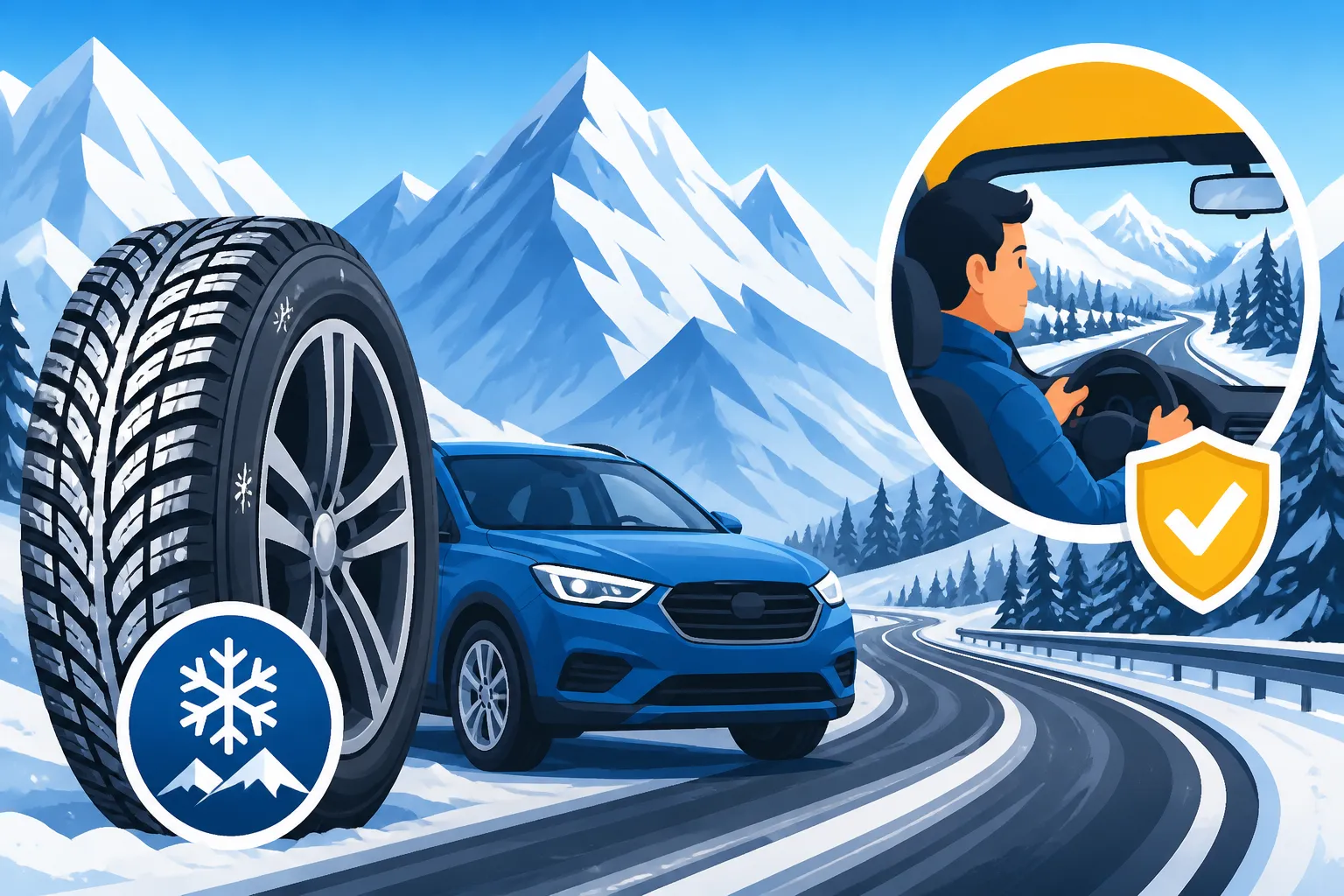
Beyond the legal nuances, practical recommendations are clear. Experts, including the Touring Club Schweiz (TCS), strongly advise fitting dedicated winter tires with a minimum tread depth of 4mm. While the legal minimum for any tire in Switzerland is 1.6mm, a winter tire with less than 4mm tread loses a significant amount of its effectiveness on snow and ice. Look for tires marked with the "3PMSF" symbol (a snowflake within a three-peak mountain), which indicates they've met specific performance criteria in snowy conditions. The older "M+S" (Mud + Snow) symbol is still present on many tires, including some all-season tires, but the 3PMSF is the gold standard for true winter performance. Ignoring these recommendations is not just a risk to your wallet, but potentially to your life and the lives of others on the road.
Getting Your Vehicle Winter-Ready: The Snow Tire Deep Dive
Winter readiness goes beyond just swapping out your tires. It's about selecting the right rubber, knowing where to get it, and understanding additional safety equipment like snow chains.
Types of Winter Tires and Their Characteristics
Choosing the right winter tire can feel like a maze, especially with all the terminology. Let's break down the main types you'll encounter and how they fare in typical Swiss winter conditions:
- Dedicated Winter Tires (3PMSF / Snowflake Symbol): These are your best friends in the Swiss Alps. They are specifically designed with a softer rubber compound that remains flexible in cold temperatures (below 7°C) and features deeper, more aggressive tread patterns with numerous sipes (small slits). This design maximizes grip on snow, ice, and wet roads, drastically reducing braking distances and improving handling. For anyone living in or regularly visiting mountain regions, these are non-negotiable. They offer superior safety, which, let's be honest, is priceless when you're navigating a winding icy road.
- All-Season Tires (M+S or 3PMSF): Some all-season tires now carry the 3PMSF symbol, meaning they offer better winter performance than older M+S-only versions. These tires are a compromise, designed to perform adequately year-round. While they might be sufficient for urban driving in mild Swiss winters where heavy snowfall is rare and roads are quickly cleared, they simply don't offer the same level of safety and performance as dedicated winter tires in true alpine conditions. They harden in extreme cold, reducing grip, and their tread patterns are less effective in deep snow or on packed ice. If you're planning on adventuring into the mountains, even occasionally, all-season tires might leave you feeling nervous and potentially unsafe.
- Nordic Friction Tires (Studless Ice and Snow Tires): These are specialized winter tires designed for extreme ice and snow conditions, more commonly used in Scandinavian countries. They feature even softer compounds and unique tread designs to maximize grip on ice. While highly effective, they might wear faster and offer slightly less precise handling on dry pavement compared to standard European winter tires. For most drivers in Switzerland, dedicated European winter tires are the sweet spot, offering excellent performance across the varied winter conditions without the drawbacks of the more extreme Nordic versions.
Where and When to Buy or Lease Snow Tires
Changing tires in Switzerland is an event, not an afterthought. The moment the temperature drops consistently below 7°C, usually in late October or early November, there's a collective rush to local garages. Booking an appointment well in advance is crucial, as slots fill up quickly.
You have a few primary options for getting your winter tires:
- Local Garages and Dealerships: This is the most common and often recommended route. Your car's brand dealership or independent garages (like those affiliated with AutoPartner or larger chains such as Pneu Egger) can advise you on the best tires for your specific vehicle and driving needs. They handle the mounting, balancing, and often offer convenient seasonal storage for your off-season tires. Many garages offer complete "wheel sets" (tires already mounted on rims) which makes the seasonal change quicker and often extends the life of your tires. This also reduces the risk of damaging your rims during frequent tire changes.
- Online Retailers: Websites like reifendirekt.ch or pneus-online.ch offer a vast selection of tires, often at competitive prices. The catch? You'll still need a local garage to mount and balance them for you, which incurs an additional fee. Make sure to factor this into your budget and confirm the garage is willing to install tires purchased elsewhere.
- Leasing/Rental Cars: If you're renting a car, winter tires are typically included from November to April, but it's always wise to confirm this when booking, especially if you're renting from a warmer neighboring country and driving into Switzerland.
Many garages also offer tire storage services. This is a lifesaver for apartment dwellers who don't have space for an extra set of four bulky tires. For a reasonable annual fee (typically CHF 80-150), they'll store your summer or winter tires until the next season. This service is incredibly convenient and well worth considering. Just remember the November 30 deadline for many administrative tasks, and apply that same proactive approach to booking your tire change!
The Role of Snow Chains
Even with the best winter tires, there are times when you'll need snow chains. These aren't just for extreme conditions; they are legally mandated in certain areas during heavy snowfall or icy conditions. You'll recognize these areas by a round blue sign depicting a tire with a snow chain. If you see that sign, you must fit chains, even if only on your driving wheels (check your car's manual for specific instructions).
- When and Where to Buy/Rent: It's smart to buy a set of chains before winter if you plan on driving in the Alps. You can find them at larger car accessory stores (like those at Jumbo or Coop Brico+Loisirs), gas stations, or specialized car shops. Some garages or even ski resorts might offer rentals, but it's best to have your own, properly sized for your tires.
- Fitting Them: Seriously, practice fitting them in your driveway before you're stranded in a blizzard at the side of a freezing mountain road. It's not intuitive, especially with cold, numb fingers.
- Speed Limits: When driving with snow chains, your speed is legally limited to 50 km/h. Exceeding this is dangerous and illegal. Chains significantly alter your car's handling, and higher speeds risk damaging both the chains and your vehicle.
Failing to carry or use snow chains when required can result in heavy fines and, more importantly, put you and others in extreme danger. Don't take chances; better safe than sorry, and certainly better than ending up like a misplaced puzzle piece on a hairpin turn!
Mastering Safe Alpine Winter Driving Techniques
Having the right equipment is only half the battle. Knowing how to drive in these conditions is equally, if not more, important.
Pre-Trip Checks and On-Road Awareness
Driving in winter demands a higher level of vigilance and preparation. Before you even set off, a few crucial checks can save you a world of trouble:
- Vehicle Fluids: Ensure your windshield washer fluid is topped up with an anti-freeze mix. Nothing is worse than getting sprayed with slush only to have your wipers smear it across a freezing windscreen. Check your radiator coolant for sufficient anti-freeze concentration.
- Battery: Cold weather is brutal on car batteries. If yours is older, consider having it tested. A dead battery on a remote mountain pass is not how you want to spend your day.
- Lights: Make sure all your lights are clean and working – headlights, taillights, fog lights. Visibility can be drastically reduced in snow, fog, or whiteout conditions.
- Emergency Kit: Pack a winter survival kit. This should include a high-visibility vest, a warning triangle, a first-aid kit, a shovel, a blanket, warm clothes, food and water, a fully charged phone, and ideally a power bank. A small bag of sand or cat litter can also help if your wheels get stuck on ice. Remember, if you're venturing high up, you might also want to look into a REGA Membership: Why Expats Need Air Rescue Insurance in the Alps, just in case the worst happens.
- Check Road Conditions: This is non-negotiable. Before every winter trip, especially to the Alps, check real-time road conditions. The Touring Club Schweiz (TCS) website and app are excellent resources, offering live updates on mountain pass closures, traffic, and snow reports. Local cantonal police websites also provide valuable information. Never rely on the weather forecast from a few days ago; conditions can change dramatically overnight or even within hours.
- On-Road Awareness: Once driving, adjust your habits. Increase your following distance significantly – at least three times what you'd use in dry conditions. Gentle is key: gentle acceleration, gentle braking, gentle steering. Abrupt movements can easily break traction on ice or snow. Look far ahead to anticipate corners and potential hazards. Be especially wary in tunnels, on bridges, and in shaded areas, as these are prime spots for black ice.
Navigating Mountain Passes and Steep Inclines/Declines
The unique topography of the Alps means you'll be dealing with significant elevation changes, which require a different driving approach than flat roads:
- Using Lower Gears (Engine Braking): When going downhill, resist the urge to constantly ride your brakes. Instead, shift into a lower gear (e.g., 2nd or 3rd, depending on the steepness and speed). This uses the engine's resistance to slow the vehicle, known as engine braking, which is far more controlled and prevents your brakes from overheating or fading. On slippery surfaces, engine braking helps maintain traction.
- Gentle Movements: As mentioned, avoid sudden steering, braking, or accelerating. Imagine you're driving with an eggshell under your accelerator pedal. Smooth inputs are crucial to prevent skids.
- Managing Descents: Many mountain passes have runaway truck ramps for vehicles whose brakes have failed. While unlikely for a passenger car, it underscores the danger of uncontrolled descents. Don't be afraid to go very slowly. If you feel your car starting to slide, gently ease off the accelerator, look where you want to go (not at the ditch!), and make small, corrective steering inputs.
- Uphill Starts on Snow/Ice: If you stop on an incline, getting moving again can be tricky. Try to start in a higher gear (e2nd) to reduce torque and prevent wheelspin. If your car has a "winter mode" or traction control, activate it. Gentle, consistent pressure on the accelerator is better than flooring it.
Remember, the goal is control, not speed. You're not on a race track; you're navigating some of the most beautiful, yet demanding, roads in the world. If you're new to driving in Switzerland, it's worth familiarizing yourself with general rules of the road, including Driving in Switzerland: Licenses, Buying Cars, and Strict Traffic Laws and knowing about Speeding Tickets in Switzerland: Income-Based Fines and Strict Radars.
What to Do in a Whiteout or Emergency
Even with the best preparation, emergencies can happen. Knowing what to do can make all the difference.
- Whiteout Conditions: If visibility drops dramatically due to heavy snow or fog, immediately reduce your speed. Turn on your low-beam headlights and front fog lights (if equipped). Avoid using high beams, as they reflect off the snow and worsen visibility. Follow the taillights of the car in front at a safe distance, or if there's no other traffic, look for the road markings or guideposts. If conditions become too dangerous, pull over to a safe spot, well off the road, and turn on your hazard lights.
- If You Get Stuck: If your wheels are spinning, stop trying to accelerate. Clear any snow or ice from around the tires. Try gently rocking the car back and forth (if safe to do so) by alternating between a low forward gear and reverse. A mat or the floor of your car under the driving wheels can sometimes provide enough traction.
- Accident or Breakdown: If you're involved in an accident or your car breaks down, first ensure your safety and the safety of your passengers. Turn on your hazard lights. Put on your high-visibility vest and place the warning triangle a sufficient distance behind your car (at least 50m on regular roads, 100m on motorways). Call for help. For medical emergencies, dial 144. For police, it's 117. The general European emergency number 112 also works. For breakdowns, your car insurance or a roadside assistance service like TCS can be called. Always prioritize getting to a safe location if possible. If you're injured in the mountains, remember Emergency Medical Services: Ambulances, REGA, and Crisis Protocols and that REGA is the best bet.
Additional Considerations for Expats and Tourists
As an expat or tourist, there are a few extra layers of complexity to consider when planning your winter adventures in Switzerland.
Rental Cars and Winter Readiness
This is a big one, and it's where many tourists and new expats get caught out. When you rent a car in Switzerland, winter tires are generally included during the colder months (typically from November 1st to April 15th). However, this isn't always explicitly stated or universally guaranteed, especially if you're renting from a company outside Switzerland, say, from neighboring France or Germany, and driving into the Alps.
Here's what you need to know:
- Always Confirm: When booking a rental car for winter travel in Switzerland, explicitly ask the rental company if winter tires are fitted. Get it in writing if possible. Don't assume.
- Snow Chains: Snow chains are almost never included in the standard rental price. They are usually an optional extra, and frankly, often quite expensive to rent from the car company. Given their importance for alpine driving, it might be more cost-effective and convenient to purchase a set yourself if you plan on extended stays or frequent mountain trips. Again, clarify with the rental company if their cars are even suitable for snow chains before you buy them.
- Cross-Border Rentals: Be extra cautious if picking up a rental car in a neighboring country. While Germany, for example, has its own winter tire regulations, they might not be sufficient for the specific conditions you'll face deep in the Swiss Alps. Always ensure the car meets Swiss recommendations for safe driving, not just the minimum legal requirements of the country of origin. This is paramount, especially if you're hitting up ski resorts where conditions can change rapidly.
- Car-Free Destinations: Many iconic Swiss destinations like Zermatt are completely car-free. If your itinerary includes such places, consider where you'll park your rental and if a car is even necessary for that part of your journey. Sometimes, it's easier to use public transport to reach the nearest car-accessible point and then switch. For booking accommodations in such places, sites like Booking.com are invaluable.
Insurance and Liability Implications
This is where the "not strictly mandatory but really mandatory" nature of winter tires bites you if you're unprepared. In Switzerland, the principle of culpa (fault or negligence) is paramount in accident liability.
- Shared Liability: If you are involved in an accident on snowy or icy roads and you were driving on summer tires, or even winter tires with insufficient tread (below 4mm), your insurance company can argue that your equipment was not "suitable for the conditions." This can lead to your claim being partially or even fully denied. Imagine the financial hit of having to pay for damages to your car, the other party's car, and potentially medical bills out of your own pocket.
- Fines and Penalties: Beyond insurance issues, you could face significant fines if caught driving without suitable tires in hazardous conditions or if your tires are found to be inadequate after an incident. This is similar to Speeding Tickets in Switzerland: Income-Based Fines and Strict Radars, where negligence can cost you dearly.
- Personal Injury: Most importantly, driving with inadequate tires drastically increases your risk of an accident, endangering yourself and others. No amount of money saved on tires is worth the potential for serious injury or worse.
It's a stark reminder that in Switzerland, individual responsibility is taken very seriously. Make sure your vehicle is prepared for the conditions you plan to drive in.
Public Transport Alternatives
Let's be brutally honest: sometimes, the safest drive is the one you don't take. Switzerland boasts one of the most efficient, extensive, and picturesque public transport networks in the world. For expats and tourists alike, it's often the superior choice for winter travel, especially when heading into the Alps.
- SBB (Swiss Federal Railways): The trains are a marvel of punctuality and comfort, even in heavy snow. They connect virtually every town and city, often running through stunning scenery. Many mountain resorts are directly accessible by train or a seamless connection to a PostBus.
- PostBus: These iconic yellow buses are the backbone of rural and mountain transport, often navigating winding, narrow roads with expertise that would terrify most private drivers. They are equipped for winter conditions and their drivers are local experts.
- Mountain Railways & Cable Cars: Once you reach a mountain village by train or bus, a network of cogwheel railways, funiculars, and cable cars will whisk you up to ski slopes, hiking trails, and panoramic viewpoints.
- Cost-Effectiveness: While tickets can seem pricey at first glance, investing in a The Half-Fare Travelcard (Halbtax): The Must-Have Pass for Swiss Residents or even a SBB Travelcards: Is the Generalabonnement (GA) Worth the CHF 4000+ Cost? can drastically reduce your travel costs and stress. Compared to the expenses of owning/renting a car, winter tires, fuel, parking, and potential accident liability, public transport can often be the more economical and certainly less stressful option.
- Convenience for Tourists: For tourists, services like Omio can simplify booking train and bus tickets, making it easy to plan your journey without worrying about driving. If you're looking for curated experiences without the hassle of navigating yourself, consider checking out options on GetYourGuide, where many tours include transport.
- Car-Free Zones: As mentioned, many beautiful mountain villages, like Zermatt and Saas-Fee, are entirely car-free. Public transport is the only way in (after parking your car at a designated hub outside the village). Embracing the public transport system is not just practical; it's an integral part of the Swiss travel experience. Plus, you can actually enjoy the incredible views instead of having your eyes glued to the potentially icy road! When you're thinking about What to Pack for a Day Trip to the Swiss Alps, knowing you're traveling by train often makes packing less of a headache too.
Remember, winter driving in the Swiss Alps is an experience, but it requires serious planning and respect for the conditions. Don't be that driver who causes a traffic jam because they're stuck on a slope without proper tires.
| Tire Type | Best Use Case in Switzerland | Winter Performance | Legal Standing | Key Features |
|---|---|---|---|---|
| Dedicated Winter | Alpine driving, consistent cold/snow, safety | Excellent | Recommended* | Soft compound (below 7°C), aggressive tread, 3PMSF symbol. |
| All-Season (3PMSF) | Mild winters, urban driving, occasional snow | Good (compromise) | Recommended* | Balanced performance, harder compound than winter, less effective in deep snow. |
| Summer | Never in winter conditions! | Dangerous | Not Suitable | Hard compound (hardens in cold), shallow tread, no grip on ice/snow. |
Note: While not explicitly mandatory, driving without suitable tires in winter conditions can lead to severe liability in an accident. Always recommended for safety and legal compliance.
Disclaimer
The information provided in this guide is intended for general informational purposes only and does not constitute legal or professional advice. While we strive to provide accurate and up-to-date information, rules and regulations in Switzerland, particularly concerning traffic laws and insurance, can change and vary by canton. Always consult official sources, such as the local authorities, your insurance provider, or a legal professional, for specific advice tailored to your situation. Driving in winter conditions carries inherent risks; exercise caution and prioritize safety at all times.