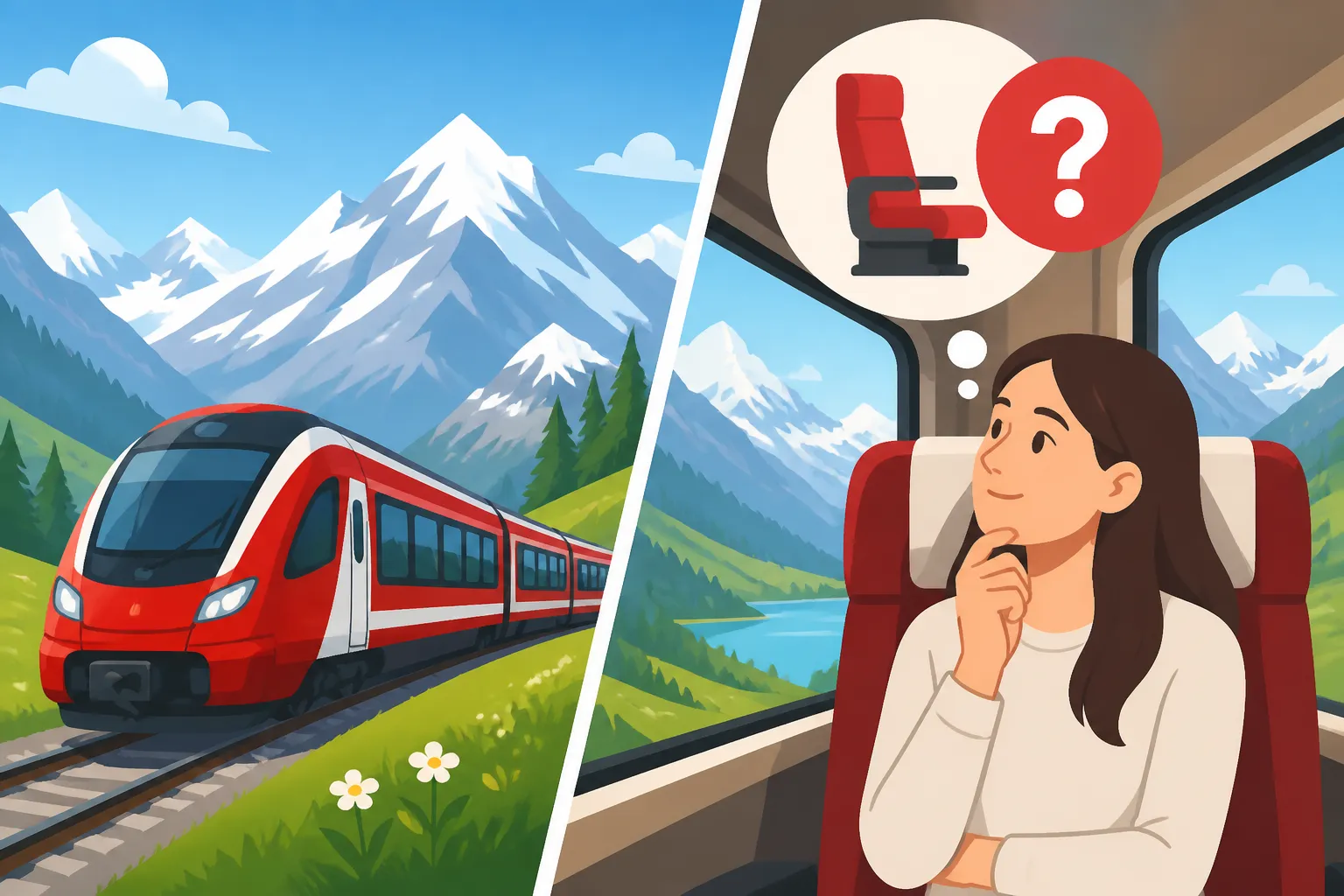
Do You Need to Reserve Seats on the Glacier Express?
Ah, the Glacier Express! It sounds so idyllic, doesn't it? Panoramic windows, majestic mountains, and a slow, winding journey through the heart of the Swiss Alps. But for many of us expats, the moment we start looking into booking, a common question pops up: do you actually need a reservation, or can you just hop on like any other Swiss train? Let me tell you, this isn't your everyday SBB commuter service, and misunderstanding that can lead to a rather disappointing day at the train station. This guide will cut through the confusion and explain exactly how seat reservations work for the "slowest express train in the world."
The Glacier Express: A Journey, Not Just a Train Ride
When you first arrive in Switzerland, you quickly learn that trains here are efficient, punctual, and generally, you can just show up with your ticket or travel pass and board. You might even stroll into first class on a regular InterCity train if you have the right pass, find an empty seat, and call it a day. But then you hear about the Glacier Express, and suddenly, the rules seem to change. It's a different beast entirely, and understanding its unique nature is the first step to enjoying it.
What Makes the Glacier Express Unique?
The Glacier Express isn't just a train; it's an experience curated specifically for tourists and those looking to marvel at Switzerland's spectacular natural beauty in comfort. Imagine traveling from the majestic peaks of Zermatt, past glaciers, through deep gorges, and across hundreds of bridges and tunnels, all the way to the chic resorts of St. Moritz or Davos. It’s a full-day adventure, usually around 8 hours, that showcases some of the most dramatic landscapes Switzerland has to offer.
What truly sets it apart are those iconic panoramic windows that stretch right into the roof, offering unobstructed views of the passing scenery. It's designed to slow down, allowing you to truly soak in every waterfall, every alpine meadow, and every charming village. They even offer an on-board catering service, bringing hot meals and drinks directly to your seat. It's a far cry from grabbing a quick Gipfeli and coffee at the station before work.
Why the Reservation Confusion Exists
The confusion around Glacier Express reservations is completely understandable. As I mentioned, the vast majority of Swiss public transport operates on a first-come, first-served basis for seating. You have your ticket or your Half-Fare Travelcard (Halbtax): The Must-Have Pass for Swiss Residents or your SBB Travelcards: Is the Generalabonnement (GA) Worth the CHF 4000+ Cost?, and you get on the train. Easy. Even for very popular routes or peak times, while trains might be crowded, you’re rarely, if ever, denied boarding for lack of a seat reservation.
The Glacier Express, however, is a special panoramic tourist service. It's not integrated into the regular rhythm of the SBB network in the same way. The carriages are custom-built, the schedule is fixed and leisurely, and the entire operation is geared towards providing that exclusive scenic journey. This means it operates under different rules, and if you're used to the flexible nature of Swiss trains, it can feel like an unexpected hurdle. You're thinking, "I have my GA, why can't I just get on?" And that's where the frustration sets in for many newcomers.
Is a Seat Reservation Truly Mandatory for the Glacier Express?
Let's cut right to the chase, because this is where many expats get tripped up, thinking they can wing it.
The Unequivocal "Yes" and Why
The answer is an unequivocal YES. A seat reservation is absolutely, 100% mandatory for every single passenger traveling on the Glacier Express, regardless of what kind of ticket or travel pass you hold. This isn't a suggestion or a recommendation for a better experience; it's a non-negotiable requirement.
Why is it so strict? Well, for several crucial reasons:
- Limited Capacity: Unlike regular trains that can add extra carriages or standees, the Glacier Express operates with a specific number of specialized panoramic cars. There's a finite number of seats, and they are designed for comfort over maximum occupancy.
- Dedicated Service: This train is a premium product. Each seat is accounted for. There are no "standing room only" areas like on a regular commuter train during rush hour.
- Operational Logistics: The catering service, the slow pace, the planned stops for scenic views – all these elements require precise planning based on a known number of passengers. The crew needs to know exactly who is on board and where they are seated.
- Demand: The Glacier Express is incredibly popular, especially during peak seasons. If reservations weren't mandatory, it would be pure chaos, and many travelers would be left disappointed.
So, please, take this to heart: even if you have a full GA Travelcard: Is the Generalabonnement (GA) Worth the CHF 4000+ Cost? that typically covers all your train travel, it does not cover the mandatory seat reservation fee for the Glacier Express. Your pass covers the fare, but the reservation is an additional, separate cost.
What Happens If You Don't Have One?
Let's paint a picture of a hypothetical (and unfortunate) scenario. You've just arrived in Zermatt, full of excitement, ready to board the legendary Glacier Express. You've got your Swiss Travel Pass or your Half-Fare card and a point-to-point ticket for the journey. You saunter up to the platform, ready to find a comfy seat in the panoramic carriage, only to be met by a stern-faced conductor who asks for your seat reservation.
You explain you have your ticket, your pass, everything. But without that specific, pre-booked seat reservation, you will be denied boarding. It sounds harsh, especially in friendly Switzerland, but it’s a hard rule. The conductor won't bend it, and there's no "pay extra on the train" option for reservations.
At this point, you might be scrambling, perhaps trying to buy a last-minute reservation at the ticket office. But here’s the kicker: during peak season, it’s highly likely that all seats will already be sold out, especially if you're a walk-in on the day. You'd then be faced with the choice of missing out on the experience entirely or finding an alternative route on regular regional trains, which, while scenic, lack the dedicated panoramic carriages and on-board service. Trust me, the stress and disappointment are not worth trying to bypass this essential step.
Understanding the Cost of Glacier Express Reservations
Another common point of confusion is that the seat reservation comes with its own separate fee. It's not a small token amount either, which can sometimes come as a surprise if you're used to regular Swiss train travel.
Reservation Fees: A Separate Charge
As we've established, your travel ticket or pass (be it a full-price ticket, a Saver Day Pass, a Swiss Travel Pass, Eurail Pass, or your GA Travelcard: Is the Generalabonnement (GA) Worth the CHF 4000+ Cost?) covers the cost of the journey. The reservation fee is an entirely separate charge. Think of it like booking a table at a very exclusive restaurant – you still have to pay for your meal, but there's a booking fee for the privilege of securing your spot.
The reservation fees for the Glacier Express are dynamic and depend on the season. They typically range from around CHF 39 to CHF 49 per person, per segment, in both 1st and 2nd class. The cost is generally higher during the busy summer months (June to September) and during the winter holiday season (mid-December to early January) when demand is at its peak. During the quieter shoulder seasons (spring and autumn), the fees might be a few francs less. It's crucial to factor this into your overall budgeting for the trip, as it can add a significant amount, especially for families or groups.
Why the Extra Cost?
You might wonder, why such a hefty additional fee on top of an already expensive Swiss train ticket? The Glacier Express justifies this cost through the unique value it offers:
- Custom-Built Panoramic Carriages: These aren't standard SBB coaches. They are specially designed with extra-large windows, often extending into the roof, providing an unparalleled viewing experience. The maintenance and operation of such specialized rolling stock come at a higher cost.
- Guaranteed Seating: The fee ensures you have a designated seat for the entire journey, which, at up to 8 hours long, is a significant comfort. No worrying about finding a spot or splitting up from your travel companions.
- On-Board Services: The Glacier Express offers a full culinary experience right at your seat. This includes a dedicated kitchen and service staff, which is a premium offering on a train.
- Slow Travel Experience: The train moves at a leisurely pace, allowing passengers to truly absorb the scenery, unlike faster regional or intercity connections. This "slow travel" is part of the allure and the premium experience.
- High Demand for a Unique Product: Simply put, people are willing to pay for this unique experience, and the reservation fee helps manage that demand while also contributing to the operating costs of this world-renowned route.
How to Secure Your Glacier Express Seat Reservation
Now that we understand why it's mandatory and that there's an extra cost, let's talk about how to actually get those all-important reservations. This is where planning truly comes into play.
Booking Directly via Glacier Express
The most straightforward and recommended way to book your seat reservation is directly through the official Glacier Express website. This gives you the most control and access to real-time availability.
Here's a general step-by-step process:
- Visit the Official Website: Go to the official Glacier Express website (often run by Matterhorn Gotthard Bahn or Rhaetian Railway).
- Select Your Journey: Choose your departure and arrival stations (e.g., Zermatt to St. Moritz, or a shorter segment like Chur to Brig). Input your desired travel date.
- Indicate Your Pass/Ticket: The system will ask if you have a GA, Half-Fare, Swiss Travel Pass, Eurail Pass, or no pass. This is crucial because it determines that you only need to pay for the reservation fee, not the full fare. If you don't have a pass, you'll need to purchase the ticket (fare) and the reservation together.
- Choose Your Class: Select 1st or 2nd class. Both offer panoramic windows, but 1st class typically has more spacious seating (2+1 configuration vs. 2+2) and is usually quieter.
- Select Your Seats: This is often possible on the official website. You'll see a carriage layout and can pick specific seats. If you're traveling as a couple or a small group, aim for seats facing each other with a table in between, and definitely try to snag a window seat for the best views. Book early for these prime spots!
- Add On-Board Meals (Optional): If you wish to enjoy a 3-course meal or a daily special at your seat, you can pre-book this during the reservation process. It's highly recommended, as availability for spontaneous meal purchases can be limited.
- Payment and Confirmation: Complete your payment. You'll receive a confirmation email with your reservation details, which you'll need to show to the conductor along with your valid travel ticket/pass.
Pro-Tip for Booking: Especially if you're traveling during high season (summer or Christmas/New Year), book your Glacier Express seat reservations as far in advance as possible – think 3 to 6 months out. Popular dates and specific seat configurations (like window seats for photographers) can sell out surprisingly quickly.
Using Online Travel Agencies and Resellers
While direct booking is often best for choice, sometimes using an online travel agency (OTA) or reseller can be convenient, especially if you're bundling it with other travel plans. Platforms like Omio or GetYourGuide often facilitate booking combined tickets and reservations, and sometimes even packages.
- Pros: These platforms can offer a streamlined booking experience, especially if you’re coordinating multiple legs of a European journey. They might also present options in your native language more readily. For instance, you could search for a journey from Zermatt to St. Moritz on Omio, and it will show you the Glacier Express option, allowing you to select your travel pass and pay the reservation fee.
- Cons: You might pay a small premium or booking fee through a third party. Also, the level of detail in seat selection might be more limited compared to the official Glacier Express website. You might not be able to pick an exact seat number, but rather a "window seat" preference. Always double-check what exactly is included in the price – whether it's just the reservation or also the fare. Ensure you're purchasing from a reputable site to avoid any issues.
For hotel bookings or other activities around your Glacier Express trip, you might find Booking.com useful, as it often integrates with transport options or provides packages for popular tourist routes.
In-Person at Swiss Train Stations
Technically, it is possible to purchase Glacier Express seat reservations in person at larger SBB train stations, such as Zermatt, St. Moritz, Chur, or even Zurich Hauptbahnhof. SBB staff are generally very helpful and can assist you.
However, I highly do not recommend this for the Glacier Express, especially if your travel dates are fixed or if you're traveling during a busy period. By the time you try to book in person, the train could very well be fully booked. This method should only be considered if you have extreme flexibility with your dates and times, or if you're attempting to book a very last-minute seat during the absolute low season when demand is minimal. Don't risk starting your dream journey with a logistical nightmare!
The Different Seasons and Their Impact on Reservations
Just like the weather in Switzerland changes dramatically with the seasons, so does the demand for the Glacier Express and, consequently, the ease of securing a reservation.
High Season (Summer & Winter Holidays)
This is when Switzerland truly shines for tourism, and the Glacier Express is no exception.
- Summer (June to September): The verdant valleys, sparkling lakes, and accessible hiking trails draw crowds. Families, international tourists, and even locals flock to the mountains. The Glacier Express experiences its highest demand during these months. Reservations for prime routes, especially the full Zermatt to St. Moritz journey, can sell out months in advance. You'll want to be booking 3-6 months ahead of your desired travel date, particularly if you have specific seating preferences (like those coveted window spots or a table for your group).
- Winter Holidays (Mid-December to Early January): The magic of a snow-covered Swiss landscape is undeniable. Ski season kicks off, Christmas markets beckon, and the New Year's celebrations fill the resorts. This period also sees a huge surge in Glacier Express bookings. Again, advanced planning (3-5 months out) is paramount to avoid disappointment.
During these periods, it's also common to see higher reservation fees. Popular segments like the Oberalp Pass section between Disentis and Andermatt or the famous Landwasser Viaduct section near Filisur are particularly sought after.
Low Season (Spring & Autumn Shoulder Months)
If you're looking for a slightly more relaxed experience, or if your budget is a bit tighter, traveling during the shoulder seasons might be a good option.
- Spring (April to May): As the snow melts and the alpine flowers begin to bloom, the landscapes are incredibly fresh and vibrant. There are fewer tourists than in summer.
- Autumn (October to November): The larch forests turn brilliant gold, creating a stunning backdrop for your journey. This is a favorite time for many photographers.
During these low seasons, while reservations are still mandatory, the pressure isn't as intense. You might find that booking a few weeks to a month in advance is sufficient to secure your seats. The reservation fees are also often at their lowest during these times. It's a fantastic time to experience the Glacier Express with a bit more breathing room and potentially more flexibility. However, always check the official timetable, as some services might run on reduced schedules during the very quietest weeks.
Annual Maintenance Breaks
One crucial detail often overlooked is that the Glacier Express, like many mountain railways, has annual maintenance breaks. Typically, this happens for a few weeks in late autumn/early winter (e.g., late October to mid-December) and sometimes for a shorter period in late spring before the summer season truly kicks off. During these periods, the Glacier Express trains simply do not run. Always, always check the official Glacier Express timetable on their website before making any plans to ensure the train is operating on your desired travel dates. There's nothing worse than planning a trip and realizing the train isn't even running!
Practical Tips for a Smooth Glacier Express Journey
Once you've wrapped your head around the reservation requirement and booked your seats, a few more tips will help ensure your journey on the Glacier Express is truly unforgettable.
Pairing Reservations with Your Travel Pass
As a seasoned expat, you're likely familiar with the various Swiss travel passes. Here’s how they interact with your Glacier Express reservation:
- Swiss Travel Pass: This pass covers the fare for the entire Glacier Express route. You only need to purchase the mandatory seat reservation.
- GA Travelcard (Generalabonnement): Similar to the Swiss Travel Pass, your GA covers the fare. You simply need to buy the separate seat reservation.
- Half-Fare Travelcard (Halbtax): This pass gives you 50% off the fare. So, you'll need to purchase a Half-Fare ticket for the Glacier Express route and the mandatory seat reservation. Don't forget both!
- Eurail/Interrail Pass: These passes typically cover the fare portion, similar to a Swiss Travel Pass. Again, you will still need to purchase the mandatory seat reservation separately.
- No Pass / Point-to-Point Ticket: If you don't have any passes, you'll need to purchase the full-fare ticket for your chosen route and the mandatory seat reservation. Sometimes, for this scenario, purchasing a Supersaver Tickets on SBB: How to Find the Cheapest Train Fares might be a consideration for the journey fare itself, but these are rarely available for the Glacier Express directly; rather, they'd apply to regular trains if you chose that alternative.
The key takeaway here is always to remember that the pass covers your travel cost but never the reservation cost for the Glacier Express.
Dining Onboard: Pre-booking Meals
The Glacier Express is renowned for its on-board dining experience, where meals are served directly to your seat. Imagine a delicious 3-course lunch, complete with Swiss wine, while majestic mountains glide past your panoramic window. It’s a highlight for many travelers.
However, due to limited kitchen space and preparation time, it is highly recommended to pre-book your meal when you make your seat reservation. While they might have a few à la carte items available for spontaneous purchase, the full menu and specific dishes need to be ordered in advance. If you don't pre-book, you might find yourself only able to get snacks or drinks, potentially missing out on a key part of the experience. The dining car serves passengers directly at their seats, so space is literally limited to what they can prepare for the booked passengers.
Seat Selection: Window Seats and Group Bookings
When you book directly on the Glacier Express website, you can often select your exact seats from a seating plan. This is your chance to snag those prized window seats!
- Window Seats: For obvious reasons, these are the most sought-after. If you're passionate about photography or just want uninterrupted views, book early to secure them. Remember that the train twists and turns, so a "window seat" on one side might offer amazing views for an hour, and then the other side might be better for the next. However, having a window seat regardless means you can lean in and see everything.
- Table Seats: Many seats are arranged in sets of four, with two seats facing two others across a table. This is ideal for families or groups of friends who want to socialize, play cards, or share a meal. If you're a couple, you might prefer two seats side-by-side facing the window.
- Which side is best? This is a hotly debated topic! Generally, the south side of the train (often the right side when traveling from Zermatt to St. Moritz) is considered to offer slightly better views, especially through the Valais region and towards the Oberalp Pass. However, the train traverses so much incredible scenery that honestly, you'll be happy with a window seat on either side.
To help manage your belongings, remember that Luggage and Ski Transport on Swiss Public Transport can be tricky, but the Glacier Express has overhead racks and some space between seats for smaller items. For a long day out, don't forget What to Pack for a Day Trip to the Swiss Alps – even on a train, layers are your friend!
Table: Glacier Express Reservation Key Information
To sum it all up concisely, here’s a quick reference table:
| Feature | Details |
|---|---|
| Mandatory Status | YES, absolutely mandatory for ALL passengers, regardless of ticket or pass. No exceptions. |
| Typical Cost Range | CHF 39 – 49 per person, per segment (varies by season). This is in addition to your fare. |
| Booking Lead Time | High Season (Summer/Winter Holidays): 3-6 months in advance. Low Season (Spring/Autumn): 2 weeks – 1 month in advance. |
| Where to Book | Official Glacier Express Website (recommended), larger SBB train stations, or reputable online travel agencies like Omio or GetYourGuide. |
| Key Considerations | Book as early as possible, especially for window seats or groups. Pre-book on-board meals. Always check the official timetable for operating dates. Bring your printed reservation and valid ticket/pass. |
| Pass Compatibility | GA, Half-Fare, Swiss Travel Pass, Eurail Pass all require a separate reservation fee. |
Alternatives to the Glacier Express: Still See the Scenery!
Let’s be real, the Glacier Express is a premium experience with a premium price tag. If the mandatory reservations, fixed schedule, or additional cost simply don't fit your travel style or budget, fear not! You can still experience much of the incredible scenery that the Glacier Express traverses.
Taking Regular SBB Trains on the Same Route
This is the expat's secret weapon for budget-friendly scenic travel. The Glacier Express operates on tracks that are also used by regular regional trains (mostly run by Matterhorn Gotthard Bahn and Rhaetian Railway).
-
Pros:
- No Reservation Needed: You can hop on and off as you please with your regular SBB ticket or pass.
- Often Cheaper: With a Half-Fare Travelcard (Halbtax): The Must-Have Pass for Swiss Residents or even Supersaver Tickets on SBB: How to Find the Cheapest Train Fares for individual legs, this option is significantly more economical.
- Flexibility: You can break up your journey, stopping in charming towns like Disentis, Andermatt, or Filisur, and resume your travel later.
- Open Windows: Unlike the sealed panoramic windows of the Glacier Express, regional trains often allow you to open the windows – perfect for photography without reflections!
- Same Spectacular Views: You're literally on the same tracks, crossing the same bridges (like the famous Landwasser Viaduct) and winding through the same valleys.
-
Cons:
- No Panoramic Windows: The views are still amazing, but you won't get that "glass-dome" effect.
- Multiple Changes: You'll likely need to change trains several times (e.g., Zermatt to Brig, Brig to Andermatt, Andermatt to Disentis, Disentis to Chur, Chur to St. Moritz). It requires a bit more planning but is easily managed with the Using the SBB Mobile App to Book Scenic and Regional Journeys.
- No On-Board Catering: You'll need to pack your own snacks and drinks, or grab something during a changeover.
- Less of the "Exclusive" Feel: It's just a regular train, not a dedicated tourist experience.
If you're curious about the cost difference, we have a whole article dedicated to Glacier Express vs Regular Trains on the Same Route: The Cost Difference, which breaks down the economics for you. It's a fantastic alternative if flexibility and budget are your priorities.
Other Scenic Trains in Switzerland
Switzerland is brimming with incredible scenic train routes, many of which also offer fantastic experiences, some with less stringent reservation rules. While some, like The Bernina Express: Crossing the Alps to Italy by Scenic Train, also require reservations for their panoramic cars, others might be more flexible.
Consider exploring parts of The GoldenPass Line: Montreux to Lucerne Through the Heartland, which takes you through the beautiful Gruyère region and past stunning lakes, or taking a regular train along one of the numerous routes highlighted in our guide to Day Trips by Train: The Best Swiss Destinations Within Two Hours. These often provide amazing views without the same level of reservation headache or cost. Each offers a different flavor of Swiss beauty, and for the local expat, it's a joy to discover them all.
Remember, whether you choose the dedicated Glacier Express experience or opt for the regional train adventure, the journey itself through the Swiss Alps is truly special. Just make sure you're prepared for the specific rules of whichever train you pick!
Final Thoughts: Don't Let Reservations Deter You
Navigating the nuances of Swiss public transport as an expat can sometimes feel like a game of "spot the exception to the rule." The Glacier Express seat reservation is definitely one of those exceptions, and it trips up many newcomers (and even some long-term residents!). But once you know the drill, it's actually quite simple: secure your reservation, and you're good to go.
Don't let this little administrative detail deter you from experiencing one of Switzerland's most iconic journeys. The Glacier Express truly is a magnificent way to see a vast swathe of this beautiful country, from the raw power of the Valais Alps to the sophisticated Engadine. It’s a slow, immersive experience that lets you relax and absorb every single breathtaking view without worrying about driving, navigating, or even opening your window.
So, go ahead, plan that trip! Whether it's for a special occasion or just a treat to explore your adopted home, make sure you reserve those seats, pack your camera, and get ready for a memorable journey. And remember, for any domestic trip within Switzerland, considering Travel Insurance for Domestic Trips Within Switzerland is always a good idea, just in case. Enjoy the ride, fellow expat!
Disclaimer
The information provided in this article is for general guidance only and is based on current regulations and practices as of 2026. Swiss travel rules and prices, especially for special tourist trains like the Glacier Express, can change. It is essential to verify all information, particularly reservation requirements, fees, and timetables, directly with the official Glacier Express website or SBB before making any travel plans or purchases. The author and publisher are not liable for any discrepancies or outdated information.