Swiss Wine and Cheese Regions: A Resident’s Tasting Guide
Moving to Switzerland, many of us expats arrive with a few preconceived notions about the local culinary scene, often centered around endless fondue nights and a generic white wine. And while these are certainly part of the charm, the true depth and diversity of Swiss wine and cheese often go undiscovered by newcomers. This guide is for those of you eager to peel back the layers, venture beyond the supermarket shelves, and truly experience the rich tapestry of flavors woven into Switzerland's incredible vineyards and rolling pastures.
Uncorking Switzerland's Hidden Wine Gems: Beyond the Stereotypes
When you think of world-class wines, Switzerland might not be the first country that springs to mind, and frankly, that's often by design! Most Swiss wine is lovingly produced, cherished, and consumed right here within the country's borders. Less than 2% of Swiss wine is exported, meaning if you want to experience these unique vintages, you pretty much have to come and drink them in their homeland. This scarcity makes discovering them all the more rewarding, and trust me, there's a whole world beyond the basic Chasselas at your local Coop.
The Terroir Triumphs: Why Swiss Wines Are Unique
Switzerland's wine-growing landscape is a marvel of adaptation and dedication. You'll find vineyards clinging to impossibly steep slopes, often requiring manual labor for cultivation, harvest, and everything in between. This isn't mass production; it's a labor of love. The country's diverse microclimates, from the sun-drenched, dry Valais to the cooler, more humid Vaud, combined with incredibly varied soil types – think slate, limestone, granite, and moraine – create a terroir that's as complex as it is beautiful.
The grape varietals grown here reflect this uniqueness. While you'll certainly find familiar international grapes like Pinot Noir and Gamay, the real treasures are the indigenous varieties. Grapes like Chasselas dominate the white wine scene, producing crisp, mineral-driven wines that are perfect with food. Then there are the lesser-known heroes: Amigne, Arvine, Humagne Blanche for whites, and Cornalin, Humagne Rouge, and Bondola for reds. These grapes, often cultivated on small, family-run estates, contribute to a production style that values quality, tradition, and expressing the land's true character above all else. The winemakers here aren't chasing international trends; they're perfecting centuries-old techniques and nurturing grapes that thrive only in this very specific corner of the world.
Key Wine Regions to Explore: Valais, Vaud, Geneva, and More
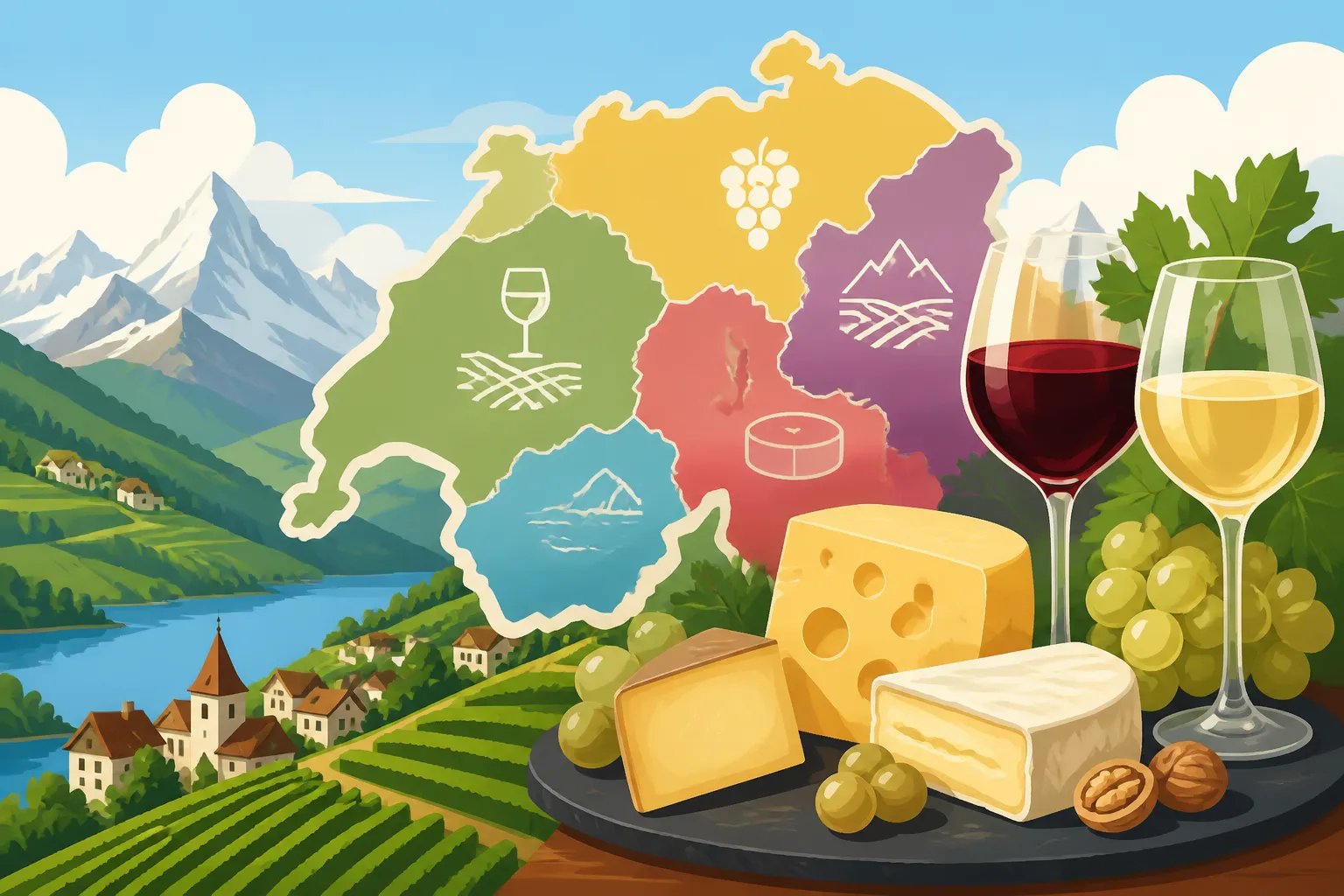
Switzerland is divided into six main wine regions, each with its own personality and star varietals. As a resident, you have the incredible advantage of being able to visit these regions not just as a tourist, but as someone who can return again and again, experiencing the subtle shifts with each season and vintage.
- Valais (Wallis): This is Switzerland's largest wine-producing canton, accounting for about a third of the national output. It's known for its incredibly sunny and dry climate, nestled between imposing mountain ranges. Here you'll find a remarkable concentration of indigenous grapes.
- Vaud (Waadt): Home to the iconic Lavaux vineyards, a UNESCO World Heritage site, Vaud is famous for its terraced vineyards overlooking Lake Geneva. Chasselas reigns supreme here, producing elegant white wines.
- Geneva (Genève): Often overlooked, Geneva has a surprisingly vibrant wine scene, particularly known for its Gamay and Chasselas, along with some excellent sparkling wines.
- Neuchâtel: Along the shores of Lake Neuchâtel, this canton is celebrated for its crisp white Chasselas and its unique Œil de Perdrix, a delicate rosé made from Pinot Noir.
- German-Speaking Switzerland (Deutschschweiz): This broad category encompasses several smaller cantons like Zurich, Thurgau, and Schaffhausen. Pinot Noir is the king here, often producing lighter, fruitier reds than their French counterparts, alongside Müller-Thurgau for whites.
- Ticino: Switzerland's Italian-speaking canton boasts a distinctly Mediterranean feel, with Merlot being the dominant grape, creating surprisingly robust and characterful red wines.
Each region offers a distinct experience, from the dramatic landscapes of the Valais to the serene beauty of the Lavaux. Exploring these areas means not just tasting wine, but immersing yourself in the local culture, cuisine, and breathtaking scenery. For a deeper dive, you might find our guide on Swiss Wine Regions: Valais, Vaud, Geneva, and Ticino Explained particularly helpful.
A Deep Dive into Switzerland's Most Celebrated Wine Regions
Let's get a bit more granular and talk about where to start your vinous adventures, focusing on a few key regions that are easily accessible for most expats.
Valais: Sun-Drenched Slopes and Indigenous Varietals
Ah, Valais! This canton truly feels like a different country, with its dramatic landscapes, abundant sunshine, and distinct culture. The Rhône River carves its way through the valley, flanked by vineyards that climb steeply up the mountainsides. The dry, warm climate here is perfect for ripening a diverse array of grapes. While Fendant (the local name for Chasselas) is prevalent and makes for a delightfully easy-drinking white, the real stars are the indigenous red grapes like Cornalin and Humagne Rouge, which produce robust, earthy wines with complex notes, and white grapes like Petite Arvine, known for its saline minerality and crisp acidity, and Amigne, which can range from dry to luscious dessert wines.
When visiting, places like Salgesch (Salquenen in French) are fantastic starting points. It's often referred to as a "wine village" and boasts numerous cellars where you can pop in for a tasting. Another gem is Visperterminen, home to Europe's highest vineyard, where you can hike through vines perched precariously on slopes. Many winemakers here are small-scale, family-run operations. Don't be shy about asking for a dégustation (tasting); often, the winemaker themselves will guide you through their offerings. Look out for local events and open cellar days, especially in autumn during harvest season, for a truly authentic experience.
Vaud: Terraced Vineyards of Lavaux and Beyond
The Canton of Vaud is perhaps the most visually stunning wine region, especially the Lavaux vineyard terraces, a UNESCO World Heritage site since 2007. Imagine miles of meticulously crafted stone walls, supporting vineyards that plunge down to the sparkling blue waters of Lake Geneva, with the snow-capped Alps in the background. It's a postcard come to life, and the wines produced here are just as captivating.
Chasselas is king in Vaud, and it's a grape that truly expresses its terroir. A Chasselas from Dezaley will taste different from one grown in Epesses or St-Saphorin. These wines are often dry, with subtle floral or mineral notes, and a refreshing acidity that makes them incredibly food-friendly – perfect with local lake fish or, of course, cheese. Beyond Lavaux, Vaud also encompasses regions like La Côte, stretching west towards Geneva, and Chablais, east towards Valais, each offering their own nuances.
A fantastic way to explore Lavaux is via one of the many "wine walks" (Chemin des Vignes). These well-marked paths lead you through the vineyards, past charming villages, and often directly to caveaux (wine cellars) where you can taste and buy wine. Many villages host regular caveaux open days, particularly on weekends, providing an excellent opportunity to sample a variety of local productions. Consider a leisurely day trip from Geneva to Montreux, stopping in the Lavaux for some wine tasting, which you can easily arrange through platforms like GetYourGuide for specific tours or simply explore on your own with the help of public transport. For more ideas on how to spend a day in this beautiful area, check out our guide on Day Trips from Geneva: Montreux, Gruyères, and the Lavaux Vineyards.
Geneva & Neuchâtel: Lakeside Elegance and Bubbly Surprises
The Canton of Geneva, despite being a major international city, is also a significant wine producer, boasting three main sub-regions: Mandement, Entre Arve et Rhône, and L'Entre deux Lacs. Here, you'll find a diverse range of grapes, including Gamay (often producing light, fruity reds), Pinot Noir, and of course, Chasselas. What's particularly interesting about Geneva's wine scene is its proximity to the city, making day trips incredibly easy. Many small winemakers offer direct sales and tastings, a true delight if you manage to find them.
A bit further north, the Canton of Neuchâtel hugs the lake of the same name and is renowned for its crisp Chasselas wines and especially for Œil de Perdrix. This unique, pale salmon-pink rosé, made from Pinot Noir grapes, is a regional specialty and absolutely delicious as an aperitif or with lighter meals. Neuchâtel also produces some lovely Pinot Noir reds and a growing number of traditional method sparkling wines, which are always a treat. The wines here are characterized by their elegance and freshness, reflecting the cooler climate and lakeside influence.
German-Speaking Switzerland: Pinot Noir & Müller-Thurgau
Venturing into the German-speaking cantons, the wine landscape shifts slightly. While less dramatic than the Valais terraces, these regions, particularly Graubünden (Grisons), Zurich, Thurgau, and Schaffhausen, are home to a vibrant and often understated wine culture. Here, Pinot Noir, known locally as Blauburgunder, is the dominant red grape. These Pinot Noirs tend to be lighter-bodied, fruitier, and less oak-driven than their French counterparts, making them incredibly approachable.
In Graubünden, specifically the Bündner Herrschaft, you'll find some of Switzerland's most esteemed Pinot Noirs. This area, with its picturesque villages like Maienfeld (Heidi's village!), benefits from the Föhn wind, which helps ripen the grapes. For whites, Müller-Thurgau (also known as Riesling x Sylvaner) is common, producing pleasant, aromatic, and easy-drinking wines. These regions are dotted with small, often generational, family wineries that are passionate about their craft. Visiting them offers a very personal experience, often involving direct conversations with the winemakers themselves. You can easily plan a day trip to explore these areas, perhaps combining it with a scenic train journey, and booking your travel through Omio to compare routes and prices.
The Art of Swiss Cheesemaking: More Than Just Holes
Now, let's talk cheese. If you thought Swiss cheese was just Emmental with its iconic holes, prepare for a delicious education! Swiss cheesemaking is an ancient tradition, deeply rooted in the country's alpine geography and agricultural heritage. It's a craft that's celebrated with immense pride, resulting in an incredible array of flavors, textures, and aromas.
From Alpine Pastures to Aged Wheels: The Cheesy Landscape
Swiss cheese is intrinsically linked to the land and the animals that graze upon it. Many of the most revered cheeses are made from raw milk, often from cows that spend their summers high in the Alps, feasting on nutrient-rich grasses and herbs. This "Alpkäse" (Alpine cheese) has a distinct flavor profile that simply can't be replicated.
The traditional cheesemaking process is fascinating and, in many cases, involves strict adherence to centuries-old methods. AOP (Appellation d'Origine Protégée) designations are fiercely protected, guaranteeing that certain cheeses are made according to specific rules in defined geographical areas, from the type of milk to the aging process. This commitment to quality and authenticity means that when you buy an AOP cheese, you're not just getting a product; you're getting a piece of Swiss heritage and a taste of its unique terroir. Think of it as the cheese equivalent of a fine wine's AOC.
Exploring Iconic Swiss Cheeses by Region
Each region of Switzerland boasts its own cheesy treasures. Getting to know them is a delicious journey of discovery.
- Gruyère (AOP): Hailing from the canton of Fribourg and parts of Vaud and Bern, Gruyère is arguably Switzerland's most famous cheese after Emmental. It's a hard, raw-milk cheese, aged for several months to over a year, developing nutty, fruity, and increasingly complex flavors. It melts beautifully, making it a star in fondues and gratins, but is equally wonderful on its own.
- Emmental (AOP): The iconic "Swiss cheese with holes," Emmental originates from the Emme Valley in the canton of Bern. It's a semi-hard cow's milk cheese with a mild, buttery, nutty flavor. The holes, or "eyes," are a result of carbon dioxide released by specific bacteria during maturation.
- Appenzeller®: This zesty, spicy, hard cheese from Appenzell is distinctively washed with an herbal brine during its maturation, giving it a unique aroma and flavor. The exact recipe for the brine is a closely guarded secret!
- Tête de Moine (AOP): Meaning "monk's head," this semi-hard cheese from the Jura region is traditionally shaved into delicate rosettes using a special tool called a girolle. The shaving process enhances its aromatic, floral, and slightly nutty flavor.
- Sbrinz (AOP): Switzerland's oldest cheese, a hard, extra-hard cheese from Central Switzerland, Sbrinz is similar to Parmesan but with its own distinct character. It's often grated or broken into small chunks and eaten with a glass of local wine.
- Vacherin Mont d'Or (AOP): A true winter delight! This soft, creamy, raw-milk cheese from the Jura mountains is encircled by a spruce bark belt, giving it a unique woody aroma. It's often baked in its box and spooned over potatoes.
- Raclette cheese (AOP): While "raclette" also refers to the meal, the cheese itself is typically a semi-hard cow's milk cheese, designed to be melted. Valais is a major producer of raclette cheese, with several distinct varieties.
- Local Mountain Cheeses (Alpkäse): Beyond the big names, every region, every valley, and sometimes every alpine pasture has its own unique Alpkäse or Bergkäse (mountain cheese). These are often made in small batches, reflecting the local flora and the cheesemaker's individual touch. Visiting an Alpkäserei (alpine dairy) in summer is an unforgettable experience.
For those keen on trying these local specialties, remember that Swiss Farmers' Markets: Where and When to Shop Local are often the best places to discover small, independent producers.
Pairing Perfection: Wine and Cheese Beyond Fondue
Okay, so you've stocked up on some fantastic Swiss wines and a selection of local cheeses. Now, how do you bring them together for a truly memorable experience that goes beyond the obvious?
Classic Combinations and Unexpected Delights
The beauty of Swiss wine and cheese is their inherent compatibility; they grew up together, so to speak. Here are a few pairings to get you started, moving past the common assumption that all white wine goes with all cheese.
- Chasselas (especially Fendant from Valais or wines from Lavaux) with Raclette or Gruyère: This is a classic for a reason. The crisp acidity and mineral notes of Chasselas cut through the richness of melted raclette or the nutty flavors of Gruyère, cleansing the palate and preparing you for the next bite. The local often pair their Raclette with Fendant for this very reason.
- Petite Arvine (Valais) with Aged Sbrinz or Alpine Cheese: The vibrant acidity, citrus, and sometimes saline notes of Petite Arvine beautifully complement the sharp, granular texture and intense flavors of an aged Sbrinz or a complex Alpkäse. It's a sophisticated match that highlights both elements.
- Pinot Noir (German-speaking Switzerland or Neuchâtel) with Tête de Moine or milder Gruyère: The often lighter body and red fruit notes of Swiss Pinot Noir make it an excellent partner for more delicate cheeses like Tête de Moine, whose shaved rosettes enhance its floral aromas. It also works well with a younger, less intense Gruyère.
- Gamay (Geneva) with Vacherin Mont d'Or (baked) or Tomme Vaudoise: The fruity, approachable nature of a Geneva Gamay pairs wonderfully with the creamy, earthy notes of a baked Vacherin Mont d'Or, or with the fresh, milky tang of a soft Tomme Vaudoise.
- Humagne Rouge or Cornalin (Valais) with Aged Mountain Cheese or Appenzeller: For the bolder red wines, reach for equally bold cheeses. The rustic, earthy, and sometimes spicy character of these Valais reds can stand up to the pungent, herbal notes of Appenzeller or the robust flavors of a mature Alpkäse.
Don't be afraid to experiment! The best pairing is always the one you enjoy most. Many producers will offer pairing suggestions directly at their caveaux or dairies. For a deeper dive into one of Switzerland's most beloved cheese dishes, you might enjoy our article on Fondue and Raclette Culture: How and When the Swiss Eat Them.
Creating Your Own Swiss Apéro Experience
The apéro (aperitif) is a cherished Swiss tradition, a time to unwind, socialize, and enjoy small bites before dinner. Hosting your own Swiss-themed apéro is a fantastic way to showcase your newfound appreciation for local wines and cheeses.
Here's how to elevate your gathering:
- Select Your Stars: Choose 2-3 Swiss wines (perhaps one white, one red, one rosé or sparkling) and 3-4 diverse Swiss cheeses. Think about a range of textures and intensities: a soft creamy one like Tomme Vaudoise, a semi-hard like Raclette or Emmental, and a hard, aged one like Gruyère or Sbrinz. Don't forget the Tête de Moine with its girolle for a touch of theater!
- Bread is Key: Serve a selection of fresh, crusty Swiss bread. A dark, hearty Bauernbrot (farmer's bread) or a light Weissbrot (white bread) are perfect.
- Accompaniments: This is where you can truly shine.
- Pickles: Small pickled gherkins (cornichons) and pickled onions are essential, especially with raclette cheese.
- Dried Meat: A platter of local viande séchée (dried meat) from Valais or Grisons is a perfect complement to red wines and hard cheeses.
- Fruits & Nuts: Fresh grapes, apples, pears, walnuts, and almonds add texture and sweetness, balancing the savory cheese.
- Mustards/Jams: A fig jam or a slightly sweet fruit mustard can be surprisingly good with certain cheeses.
- Potatoes: For a more substantial apéro, consider serving Gschwellti (boiled jacket potatoes) alongside the raclette cheese – a simple yet incredibly satisfying combination.
- Presentation Matters: Arrange your cheeses on a beautiful wooden board, clearly label them, and ensure your wines are served at the correct temperature. A little effort goes a long way in making the experience special.
Remember, the apéro is about relaxed enjoyment and good company, so don't stress too much about perfection. It's the thought and the local flavors that truly count!
Planning Your Wine and Cheese Journey as a Resident
One of the greatest perks of living in Switzerland is the sheer accessibility of these incredible wine and cheese regions. You don't need a grand vacation; a simple day trip or a weekend getaway can immerse you in the heart of Swiss culinary tradition.
Visiting Wineries and Caveaux: What to Expect
Visiting a Swiss winery is often a more intimate affair than in some larger wine-producing countries. Here's what you should know:
- Booking is Often Essential: Especially for smaller, family-run operations, it’s always best to call or email ahead to arrange a tasting (dégustation). Many don't have regular drop-in hours. For larger, more established wineries, you might find structured tours you can book directly or through platforms like GetYourGuide.
- Language: While many winemakers, especially in tourist-heavy regions like Lavaux or Valais, will speak some English, knowing a few basic phrases in the local language (French in Vaud/Valais/Geneva, German in German-speaking Switzerland, Italian in Ticino) will significantly enhance your experience.
- Tasting Fees: Expect to pay a fee for a tasting, especially if you're not purchasing bottles. This is common practice and fair compensation for the winemaker's time and product. Fees vary but are usually reasonable, and sometimes waived if you buy wine.
- Buying Directly: This is the best part! Not only do you get to take home wines you genuinely love, but buying directly from the producer often means better prices and ensures you're supporting local businesses.
- Best Times to Visit: Spring (April-May) is beautiful with blooming vineyards, and autumn (September-October) is bustling with harvest season, often accompanied by local wine festivals. Summer (June-August) offers warm weather for apéros on terraces. Winter can be quiet but still offers charming cellar experiences.
Remember that Swiss Customs and Etiquette: Social Norms Every Newcomer Should Know also apply to winery visits – punctuality, respect, and a genuine interest in the craft will be appreciated.
Cheese Dairies and Alp Cheese Farms (Alpkäsereien)
Experiencing cheesemaking firsthand is a truly wholesome and educational experience.
- Public Tours: Many larger cheese dairies, particularly those with AOP status, offer public tours and visitor centers. The Maison du Gruyère in Gruyères and the Emmentaler Schaukäserei in Affoltern im Emmental are prime examples, offering engaging insights into the production process, often with an opportunity to watch cheesemakers at work. These are often called Schaukäsereien (show dairies).
- Tasting Opportunities: Tours almost always conclude with a tasting, allowing you to sample cheeses at different stages of maturity. You can also purchase cheese directly from their shops, often at better prices than in supermarkets.
- Alpkäsereien: For a more rustic, seasonal experience, seek out Alpkäsereien during the summer months (typically June to September). These are small dairies located high in the Alps where cows graze on fresh mountain pastures, and the cheese is made daily, often over a wood fire. Many offer simple meals or cheese platters, and the chance to buy Alpkäse directly. It’s an incredible way to connect with traditional Swiss farming. You might even stumble upon an Alpabzug (cattle descent) in autumn, a vibrant festival celebrating the cows' return from the alpine pastures.
- Seasonality: Keep in mind that some cheeses, like Vacherin Mont d'Or, are seasonal, only available in the colder months. Alpkäse is, by definition, a summer product.
Navigating Wine Walks and Festivals
Switzerland excels at combining its stunning landscapes with its culinary offerings, and wine walks are a perfect example.
- Popular Wine Walks: The Lavaux region offers several well-marked wine walks, where you can stroll through vineyards and visit caveaux along the way. Other cantons like Valais also have established routes. These are typically well-signposted, and you can often find maps at local tourist offices or online.
- Annual Wine Festivals (Weinfeste/Fêtes du Vin): These are fantastic opportunities to sample a huge variety of wines from a specific region or village. They often take place during the harvest season (September/October) but can also be found in spring or summer. Expect lively atmospheres, food stalls, music, and the chance to meet many local winemakers. The Fête des Vendanges in Neuchâtel or the Fête du Raisin in Lutry (Lavaux) are prime examples.
- Local Events: Keep an eye on local Gemeinde (municipality) or tourist office websites for smaller, more intimate events like open cellar days or specific wine-and-dine events. These hidden gems often provide the most authentic experiences.
For inspiration on combining wine walks with other activities, our guide to Swiss Hiking for Beginners: Trail Grades and the SAC System might give you some ideas for exploring the general regions by foot.
Transport & Accommodation Tips for Culinary Trips
Planning your trip within Switzerland is incredibly easy thanks to its world-class public transport network.
- Using SBB: Switzerland's public transport system (SBB) is incredibly efficient and reaches even the smallest villages. Most wine regions are well-served by trains and local PostBuses. Planning your route on the SBB website or app is straightforward. Consider getting a The Half-Fare Travelcard (Halbtax): The Must-Have Pass for Swiss Residents or even the SBB Travelcards: Is the Generalabonnement (GA) Worth the CHF 4000+ Cost? if you plan frequent excursions, as these can significantly reduce travel costs. Remember, you can compare train and bus options using Omio to make sure you're getting the best connections for your journey.
- Staying in Wine Villages: For a truly immersive experience, consider booking accommodation directly in a wine village. Many small hotels, guesthouses, and even B&Bs are run by winemaking families. This allows you to explore at a leisurely pace, enjoy tastings without worrying about driving, and soak in the local atmosphere. You can often find charming boutique hotels or cozy guesthouses directly through Booking.com by searching for specific village names like Lavaux, Salgesch, or Maienfeld.
- Car Rental: While public transport is excellent, a car can offer more flexibility, especially if you plan to visit multiple small, remote wineries or Alpkäsereien off the main routes. Just be mindful of Swiss drinking and driving laws, which are very strict.
Practical Tips for Expats: Embracing the Swiss Culinary Scene
As an expat, navigating a new culture’s culinary nuances can be daunting, but with a few pointers, you'll be swirling and sniffing like a local in no time.
Language and Local Etiquette in Wine & Cheese Settings
While the Swiss are generally accommodating, making an effort with the local language goes a long way.
- Basic Phrases: Learn a few key phrases: "Guten Tag" (German), “Bonjour” (French), “Buon giorno” (Italian) for greetings; “Danke schön”/“Merci beaucoup”/“Grazie mille” for thank you; “Auf Wiedersehen”/“Au revoir”/“Arrivederci” for goodbyes.
- Tasting Terminology: Knowing words like dégustation (tasting), caveau/Weinkeller (wine cellar), Käserei/Fromagerie (cheese dairy), Weisswein/vin blanc (white wine), Rotwein/vin rouge (red wine), Käse/fromage (cheese) will be helpful.
- Engaging with Producers: The Swiss value directness and authenticity. Show genuine interest in their craft, ask questions (even if through a translation app), and be respectful of their traditions. Don't be surprised if they offer you a glass of wine directly from the barrel or a piece of cheese they've just cut; it's a sign of hospitality.
- Punctuality: As always in Switzerland, punctuality is key, especially if you've booked a tasting appointment.
Buying Swiss Wine & Cheese: Where to Find the Best
Beyond the immediate satisfaction of a tasting, you'll want to bring these delicacies home.
- Direct from Producers: This is hands-down the best option for wine. You get the freshest selection, often wines not available elsewhere, and personal advice. Many winemakers also offer shipping within Switzerland if you buy a larger quantity.
- Local Markets: For cheese, local Wochenmärkte (weekly markets) or Bauernmärkte (farmers' markets) are goldmines. You'll find smaller producers selling their seasonal cheeses, often with samples. This is where you'll discover those unique Alpkäse varieties that rarely make it to larger stores. You can find more details in our Swiss Farmers' Markets: Where and When to Shop Local article.
- Specialty Shops (Weinhandlungen/Fromageries): Larger towns and cities will have dedicated wine shops and cheesemongers who are incredibly knowledgeable and can guide you through regional specialties. They might carry a wider selection of smaller producers than even the larger supermarkets.
- Larger Supermarkets (Coop, Migros, Manor): While they offer convenience, their selection of Swiss wines and cheeses tends to be more mainstream. However, they are improving, and you can still find good quality options, especially with their own labels or regional selections.
- Online Retailers: A growing number of Swiss wineries and cheese producers now offer online sales and home delivery, which can be incredibly convenient, especially if you're in a canton far from your favorite region. Some consolidated platforms also exist, offering a curated selection.
Budgeting for Your Gastronomic Adventures
Switzerland is, let's be honest, not known for being cheap. But with a bit of savvy planning, you can indulge in its culinary delights without completely draining your wallet.
- Wine Tasting Costs: As mentioned, tastings often have a fee. If you're on a budget, consider splitting a tasting flight with a friend or focusing on purchasing a few bottles after a single, carefully chosen tasting rather than visiting many.
- Cheese Prices: Specialty cheeses can be pricey, especially Alpkäse or those with long maturation periods. Buying directly from a dairy or market can sometimes offer slight savings compared to fromageries in prime city locations.
- Travel Costs: Utilizing your Half-Fare Card is essential. If you're planning a full day of hopping between villages, a Day Pass (Tageskarte) or a Saver Day Pass (Spartageskarte) purchased in advance via Omio or SBB can be much more economical than buying individual tickets. For group travel, look into group discounts.
- Picnics: Instead of always eating at restaurants, pack a picnic! Grab some fresh bread, charcuterie, and cheese from a local market, and enjoy it with a bottle of local wine amidst the vineyards or by a lake. This is a truly Swiss way to experience the scenery and save money.
- Combining Activities: Plan your wine or cheese excursion to coincide with other regional attractions. For instance, combine a visit to Gruyères Castle and town with a stop at La Maison du Gruyère. Or integrate a vineyard visit into a hike, as detailed in our guide Hiking the Lavaux Vineyard Terraces Above Lake Geneva.
The Future of Swiss Wine and Cheese: Innovation and Sustainability
Switzerland isn't just clinging to tradition; its wine and cheese industries are dynamic, constantly evolving, and increasingly focused on sustainability and innovation.
New Generations and Organic Practices
A new wave of young, passionate winemakers and cheesemakers is injecting fresh energy into these ancient crafts. Many are returning to family vineyards and dairies after training abroad, bringing back new ideas while honoring their heritage.
- Biodynamic and Organic Farming: There's a growing trend towards organic, biodynamic, and natural wine production. More producers are eschewing chemicals, focusing on soil health, and letting the grapes express their true nature with minimal intervention. This commitment often translates to higher quality and more expressive wines.
- Modern Techniques: While respecting tradition, cheesemakers are also integrating modern technology to ensure consistency, hygiene, and efficiency, all while maintaining the artisanal quality that Swiss cheese is known for.
- Experimentation: Expect to see more experimental wines – new blends, forgotten varietals brought back to life, and innovative aging techniques. For cheese, new flavors and textures are being explored, though always within the framework of local taste preferences and quality standards.
Challenges and Opportunities for Swiss Producers
The journey isn't without its hurdles, but Swiss producers are resilient and adaptable.
- Climate Change: Like agricultural sectors worldwide, Swiss vineyards and pastures are facing the impacts of climate change. Warmer temperatures are prompting some winemakers to plant different grape varietals or adapt their viticultural practices. Cheesemakers are dealing with changes in pasture growth and milk production.
- Export Challenges: The high cost of production and the small scale of most operations mean Swiss wines struggle to compete on the international market in terms of price. However, this also presents an opportunity: focusing on niche, high-quality exports to discerning markets and highlighting the unique story behind each bottle.
- Maintaining Quality and Reputation: The biggest challenge and opportunity for Swiss wine and cheese is to continue to uphold their reputation for exceptional quality and authenticity. Strict AOP designations and dedicated craftsmanship ensure that Swiss products remain among the best in the world, a point of pride for residents and a delight for visitors.
So, as an expat living here, you're not just a consumer; you're part of this journey, helping to support these incredible traditions and innovations with every glass of local wine and every bite of artisanal cheese. Cheers to that!
Disclaimer
The information provided in this guide is for general informational purposes only and does not constitute professional advice. While we strive to keep the information up-to-date and correct, rules and regulations regarding customs, permits, and specific product availability or pricing can change. We recommend verifying details with official sources, local authorities, or specific businesses mentioned before making any decisions or plans. We cannot be held responsible for any errors or omissions.