Switzerland by Train: The SBB Network, Scenic Routes, and Day Trips
Oh, train travel in Switzerland! If you're anything like me when I first moved here, you probably looked at the SBB website and felt a mix of awe and utter bewilderment. Awe at the sheer efficiency and punctuality, and bewilderment at the labyrinthine ticket options and prices. It's a fantastic system, truly world-class, but it definitely has its quirks for newcomers. This guide is going to cut through the confusion and help you master the art of Swiss train travel, from understanding the core network to embarking on those jaw-dropping scenic routes and hassle-free day trips.
The Heart of Swiss Travel: Understanding the SBB Network
Let's be real: Switzerland's public transportation system is the envy of the world. It’s an intricate ballet of trains, buses, boats, and cable cars, all working in seemingly perfect harmony. And at the heart of it all is the SBB – Schweizerische Bundesbahnen, or Swiss Federal Railways. But it's so much more than just a train company; it’s the backbone of how most people, whether residents or tourists, get around this stunning country.
SBB: More Than Just Trains – The Integrated System
When you think SBB, don't just picture a train. Envision a seamlessly integrated network that connects practically every hamlet and mountain peak. This means that a single SBB ticket, or especially a travel pass, often covers not just the train ride, but also the connecting PostBus that winds up a remote valley, a tram ride across a city, or even a ferry journey across a sparkling lake. It’s truly comprehensive, designed to get you from any A to any B, no matter how remote A or B might be. For instance, if you want to visit a small mountain village like Lauterbrunnen, your SBB ticket from Zurich will likely cover the intercity train to Interlaken, the regional train to Lauterbrunnen, and even the local bus within the village, all on one simple booking. This integration is what makes last-minute travel or spontaneous detours so wonderfully easy here, unlike in many other countries where you'd be wrestling with multiple different operators and tickets.
The magic lies in the fact that the SBB acts as the central coordinator for most public transport in Switzerland. While individual cantons and private companies operate parts of the network (like certain mountain railways or local city trams), the SBB app and website consolidate all this information. This means you don't need to juggle separate apps for a bus in Lugano, a tram in Geneva, and a train to Zurich. It’s all there, one-stop shopping for your journey planning. This comprehensive approach ensures that you rarely, if ever, find yourself stranded or unable to reach your destination by public transport, even in the most remote corners of the Alps. This level of coordination makes exploring the country a true joy, reducing stress and allowing you to simply enjoy the ride and the breathtaking scenery passing by your window.
Navigating the Swiss Timetable and SBB Mobile App
The Swiss timetable isn't just a suggestion; it's a way of life here, and it’s meticulously planned down to the minute. The SBB Mobile App is, without a doubt, your best friend for navigating this system. Forget paper timetables; this app is an absolute game-changer. It's available in English, German, French, and Italian, and it provides real-time updates on all public transport connections across the entire country. You can input any address, not just train stations, and it will give you the precise connection, including walking routes, train numbers, platform changes, and estimated arrival times.
What I love about the SBB app is its accuracy. If a train is delayed by a minute, the app tells you. If your platform changes at the last second (which can happen in busy stations like Zurich HB!), the app pushes a notification right to your phone. It even shows you the expected occupancy of trains, which can be a lifesaver if you’re trying to avoid standing-room-only carriages during rush hour or on popular routes. You can buy tickets directly through the app, store your Half-Fare card or GA, and even subscribe to push notifications for specific routes you frequently travel. Seriously, download it the moment you arrive. It removes so much of the stress and guesswork, making you feel like a seasoned local from day one. Trust me, I spent my first few months here glued to that app, and it’s still my go-to for any travel planning, whether it’s a quick hop across town or a grand adventure to the other side of the country.
Decoding Swiss Travel Passes: GA, Half-Fare, and Day Passes
This is where many expats (and tourists) get a bit overwhelmed. Switzerland has a bewildering array of travel passes, each designed for different types of travelers and different lengths of stay. Choosing the right one can save you a significant amount of money, but picking the wrong one can feel like flushing francs down the toilet. Let's break down the most popular and useful options for residents and frequent visitors.
The General Abonnement (GA): Is It Worth the Investment?
Ah, the General Abonnement, or GA. This is the holy grail of Swiss public transport – unlimited travel on almost all trains, buses, trams, and boats across Switzerland, with discounts on most mountain railways, for an entire year. It’s the ultimate freedom pass. The feeling of just hopping on any train, any time, without a second thought about tickets, is truly liberating. It means you can spontaneously decide to go to Geneva for lunch, or take an evening stroll around Lake Lucerne, and it won't cost you an extra cent beyond the initial yearly fee.
However, the GA comes with a hefty price tag, typically well over CHF 4,000 for an adult annual pass (prices can vary slightly depending on whether you pay monthly or yearly, and specific age groups). So, is it worth it? For most expats, especially those living here for the long haul, it absolutely can be. If you commute daily by train for work, travel frequently for leisure on weekends, or have children who also benefit from discounted passes, the GA can quickly pay for itself. I know many colleagues who calculate that just their daily commute covers a huge chunk of the cost, and then all their weekend excursions are essentially "free." It's perfect for those who truly want to immerse themselves in exploring every corner of Switzerland without budgeting for individual journeys. If you're planning on being in Switzerland for a while and anticipate extensive travel, definitely look into the SBB Travelcards: Is the Generalabonnement (GA) Worth the CHF 4000+ Cost? article for a deeper dive.
The Half-Fare Travelcard (Halbtax): Your Essential Companion
If the GA is the Cadillac, the Half-Fare Travelcard (often just called "Halbtax") is the sturdy, reliable SUV that everyone needs. This is, in my opinion, the single most valuable investment any expat or long-term visitor to Switzerland can make. For an annual fee (around CHF 185 for adults), it gives you 50% off almost all public transport tickets – trains, buses, trams, and boats – and significant discounts on most mountain railways. It quickly pays for itself after just a few longer journeys.
Seriously, almost every Swiss resident has a Halbtax. It’s just expected. Even if you only plan a few weekend trips a year, the savings add up dramatically. Imagine a return trip from Zurich to Zermatt costing around CHF 250 without a Halbtax; with one, it's CHF 125. That’s already close to covering the annual cost! It’s the easiest way to make Swiss travel affordable without committing to the full expense of a GA. You can purchase it for one, two, or three years, and it's super easy to link to your SBB Mobile app or carry as a physical card. Trust me on this one, get a The Half-Fare Travelcard (Halbtax): The Must-Have Pass for Swiss Residents. It's a no-brainer.
Saver Day Passes and Supersaver Tickets: Smart Savings
Even with a Half-Fare card, individual tickets can still be quite pricey, especially for long distances. This is where "Saver Day Passes" (Spartageskarten) and "Supersaver Tickets" (Sparbillette) become your budgeting secret weapon. These are discounted tickets that are sold in limited quantities for specific routes or days, and their price increases as the travel date approaches and availability shrinks. Think of it like booking a flight – the earlier you book, the cheaper it is.
A Saver Day Pass allows you to travel for a full day on the entire SBB network, similar to a mini-GA, but only for a specific date. The price can range from CHF 29 (with Halbtax) to CHF 106 (without Halbtax) for 2nd class, if booked far enough in advance. These are fantastic for spontaneous day trips across the country. Supersaver Tickets, on the other hand, are for specific train connections on specific routes. They are tied to a particular time and train, meaning you can't just hop on an earlier or later train. If you miss it, your ticket is void. However, they can offer deep discounts, sometimes up to 70% off the standard fare. The trick with both is to book as early as possible, typically up to 60 days in advance, directly through the SBB website or app. Keep an eye out for these, especially if you have firm travel plans. They're an absolute lifesaver for making those incredible Swiss adventures more affordable. You can learn more about these in the dedicated guide: Saver Day Pass (Spartageskarte): How Residents Save on Day Trips.
Here’s a quick overview of the main passes:
| Pass Type | Price (Approx. Adult Annual) | Key Benefit | Ideal For |
|---|---|---|---|
| General Abonnement (GA) | CHF 4,000 – CHF 5,000+ | Unlimited travel on most public transport (train, bus, tram, boat) | Daily commuters, frequent leisure travelers, long-term residents with high usage |
| Half-Fare Travelcard | CHF 185 | 50% off almost all public transport tickets and most mountain railways | All residents and frequent visitors, pays off quickly |
| Saver Day Pass | CHF 29 – CHF 106 (with Halbtax, booked early) | Unlimited travel for one specific day on entire network (must book in advance) | Spontaneous full-day trips, when booked early |
| Supersaver Ticket | Varies (up to 70% off) | Discounted travel for a specific route and train connection (must book in advance) | Planned long-distance journeys on a budget, for a specific itinerary |
Booking Your Journey: Tickets, Reservations, and Platforms
Once you've wrapped your head around the different passes, the actual act of booking a journey is usually straightforward. However, there are a few nuances that can trip up even experienced travelers, especially regarding seat reservations and the various booking platforms available.
Purchasing Tickets: Online, App, and Station Options
The beauty of the SBB system is its flexibility in ticket purchasing. For most journeys, you have three primary options, and honestly, the app is usually the quickest and most convenient.
SBB Mobile App: This is my absolute recommendation. You can search for connections, buy tickets, and store your Half-Fare card or GA directly within the app. Tickets are digital, appearing as a QR code on your phone, which you simply show to the conductor. It's incredibly user-friendly and usually the cheapest option when combined with Supersaver tickets. The app also remembers your frequent journeys and preferred payment methods, making repeat purchases a breeze. I find myself using it almost daily, not just for tickets but also for checking real-time platform changes or delays while I'm already en route.
SBB Website: The official SBB website (sbb.ch) offers the same functionality as the app, perfect for planning longer trips on a larger screen or if you prefer to print your tickets at home. You can easily compare prices, check connections, and manage your bookings. This is particularly useful if you're planning a complex itinerary or need to buy tickets for multiple people.
At the Station: Of course, you can always buy tickets at the train station. There are automated ticket machines (which usually offer multiple languages) and staffed ticket counters. The machines are great for quick, standard purchases, but for more complex queries, pass advice, or if you prefer human interaction, the counter is your best bet. Be warned, though, that during peak times, queues at ticket counters can be long, and you'll typically pay the full, flexible fare without the possibility of Supersaver discounts. For an international ticket, you might also look at platforms like Omio, which can help compare prices across different operators if your journey crosses borders, but for purely domestic Swiss travel, SBB is king.
Seat Reservations: When Are They Necessary?
This is a common point of confusion for newcomers. Unlike many other European countries, seat reservations are generally NOT required or even possible on most standard SBB trains within Switzerland. You simply buy your ticket, find an empty seat, and plonk yourself down. The only exceptions are specific panoramic scenic trains (like the Glacier Express or Bernina Express, which we'll talk about soon) and some international long-distance trains crossing into or out of Switzerland.
On regular intercity trains, if you really want to guarantee a seat, especially during peak travel times (think Friday evenings, Sunday afternoons, or holidays), you can purchase an optional seat reservation for a small fee (around CHF 5). However, even then, it's not compulsory, and most locals don't bother. I’ve only ever bought one if I'm traveling with a large group and want us all to sit together, or if I’m specifically trying to get a window seat on a very popular route. Otherwise, just walk through the carriages until you find a spot. The trains are very efficient, and even if one is full, another usually comes along pretty quickly.
Third-Party Booking Sites vs. Direct SBB: The Pros and Cons
While the SBB app and website are generally your best bet, you might stumble upon third-party booking sites like GetYourGuide or Omio, especially if you're looking for broader European travel or packaged tours.
Direct SBB (Pros):
- Best Prices for Domestic Travel: You'll almost always find the best deals, especially Supersaver Tickets and Saver Day Passes, directly from SBB.
- Real-time Information: Unbeatable for live updates, platform changes, and disruption notifications.
- Comprehensive Coverage: Integrates all Swiss public transport (trains, buses, trams, boats, many mountain railways).
- Pass Integration: Seamlessly uses your GA or Half-Fare card for discounts.
Direct SBB (Cons):
- Focus on Switzerland: Less useful for complex international multi-leg journeys.
Third-Party Sites (Pros):
- International Comparisons: Platforms like Omio are excellent for comparing train, bus, and even flight options across multiple countries and operators in Europe. If you're planning a trip from, say, Geneva to Paris, Omio can show you various train companies, prices, and travel times in one go.
- Package Deals: Sites like GetYourGuide often offer combined packages for popular tourist experiences that include train travel, like a day trip to the Jungfraujoch with pre-booked tickets and maybe even a guide. These can be convenient if you want a hassle-free, all-in-one experience.
Third-Party Sites (Cons):
- Higher Prices for Domestic Swiss Travel: You generally won't find SBB's best discounts (like Supersaver tickets) on third-party sites, and they often add their own booking fees.
- Limited Real-time Info: They don't have the same granular, real-time updates as the SBB app for disruptions within Switzerland.
- Pass Compatibility Issues: They might not always correctly apply Swiss travel pass discounts, or it might be a more cumbersome process.
My advice: for anything purely within Switzerland, stick to SBB. For international travel or curated tours that happen to include train legs, then consider the third-party platforms.
Switzerland's Iconic Scenic Train Routes: Beyond Commuting
While regular SBB trains offer stunning views, Switzerland is famous for its dedicated scenic routes, often dubbed "panoramic trains." These are specifically designed to showcase the country's most breathtaking landscapes, traveling at a leisurely pace through mountains, valleys, and along shimmering lakes. They're an experience in themselves, often featuring special panoramic windows and onboard catering.
The Glacier Express: Slowest Express Train in the World
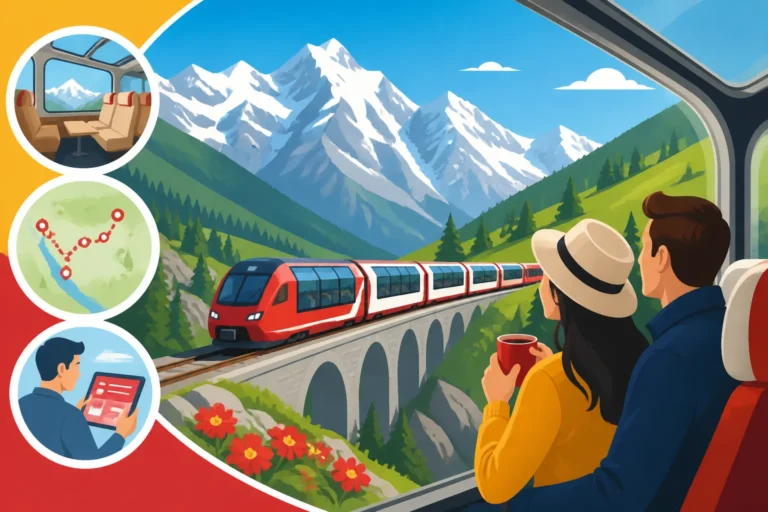
The Glacier Express truly lives up to its moniker as the "slowest express train in the world." Connecting Zermatt and St. Moritz (or Davos), this 8-hour journey is an epic traverse of the Swiss Alps, crossing 291 bridges, passing through 91 tunnels, and ascending the 2,033-meter Oberalp Pass. It's not about speed; it's about the journey. The train features large panoramic windows that extend into the roof, ensuring you don't miss a single alpine vista.
You'll wind through dramatic gorges, past charming villages, and over the famous Landwasser Viaduct, a UNESCO World Heritage site. Onboard, you can enjoy a multi-course meal served right at your seat, adding to the luxurious experience. While a normal SBB ticket (with a Half-Fare card) covers the base fare, a compulsory seat reservation (which can be pricey, especially in peak season) is required, even if you have a GA. This is a journey you plan for, not just spontaneously jump on. It's a bucket-list experience that truly showcases the engineering marvels and natural beauty of Switzerland.
The Bernina Express: Alpine Adventure to Italy
If the Glacier Express is majestic, the Bernina Express is its equally impressive, slightly more exotic cousin. This train connects Chur or St. Moritz in Switzerland with Tirano in Italy, often continuing by bus to Lugano. It’s renowned for traversing the Bernina Pass without the aid of cogwheels, making it one of the steepest adhesion railways in the world. The journey, typically around 4 hours by train to Tirano, is a UNESCO World Heritage route itself, famous for the circular Brusio Viaduct and the stunning landscapes of Graubünden.
What sets the Bernina Express apart is its dramatic shift in scenery, from the glaciers of the Engadine to the palm trees of Italy. You'll see turquoise lakes, alpine forests, and rugged peaks before descending into the Mediterranean climate of Tirano. Like the Glacier Express, panoramic cars are available and a seat reservation is mandatory. For expats, it’s a fantastic way to combine a spectacular alpine adventure with a quick Italian lunch or even a multi-day trip into Lombardy. If you're looking for a slightly more affordable (but still incredible) alternative, you can ride the same route on a regular regional train, which means no mandatory reservation, though you'll miss out on the dedicated panoramic windows and commentary.
The GoldenPass Line: From Lake Geneva to Central Switzerland
For a journey that blends picturesque lakes with rolling hills and charming towns, the GoldenPass Line is your ticket. This route isn't a single train but a series of connections that link Montreux on Lake Geneva with Lucerne in Central Switzerland. The full journey takes about 5.5 hours and uses three different trains, each offering a distinct experience.
You'll start from Montreux, climbing steeply through the Lavaux vineyards (another UNESCO site) towards the Gruyères region, known for its cheese. The train then passes through Gstaad, a chic ski resort, before descending into the dramatic landscape around Lake Thun and Lake Brienz, eventually reaching Lucerne. There's a special "GoldenPass Panoramic" train with extra-large windows, and even "GoldenPass Belle Epoque" trains styled after historic Pullman cars for part of the route. No mandatory seat reservations on these, but they are highly recommended, especially for the panoramic cars, and you'll benefit from your Half-Fare or GA for the ticket itself. It’s a wonderful way to see the diverse beauty of the Swiss midlands and two of its most famous lakes.
Exploring Switzerland by Train: Unforgettable Day Trips from Major Cities
One of the greatest joys of living in or visiting Switzerland is the ease of taking incredible day trips. Thanks to the dense SBB network, you can wake up in a city and be in a completely different world – be it mountains, lakes, or another charming town – within a couple of hours. These are just a few ideas to get your inspiration flowing!
Day Trips from Zurich: Mountains, Lakes, and Historic Towns
Zurich is a fantastic hub for day trips, putting a vast array of Swiss delights within easy reach. The options are truly endless!
- Lucerne (Luzern): This is the quintessential Swiss postcard town, just a 45-minute direct train ride from Zurich. Stroll across the Chapel Bridge, visit the Lion Monument, and take a leisurely cruise on Lake Lucerne. From Lucerne, you can easily connect to popular mountain excursions like Mount Pilatus or Mount Rigi. It’s a perfect blend of city charm, lake beauty, and mountain access.
- Rhine Falls (Rheinfall): Europe's largest waterfall is a majestic sight, and it’s easily accessible by train to Neuhausen am Rheinfall (approx. 50 minutes from Zurich). You can get incredibly close to the roaring water, take a boat ride to the rock in the middle, or simply enjoy the viewpoints. Combine it with a visit to the charming medieval town of Stein am Rhein for a full day out.
- Appenzell: For a taste of traditional, rustic Switzerland, take a train to Appenzell (approx. 1.5 hours with one change). This charming village is famous for its painted houses, traditional cheese, and unique customs. It’s a wonderful place to wander, soak in the atmosphere, and perhaps take a short hike in the surrounding rolling hills.
- Bern: The Swiss capital, with its UNESCO-listed Old Town, is just over an hour by direct train. Explore the Zytglogge clock tower, visit the Bear Park, and enjoy the arcaded shopping streets. It’s a city that feels both grand and intimate.
For more ideas, check out our guide on Day Trips from Zurich: Rhine Falls, Rapperswil, and Lucerne.
Day Trips from Geneva: Vineyards, Castles, and French Alps
Geneva, nestled by its eponymous lake and close to the French border, offers a different flavor of day trips, blending Swiss elegance with a touch of French flair.
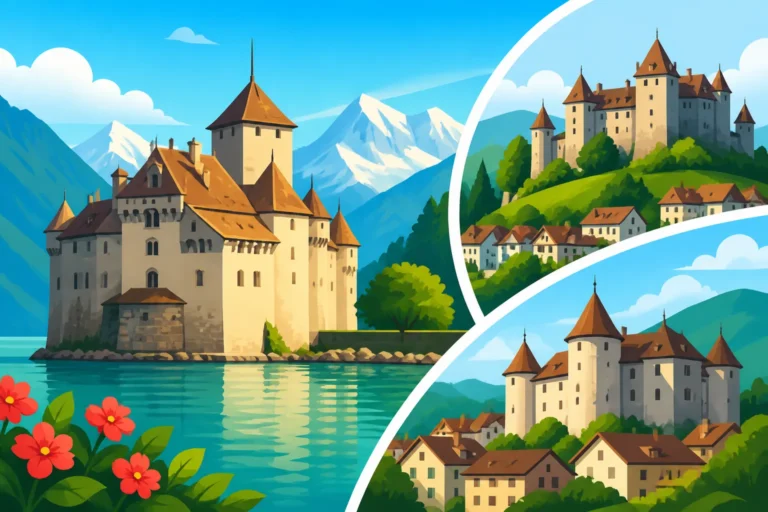
- Montreux and Chillon Castle: Take a scenic train along Lake Geneva (approx. 1 hour direct) to Montreux, famous for its jazz festival and beautiful lakeside promenade. Just a short walk or bus ride away is the stunning Chillon Castle, a medieval fortress perched on a rock in the lake. It's one of Switzerland's most visited historic monuments and absolutely worth exploring.
- Gruyères: Beyond its famous cheese, the charming medieval hilltop village of Gruyères (approx. 1.5 hours by train with a change) is a delight. Explore its cobbled streets, visit the Gruyères Castle, and for a bizarre contrast, check out the HR Giger Museum (creator of the Alien creature!). Pair it with a visit to the Maison Cailler chocolate factory in nearby Broc for a truly Swiss culinary experience.
- Lausanne: Just 40 minutes by direct train, Lausanne is a vibrant university city with a beautiful medieval old town, a stunning cathedral, and a lovely lakeside area (Ouchy). It's also home to the Olympic Museum. It offers a great mix of culture, history, and modern life.
- Lavaux Vineyards: The UNESCO-listed Lavaux terraces are a must-see, easily reachable by train from Geneva (e.g., to Cully or Rivaz, about 45-60 minutes). Spend an afternoon walking through the vineyards, enjoying the spectacular views over Lake Geneva, and stopping at a local caveau for a wine tasting.
You can dive deeper into these adventures with our article on Day Trips from Geneva: Montreux, Gruyères, and the Lavaux Vineyards.
Day Trips from Basel: Cross-Border Gems and Roman History
Basel, strategically located at the Swiss, French, and German borders, offers unique opportunities for day trips, including easy access to neighboring countries.
- Colmar, France: Just a 30-minute train ride across the border, Colmar is a fairytale town in Alsace, France. Famous for its picturesque canals ("Little Venice"), half-timbered houses, and charming Christmas markets, it feels like stepping into a storybook. It’s a fantastic change of scenery and culture for a day.
- Freiburg, Germany: Another quick hop over the border (approx. 1 hour by train), Freiburg is a lively university city on the edge of the Black Forest. Explore its historic old town, enjoy its unique Bächle (small water channels running alongside the streets), and soak in the relaxed German atmosphere.
- Augusta Raurica: For a dose of ancient history, take a short train or bus ride (approx. 20 minutes) from Basel to Augusta Raurica, Switzerland's most important Roman archaeological site. Explore well-preserved ruins, including an amphitheater, and visit the Roman museum. It's a fascinating glimpse into the past.
- Basel's Own Charms: Don't forget Basel itself! Its beautiful Old Town, world-class museums (like the Beyeler Foundation), and the Rhine River are perfect for exploration. Consider a relaxing ferry ride across the Rhine (the "Fähri") for a unique perspective.
Our guide on Day Trips from Basel: The Black Forest, Alsace, and Augusta Raurica has even more ideas for you.
Mountain Excursions by Rail and Cable Car: Reaching the Peaks
No trip to Switzerland is complete without ascending into the majestic Alps. The country’s incredible network of mountain railways, cogwheel trains, and cable cars makes even the highest peaks accessible to almost everyone, regardless of hiking ability. These journeys are often highlights in themselves, offering engineering marvels and unparalleled panoramic views.
Jungfraujoch: Top of Europe by Cogwheel Train
The Jungfraujoch, often called the "Top of Europe," is a truly iconic destination. Reaching an altitude of 3,454 meters (11,332 feet), it offers breathtaking views of the Aletsch Glacier (a UNESCO World Heritage site), the Eiger, Mönch, and Jungfrau peaks. The journey itself is an adventure, involving a series of cogwheel trains from Grindelwald or Lauterbrunnen, with significant portions running through tunnels carved directly into the Eiger and Mönch mountains.
At the top, you’ll find an ice palace, viewing platforms, restaurants, and even a "Snow Fun Park" in summer. It’s an expensive excursion, but for many, the once-in-a-lifetime views and the sheer marvel of the engineering are worth every franc. Be prepared for crowds, especially in peak season, and always check the weather forecast before you go – clear skies are essential to truly appreciate the views. A Half-Fare card will get you a 50% discount on the entire journey, which is substantial given the cost. For detailed planning and cost-saving tips, refer to our article: Jungfraujoch 'Top of Europe': Planning the Trip and Saving Money.
Pilatus and Rigi: Classic Lake Lucerne Mountain Experiences
For classic Swiss mountain scenery easily accessible from Lucerne, Mount Pilatus and Mount Rigi are fantastic choices, each offering distinct experiences.
Mount Pilatus: Known as the "Dragon Mountain," Pilatus offers a dramatic ascent and panoramic views over Lake Lucerne and the surrounding Alps. The "Golden Round Trip" is the most popular way to experience it: a boat cruise on Lake Lucerne from Lucerne to Alpnachstad, then the world’s steepest cogwheel railway up to the summit. From the top, you can descend via a panoramic gondola and aerial cableway to Kriens, then take a bus back to Lucerne. The views from the summit are spectacular, and on a clear day, you can see up to 73 alpine peaks. It’s an adventure combining boat, cogwheel train, and cable car, making it a diverse and exciting day out.
Mount Rigi: Often called the "Queen of the Mountains," Rigi boasts equally stunning 360-degree views, but with gentler, more accessible terrain at the summit, making it ideal for families or those who prefer leisurely strolls over rugged hikes. Rigi is famous for its sunrise and sunset views. You can reach it via Europe's first-ever cogwheel railway from Vitznau (connecting directly from Lucerne by boat) or from Goldau by cogwheel train. Another option is by aerial cable car from Weggis. All these routes are covered by the Half-Fare card, and the GA even covers the entire journey up Rigi. At the top, you'll find easy walking paths, restaurants, and a more relaxed atmosphere than the bustling Jungfraujoch.
Gornergrat and Zermatt: Iconic Matterhorn Views
No mountain guide would be complete without mentioning Zermatt and the iconic Matterhorn. The car-free village of Zermatt itself is charming, but the real star is the Matterhorn, one of the most recognizable mountains in the world.
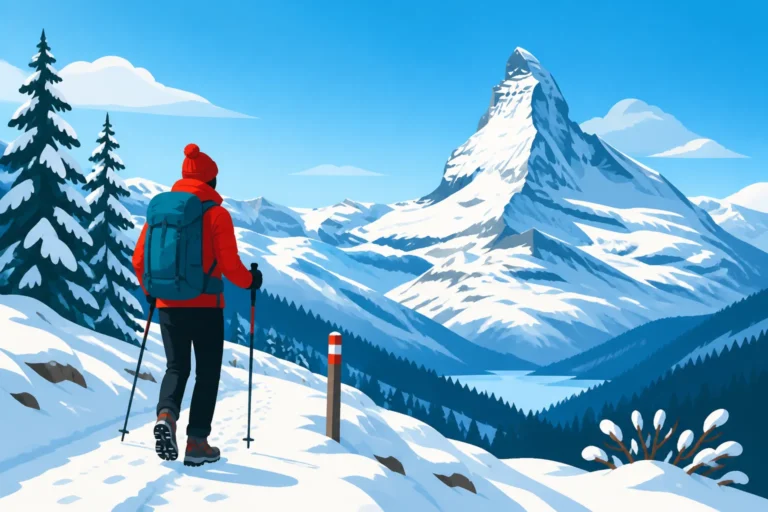
To get the best views of this majestic peak, take the Gornergrat Railway, Europe's highest open-air cogwheel railway. From Zermatt, the train slowly winds its way up to the Gornergrat summit at 3,089 meters (10,135 feet). The 33-minute journey offers continuous, jaw-dropping views of the Matterhorn, the Gorner Glacier, and a panorama of 29 other peaks over 4,000 meters. At the top, there’s an observation platform, a hotel, and restaurants, allowing you to linger and soak in the incredible scenery. Like other mountain railways, your Half-Fare card gives you a 50% discount on the Gornergratbahn, making this unforgettable experience a bit more manageable on the wallet.
Practical Tips for Expats: Maximizing Your Train Travel Experience
Living in Switzerland means embracing its efficient public transport system. As an expat, understanding a few local quirks and tips can make your train journeys even smoother and more enjoyable. From lugging your skis to knowing what to do during a disruption, these insights will help you travel like a local.
Luggage, Pets, and Cycling on Swiss Trains
Swiss trains are generally very accommodating, but there are some unwritten (and written) rules to keep in mind, especially for larger items.
Luggage: For standard luggage, there are overhead racks and spaces between seats. For larger suitcases, you'll find dedicated luggage racks at the end of each carriage. Be aware that during peak holiday times (like winter ski season), these areas can get crowded. If you're traveling with very heavy or bulky items, SBB offers a convenient "Flyer luggage" service, where you can send your bags from one station to another, or even from your home/hotel to your destination, for a fee. This is a godsend for ski gear or multiple large suitcases, allowing you to travel light.
Pets: Dogs are welcome on Swiss trains, but generally require their own ticket. Small dogs (up to 30 cm shoulder height) traveling in a carrier can travel for free. Larger dogs need a half-fare ticket (even if you have a GA, the dog needs a half-fare ticket), or you can buy a special day pass for dogs. Always keep your dog on a leash, and generally, muzzling is recommended for larger breeds, especially during busy times, though not always strictly enforced. Remember that Swiss cultural norms often lean towards quiet and orderly public spaces, so a well-behaved pet is key.
Cycling: Bringing your bike on the train is definitely possible, but it requires an extra ticket for the bicycle. On some routes, especially during peak season or on certain scenic trains, you might even need a reservation for your bike. Look for the bicycle symbol on the SBB app or website to see if a specific connection allows bikes and if reservations are needed. Sometimes, it's easier to rent a bike at your destination or use the excellent network of cycling paths to explore. Our guide on Taking Bicycles on Swiss Trains: Mandatory Reservations and Velo Tickets offers more detailed advice.
Dealing with Delays and Disruptions
While Swiss trains are famous for their punctuality (seriously, it's a national obsession), delays and disruptions do happen. When they do, SBB is generally very good at communicating.
- SBB Mobile App is Key: Again, the SBB Mobile App is your absolute best resource. It provides real-time updates on delays, platform changes, and alternative connections. Turn on notifications for your journey.
- Announcements: Listen to station and onboard announcements. They are usually made in the local language (German, French, or Italian) and sometimes in English in major hubs or tourist routes.
- Information Boards: Look at the digital information boards at stations. They display departure and arrival times, track numbers, and any delay information.
- Customer Service: If you're really stuck or need help finding an alternative route, head to an SBB travel center at a major station. The staff are usually very helpful.
- Compensation: For significant delays (typically over 60 minutes), SBB has a compensation policy. You might be eligible for a partial refund or voucher. Keep your ticket as proof. While disruptions are rare, knowing how to navigate them will save you a lot of stress.
Accessibility and Family-Friendly Travel
Switzerland strives for accessibility, and SBB is no exception. Most modern trains are low-floor and offer dedicated spaces for wheelchairs, prams, and bicycles. Major stations have ramps and lifts. If you require assistance, SBB offers a free service called "SBB Call Center Handicap" (call 0800 007 102 in Switzerland) that can help arrange boarding and disembarking assistance.
For families, SBB trains are generally very child-friendly. Many intercity trains have dedicated family zones (Fa- Zones or "Play & Study" areas) with games, books, and space for kids to move around. Children under 6 travel free, and the SBB Junior Travelcard or Children's Co-Travelcard (both around CHF 30 per year) allow children aged 6-16 to travel for free when accompanied by a parent or adult with a valid ticket. These are fantastic value for families! There's usually plenty of space for strollers, and changing facilities are available in many station restrooms. Traveling with kids here is generally a relaxed experience, which is a huge relief for expat parents.
Beyond the Rails: Integrating Boats, Buses, and PostBuses
The true genius of the Swiss public transport system isn't just its trains, but how seamlessly it integrates other modes of transport. Your SBB passes or tickets often extend far beyond the tracks, opening up even more avenues for exploration.
Lake Cruises: Seamless Connections with SBB
Switzerland is blessed with stunning lakes, and a lake cruise is often the perfect complement to a train journey. What many new arrivals don't realize is that most lake cruises are fully integrated into the SBB timetable and ticketing system. This means your GA often covers the entire boat trip, and your Half-Fare card gives you 50% off.
You can often step directly from a train onto a boat at major lakeside towns like Lucerne, Interlaken, or Montreux. For instance, after a scenic train ride to Lucerne, you could hop on a steamer across Lake Lucerne as part of your overall SBB journey, enjoying breathtaking views of the surrounding mountains and charming lakeside villages. The SBB app will show you boat connections just like it shows train connections. It’s a fantastic way to add another dimension to your travel, turning a simple journey into a multi-modal adventure. From the paddle steamers on Lake Geneva to the modern ferries on Lake Zurich, these boat trips offer unique perspectives and a truly relaxing way to travel.
PostBus Services: Reaching Remote Alpine Villages
While SBB trains cover the main arteries, it's the iconic yellow PostBuses (PostAuto in German, CarPostal in French) that truly connect Switzerland's remote valleys and alpine villages. These buses are a vital part of the public transport network, winding their way up narrow mountain roads with incredible precision and often offering stunning views out the window.
Like the lake cruises, PostBus services are fully integrated into the SBB network. Your SBB tickets, GA, and Half-Fare card are all valid on PostBuses. This means you can take a train as far as it goes into a valley, then seamlessly transfer to a PostBus that will take you up to a small, isolated village or a trailhead. The PostBus drivers are incredibly skilled at navigating challenging terrain, and the distinctive three-tone horn is a familiar sound in the mountains. For example, if you're going hiking in the Engadine Valley or visiting a hidden gem in the Valais, the PostBus will likely be your final leg of the journey. It ensures that even the most secluded corners of Switzerland are accessible by public transport, which is a huge bonus for explorers and nature lovers. For any trip involving deep valleys or mountain villages, the SBB app will direct you to the correct PostBus connection.
Understanding the Integrated Zone Systems
Finally, it's important to understand the concept of zone systems, especially for urban and regional travel. Many Swiss cities and surrounding regions operate on a tariff zone system, where your ticket covers travel within a certain number of zones for a specific period. While this can seem complex at first, the SBB app usually simplifies it by calculating the correct fare for your journey automatically.
For example, in Zurich, the ZVV network covers the city and its surrounding areas, divided into various zones. If you buy a ticket from Zurich HB to an outlying suburb, the SBB app will automatically sell you a ZVV ticket valid for the necessary zones. Similarly, in Geneva, the Unireso system covers the canton, and in Basel, the TNW network. The beauty is that your GA typically covers all zones, and your Half-Fare card gives you a 50% discount on these zone tickets too. So, even though it's technically a different regional operator, it all feels like one big, integrated system under the SBB umbrella. This means less fumbling for separate tickets and more time enjoying your surroundings, whether you’re commuting or exploring. It truly makes urban and regional travel a breeze once you get the hang of it.
Disclaimer
Please note that while this guide provides comprehensive information based on current knowledge and typical conditions, regulations and prices for Swiss public transport, including SBB fares, travel passes, and specific routes, can change. It is always advisable to check the official SBB website (sbb.ch) or the SBB Mobile App for the most up-to-date information, schedules, and pricing before planning your journey. Specific conditions may apply to certain tickets or passes.