Speech Therapy (Logopädie) for Bilingual Expat Children in Switzerland
It's completely normal to feel a swirl of emotions when your child, especially a bilingual one, seems to be struggling with their speech in a new country like Switzerland. You might wonder if it's the multiple languages, the stress of the move, or something more. It can be incredibly isolating and confusing trying to figure out the local healthcare and educational system in a language that isn't your own, all while worrying about your little one. This comprehensive guide will walk you through everything you need to know about speech therapy, known as Logopädie, for bilingual expat children in Switzerland, from understanding development to navigating the Swiss system.
Understanding Speech Development in Bilingual Children
Let's start by dispelling a common myth: bilingualism does not cause speech or language delays. Many expat parents hear this, or fear it, when their child isn't speaking as much as their monolingual peers, or is mixing languages. However, research consistently shows that bilingual children reach their language milestones in the same age range as monolingual children. The difference is that their vocabulary and grammatical structures are distributed across two (or more) languages, rather than consolidated into one. It means they might have fewer words in each individual language initially, but their total vocabulary across all languages is comparable, if not richer.
Normal Bilingual Language Milestones vs. Red Flags
It’s crucial for parents, especially those raising children in a multilingual environment, to distinguish between typical bilingual language development and actual red flags that might indicate a speech or language disorder. In the first few years, a bilingual child might exhibit what's called "code-switching," where they naturally mix words or phrases from both languages in the same sentence. This is a normal part of their linguistic exploration and not a sign of confusion or delay. They are simply using all the tools they have to communicate effectively. Another common phase is a "silent period" when first exposed to a new language (like Swiss German or French at Kita or school), where they absorb before actively producing speech. This, too, is typical.
However, certain signs should prompt a conversation with your pediatrician or a speech therapist. If your child isn't babbling by 12 months, isn't using single words by 16 months, or two-word phrases by 24 months, regardless of the language, these could be indicators. Difficulty understanding simple instructions, noticeable frustration when trying to communicate, a very limited vocabulary (even across both languages), or persistent issues with articulating sounds that are considered age-appropriate even in their primary language, warrant attention. It's not about comparing their English vocabulary to a child in the UK, but rather looking at their overall communicative abilities. Delays often become more apparent when comparing the child's communication skills to their overall cognitive and social development.
The Expat Child's Unique Linguistic Environment
Expat children in Switzerland often navigate a complex linguistic landscape, which adds another layer to their development. At home, they might speak English with one parent and another native language with the other, or solely English. Outside the home, they're immersed in a new language – be it Swiss German, High German, French, or Italian, depending on the canton. This constant exposure and negotiation between languages, while incredibly beneficial for cognitive development, can sometimes make it harder to pinpoint specific language challenges.
Consider a child who speaks English at home and attends a German-speaking kindergarten. They might be fluent in English but struggle to express themselves in German during school time, or vice-versa. This isn't necessarily a disorder but a natural process of acquiring a new language. A good speech therapist, especially one experienced with bilingualism, will consider all the languages a child is exposed to and assess their abilities across the board, not just in one dominant language. They will look at the child’s holistic communication profile, understanding that a child's linguistic skills might manifest differently in each language environment. This can also include considering the language of play, social interactions, and even television or books, as these all contribute to their overall linguistic input.
Navigating the Swiss System for Speech Therapy (Logopädie)
Once you've identified a potential concern, navigating the Swiss healthcare and educational system can feel like deciphering a secret code. But don't worry, many expat families have been down this road before, and the system, while bureaucratic, is generally well-structured. The first point of contact is usually your child's pediatrician, or, if your child is already in the school system, the school itself.
Initial Assessment and Referral Process
In Switzerland, the process for initiating speech therapy often begins with a referral from a medical professional or the child's school. If you have concerns, your child's Kinderarzt (pediatrician) should be your first stop. They can perform an initial developmental screening and, if necessary, refer your child to a specialist. This specialist might be a Logopädist (speech therapist) directly, a child psychologist (Kinderpsychologe), or a child development center (Entwicklungsdiagnostische Stelle). These centers are often interdisciplinary and can provide a comprehensive assessment covering speech, motor skills, and cognitive development.
For children already attending a Swiss public school or Kita, the Schulpsychologischer Dienst (School Psychological Service) or the school itself often plays a pivotal role. Teachers might notice communication difficulties in the classroom and recommend an evaluation. The school psychologist or an internal Logopädist can conduct assessments and initiate therapy within the school setting if warranted. It's a collaborative process, aiming to involve parents, teachers, and specialists to get a holistic view of the child's needs. Remember, a formal diagnosis or a prescription from a doctor is usually essential for costs to be covered by basic health insurance. For a general overview of the system, you might find this guide on Healthcare in Switzerland for Expats: The Complete System Overview (2027) helpful.
Types of Speech Therapy and Intervention Approaches
Speech therapy in Switzerland covers a wide range of needs, tailored to the specific challenges a child faces. Common areas include:
- Articulation Disorders: Difficulty producing specific sounds correctly (e.g., lisping, substituting sounds).
- Phonological Disorders: Patterns of sound errors (e.g., simplifying words by omitting sounds).
- Language Delays/Disorders: Problems with understanding (receptive language) or using (expressive language) vocabulary, grammar, and sentence structure.
- Stuttering/Fluency Disorders: Interruptions in the flow of speech.
- Voice Disorders: Problems with pitch, loudness, or quality of voice.
- Pragmatic Language Difficulties: Challenges with social communication, like taking turns in conversation or understanding non-verbal cues.
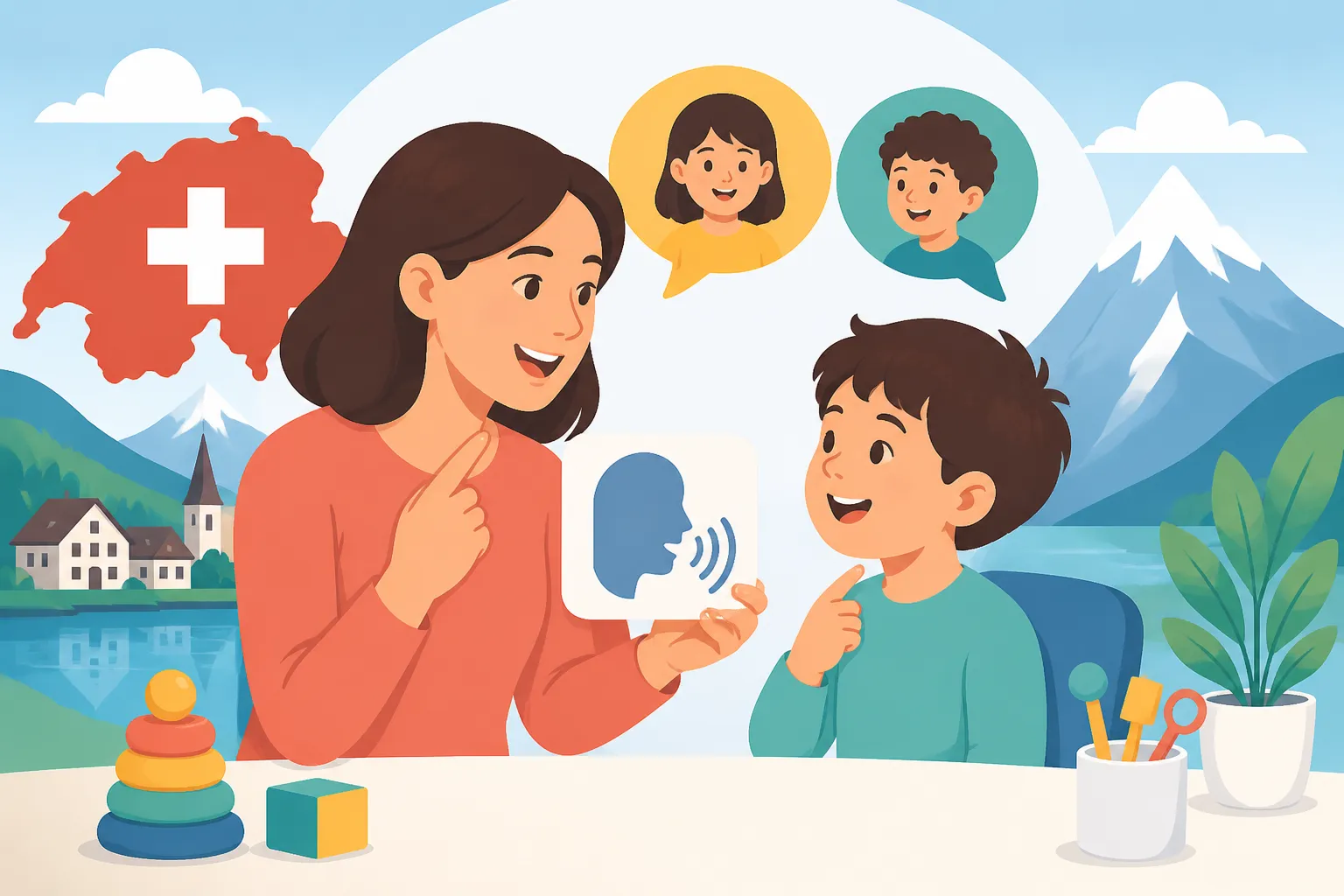
For bilingual children, a skilled Logopädist will employ approaches that consider all languages spoken. This might involve therapy sessions in the local language (German, French, or Italian) while providing strategies for parents to support their child's other languages at home. The goal is never to reduce the child's exposure to one language, but rather to strengthen their overall communication skills, often leveraging the strengths of one language to support the development of another. Therapists may use play-based interventions, picture cards, storytelling, and interactive games to make the sessions engaging and effective.
The Role of the School System (Schulische Logopädie)
One of the great advantages of the Swiss system is the integration of Logopädie services within public schools, particularly at the kindergarten and primary school levels. If your child is enrolled in a local public school, and a speech or language difficulty is identified, the school's own speech therapist (or one associated with the Schulpsychologischer Dienst) will likely conduct assessments. Based on these assessments, therapy can often be provided directly within school hours or on school premises, which is incredibly convenient for parents and ensures seamless communication with teachers.
The scope and availability of these services can vary slightly by canton and even by individual school district, but the underlying principle is that educational support, including speech therapy, should be accessible. This school-based therapy is typically free of charge to parents, as it falls under educational provisions. It’s important to maintain open communication with the school and the therapist to understand the goals of the therapy and how you can reinforce learning at home. If you're concerned about your child's general health and school integration, exploring resources like Pediatric Care: Checkups, Vaccination Schedules, and School Health could be beneficial.
Costs, Insurance, and Practicalities for Expat Families
Understanding the financial and logistical aspects of speech therapy in Switzerland is crucial, as the system can be a bit different from what you might be used to. Health insurance plays a significant role here, but there are also school-based options that often come at no direct cost.
What Basic Health Insurance (KVG/LAMal) Covers
In Switzerland, mandatory basic health insurance (KVG or LAMal) covers medically necessary speech therapy for children. However, there are specific conditions. The therapy must be prescribed by a doctor (usually your pediatrician or a specialist), and it must be performed by a state-recognized Logopädist. The number of sessions covered often depends on the diagnosis and the therapist's treatment plan. Before starting any long-term therapy, it's always wise to clarify with your health insurance provider exactly what they will cover and under what circumstances.
You will still be subject to your chosen franchise (deductible) and a Selbstbehalt (co-payment) once your franchise is met. For children, the minimum annual franchise is typically CHF 0, but you can opt for a higher one to reduce monthly premiums. However, for ongoing treatments like speech therapy, a lower franchise might be more cost-effective in the long run. Understanding The Swiss Franchise System: How Deductibles and Copays Work is key here. It’s a common frustration for expats to discover these out-of-pocket costs, so budgeting for them is important. Ensure you complete your Mandatory Registration: How to Sign Up for Health Insurance Within 90 Days upon arrival to ensure coverage from day one.
Supplementary Insurance and Private Options
While basic KVG covers a significant portion of medically necessary speech therapy, supplementary health insurance (VVG) might offer additional benefits. These can include a wider choice of therapists (some private Logopädisten might only be covered by certain supplementary plans), more sessions, or coverage for alternative therapies that basic insurance might not deem "medically necessary." It's worth reviewing your existing supplementary policy or considering one if you anticipate long-term therapy needs. Each supplementary insurance plan is different, so a careful check of their specific terms and conditions is essential.
If you opt for private speech therapy without a doctor's prescription or choose a therapist not recognized by your basic insurance, you will likely bear the full cost yourself. Private therapy can be a good option if waiting lists for school-based or KVG-covered therapists are long, or if you prefer a specific therapist who specializes in bilingualism and isn't affiliated with the public system. Costs for private sessions can range from CHF 100 to CHF 180 per hour, so it's a significant financial commitment.
Finding English-Speaking Logopädisten (Speech Therapists)
Finding an English-speaking speech therapist can be a challenge, especially outside of major expat hubs like Zurich, Geneva, or Basel. However, it's not impossible. Here are a few strategies:
- Ask Your Pediatrician: Your Kinderarzt is often the best resource for local referrals, and they might know therapists who are comfortable working in English or with expat families. This is similar to how you would approach Finding an English-Speaking Family Doctor (Hausarzt) in Major Cantons.
- Expat Networks and Forums: Online forums like Facebook groups for expat parents in Switzerland are invaluable. Other parents who have navigated this journey often share recommendations for specific therapists.
- Professional Associations: The Swiss Association of Speech Therapists (ASL – Association Suisse des Logopédistes / Schweizerischer Verband der Logopädinnen und Logopäden) often has a directory on their website where you might be able to filter by language.
- School Psychological Services: If your child is in school, the Schulpsychologischer Dienst might have therapists who can conduct assessments in English or can refer you to someone who can.
Don't be afraid to ask potential therapists about their experience with bilingual children and if they can communicate effectively with you in English. A good therapist understands that parental involvement is key, and clear communication with you is just as important as their work with your child.
Supporting Your Bilingual Child at Home
Therapy sessions are only one part of the equation; the home environment plays a massive role in your child's language development and the success of speech therapy. You, as parents, are your child's most important language models.
The One Parent, One Language (OPOL) Approach and Other Strategies
The "One Parent, One Language" (OPOL) approach is a popular strategy where each parent consistently speaks a different language to the child. For example, one parent always speaks English, and the other always speaks German. This creates a clear distinction and helps the child organize their languages. While it's widely recommended, it's not the only way, and flexibility is key. What matters most is consistent and rich language input in all languages.
Other strategies include:
- Contextual Language Use: You might use one language for specific activities (e.g., "bath time is always English time," "shopping is always German time").
- Minority Language Support: If one language is dominant in the community (e.g., German at school), ensure the minority language (e.g., English, your home language) receives plenty of input at home. This often means being very intentional with reading, conversations, and media in that language.
- Focus on Communication, Not Perfection: When a child is struggling, the most important thing is that they communicate. Correcting every grammatical error or pronunciation mistake can discourage them. Instead, model the correct form by repeating what they said, but correctly. For instance, if they say "Me go park," you can respond with, "Oh, you want to go to the park? That sounds fun!"
The key is to create a positive and supportive linguistic environment where your child feels comfortable experimenting with language without fear of judgment. This guide on Maternity and Child Healthcare in Switzerland: From Pregnancy to Pediatrics may offer additional insights into general child development.
Creating a Language-Rich Environment
Beyond specific language strategies, simply creating a rich and engaging language environment at home is paramount. This means making language fun and integrated into daily life.
- Read Aloud Regularly: Reading books in all home languages is incredibly powerful. It exposes children to a wide range of vocabulary, sentence structures, and storytelling. Don't underestimate the power of picture books even if your child isn't reading yet.
- Sing Songs and Rhymes: Songs and rhymes are fantastic for developing phonological awareness, rhythm, and memory, which are all crucial for speech development.
- Engage in Conversational Play: Talk to your child constantly! Narrate your actions, ask open-ended questions, and encourage them to describe things. Play games that involve language, like "I spy" or storytelling.
- Use Diverse Media: While screen time should be balanced, educational shows, movies, and apps in your child's different languages can be a valuable supplement, especially if they are interactive and encourage verbal responses.
- Connect with Other Bilingual Families: Finding playgroups or expat families who speak your home languages can provide a natural environment for your child to use and develop those languages outside of the immediate family.
Remember, consistency, patience, and a lot of love are the best tools you have. Your child's bilingual journey is a marathon, not a sprint, and with the right support, they will thrive.
Comparing Cantonal School-Based vs. Private Speech Therapy
Navigating the options for speech therapy can be confusing. Here's a quick comparison to help you understand the main differences between accessing therapy through the cantonal school system and seeking private care.
| Feature | Cantonal School-Based Logopädie | Private Logopädie |
|---|---|---|
| Cost | Generally free for parents (covered by the canton/school district). | Varies, typically CHF 100-180 per session. Subject to KVG franchise/co-pay, or fully out-of-pocket without referral. |
| Referral Process | Often initiated by pediatrician, school, or Schulpsychologischer Dienst after assessment. | Usually a direct referral from a pediatrician or specialist. |
| Accessibility | Integrated into school hours/premises, convenient for children already in school. | Requires scheduling outside of school hours; clinic location might require travel. |
| Therapist Choice | Limited to therapists employed by or affiliated with the school/canton. | Wider choice of independent therapists, allowing for specific specializations (e.g., bilingualism focus). |
| Integration | Close coordination with teachers and school curriculum. | Less direct integration with school, requires parental communication between therapist and school. |
| Waiting Times | Can vary; some cantons/schools may have waiting lists, especially in high-demand areas. | Also varies; highly sought-after private therapists may have waiting lists. |
| Language Support | Often conducted in the local Swiss language (German, French, Italian); English might be limited depending on therapist. | More likely to find English-speaking therapists, or those specifically experienced with multiple languages. |
| Coverage Focus | Primarily addresses needs impacting educational progress. | Addresses a broader range of speech and language disorders, can be more intensive. |
Disclaimer
The information provided in this article is intended for general guidance and informational purposes only, and does not constitute professional medical, legal, or financial advice. While we strive to provide accurate and up-to-date information, the Swiss healthcare, insurance, and educational systems are complex and subject to change. Always consult with a qualified Swiss pediatrician, speech therapist (Logopädist), school psychologist, or health insurance provider for advice tailored to your specific situation and needs. Individual cantons and communes may have slightly different procedures and offerings. We are not responsible for any actions taken based on the information in this article.