Walk-in Clinics in Basel: Medgate and Permanence Options
That sudden headache that won't quit, a sprained ankle after a weekend hike, or that nagging cough that's getting worse – we've all been there, that moment when you're suddenly ill or hurt in a new country and the familiar comfort of your home healthcare system feels a million miles away. I certainly remember my first minor emergency here in Basel – a nasty cut that definitely didn't need an ER but needed more than a bandage. Figuring out where to go for immediate, non-life-threatening care without ending up with a colossal bill or a six-hour wait in a hospital emergency room can feel like a maze. This guide is going to walk you through your best options for convenient, immediate medical care right here in Basel, focusing on accessible walk-in clinics like Permanence and modern telemedicine solutions like Medgate.
The Swiss Urgent Care Landscape: More Than Just ERs
When you first arrive in Switzerland, the healthcare system can feel like a labyrinth of rules and regulations. It’s certainly not like back home in many places, where a quick trip to the GP is always an option or a pharmacy might fill a minor prescription on the spot. Here, everything tends to be a bit more structured, and knowing your options for urgent, but not emergency, care is absolutely crucial. Walk-in clinics, known as "Permanence" clinics in much of the German-speaking part of Switzerland, are a fantastic middle-ground, designed specifically for those unexpected medical issues that don't threaten life or limb but can't wait for a regular doctor's appointment. They fill a vital gap, preventing emergency rooms from becoming overwhelmed with cases like flu, minor injuries, or simple infections, which frankly, is better for everyone.
When to Choose a Walk-in Clinic vs. an Emergency Room
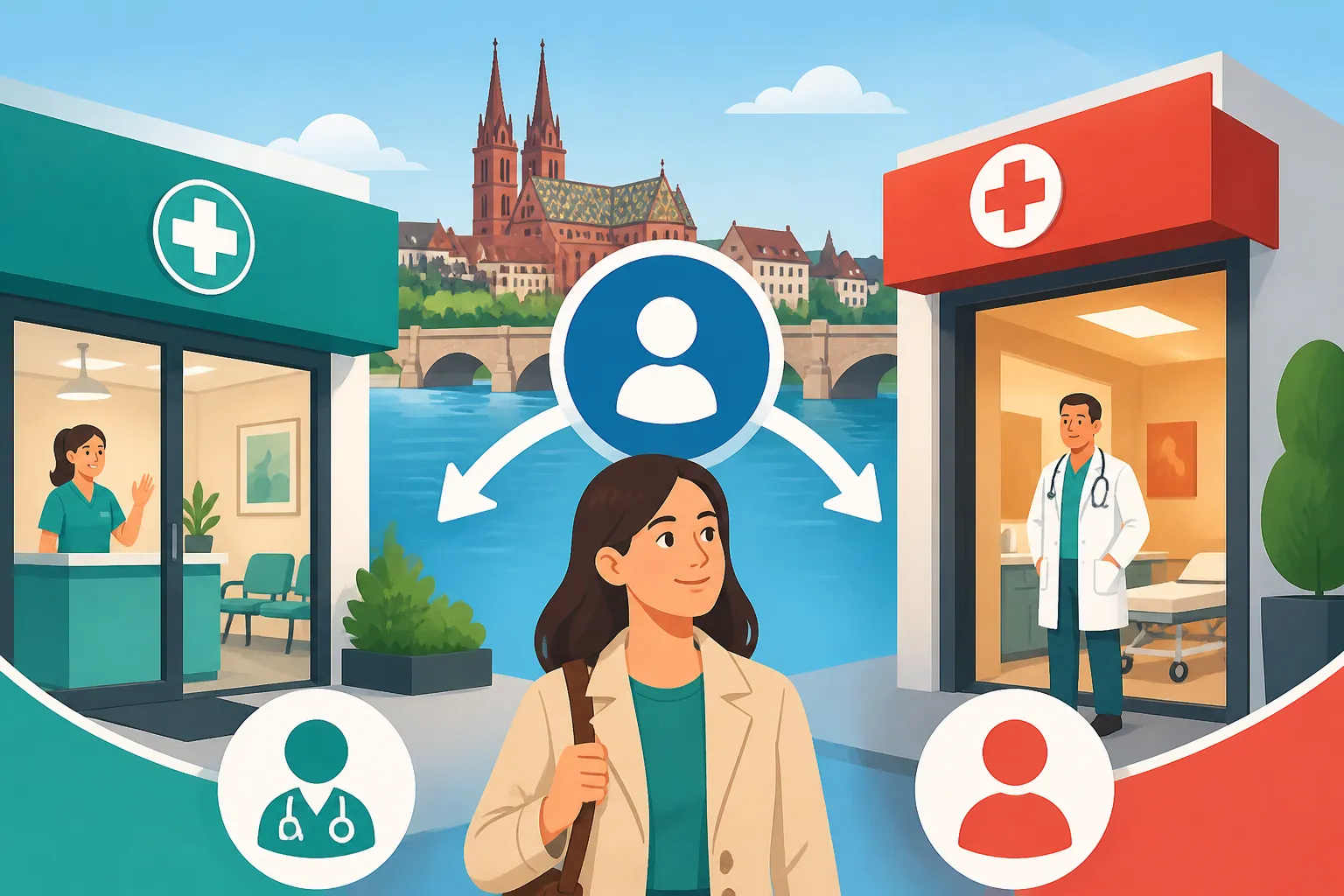
This is often the million-franc question for new expats! Deciding between a walk-in clinic, a telemedicine service, or a full-blown emergency room can be daunting. The key is understanding the severity of your condition.
- Emergency Room (Notfallaufnahme): These are for true emergencies. Think life-threatening situations: severe chest pain, stroke symptoms, major trauma from an accident, uncontrollable bleeding, sudden severe abdominal pain, or very high fevers in infants. If you suspect your life, or someone else's, is in immediate danger, you should always go to the nearest hospital emergency room, such as Universitätsspital Basel (USB) or Claraspital, or call 144 for an ambulance. Keep in mind that Swiss emergency rooms, like anywhere else, prioritize by severity, so if your issue isn't critical, you could face significant waiting times. To understand the wider system, our comprehensive guide on Emergency Medical Services: Ambulances, REGA, and Crisis Protocols can provide more details.
- Walk-in Clinic (Permanence/Notfallpraxis): These are for urgent but non-life-threatening issues. This includes things like:
- Sudden illness (flu, severe cold, sore throat, ear infection, urinary tract infection)
- Minor injuries (sprains, small cuts that might need stitches, minor burns)
- Allergic reactions (non-anaphylactic)
- Skin rashes, infections
- Minor eye problems
- Back pain, headaches (if not severe enough for ER)
- Prescription refills when your regular doctor is unavailable.
These clinics are equipped to handle a wide range of common ailments and minor accidents without the overhead and wait times of a hospital ER.
- Telemedicine (e.g., Medgate): Ideal for quick advice, initial assessments, or when you're unsure if you need to see a doctor in person. It's perfect for:
- General health questions
- Minor symptoms that don't require a physical examination (e.g., cough, cold, mild rash, questions about medication)
- Getting a doctor's note for work (Arztzeugnis) for minor illnesses
- Initial prescription advice or renewals for stable conditions.
The Cost Factor: What to Expect for Walk-in Visits
Navigating medical bills in Switzerland can be another source of anxiety. It's critical to understand that even for a walk-in clinic, you'll be using your mandatory Swiss basic health insurance (KVG/LAMal). If you're a new arrival, you'll need to remember the Mandatory Registration: How to Sign Up for Health Insurance Within 90 Days.
With Swiss health insurance, the costs work a bit differently than in many other countries. You'll generally pay your chosen annual franchise (deductible) first, and then a 10% Selbstbehalt (co-pay) on top of that, up to a maximum annual cap. Our article on The Swiss Franchise System: How Deductibles and Copays Work explains this in detail.
Typically, for a walk-in clinic visit, you'll receive a bill directly to your home (Tiers Garant system), which you then pay and submit to your insurance for reimbursement. Some larger clinics or telemedicine providers might have direct billing arrangements with certain insurers (Tiers Payant), but "Tiers Garant" is more common. Make sure to check our guide on How to Pay Medical Bills: Tiers Garant vs. Tiers Payant Billing Systems to prepare yourself.
For new arrivals who might still be within their 3-month window before mandatory KVG kicks in, or for short-term visitors, having international travel insurance is a lifeline. Providers like SafetyWing offer plans specifically designed for digital nomads and travelers, covering urgent medical needs while abroad. This can be invaluable for bridging the gap before you're fully integrated into the Swiss system, or for non-residents. Just make sure to confirm exactly what your policy covers in a high-cost country like Switzerland.
Prominent Walk-in Clinic Options in Basel
Basel, like other major Swiss cities, has a good selection of urgent care options. It's always a good idea to know where they are before you actually need them.
Permanence Clinics: Your Local Go-To
In Basel, the "Permanence" clinics are your primary walk-in urgent care centers. They are set up to handle general medical issues, minor accidents, and provide consultations without an appointment during extended hours. They offer a good alternative to the hospital emergency room for conditions that aren't life-threatening but can't wait.
A key Permanence clinic in Basel is often found near central transport hubs or within hospital complexes, making them easily accessible. For instance, the Permanence at Basel SBB train station (often referred to as Medgate Medical Center Basel) is a popular and very convenient option for both locals and travelers. It's designed to be easily accessible, especially for those commuting or just passing through.
What to expect at a Permanence clinic:
- No Appointment Needed: You can generally just walk in.
- Extended Hours: They often have longer opening hours than a typical GP practice, including evenings and weekends.
- Broad Scope of Care: They treat a wide variety of conditions, from infections to minor injuries.
- Wait Times: While generally shorter than an ER, wait times can vary depending on patient volume. Arriving early or later in the evening might help.
- Costs: Standard KVG billing applies.
It's always smart to confirm current opening hours and services directly on their website before heading out, especially on public holidays, which can be tricky to navigate.
Telemedicine Options: Medgate and Beyond
Telemedicine has truly transformed how we access quick medical advice, and it's particularly helpful for expats trying to navigate a new system or simply looking for convenience. Medgate is one of the leading telemedicine providers in Switzerland and works closely with many health insurance companies. In fact, many basic insurance models, like "Telmed," require you to call a telemedicine center first before seeing a doctor in person, saving you on premiums! You can learn more about these models in our article on Comparing Health Insurance Models: Telmed, HMO, Family Doctor, and Standard.
How Medgate (and similar services) work:
- Call or Use App: You contact Medgate via phone or their mobile app.
- Initial Assessment: A medical professional (often a nurse) will take your details and symptoms.
- Doctor Consultation: You'll then be connected with a Swiss-licensed doctor, usually within minutes. This can be a phone call or a video consultation.
- Diagnosis and Advice: The doctor will assess your condition, provide advice, issue a prescription (sent electronically to a pharmacy), or recommend an in-person visit if necessary.
- Referrals: If an in-person visit is needed, they can often direct you to a suitable local clinic or specialist, which sometimes includes their own physical Medgate Medical Centers, like the one at Basel SBB.
Telemedicine is incredibly convenient for minor ailments or when you just need quick reassurance. For expats who might struggle with German or French, Medgate often has English-speaking doctors available, which is a huge relief. As mentioned earlier, international health insurance, such as that provided by SafetyWing, can also be used for telemedicine consultations, especially if you're traveling or waiting for your Swiss insurance to fully kick in. It’s a flexible solution that fits well with a mobile lifestyle.
Navigating the Visit: What to Bring and How to Prepare
A little preparation can go a long way in making your walk-in clinic or telemedicine experience smoother.
Essential Documents: Insurance, ID, and Medical History
Whether you're visiting a physical clinic or having a virtual consultation, having your documents ready is key.
- Swiss Health Insurance Card (VeKa): This is your absolute must-have. It contains all your vital insurance information. Always present it upon arrival at a clinic. Our article on How to Use Your Swiss Health Card (VeKa) at the Clinic has more details.
- Identification: Your passport or Swiss residence permit (B Permit, C Permit, etc.) will be required.
- List of Medications: If you're currently taking any prescription medications, have a list ready, including dosages. Even better, bring the actual packaging.
- Brief Medical History: Jot down any chronic conditions, allergies, past surgeries, or relevant medical history. This is especially important if you haven't yet registered with a Finding an English-Speaking Family Doctor (Hausarzt) in Major Cantons.
- Payment Method: Be prepared to pay for any upfront costs or your portion of the bill, even if it's eventually reimbursed by insurance. A credit or debit card is usually sufficient.
Language Barriers: English-Speaking Staff and Translation Apps
One of the biggest anxieties for expats is the language barrier. While Basel is an international city, and many medical professionals speak excellent English, it's not guaranteed, especially in smaller practices or at off-peak hours.
- Ask in Advance: If you're calling a clinic, don't hesitate to ask if they have English-speaking staff available. For telemedicine services like Medgate, you can often specifically request an English-speaking doctor.
- Prepare Key Phrases: Even a few basic German phrases related to your symptoms can be helpful.
- Translation Apps: Keep a reliable translation app on your phone (like Google Translate or DeepL). While not perfect, they can bridge communication gaps for specific words or phrases.
- Bring a Friend: If you're very concerned, consider bringing a Swiss friend or a friend fluent in German to help translate.
Here’s a quick comparison of the common urgent care channels to help you choose:
| Urgent Care Channel | Best For | Typical Access | Cost Implications (with KVG) | Language Barrier (Basel) |
|---|---|---|---|---|
| Emergency Room (ER) | Life-threatening conditions, severe trauma, heart attack, stroke. | Immediate, 24/7 | Highest (after franchise/co-pay), often includes ER-specific fees. | Good chance of English-speaking staff, but busy. |
| Permanence Walk-in Clinic | Urgent but non-life-threatening issues: colds, flu, minor injuries, infections. | Walk-in, extended hours (often 7 AM – 10 PM) | Moderate (after franchise/co-pay), generally less than ER. | Often good English, but not guaranteed. |
| Telemedicine (Medgate) | Minor symptoms, general advice, prescriptions, referrals, doctor's notes. | Phone/video, 24/7 | Lowest (after franchise/co-pay), often part of Telmed models. | High chance of English-speaking doctors, specifically designed for remote consultation. |
| Pharmacy (Apotheke) | Very minor ailments, over-the-counter advice, first aid. | Walk-in, retail hours | Low (OTC products), some basic services covered by KVG if prescribed. | Varies greatly, some pharmacies have excellent English. |
Alternative and Supplementary Options for Urgent Care
Beyond the primary walk-in clinics and telemedicine, there are a couple of other avenues to consider for your health needs in Basel.
Apotheken (Pharmacies) as First Points of Contact
In Switzerland, pharmacies (Apotheken) play a much more active role in initial health consultations than in some other countries. For very minor ailments, the pharmacist can be an excellent first stop. They are highly trained professionals who can:
- Provide Advice: For common colds, minor pains, digestive issues, or skin irritations, a pharmacist can offer professional advice and recommend appropriate over-the-counter (OTC) medications.
- Suggest Remedies: They stock a wide range of non-prescription drugs, herbal remedies, and first aid supplies.
- Direct You: If your condition warrants a doctor's visit, they can advise you on whether a walk-in clinic or a full ER is more appropriate.
- Emergency Pharmacies: Basel, like other major cities, has an emergency pharmacy service (Notfallapotheke) that rotates, ensuring you can always find medication after hours or on Sundays. Our guide on Pharmacies (Apotheken) After Hours: Finding Emergency Medication details how to locate one.
Don't underestimate the expertise of a Swiss pharmacist for those "hmm, should I see a doctor?" moments.
International Health Insurance and Travel Plans
While basic Swiss KVG health insurance is mandatory for all residents, sometimes you might be in a transitional phase or need coverage beyond what KVG provides, especially if you travel frequently outside Switzerland. If you're a new arrival, for example, your KVG coverage might not have started yet, or you might be here for a short-term contract. In such cases, having a robust international travel or expat health insurance plan can be a lifesaver.
Companies like SafetyWing are specifically geared towards the modern global citizen, offering flexible, comprehensive plans that can cover you for medical emergencies and urgent care needs while you are abroad, or bridging gaps in your initial weeks in Switzerland before you fully register for local health insurance. It's always a good idea to research Travel Health Insurance for Trips Outside Switzerland: What KVG Covers Abroad to understand the limitations of your basic Swiss plan when you're traveling. Having a solid plan from a provider like SafetyWing ensures that minor medical mishaps don't turn into major financial ones, giving you extra peace of mind.
Ultimately, Basel offers a robust network of medical care options for various urgencies. By understanding the roles of walk-in clinics, telemedicine, and pharmacies, and by always having your insurance details handy, you can navigate unexpected health issues with confidence, knowing you have practical, accessible solutions right here in your new home.
Disclaimer
The information provided in this guide is for general informational purposes only and does not constitute medical, legal, or financial advice. While we strive to keep the information up-to-date and correct, healthcare systems, regulations, and services can change rapidly. Always consult with a qualified medical professional for any health concerns and official sources or a qualified advisor for specific legal or financial matters in Switzerland.