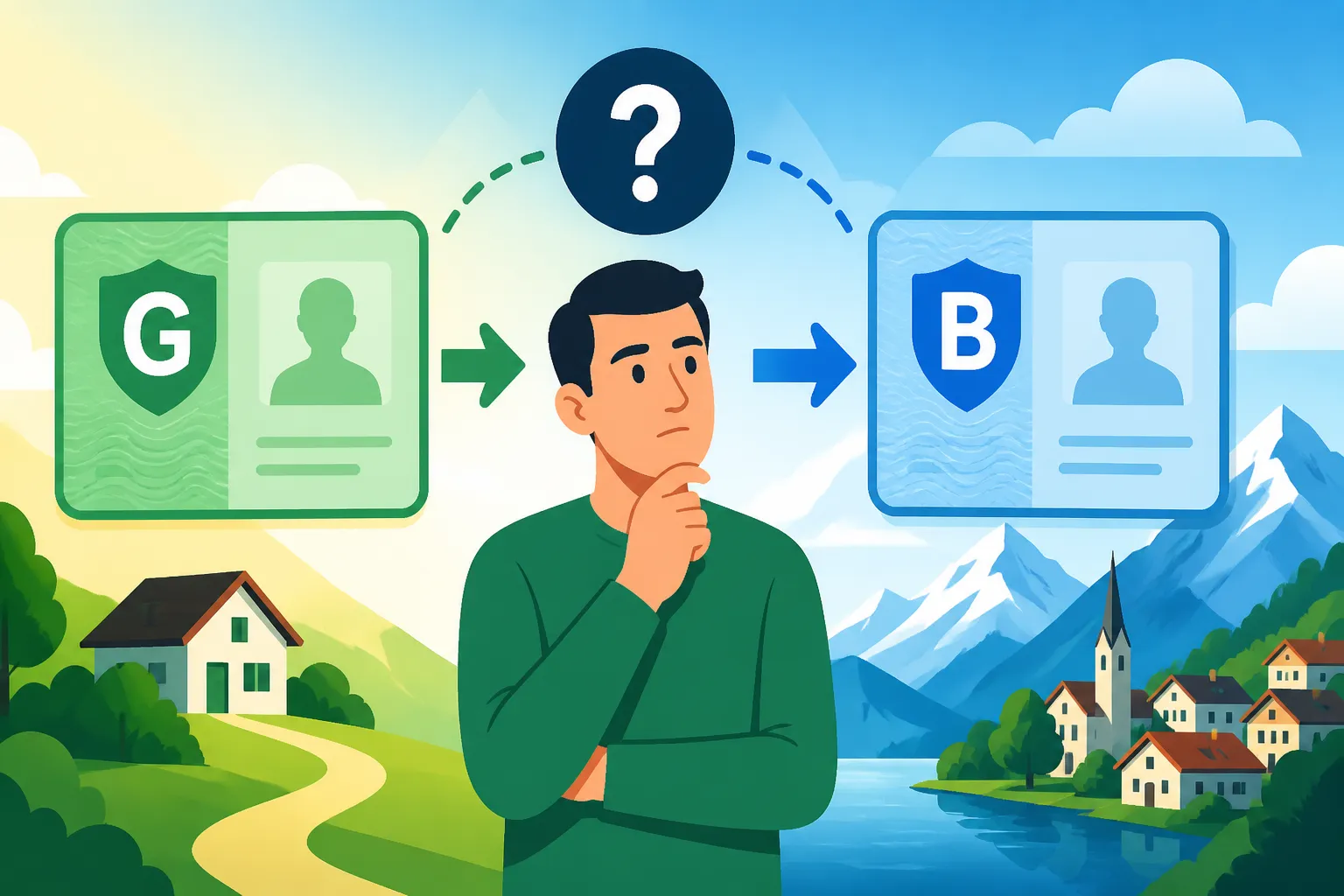
Can a G Permit Holder Move to Switzerland and Get a B Permit?
Commuting from France, Germany, or Italy into the Swiss workforce every morning is a rite of passage that eventually leads to a burning question: why am I spending three hours a day in traffic when I could just live there? I remember the exact moment I decided to trade my cross-border life for a flat in Zurich; it was a rainy Tuesday at the Basel border, and I realized I was missing the very culture I was working so hard to support. This guide provides the definitive roadmap for transitioning from a G permit to a B permit, ensuring you don't get caught in the administrative gears of the Swiss migration offices.
Understanding the Fundamental Shift from Commuter to Resident
The transition from being a "Frontalier" (a cross-border commuter) to a full-time Swiss resident is more than just a change of address; it is a total recalibration of your legal and financial identity in the eyes of the Swiss Confederation. When you hold a G permit, you are effectively a guest who leaves every night. Moving to a B permit means you are now "settled," which brings a new set of rights, such as the ability to buy property without the same restrictions faced by non-residents, but also a new set of heavy responsibilities like mandatory local health insurance and municipal taxes.
The legal basis for this move depends heavily on your nationality. For EU/EFTA citizens, the Agreement on the Free Movement of Persons (ALCP) makes this transition relatively straightforward. You have a right to live where you work, provided you have a valid employment contract. However, if you are a third-country national working on a G permit—perhaps because you have a long-term residency in a neighboring country—the process is significantly more complex and involves quotas and cantonal approvals that can feel like a mountain of red tape.
Regardless of your passport, the first thing you must accept is that the G permit and the B permit cannot coexist. The moment your B permit is approved, your G permit becomes void. This transition requires a "clean break" from your previous residency. You cannot simply keep your house in France as a primary residence and rent a small studio in Geneva to get the B permit; the Swiss authorities are meticulously thorough in ensuring that your "center of life" has truly shifted across the border. For a broader look at the permit landscape, you might want to review Residence Permits in Switzerland: L, B, C, and G Permits Explained to see how these categories interact.
The Practical Requirements for Converting to a B Permit
The most significant hurdle you will face is the "housing trap." In many Swiss cantons, you cannot apply for a B permit without a Swiss address, but many landlords are hesitant to rent to someone who doesn't already have a residency permit. To break this cycle, you must often rely on your current Swiss employment contract as your primary leverage. Most migration offices will accept a signed lease agreement as part of your B permit application, even if you haven't moved in yet.
Once you have secured a lease, you must report to the local residents' registration office, often called the Einwohnerkontrolle or Contrôle des Habitants, in your new commune. You generally have 14 days from the moment you move in to register. During this meeting, you will need to present your current G permit, your new lease, and your employment contract. If your documents are not in one of the official Swiss languages (German, French, or Italian), you should use a professional service like RushTranslate to ensure your papers are accepted without delay.
For those who have spent years as frontaliers, The G Permit (Cross-Border Commuter): Complete Guide for Frontier Workers often becomes a comfort zone, but the B permit offers much more long-term security. The B permit is usually issued for five years for EU/EFTA citizens and one year for non-EU citizens, renewable as long as the employment relationship continues. This permit is your gateway to eventually qualifying for permanent residency, a path you can explore further in our guide on The Swiss B Permit: Eligibility, Renewal, and Restrictions.
Financial Implications and Tax Transitions
Moving your residency to Switzerland will fundamentally change how your income is taxed. As a G permit holder, you might have been taxed in your country of residence or at the source in Switzerland, depending on the specific double-taxation treaty between Switzerland and your neighbor. Once you hold a B permit, you will almost certainly be subject to Quellensteuer (withholding tax) if you earn below a certain threshold or are not married to a Swiss citizen.
This tax is deducted directly from your salary every month. However, being a resident allows you to claim various deductions that were previously unavailable to you as a commuter. You can often deduct costs related to professional training, pillar 3a pension contributions, and childcare. To maximize your take-home pay, it is vital to understand Tax Corrections (Tarifkorrektur): Claiming Deductions on Withholding Tax so you don't overpay the federal and cantonal authorities during your first year of residency.
Furthermore, the cost of living in Switzerland is famously high. While your salary remains the same, your net "disposable" income might actually decrease initially due to higher rent and the mandatory health insurance premiums. You are no longer eligible for the cheaper healthcare plans in your home country. Every resident must sign up for a Swiss plan within 90 days. You can find more about this in Mandatory Registration: How to Sign Up for Health Insurance Within 90 Days.
Healthcare and Social Security Adjustments
One of the biggest shocks for former G permit holders is the Swiss healthcare system. As a commuter, you might have had the option to stay within the health system of France or Germany. As a B permit holder, you are legally required to join the Swiss system. This is a private but mandatory insurance model that involves choosing a "franchise" (deductible) and paying a monthly premium that doesn't depend on your income.
For many expats, this is the most confusing part of the move. You will need to navigate various insurance models—Telmed, HMO, or the traditional model. For a comprehensive look at how this works, read Healthcare in Switzerland for Expats: The Complete System Overview (2027). During the transition period, if you are worried about gaps in coverage or if you travel frequently back to your home country, considering a global provider like Cigna Global can offer peace of mind and supplementary benefits that local basic insurance might lack.
| Feature | G Permit (Commuter) | B Permit (Resident) |
|---|---|---|
| Residency | Living outside Switzerland | Living inside Switzerland |
| Health Insurance | Home country or Swiss KVG (choice) | Mandatory Swiss KVG |
| Primary Tax | Often home country (treaty dependent) | Swiss Quellensteuer (withholding) |
| Housing | Not required in Switzerland | Mandatory Swiss lease or property |
| Social Life | Limited by commute | Integration in local commune |
| Path to Citizenship | Does not count towards years | Years count toward C permit/Passport |
Navigating the Housing Market as a New Resident
The Swiss rental market is notoriously competitive, especially in expat hubs like Zurich, Geneva, and Basel. Landlords will ask for a "Bewerbungsmappe" (application dossier) that includes your work contract, your last three salary slips, and a clean debt register extract. Since you were previously living abroad, you may not have a Swiss debt register history. In this case, providing a similar document from your previous country of residence is essential.
If your previous landlord’s reference or your debt records are in English or another foreign language, having them translated by an agency like RushTranslate can give you a competitive edge over other applicants. You want to make it as easy as possible for the landlord to say yes. For a deeper dive into the nuances of the local market, check out Renting in Switzerland: The Complete 2027 Guide for Expats.
Once you find a place, the physical move is just the beginning. You will need to deal with the technicalities of Registering at the Kreisbüro: What Documents Do Expats Need to Bring? to ensure your permit is processed correctly. This is the stage where most people realize that the "Swiss Way" involves a lot of stamps, signatures, and very specific office hours.
Legal Documentation and Personal Status Changes
If you are moving with a family, the documentation requirements multiply. The migration office will want to see marriage certificates and birth certificates for any children. If these events occurred outside of Switzerland, the authorities often require an apostille or a certified translation. This is another area where professional translation services are non-negotiable to avoid being sent away from the counter at the commune office.
If you find yourself needing legal verification for certain documents during this process, searching for Finding English-Speaking Notaries for Visa Documents in Switzerland can save you a significant amount of stress. They can help certify copies and witness signatures that the migration office might require for your application. Furthermore, if your move is prompted by a change in marital status, be sure to understand the Translation and Apostille Requirements for Marriage Certificates to keep your file moving through the system.
Moving to Switzerland as a resident is a bold step that signals your commitment to the country. While the G permit is a functional tool for work, the B permit is an invitation to a different quality of life. It allows you to truly integrate, join local associations (Vereine), and stop measuring your life in kilometers driven across a border.
Common Pitfalls to Avoid During the Transition
One of the most frequent mistakes is failing to notify your previous country's tax and social security offices of your move. If you leave France or Germany but don't "de-register" properly, you could find yourself being taxed in two countries simultaneously while the authorities sort out where you actually live. Always get a written confirmation of de-registration from your previous town hall.
Another pitfall is underestimating the "Nebenkosten" (ancillary costs) of living in Switzerland. Your rent is just the base; you also have to account for electricity, water, heating, and the mandatory Swiss media fee (Serafe). When you were a G permit holder, these costs were likely much lower in your home country. Budgeting for these increases is crucial so that your move to Switzerland doesn't become a financial burden.
Finally, do not wait until the last minute to start the health insurance process. While you have 90 days, the premiums are backdated to the day you registered your residency. If you wait three months to pick a provider, you will receive a massive bill for those three months all at once. It is better to have your coverage, perhaps supplemented by a flexible plan like Cigna Global, ready to go from day one.
Information Disclaimer
The information provided in this guide is for general informational purposes only and does not constitute legal, financial, or professional advice. Swiss immigration laws and cantonal regulations are subject to frequent changes. While we strive to keep this information accurate and up-to-date, you should always consult with the official Swiss State Secretariat for Migration (SEM) or your local cantonal migration office before making significant residency decisions. Moving between permit types can have complex tax and legal implications that vary based on individual circumstances.