Travel Rights: Visiting the Schengen Area with a Swiss Residence Permit
One of the most heart-stopping moments you can have as an expat is standing at a boarding gate in Zurich or Geneva, realizing you aren't 100% sure if your residency card is actually a valid travel document for your weekend trip to Paris. I remember my first year in Switzerland, clutching my plastic B permit like a lucky charm while the border police in Italy scrutinized it, wondering if I had accidentally overstayed a visa I didn't know I needed. This guide solves the confusion around your travel rights, breaking down exactly how your Swiss residence permit allows you to navigate the Schengen Area.
Understanding the Swiss Residence Permit as a Schengen Document
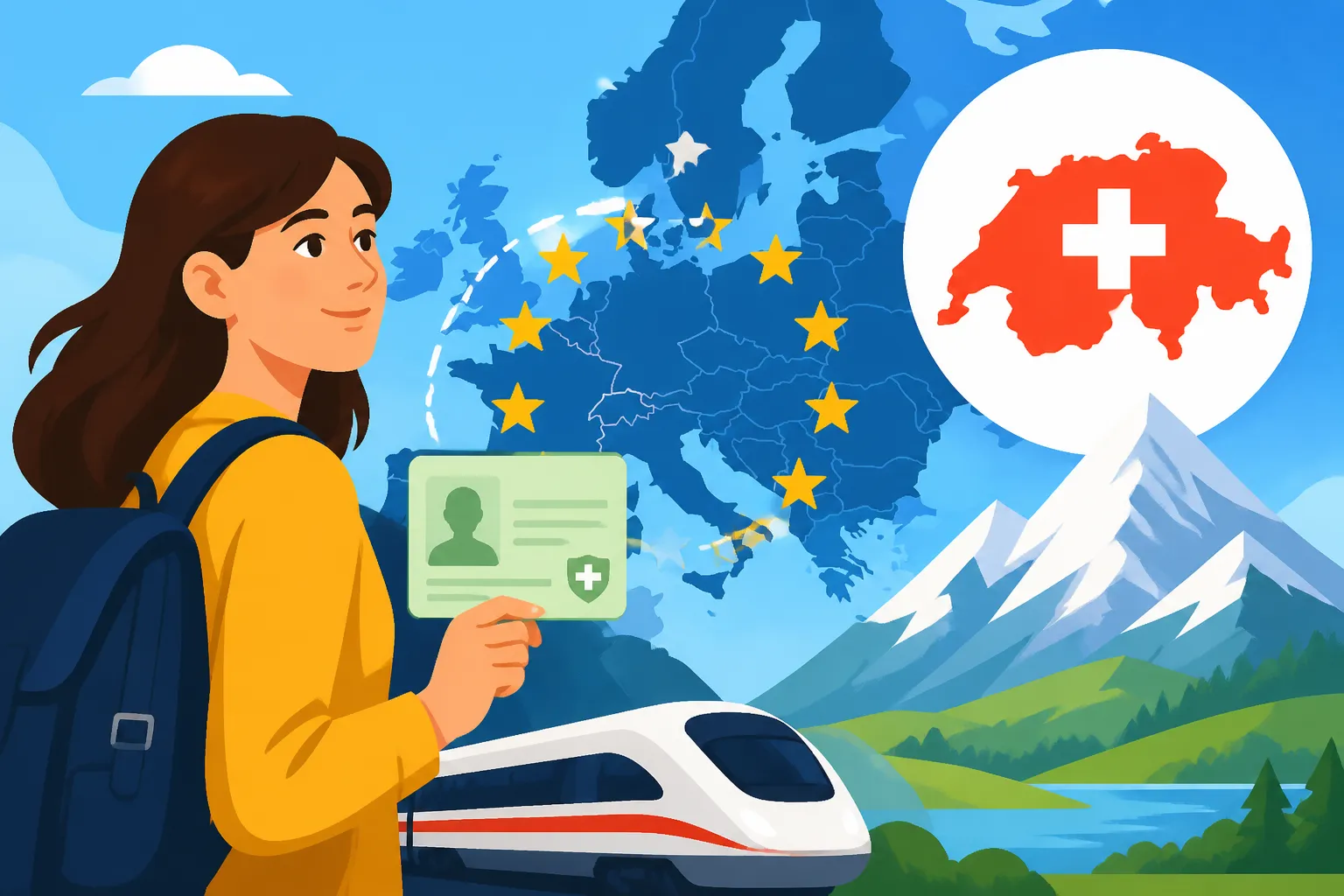
Switzerland occupies a unique geopolitical space; it is famously not a member of the European Union, yet it is a core member of the Schengen Area. This distinction is the source of endless confusion for newcomers. When you receive your residence permit, whether it is an L, B, or C card, you are effectively being granted a "Uniform Residence Permit." This document, when paired with a valid travel document, essentially acts as a multi-entry visa for the entire Schengen zone.
The Legal Basis for Your Movement
The Schengen Agreement is designed to abolish internal border checks, but it does not abolish the requirement to hold a valid status. For us expats, our Swiss residence permit is that status. According to the Swiss State Secretariat for Migration (SEM), your permit allows you to move freely within the Schengen Area for up to 90 days within any 180-day period for "tourist purposes." This means you can hop on a train to Milan or fly to Barcelona without applying for additional visas, provided your stay is short-term and you aren't seeking work in those countries.
It is vital to understand that your rights are tied to the Residence Permits in Switzerland: L, B, C, and G Permits Explained framework. While your permit gives you the right to reside and work in Switzerland, it only gives you the right to visit other Schengen countries. You cannot, for instance, use your Swiss B permit to move to Germany and start a job there. Each country retains its own labor market restrictions, even within the border-free zone.
The 90/180 Day Rule for Expats
Even though we live here, we are still subject to the 90/180 day rule when we step outside Swiss borders into the rest of the Schengen Area. This rule is a rolling window. If you spend 10 days in France in January, those 10 days count against your 90-day limit. Many expats assume that because there are no physical border booths when driving into France or Germany, the clock doesn't matter. However, if you are ever caught in a random spot check or involved in a minor traffic accident in Spain, the authorities will check your entry and exit history.
For those of us coming from "Third Countries" (non-EU/EFTA nations like the US, Canada, India, or the UK), this is even more critical. If you are aiming for The Swiss C Permit (Permanent Residency): Fast-Track and Standard Routes, you want to ensure your record is spotless. Overstaying your 90-day tourist allowance in a neighboring Schengen country can, in extreme cases, lead to an entry ban that could complicate your Swiss permit renewal or naturalization process.
Differences Between Permit Types
Not all permits are created equal when it comes to the "feeling" of travel security, though legally they function similarly within Schengen. A C permit holder is often viewed by border guards with the same level of permanence as a local citizen, whereas someone on a short-term L permit might face more questions.
| Permit Type | Travel Rights in Schengen | Work Rights in Schengen | Max Stay per Trip |
|---|---|---|---|
| L Permit | Yes, with valid passport | No | 90 days / 180-day period |
| B Permit | Yes, with valid passport | No | 90 days / 180-day period |
| C Permit | Yes, with valid passport | No | 90 days / 180-day period |
| G Permit | Limited to transit/commute | No | Varies by nationality |
If you are currently navigating The Swiss B Permit: Eligibility, Renewal, and Restrictions, keep in mind that the "travel right" is only valid as long as the card hasn't expired. If you are in the "renewal limbo," your travel rights become significantly more complicated.
Required Documentation for Seamless Border Crossings
The biggest mistake I see expats make is assuming the residence permit replaces their passport. It does not. Your Swiss permit is a residency document, but it is not a "travel document" in the eyes of international law. To cross any border—even the invisible ones—you must carry both your valid national passport and your physical Swiss residence permit.
The Essential Duo: Passport and Permit
Whenever I travel, I have a specific pocket in my bag for these two items. Most airline check-in desks at Zurich airport will ask for both. If you are a non-EU citizen, the airline needs to see your permit to verify why you don't have a Schengen visa stamped in your passport. Without that permit, they might deny you boarding because they fear being fined for transporting an undocumented passenger.
In some cases, especially if you are from a country where documents are frequently scrutinized, you might need to provide certified translations of supporting documents if you are traveling for more than just a weekend away—perhaps for a long-term lease in a holiday home or a family emergency. For these needs, using a service like RushTranslate can be a lifesaver. They provide the high-quality, certified translations that European bureaucracies crave, ensuring that your background documents are never the reason you're held up at a border.
Traveling with a Pending Permit Application
This is the ultimate expat stress test. Your permit is expiring, you’ve sent in your renewal forms to the Gemeinde, but the new card hasn't arrived yet. Can you still go to Austria for your ski trip?
The short answer is: it’s risky. A "Verfallanzeige" (the notice of expiration) or a letter from your local migration office stating that your renewal is in progress is often not recognized by border guards in other countries. If you must travel while your permit is being processed, you should apply for a "Rückreisevisum" (Return Visa) from your cantonal migration office. This is a physical visa sticker placed in your passport that explicitly allows you to re-enter Switzerland and travel through Schengen while your permit is "in the works." For more on this, check out Getting a 'Return Visa' (Rückreisevisum) When Traveling with an Expired Card.
Handling Lost or Expired Cards Abroad
If you lose your permit while you’re sipping espresso in Rome, do not panic, but do act immediately. You will need to file a police report in the country where it was lost. You cannot easily re-enter Switzerland by air without that permit. You may need to visit a Swiss embassy or consulate to get an emergency travel document or an entry clearance.
I always keep a high-quality scan of my permit and passport on a secure cloud drive. This doesn't replace the physical card, but it makes the process at the embassy much faster. If you find yourself in a situation where you need to prove your residency status through older records or translated police reports, RushTranslate can quickly turn around the necessary paperwork so you can present it to the local authorities.
Specific Rules for Non-EU/EFTA Nationals
If you hold a passport from a country like India, China, or South Africa, your Swiss permit is your golden ticket. Without it, you would typically need to apply for a Schengen visa for every single trip. The permit waives this requirement, but it comes with higher scrutiny.
Visa-Free Entry vs. Residency Rights
There is a distinction between people who can enter Schengen as tourists visa-free (like Americans or Australians) and those who require a visa. If you are from a visa-required country, your Swiss residence permit is your visa. You do not need to apply for anything else. However, if you are a Third-Country National Quotas: How the Swiss Permit Limits Work success story, you must be careful about your total time spent outside Switzerland.
If you spend too much time in other Schengen countries, you might inadvertently trigger questions about where your "center of life" actually is. Swiss authorities expect B and C permit holders to actually live in Switzerland. Excessive travel, while legally permitted under the 90-day rule, shouldn't look like you are actually living in Spain while just keeping a Swiss mailing address.
The Impact of Nationality on Schengen Travel
While the law says all Schengen residents are treated equally for travel, the reality at the border can be different. A person with a US passport and a Swiss B permit will rarely be questioned. A person with a passport from a "high-risk" country might be asked for proof of funds or a return ticket to Switzerland.
When I travel to more "formal" Schengen countries like Germany, I always carry a copy of my Swiss employment contract or a recent bank statement, just in case. It sounds paranoid, but in the world of Visa & Immigration, being over-prepared is the only way to stay sane. If your documents are in a language other than the one spoken in your destination, having them translated by RushTranslate ensures that the border agent can actually read your proof of residency.
Health Insurance and the Schengen Requirement
One of the often-overlooked requirements for traveling within Schengen is having adequate health insurance. While your mandatory Swiss KVG insurance covers emergencies in the EU/Schengen area, it often only pays up to twice what the treatment would cost in Switzerland. In high-cost private clinics abroad, this might not be enough.
For expats who travel frequently, having a global policy like Cigna Global is a massive relief. Cigna Global provides comprehensive international coverage that goes far beyond the "emergency-only" scope of basic Swiss insurance. This is particularly important because some Schengen countries still technically require "proof of insurance" for non-EU residents. Showing a Cigna Global card is a universally recognized sign that you aren't going to be a burden on their local healthcare system.
Practical Considerations: Flights, Trains, and Road Trips
The method of your travel changes the likelihood of being checked, but it shouldn't change your level of preparation.
Airline Check-in Requirements
Airlines are the strictest gatekeepers of Schengen rules. When you check in for a flight from Zurich to Lisbon, the gate agent is legally responsible for ensuring you have the right to enter Portugal. If you are a non-EU citizen, they will look for that Swiss permit. If your permit is a newer biometric version, they will scan it alongside your passport.
I’ve seen people try to use their Swiss Driver's License as ID at the gate. This will not work. A driver's license is not proof of nationality or residency status for border crossing purposes. Always, always have the passport-permit combo ready before you reach the front of the line.
Spontaneous Road Trips and Border Controls
One of the joys of living in Switzerland is the ability to drive into France for lunch or Germany for cheaper groceries. Most of the time, the border booths are empty. However, "random" checks are frequent, especially on major motorways like the one between Basel and Freiburg or Geneva and Annecy.
If you are caught in a check without your permit, you could be fined or even detained while they verify your status. If you are a Cross-Border Commuters (G Permit): Health Insurance Exemptions and Rules holder, you have specific lanes and rules to follow, but for the rest of us, it’s a standard check. Ensure your car also has the necessary equipment for the country you are entering (like high-vis vests in France) to avoid giving the police a reason to pull you over in the first place.
Travel Insurance and Health Coverage in Schengen
When you leave Switzerland, your Emergency Medical Services: Ambulances, REGA, and Crisis Protocols coverage changes. Your Swiss insurance card (the blue back of your health card) is the European Health Insurance Card (EHIC). This allows you to access public healthcare in other Schengen countries at the same cost as a local.
However, as I mentioned, the "same cost as a local" might still leave you with huge bills if you end up in a private facility. This is why many expats choose Cigna Global. Having a dedicated international plan means you can choose your doctor in Paris or Berlin rather than being stuck in whichever public hospital has an open bed. Cigna Global also handles the "Tiers Payant" (direct payment) system more smoothly in international contexts than some local Swiss insurers might.
Common Pitfalls and How to Avoid Them
Even the most seasoned expats can trip up on the nuances of Schengen travel. Here are the big ones to watch out for.
Overstaying the Schengen Limit
It is easy to lose track of time if you have a holiday home in France or Italy. If you spend your entire 90-day allowance in the first three months of the year, you technically cannot leave Switzerland for any other Schengen country for the next three months. This includes transit! If you have a flight to the UK (non-Schengen) but it has a layover in Munich (Schengen), you could be denied entry to the transit zone if your 90 days are up.
Traveling to Non-Schengen EU Countries
This is a huge trap. Countries like Ireland or Cyprus are in the EU but not in the Schengen Area. Your Swiss residence permit does not automatically give you visa-free access to these countries unless your nationality already allows it. For example, an Indian citizen living in Zurich with a B permit still needs to apply for a standard tourist visa to visit Dublin.
Always check the specific visa requirements for your nationality for the destination country, regardless of your Swiss permit. If you need to submit a visa application, you'll likely need to provide a certified translation of your Swiss residency proof. RushTranslate is excellent for this, as they understand the specific terminology used in Swiss permits and can provide a translation that the Irish or Cypriot embassy will accept without question.
Misunderstanding the L Permit Restrictions
If you are on an L permit, you are considered a "Short-term Resident." While you have the same travel rights, you are under much more pressure to prove your ties to Switzerland. If you are traveling near the end of your L permit's validity, carry a copy of your work contract to show you have a reason to return to Switzerland.
| Checklist for Schengen Travel | Check? |
|---|---|
| Valid National Passport (at least 3-6 months left) | [ ] |
| Physical Swiss Residence Permit (L, B, or C) | [ ] |
| European Health Insurance Card (back of your Swiss card) | [ ] |
| International Health Insurance (like Cigna Global) | [ ] |
| Scans of all documents on a secure cloud | [ ] |
| Certified translations of essential docs (by RushTranslate) | [ ] |
Finally, always be aware of the "Quiet Rules" of the country you are visiting. Just because you've mastered Swiss Everyday Rules: Recycling, Quiet Hours, and Neighborhood Etiquette doesn't mean you can ignore the local norms in Italy or Spain. Being a respectful guest makes the entire process of being an expat traveler much smoother.
Emergency Protocols While Traveling
What happens if you are in a different country and your health takes a turn? Your Swiss KVG insurance might cover the basics, but it won't cover things like medical evacuation back to Switzerland or a private room in a top-tier hospital. This is where Cigna Global becomes your best friend. Their 24/7 emergency helplines are designed for expats who aren't in their home country or their country of residence.
If you lose your passport and permit simultaneously, your first call should be to the local police, and your second should be to your embassy. You will likely need to prove who you are using whatever digital documents you have. If you need to get your birth certificate or other identity documents translated in a hurry to get an emergency passport, RushTranslate offers 24-hour turnaround times which can be the difference between getting home for work on Monday or being stuck in a foreign city for a week.
Travel is one of the best parts of living in the heart of Europe. By treating your Swiss residence permit with the respect it deserves—and understanding its limitations—you can explore the wonders of the Schengen Area without the "border-crossing-sweats." Just remember: Passport + Permit + Preparation.
Disclaimer
The information provided in this guide is for informational purposes only and does not constitute legal or immigration advice. Immigration laws and Schengen Area regulations are subject to frequent change. Always verify current requirements with the official Swiss State Secretariat for Migration (SEM) or the embassy of your destination country before traveling. The author and publisher are not responsible for any travel disruptions, fines, or legal issues arising from the use of this information.