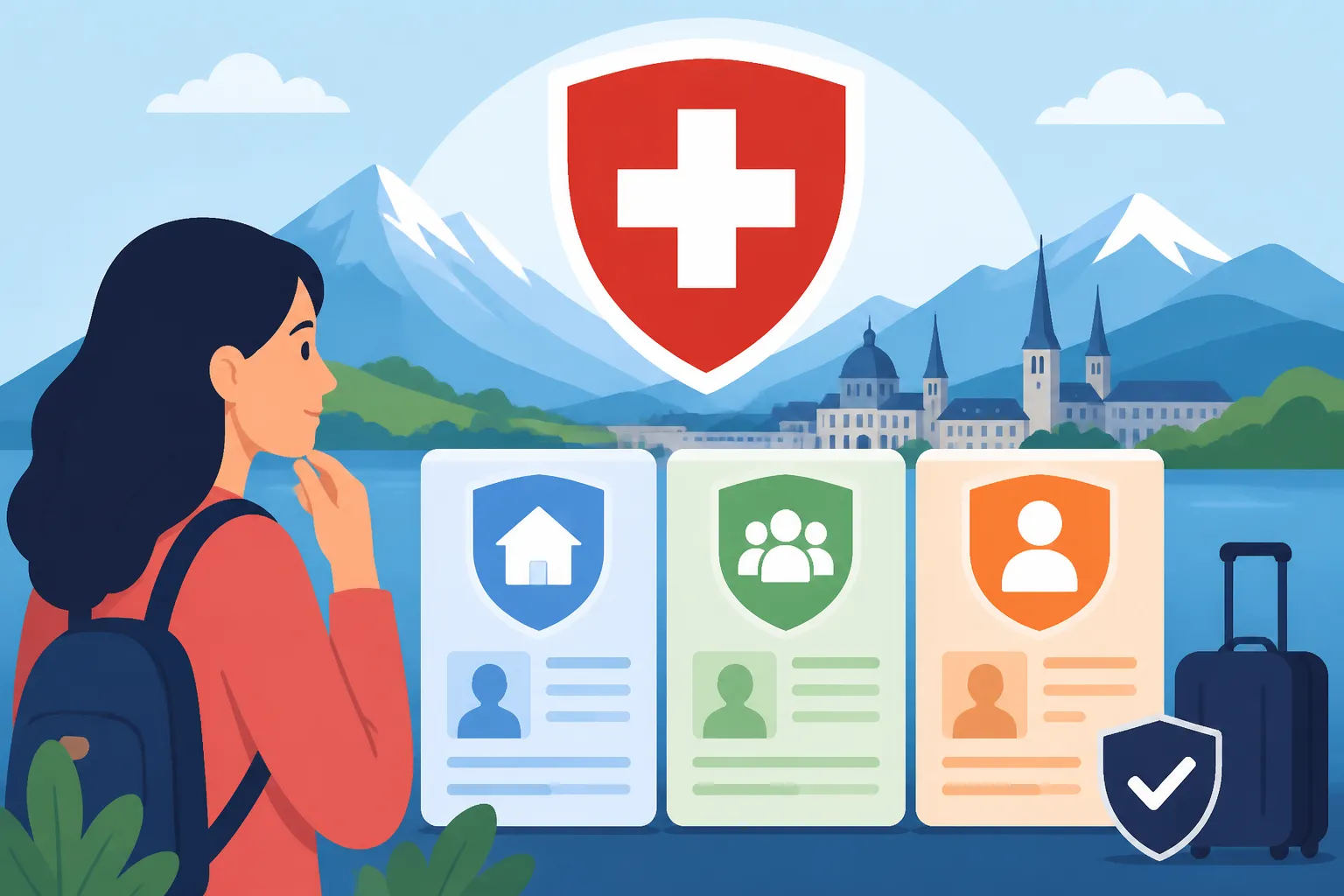
Asylum and Provisional Admission: Understanding N, F, and S Permits
Navigating the Swiss permit system often feels like trying to solve a Rubik's cube while blindfolded, especially when you move beyond the standard work visas. I remember the sheer confusion of my first month here, watching friends wait months for a single letter from the migration office regarding their status. This guide clarifies the complexities of N, F, and S permits to help you understand your rights and obligations.
The N Permit: Seeking Asylum in Switzerland
The N permit is issued to individuals who have applied for asylum in Switzerland and are currently awaiting a decision from the State Secretariat for Migration (SEM). This is not a residence permit in the traditional sense; rather, it is a "confirmation of the application for asylum." From the moment you receive this document, your life is governed by a specific set of federal and cantonal rules that differ significantly from those holding Residence Permits in Switzerland: L, B, C, and G Permits Explained.
The Application Process and Initial Rights
When you first arrive and request asylum, you are typically housed in a Federal Asylum Center (FAC). During this initial phase, the SEM conducts interviews to determine if Switzerland is responsible for your case under the Dublin Agreement and to assess the validity of your asylum claim. I have seen how stressful this waiting period can be, as the N permit essentially places your life on hold. You are granted a right of residence only until the asylum proceedings are concluded.
While on an N permit, your freedom of movement is restricted. You are assigned to a specific canton based on a quota system, and you are generally expected to remain within that canton. If you need to travel to another part of Switzerland for an urgent reason, you often need to notify the authorities. It is also important to note that N permit holders are generally not allowed to travel abroad; doing so can result in the immediate loss of your status and the termination of your asylum application.
Working and Integration on an N Permit
One of the most common frustrations for those on an N permit is the restriction on employment. For the first three months after filing your asylum application, you are strictly prohibited from working. After this initial "blackout" period, the canton may grant you a work permit, but this is subject to the principle of "Swiss priority." This means an employer must prove they could not find a suitable candidate among Swiss citizens or those with a valid residence permit.
Even if you find a job, the administrative hurdles are high. Employers must apply for a specific work authorization on your behalf. Additionally, a portion of your salary may be withheld as a "special charge" to contribute toward the costs of the asylum procedure and social assistance. This can make financial independence feel like an uphill battle. If you are navigating these professional hurdles, you might find that having your credentials and diplomas professionally handled by services like RushTranslate can help speed up the background verification process for potential employers.
Housing and Cantonal Allocations
Once you leave the federal center, the canton takes over your housing. You do not get to choose where you live; you might be placed in a collective living center or a small apartment, depending on availability and the canton’s resources. I’ve known people assigned to remote mountain villages where public transport is sparse, making integration even more challenging.
The canton is responsible for your basic needs, providing social assistance if you cannot support yourself. This assistance is usually lower than the standard social welfare rates provided to Swiss citizens. You are also required to follow the local Registering at the Kreisbüro: What Documents Do Expats Need to Bring? protocols, ensuring the local residents’ registration office always has your current address. Any change in your living situation must be approved by the cantonal migration office, leaving very little room for personal autonomy.
The F Permit: Provisional Admission for the Temporarily Protected
The F permit is one of the most misunderstood categories in the Swiss immigration landscape. It is issued to people who have been denied asylum but cannot be deported for specific legal reasons. This "provisional admission" is often anything but provisional, as many people remain on an F permit for decades. It represents a state of legal limbo that requires a high degree of resilience.
Why F Permits are Issued Instead of Refugee Status
A provisional admission is granted when the enforcement of a deportation order is deemed impossible, unlawful, or unreasonable. "Impossible" usually refers to technical issues, like a lack of travel documents. "Unlawful" occurs if deportation would violate international law, such as the European Convention on Human Rights. "Unreasonable" is most common in cases of war or general violence in the home country.
There is a distinction between "provisionally admitted foreigners" and "provisionally admitted refugees." The latter have been recognized as refugees but are excluded from asylum due to specific grounds (like committing a crime). Regardless of the sub-category, the F permit must be renewed every 12 months. This constant cycle of renewal can be exhausting, and it’s a reality that many in the expat community rarely have to face compared to The Swiss B Permit: Eligibility, Renewal, and Restrictions.
Professional Life and Social Security
Unlike the N permit, the F permit allows for much greater access to the labor market. Since 2018, the "Swiss priority" rule has been abolished for F permit holders, meaning they can start working immediately without the employer needing to prove they couldn't find a Swiss worker. You simply need to notify the cantonal authorities of your employment. This was a massive win for integration, allowing people to build a life despite their uncertain legal status.
However, social security and social assistance remain complex. If you are unable to work, the social assistance you receive is often less than what is provided to recognized refugees (B permit holders). You are also subject to the same tax and social security deductions as any other worker. For those looking to secure their future while in this status, exploring international health options like Cigna Global can sometimes provide a sense of continuity that local, basic-tier insurance might lack if your status changes rapidly.
Family Reunification Hurdles
One of the most heartbreaking aspects of the F permit is the restriction on Family Reunification: Bringing Your Spouse and Children to Switzerland. Unlike B or C permit holders, people with an F permit must wait at least three years before they can even apply to bring their family members to Switzerland. Even then, the requirements are incredibly strict.
You must prove that you are financially independent and do not rely on social assistance, that you have adequate housing for the entire family, and that you can speak the local language to a certain level. Because of these barriers, many families remain separated for five to seven years. During this time, maintaining clear documentation is vital. If you are preparing an application, using an expert service like RushTranslate for your Translation and Apostille Requirements for Marriage Certificates is essential to ensure the cantonal migration office doesn't reject your dossier on a technicality.
The S Permit: Protection Status for People from Ukraine and Beyond
The S permit was a "sleeping" legal provision that was famously activated for the first time in response to the war in Ukraine in 2022. It is designed for a "mass influx" of people seeking protection, allowing the Swiss government to provide help quickly without overwhelming the individual asylum system. It is a collective form of protection that bypasses the long interviews associated with the N permit.
The Legal Basis of Collective Protection
The S permit is temporary by design. It grants the right to stay in Switzerland for as long as the Federal Council deems the situation in the home country to be dangerous. While it was initially valid for one year, it has been extended multiple times as the conflict in Ukraine persists. This status is unique because it doesn't involve an individual "refugee" check; if you belong to the group defined by the Federal Council, you are eligible.
This collective approach is much faster than the standard asylum route. However, the downside is the inherent uncertainty. If the Federal Council decides that the protection status is no longer necessary, all S permit holders are expected to leave the country simultaneously. This creates a different kind of psychological pressure compared to the individual path of the N or F permits.
Accessing the Labor Market and Health Services
S permit holders have the right to work immediately upon registration. Unlike the N permit, there is no three-month waiting period. This was designed to encourage self-sufficiency from day one. You can be employed by a company or even start your own business as a freelancer, provided you notify the cantonal authorities.
From a healthcare perspective, S permit holders are integrated into the Swiss system quickly. You are required to follow the Mandatory Registration: How to Sign Up for Health Insurance Within 90 Days rule. The canton usually pays the premiums if you are receiving social assistance, but once you start working, you are responsible for your own costs, just like any other resident. Having access to a Finding an English-Speaking Family Doctor in Zug or other major hubs can be a significant comfort for those who have recently fled a crisis and are dealing with trauma.
Travel Restrictions and Duration
A significant benefit of the S permit compared to the N or F permit is the ability to travel. S permit holders are generally allowed to travel within the Schengen area for up to 90 days without a visa, and they can even make short trips back to their home country for urgent matters without immediately losing their protection status. This flexibility is vital for maintaining family ties and managing affairs back home.
However, the duration remains the big question mark. The S permit does not lead directly to a permanent residence (C permit). Time spent on an S permit does not currently count toward the years required for naturalization. If the protection status ends, the holder must either leave or apply for a different type of permit, such as a B permit through an employer, which brings us back to the standard immigration rules.
Comparison of N, F, and S Permits
| Feature | N Permit (Asylum Seeker) | F Permit (Provisionally Admitted) | S Permit (Protection Status) |
|---|---|---|---|
| Legal Status | Application pending | Asylum denied, deportation impossible | Collective temporary protection |
| Right to Work | After 3 months (with restrictions) | Immediate (no Swiss priority) | Immediate |
| Travel Abroad | Generally prohibited | Restricted (requires permission) | Allowed in Schengen (90 days) |
| Family Reunification | Not possible | Possible after 3 years (strict rules) | Possible (under specific rules) |
| Validity | Until end of procedure | 12 months (renewable) | Until revoked by Federal Council |
| Health Insurance | Mandatory (paid by Canton if on aid) | Mandatory (paid by Canton if on aid) | Mandatory (paid by Canton if on aid) |
Transitioning Between Permits and Residency Routes
For many, the goal is to move from these temporary statuses to a more stable The Swiss B Permit: Eligibility, Renewal, and Restrictions. This transition is not automatic and is often fraught with legal complexities that require years of "good behavior" and economic integration.
From F Permit to B Permit: The Hardship Case Route
If you have been in Switzerland on an F permit for more than five years, you may apply for a B permit based on a "hardship case." This is where the Swiss authorities look at how well you have integrated into the local community. I’ve seen this process take a long time, and the criteria are rigorous. You need to demonstrate financial independence, language proficiency (usually at least A2 or B1), and a clean criminal record.
The authorities will also look at your social ties. Do you volunteer? Are your children well-integrated into the local school system? This is often referred to as the What is a 'Härtefall' (Hardship Case) Visa Status in Switzerland? pathway. It’s a vital lifeline for those who have built a life here while their home country remains unsafe. During this transition, keeping your medical records in order is crucial, and Translating Medical Records from English to German/French for Your Hausarzt via a certified service like RushTranslate can ensure your health history is correctly understood by your new Swiss doctors.
Legal Rights and Appeals
Every decision made by the SEM can, in theory, be appealed. Whether it’s a denial of asylum that leads to an F permit or a rejection of a hardship case application, the Swiss legal system provides a framework for review. However, legal fees can be prohibitive. Many expats rely on NGOs like HEKS or the Swiss Refugee Council for legal advice.
It is important to understand that your rights are protected by the Swiss Constitution and international treaties. Even on an N or F permit, you have the right to a fair hearing and the right to basic human dignity. However, navigating these legal waters without a specialized lawyer is almost impossible. If you are moving between statuses, having a global insurance backup like Cigna Global might provide peace of mind during the gaps where cantonal coverage might be in flux during administrative transitions.
Practical Realities of Living on Provisional Permits
Living with a letter for a permit instead of a plastic card is a constant reminder of one's precarious status. It affects everything from getting a mobile phone contract to renting an apartment. Landlords in cities like Zurich or Geneva are notoriously picky, and an F or N permit is often viewed as a "risk," even if it’s legally not supposed to be a barrier.
Healthcare and Insurance Logistics
All residents in Switzerland, regardless of their permit, must have health insurance. For N and F permit holders, the canton often chooses the insurance provider and the most restrictive model (usually a Telmed or HMO model) to keep costs low. This means you cannot just go to any doctor; you must follow the specific referral path dictated by your policy.
You will still be responsible for the "Franchise" (deductible) and the 10% co-payment once you start earning an income. Understanding Healthcare in Switzerland for Expats: The Complete System Overview (2027) is essential because the rules for billing and reimbursements apply to you just as they do to anyone else. I always suggest finding a local "Hausarzt" who is empathetic to the expat or refugee experience, as they can be your greatest advocate in a system that often feels impersonal.
Administrative Requirements: Translations and Registrations
Every step of the way, you will be asked for documents. Whether you are applying for a work permit on your N status or trying to prove your marriage for family reunification on an F status, the "Original and Certified Translation" requirement is king in Switzerland. The authorities are very specific about who can translate documents.
Using a service like RushTranslate ensures that your birth certificates, marriage licenses, and educational degrees meet the stringent Swiss standards. I have seen applications delayed for months because a translation was done by a non-certified friend or an obscure agency abroad. Furthermore, staying on top of your registration is non-negotiable. Every time you move, you must visit the local Gemeinde. If you live in a larger city, you must follow the rules for Registering at the Kreisbüro: What Documents Do Expats Need to Bring? within 14 days, or you risk fines that could negatively impact your permit renewal.
Important Considerations for Future Stability
While the N, F, and S permits are designed for protection, they are also tests of integration. The Swiss government increasingly views the right to stay as something that is earned through participation in society and the economy. For many, this means learning a language while working a low-skilled job and living in shared accommodation.
If you are currently on one of these permits, my best advice is to document everything. Keep every pay stub, every language certificate, and every letter of recommendation from a local club or employer. These will be the building blocks of your future application for a B or C permit. The journey from an N permit to a Swiss passport is long—often taking over 10 to 12 years—but it is a path that many have successfully walked before you.
Disclaimer
The information provided in this guide is for informational purposes only and does not constitute legal advice. Swiss immigration laws and cantonal practices are subject to frequent changes. Always consult with the State Secretariat for Migration (SEM), your cantonal migration office, or a qualified legal professional regarding your specific situation.