Do I Need a TV License if I Only Watch Netflix? Serafe Nuances
Getting your first Serafe bill in the mail feels like a rite of passage for every expat, usually arriving just as you have finally mastered the local trash collection schedule. I remember staring at that CHF 335 invoice, convinced it was a mistake since I had not even bought a television for my new apartment yet. This guide explains why almost everyone pays the Swiss media fee, even if you only stream Netflix on your laptop.
Decoding the Serafe Fee: It’s Not Just a TV License
To understand why you are receiving a bill for "radio and television" when you do not own either, we have to look at the massive shift in Swiss law that occurred a few years ago. In the old days, a company called Billag handled these collections, and you only paid if you physically owned a radio or a television. If you were a "device-free" household, you could technically opt-out. However, the system changed to a device-independent household fee, now managed by a private company called Serafe.
The logic behind this change was that in the modern era, almost everyone has a "receiving device" in their pocket. If you have a smartphone with an internet connection, a tablet, or a laptop, the Swiss government considers you capable of accessing public broadcasting services. Therefore, the fee is no longer about whether you watch the local news; it is a mandatory contribution toward the public service mandate of the Swiss Broadcasting Corporation (SRG SSR). When you are first Renting in Switzerland: The Complete 2027 Guide for Expats, this is one of those "hidden" costs that often catches people off guard.
The current fee is set at CHF 335 per year per private household. This is a flat rate. It does not matter if you are a single person living in a studio or a family of six in a sprawling villa; the household pays one fee. If you are using a platform like HousingAnywhere to find a temporary room, you should clarify with the primary tenant or landlord if this fee is already covered in your "Nebenkosten" or if you will be expected to contribute separately.
The Netflix Dilemma: Why Streaming Does Not Exempt You
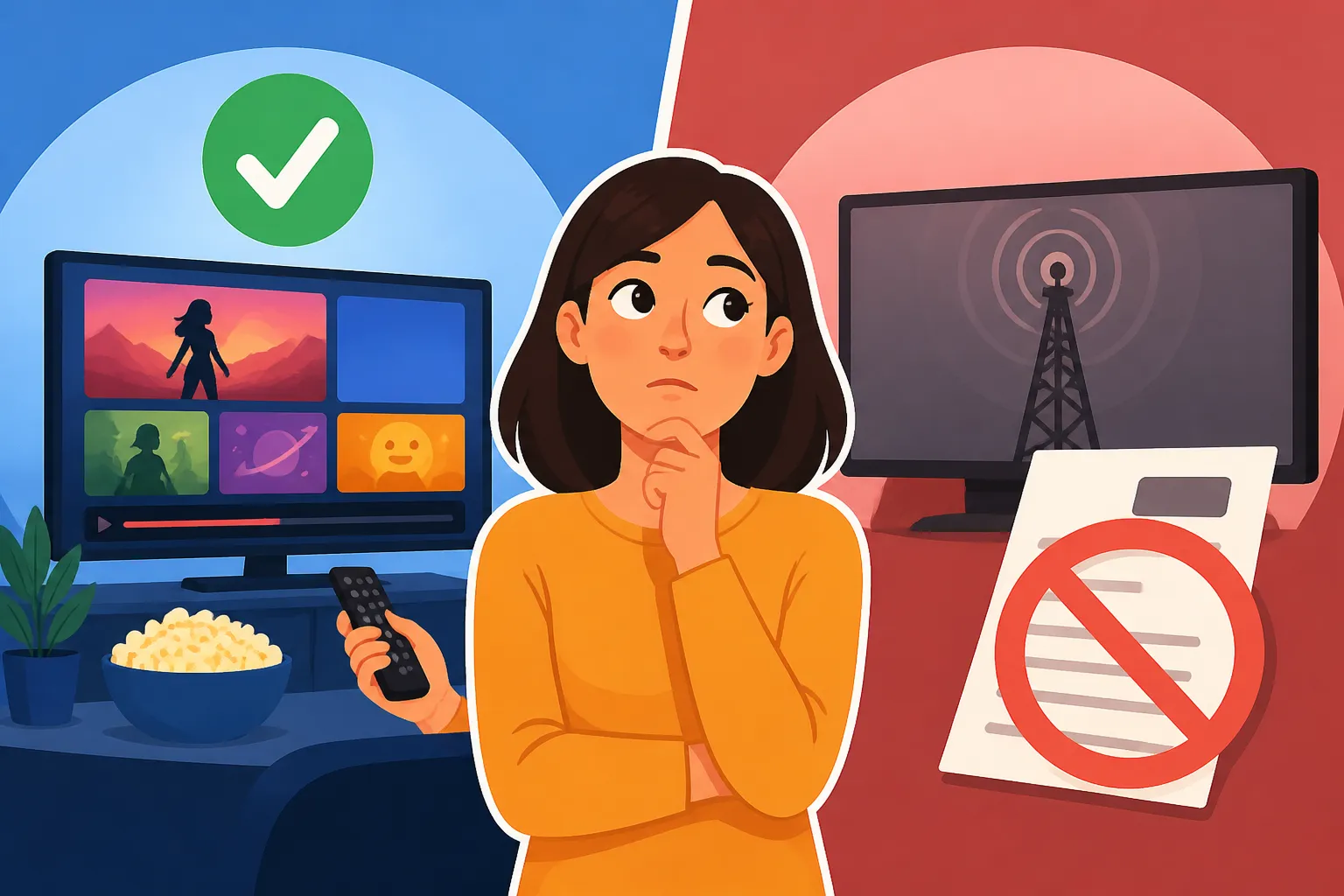
A common question I hear from new arrivals is: "If I only watch Netflix, Disney+, or YouTube, why am I funding Swiss public TV?" It is a valid frustration. If your media diet consists entirely of international streaming services and you do not speak a word of German, French, or Italian, paying for local programming feels like a "language tax."
However, the Swiss Federal Act on Radio and Television is very specific. The obligation to pay is linked to the "household" rather than the "usage." Because your Netflix habit requires an internet connection, and that same internet connection allows you to access the SRF, RTS, or RSI websites and apps, you are legally obligated to pay. Even if you use an Airalo eSIM to stay connected while your home fiber is being installed, that device in your hand is technically a radio and TV receiver in the eyes of Serafe.
This is part of the broader Cost of Living in Switzerland 2026: Budgeting for Singles and Families that foreigners must calculate. While the fee supports high-quality local journalism and cultural programming, for the average expat, it is essentially a mandatory utility bill. It is also worth noting that the fee supports the technical infrastructure of broadcasting across the Alps, which is vital for emergency alerts—something you will appreciate if you are ever caught in a mountain storm.
| Feature | Old System (Billag) | New System (Serafe) |
|---|---|---|
| Basis of Fee | Ownership of specific devices (Radio/TV) | Per household (Device-independent) |
| Annual Cost | Approx. CHF 450 | CHF 335 (Current 2026 Rate) |
| Enforcement | Door-to-door inspections were possible | Automatic billing based on resident registry |
| Exemptions | "Opt-out" possible if no devices owned | Extremely rare (No internet/smartphone/radio) |
Shared Apartments and the Household Rule
Things get a little more complicated when you are not living alone. In Switzerland, the "household" is the unit of taxation. This means that in a Wohngemeinschaft (WG) or shared flat, only one bill is sent to the address, and it covers everyone living there. If you are Finding a WG (Shared Flat) as an International Student in Lausanne, you need to discuss how this bill is split. Usually, the person whose name is first on the mailbox receives the invoice and then collects "shares" from the other roommates.
Serafe gets its data directly from the cantonal and communal inhabitant registries. This is why Registering Your Address at the Kreisbüro Within 14 Days of Moving is so critical; once your name is in the system at a specific address, Serafe will eventually find you. If you move into a flat where someone is already paying, your name should theoretically be linked to that household. However, the system is not perfect. Sometimes, two people in the same shared flat receive separate bills. If this happens, do not just pay both! You need to contact Serafe and explain that you are part of the same household to have one of the invoices canceled.
For those who enjoy shopping on Amazon Germany for their electronics, keep in mind that buying a high-end monitor instead of a "TV" does not save you from the fee anymore. In the past, people would buy "tuneless" monitors to avoid the Billag man. Today, if that monitor is connected to a PC with internet access, you are in the same boat as someone with a 75-inch OLED television.
Are There Any Real Exemptions for Expats?
I often get asked if there is a "legal loophole" to avoid this. The short answer is: probably not for you. The requirements to be exempt from the Serafe fee are incredibly strict. You have to prove that no one in your household has any means of receiving radio or television signals. In 2026, this means:
- No television sets.
- No radios (including car radios).
- No smartphones.
- No tablets or computers.
- No internet connection.
If you are reading this blog post, you almost certainly do not qualify for that exemption. There are, however, legitimate exemptions for people receiving certain types of social benefits. You can find more details on this in the guide regarding Can University Students or Welfare Recipients Get a Serafe Exemption?. Additionally, households where all adult members are deaf or blind and do not have any devices equipped with "sensory" aids for the other sense are exempt.
For the average working expat, the only way to "save" is to ensure you are not being double-billed. When you finally decide to repatriate or move to a new country, you must remember the How to Cancel the Serafe Fee When Leaving Switzerland Permanently process. You do not actually cancel Serafe directly; instead, you must "deregister" from your commune (Abmeldung). Once the commune marks you as "moved abroad," they notify Serafe, and your billing cycle stops. If you forget this step, the bills will keep coming, and Swiss authorities are known for pursuing debts across borders.
Navigating the Billing Cycle and Payments
The invoice usually arrives once a year, but it can be staggered depending on when you registered your residency. It is a major line item in your annual budget, right up there with your health insurance franchise. If you are struggling with the one-time hit, it is sometimes possible to request quarterly billing, though the default is the annual CHF 335.
Many expats find the Swiss Everyday Rules: Recycling, Quiet Hours, and Neighborhood Etiquette to be quite rigid, and the Serafe payment is no different. If you ignore the bill, you will receive a "Mahnung" (reminder) with a late fee. If you continue to ignore it, it can lead to a "Betreibung"—a formal debt collection entry that can ruin your chances of getting a future apartment or renewing your permit.
To make life easier, I highly recommend setting up an eBill. Most Swiss banks allow you to search for "Serafe" in your online banking portal and link your account. This way, the bill appears digitally, and you can pay it with one click. For a detailed breakdown of the mechanics, check out How to Pay the Serafe Bill: eBill, Bank Transfer, or Post Office. If you are living in a shared space, the guide on Who Pays the Serafe Bill in a WG (Shared Apartment)? is an essential read to avoid roommate conflicts.
Ultimately, while watching Netflix doesn't feel like a "public service," the Serafe fee is simply part of the price of admission for living in this beautiful, well-organized country. It funds the 24/7 news cycles that keep the country informed in four languages and ensures that even the most remote alpine village has access to information. It may be a "nuance" that feels like a nuisance, but once it is paid, you can get back to enjoying your Swiss life—and your Netflix shows—guilt-free.
Disclaimer
This article is for informational purposes only and does not constitute legal or financial advice. Swiss laws regarding media fees and taxation are subject to change. Always verify the current rates and regulations with the official Serafe AG website or your local municipal office (Gemeinde/Commune) to ensure compliance with the most recent legislation.