How to Pay the Serafe Bill: eBill, Bank Transfer, or Post Office
Just when you think you have finally mastered the art of Swiss bureaucracy and balanced your monthly budget, a sleek envelope from Serafe AG lands in your mailbox like an uninvited guest. I remember the sinking feeling in my stomach when I first saw that bill for several hundred francs, wondering if I had somehow missed a fine or signed a contract I didn't understand. This guide settles the confusion once and for all by explaining exactly how to pay your mandatory media tax via eBill, bank transfer, or the post office.
Understanding the Serafe Mandatory Media Tax
The first thing every expat needs to understand is that the Serafe bill is not an optional subscription like Netflix or Disney+. In Switzerland, the "radio and television fee" is a mandatory household tax. Since 2019, Serafe has been the collection agency responsible for this, replacing the old system known as Billag. Unlike the previous system, where you only paid if you owned a television or a radio, the current law assumes that every household has the potential to access public broadcasting via smartphones, tablets, or computers.
The fee is currently set at CHF 335 per year for a private household. It doesn't matter if you never watch Swiss national TV (SRF/RTS/RSI) or if you only consume media in English. If you are registered at a Swiss address, you will eventually receive this bill. This is why it is a critical component of the Cost of Living in Switzerland 2026: Budgeting for Singles and Families that every newcomer must account for in their financial planning.
The billing cycle usually starts from the month you officially register at the residents' registration office (Kreisbüro or Gemeinde). For many, the first bill arrives about two to three months after moving in and covers the remainder of the calendar year or a full twelve-month period. Because this is a per-household fee, only one person in an apartment needs to pay it. If you are living in a shared flat, it is vital to know Who Pays the Serafe Bill in a WG (Shared Apartment)? to avoid double-paying or missing the deadline entirely.
Paying via eBill: The Modern and Seamless Method
If you want to live like a local and minimize the time you spend on administrative chores, eBill is the absolute "gold standard" for paying Serafe. Most Swiss residents have moved away from physical paper bills in favor of this digital system integrated directly into their online banking.
To set this up, you first need to log in to your Swiss bank account—whether you are using a traditional giant like UBS or a digital-first solution. Within the eBill section of your banking portal, you can search for "Serafe" under the list of available billers. You will need your customer number and the reference number found on your most recent paper invoice to link the two.
The beauty of eBill is that once it is set up, you no longer receive a physical letter. Instead, a digital invoice appears in your banking app. You simply click "Approve," and the money is sent. You can even set up "Permanent Approval" for Serafe so that the CHF 335 is automatically deducted every year without you having to lift a finger. This level of automation is a cornerstone of Banking and Finance for Expats in Switzerland: The 2027 Guide and helps ensure you never rack up late fees.
If you are managing your daily expenses using a multi-currency tool like Wise to bring in funds from abroad, you can easily transfer your CHF balance to your local Swiss account to cover these eBill approvals. Many expats find that keeping their "bill money" in a separate bucket or even a high-interest savings environment like Trade Republic helps them accrue a little bit of interest on the side before the annual Serafe payment is due.
Using a Manual Bank Transfer with the QR-Bill
For those who prefer a bit more control or haven't yet committed to the eBill system, the most common way to pay is via a manual bank transfer using the QR-bill (QR-Rechnung) that comes in the mail. Switzerland transitioned fully to QR-bills a few years ago, replacing the old orange and red payment slips.
The QR-bill contains a black-and-white pixelated square that holds all the necessary payment information: the IBAN, the exact amount, and a unique 27-digit reference number. To pay this manually, you have two main options:
- Mobile Banking Scan: Open your banking app on your smartphone, select the "Scan & Pay" or "Payments" feature, and point your camera at the QR code on the Serafe bill. The app will automatically populate all the fields. This is incredibly helpful because it prevents typos in that long reference number.
- Manual Data Entry: If your camera isn't working, you can manually type in the details. However, be extremely careful. If the reference number is wrong, Serafe’s automated system won't be able to link the payment to your account, and you might receive a reminder (Mahnung) despite having sent the money.
Understanding how to navigate these digital payments is just as important as Understanding Swiss Payslips: Deductions for AHV, ALV, and NBU when you are trying to make sense of your total financial output each month. If you are also active in the digital asset space and use platforms like Binance to manage your portfolio, remember that you must always convert your assets to Swiss Francs (CHF) through a gateway before attempting to pay a QR-bill, as government agencies like Serafe do not accept direct crypto payments.
Paying at the Post Office: The Traditional Route
Switzerland is one of the few highly digitized countries that still maintains a robust culture of paying bills in person at the post office (Die Post/La Poste). If you are new to the country and don't have your banking app set up yet, or if you simply prefer a physical receipt with a stamp, you can take your Serafe QR-bill to any post office branch.
You walk up to the counter, hand over the paper slip, and pay using your debit card or even cash. The postal clerk will process the payment and give you a physical receipt. This is a very reliable method, but be aware that the post office charges a small processing fee for this service, which is usually added to the total or charged to the biller (who may eventually pass that cost on to consumers in higher general fees).
For expats who find the physical administrative side of Switzerland overwhelming, Paying Bills at the Post Office Counter with a QR-Slip (Einzahlungsschein) is a deep dive into how this process works for everything from rent to health insurance. While you are at the post office, you might also find it useful to ask about other local services, as the post office often acts as a hub for community information.
| Payment Method | Difficulty | Speed | Best For |
|---|---|---|---|
| eBill | Low | Instant | Automation lovers and paperless households |
| Bank Transfer (QR-Scan) | Medium | Fast | People who want to review every bill before paying |
| Post Office (In-Person) | High | Slow | Newcomers without a Swiss bank account or those preferring cash |
| TWINT | Low | Fast | Quick payments via the QR-code on the invoice |
Handling Reminders and Late Fees
Swiss companies, including Serafe, are generally very efficient but also quite strict regarding deadlines. If you forget to pay your bill, you will typically receive a reminder (Mahnung). The first reminder is often a "friendly" nudge without an extra fee, but subsequent reminders will quickly add CHF 20 or more to your total.
If you continue to ignore the bill, the situation can escalate to a legal debt collection process known as a Betreibung. This is something you want to avoid at all costs. A debt record in Switzerland can prevent you from renting an apartment, getting a car lease, or even renewing your residence permit. Ensuring your contact details are updated and that you have a system for tracking bills—perhaps by utilizing a budgeting app or a versatile account like Wise to keep your CHF liquid—is the best defense against these administrative headaches.
If you believe the bill is an error—for example, if you are being billed for a period before you arrived in the country—don't just ignore it. You must contact Serafe customer service immediately. They are generally helpful, though they will require proof of your entry date or your registration at the Gemeinde. You may need to provide your How to Find Your 13-Digit Swiss AHV Social Security Number as part of your identification process when dealing with state-adjacent agencies.
Exemptions and Reductions: Can You Avoid Paying?
Many expats ask if there is any way to get out of the Serafe fee. For the vast majority of working professionals, the answer is a firm "no." However, there are specific categories of people who are exempt or entitled to a reduction.
People who receive federal disability benefits (IV/AI) or supplementary benefits (Ergänzungsleistungen) can apply for an exemption. Furthermore, households where no one has the technical means to receive radio or television (which is virtually impossible given that a smartphone counts) can theoretically apply for an opt-out, but these are rarely granted and are often subject to inspection.
If you are struggling financially, it is worth checking Can University Students or Welfare Recipients Get a Serafe Exemption? to see if your specific situation qualifies. Generally, students living in dorms still have to pay if the dorm doesn't cover it as a collective household. If you are using modern financial tools, you might find that the interest earned on your savings via Trade Republic or the cashback from certain cards can help offset the cost of this annual tax.
Special Considerations for Moving and Shared Housing
One of the most common points of confusion occurs when people move house within Switzerland. If you move in the middle of the year, Serafe is usually notified automatically by the residents' registration office. However, you should still check your final bill at the old address. You are not required to pay twice for the same period.
If you are moving into a shared flat (WG), make sure you talk to your new roommates immediately. Serafe bills the household, not the individual. If one roommate has already paid for the year, you should simply pay your share to them directly. Using a local payment app is the easiest way to handle this; you can learn How to Set Up and Use the TWINT Payment App as an Expat to make these internal roommate transfers seamless.
Lastly, if you are planning on How to Cancel the Serafe Fee When Leaving Switzerland Permanently, you must make sure you officially de-register at your local town hall (Abmeldung). Serafe will only stop billing you once they receive the official notification that you are no longer a resident. If you leave without de-registering, the bills will continue to pile up, and while you might be out of the country, it could cause significant issues if you ever decide to return to Switzerland for work or a visit.
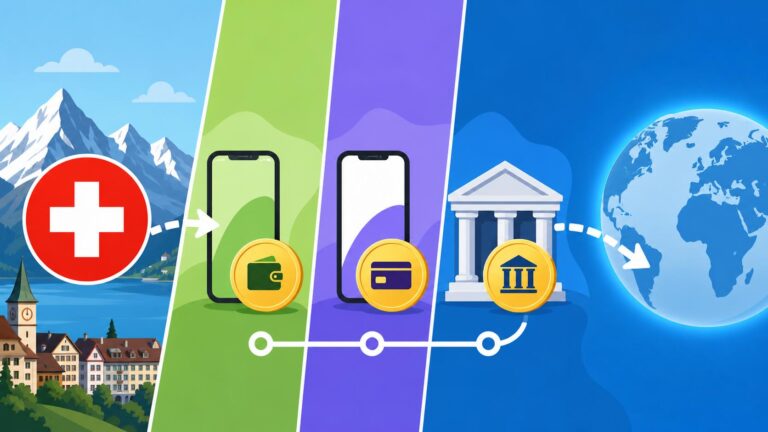
Whether you choose the high-tech route of eBill or the traditional walk to the post office, paying your Serafe bill on time is a small but necessary part of a successful expat life in Switzerland. By integrating this into your broader financial strategy—perhaps using Wise for currency management or Trade Republic and Binance for your investment goals—you can turn a frustrating piece of mail into just another automated line item in your Swiss adventure.
Disclaimer
This article is for informational purposes only and does not constitute legal or financial advice. Swiss laws regarding media taxes and collection procedures may change. Always consult the official Serafe website or a qualified professional for the most up-to-date information regarding your specific situation.