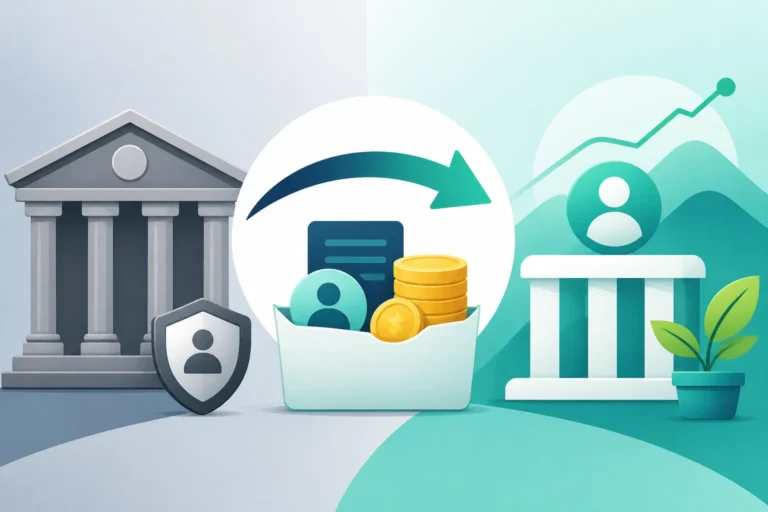
Withdrawing Pillar 2 for a Home Purchase in Switzerland
Saving for a 20% down payment in Switzerland feels like trying to climb the Eiger without a rope while someone throws gold bars at you. I remember the sinking feeling in my stomach when I realized my hard-earned savings barely covered the notary fees, let alone the actual deposit. This guide explains how to leverage your Pillar 2 pension to bridge that gap.
Understanding the Role of Pillar 2 in Swiss Real Estate
The Swiss pension system is often described as a three-legged stool, but when it comes to buying a home, it feels more like a hidden treasure chest that you are only allowed to unlock under very specific circumstances. The Pillar 2, or the BVG/LPP (Occupational Pension), is funded by both you and your employer. For many expats, this account accumulates a significant balance surprisingly quickly. However, the Swiss government and banks have strict rules about how much of this money can be diverted from your retirement to your real estate ambitions.
The 10 Percent Hard Cash Rule
One of the first hurdles I encountered—and one that catches many foreigners off guard—is the requirement that at least 10% of the property's purchase price must come from "hard cash" assets that are not Pillar 2 funds. This means you cannot simply withdraw your entire 20% deposit from your pension fund. The banks want to see that you have skin in the game through liquid savings, investments, or perhaps your Pillar 3a. If you are transferring funds from overseas to meet this 10% requirement, using a service like Wise can save you a fortune on exchange rates compared to traditional bank transfers, which is crucial when you are moving six-figure sums.
If you have been aggressively saving in a high-yield environment like Trade Republic, those funds are perfect for this "hard cash" portion. The logic behind this rule is simple: the regulator wants to ensure that you aren't completely draining your retirement safety net. It forces a level of financial discipline that, while frustrating when you’re staring at a beautiful flat in Thalwil, actually protects your long-term solvency in the expensive Banking and Finance for Expats in Switzerland: The 2027 Guide landscape.
Minimum Withdrawal Amounts and the Age 50 Rule
There is a technical floor for how much you can take out. Generally, the minimum withdrawal for home ownership is CHF 20,000. If your balance is lower than this, you usually cannot touch it for real estate purposes. Furthermore, the rules change drastically once you hit the age of 50. Before 50, you can theoretically withdraw your entire vested benefit. After 50, the amount you can withdraw is capped at either the amount you had in the fund at age 50, or half of your current vested benefits—whichever is higher.
This age-related cap is designed to prevent people from emptying their retirement accounts right before they actually need them. When I first looked into The Three-Pillar Pension System: AHV, BVG, and Private Savings, I didn't realize how much the math changes as you blow out more birthday candles. If you are an expat arriving in Switzerland later in your career, this "Age 50" rule is something you need to calculate into your long-term housing strategy immediately.
Eligibility of the Property Type
You cannot use your Pillar 2 to buy a vacation home in Verbier or a rental property in Lugano to put on Airbnb. The law is very clear: the funds must be used for your primary residence. This means you must live in the property yourself. If you are caught using pension funds for a secondary residence, the tax office and your pension fund will have a very unpleasant conversation with you. This also applies to the repayment of mortgages or the purchase of shares in a housing cooperative.
Pledging vs Withdrawing: The Strategic Choice
This is the fork in the road where most expats get confused. You have two primary ways to use your Pillar 2: you can physically take the money out (Withdrawal) or you can use the money as collateral (Pledging). Each path has massive implications for your taxes, your interest rates, and your eventual retirement lifestyle. I spent weeks debating this with my financial advisor, and the "right" answer depends entirely on your cash flow and risk tolerance.
The Case for Withdrawing Funds
Withdrawing the money means you physically move the capital from the pension fund to the bank to reduce the size of your mortgage. This is the most common route for those who simply don't have enough cash for the 20% deposit. The benefit is immediate: a smaller mortgage means lower monthly interest payments. In the current Cost of Living in Switzerland 2026: Budgeting for Singles and Families environment, reducing monthly overhead can be a lifesaver.
However, there is a catch. When you withdraw the money, your retirement benefits (death and disability) are usually reduced proportionally. You are effectively "buying" your house with your future security. You will also be hit with an immediate capital withdrawal tax, which we will detail later. If you have significant crypto holdings on Binance, you might be tempted to use those instead of touching your pension, but remember that banks will scrutinize the volatility of those assets much more harshly than the "guaranteed" capital in your Pillar 2.
The Mechanics of Pledging (Verpfändung)
Pledging is the "hidden" option that many expats overlook. Instead of taking the money out, you leave it in the pension fund where it continues to earn interest and provide full insurance coverage. You simply tell the bank, "If I default on my mortgage, you can have my pension." Because the bank has this extra security, they are often willing to lend you more than the standard 80% of the property value, or they might offer you a slightly better interest rate.
The massive advantage of pledging is that you don't pay the capital withdrawal tax today, and your pension capital continues to grow. The downside? Your mortgage is larger, which means your monthly interest payments are higher. This is a play for people with high monthly salaries who want to maximize their tax deductions on mortgage interest. It’s a more sophisticated way to handle Mortgages in Switzerland: The 20% Down Payment and Amortization Rules, but it requires a very stable income.
Comparison of Pledging and Withdrawing
| Feature | Pillar 2 Withdrawal | Pillar 2 Pledging |
|---|---|---|
| Mortgage Size | Reduced | Remains Higher |
| Monthly Interest | Lower | Higher |
| Tax Impact | Immediate Withdrawal Tax | No Immediate Tax |
| Pension Growth | Stops on withdrawn amount | Continues on full amount |
| Insurance Coverage | Usually Reduced | Remains Full |
| Repayment | Mandatory if property is sold | N/A (Collateral only) |
The Financial Implications and Tax Consequences
Switzerland is a land of precision, and that precision extends to how they tax you when you touch your "sacred" pension money. You cannot just pull out CHF 100,000 and expect it all to land in your house. The tax man will take his cut before the money even leaves the building.
The Capital Withdrawal Tax
The moment you withdraw funds from your Pillar 2 for a home purchase, you are liable for a capital withdrawal tax. This tax is separate from your normal income tax and is usually levied at a reduced rate. However, "reduced" is a relative term. Depending on your canton of residence and the amount withdrawn, you could be looking at anywhere from 5% to 15%. For example, withdrawing in Zurich is significantly more expensive than withdrawing in Zug.
This is a one-time hit, but it needs to be planned for. I’ve seen expats forget to account for this tax, only to realize they are CHF 15,000 short on their closing costs. It’s also worth noting that if you later decide to move your pension into a Freizügigkeitskonto: Managing Vested Pension Benefits Between Jobs because you’ve changed employers, the rules for future withdrawals remain tied to the original purpose of the funds.
The Hidden Cost of Reduced Benefits
When you withdraw money from your Pillar 2 (BVG): Understanding Your Swiss Occupational Pension, you aren't just taking out cash; you are reducing your future "risk" coverage. Most Pillar 2 plans include life insurance and disability insurance. If you withdraw 30% of your capital, your payout in the event of disability might also drop by 30%.
This is where you need to look at your broader insurance portfolio. You might need to take out a separate Private Liability Insurance (Privathaftpflicht): Why Expats Need It or a dedicated life insurance policy to bridge the gap you created by buying the house. It’s a classic Swiss "Vorsorge" (provision) trap: you solve the housing problem but create a future security problem. Always ask your pension fund for a "pro-forma" benefit statement showing your coverage after the planned withdrawal.
Wealth Tax and Interest Deductions
Owning a home in Switzerland changes your tax profile in ways that feel like a complex board game. While you lose the tax-free growth of the pension capital you withdrew, you gain the ability to deduct mortgage interest from your income tax. You also have to deal with "Eigenmietwert" or "Imputed Rental Value," which is a theoretical income you "earn" by not paying rent to someone else. It sounds insane—taxing you on money you don't spend—but that’s the system.
If you have other investments, perhaps in a diversified portfolio on Trade Republic, you need to balance these deductions. The goal is to reach a "tax neutral" or "tax advantageous" state where your mortgage interest deductions offset the Eigenmietwert. For many, withdrawing Pillar 2 capital to lower the mortgage actually increases their tax bill because they have fewer interest deductions. This is why the pledging option is so popular among high earners in high-tax cantons.
The Practical Step-by-Step Withdrawal Process
If you’ve decided that withdrawing is the right move, you need to prepare for the administrative marathon. The Swiss are not known for rushing paperwork, and the pension fund is no exception. You should start this process at least three to four months before your scheduled "Notar" (notary) appointment.
Step 1: Requesting a Statement of Vested Benefits
The first thing you need is an official statement from your Pensionskasse (pension fund) stating exactly how much "Encouragement à la propriété du logement" (EPL) money is available to you. This document will also outline the conditions and the minimum amount you can withdraw. The bank will demand this document before they even think about giving you a mortgage offer.
During this stage, I recommend you also look at your Pillar 3a in 2026: Tax Deductions, Limits, and Investment Options. Often, it is more tax-efficient to empty your Pillar 3a first before touching your Pillar 2. The rules for 3a are slightly more flexible, and the tax hit is often smaller. If you’ve reached the Pillar 3a Limits 2026: CHF 7,258 for Employees, CHF 36,288 for Self-Employed, you might have a substantial "First Pillar" of your deposit ready to go.
Step 2: The Application and Spouse’s Consent
Once you have your property contract (or a draft of it), you submit a formal withdrawal application to your pension fund. Here is a detail that surprises many expats: if you are married or in a registered partnership, your spouse must sign the application. In many cantons, this signature must even be notarized. The Swiss law treats pension assets as joint marital property in the context of retirement security, so you cannot unilaterally decide to "spend" your retirement on a house without your partner’s legal consent.
If you are using funds that were transferred from a previous employer and are currently sitting in a Freizügigkeitskonto: Managing Vested Pension Benefits Between Jobs, the process is similar, but you deal with the bank or foundation holding that account instead of your current employer’s pension fund.
Step 3: The Payment and Entry in the Land Register
The pension fund does not send the money to your personal bank account. They wouldn't trust you not to spend it on a new Porsche. Instead, the money is transferred directly to the notary or the lending bank at the time of the property transfer. Simultaneously, a "restriction on disposal" is entered into the Land Register (Grundbuch).
This entry is crucial. It tells the world—and any future buyers—that this property was partially financed with pension funds. This note remains on the property title until you either pay the money back to the pension fund or sell the house. It is a legal "leash" that ensures the money eventually finds its way back to your retirement pot.
Repayment and Selling the Property
One of the biggest misconceptions I see in the expat community is the idea that once the money is in the house, it’s "gone" from the pension system forever. That is not the case. The Swiss system is designed to eventually bring that money back into the retirement fold.
What Happens When You Sell the House?
If you sell your property, you are legally obligated to repay the withdrawn Pillar 2 amount back to your pension fund. You cannot simply take the profit from the sale and move to a beach in Portugal. The notary involved in the sale will see the restriction in the Land Register and will ensure that the pension fund is reimbursed before you get your hands on the remaining equity.
There are exceptions, of course. If you sell your house but immediately buy another primary residence in Switzerland within a reasonable timeframe (usually two years), you can "transfer" the pension investment to the new property. This is a vital strategy for families who are "trading up" as their needs change. However, if you are Leaving Switzerland Financially: Closing Accounts and Pension Payouts, the rules become much more complex, often involving the taxation of the payout and the potential to move the funds into a vested benefits account.
Voluntary Repayments
You can choose to pay the money back at any time, in chunks of at least CHF 10,000. Why would you do this? Two reasons: taxes and security. When you repay the money, you can actually claim back the capital withdrawal tax you paid when you first took the money out. It’s like a tax refund from the past. Furthermore, as soon as you repay the funds, your retirement and disability benefits are restored to their full levels.
I’ve met many expats who used their year-end bonuses or sales of assets on Binance to "buy back" their pension. It’s a fantastic way to de-leverage your life. Once the full amount is repaid, you can request that the "restriction on disposal" be removed from the Land Register, giving you full, unencumbered ownership of your property’s equity.
The Impact of Moving Abroad
If you decide to leave Switzerland, the "house" situation becomes your primary financial anchor. If you keep the house and rent it out, it is no longer your primary residence, which technically triggers the repayment obligation. If you sell the house because you are leaving the EU/EFTA zone, you can often take the Pillar 2 cash with you, but you will be hit with the withdrawal taxes again.
This is where services like Wise become indispensable again. Moving the proceeds of a Swiss home sale to an account in the UK, US, or Australia involves navigating massive currency fluctuations. If you have the luxury of time, you might wait for a favorable exchange rate, but usually, the timeline is dictated by your relocation.
Strategic Alternatives and Final Thoughts
Using your Pillar 2 is a powerful tool, but it should often be your last resort. I always tell newcomers to maximize their other "buckets" first.
- Pillar 3a: Use this first. It’s designed for this and has fewer strings attached than the Pillar 2.
- Liquid Savings: If you have been saving in Trade Republic or other brokerage accounts, use that cash. The interest you save on a mortgage is often higher than the post-tax return on a conservative investment portfolio.
- Pledging: If your salary is high enough to cover the larger interest payments, pledging is almost always mathematically superior to withdrawing because it keeps your insurance intact and your capital growing tax-free.
Buying a home here is a marathon, not a sprint. The administrative hurdles can feel like a personal insult, but they are there to ensure that when you finally reach 65, you aren't just "house rich" and "cash poor." Take the time to run the numbers, talk to your spouse, and maybe have a stiff drink before you sign that notary contract.
Disclaimer
This guide is for informational purposes only and does not constitute financial, legal, or tax advice. Swiss pension regulations and tax laws are subject to frequent changes and vary significantly by canton and individual circumstances. Always consult with a qualified Swiss tax advisor or financial planner before making significant decisions regarding your Pillar 2 assets.