Student Visas in Switzerland: From Application to Post-Graduation Work
Getting a Swiss student visa often feels like trying to hike the Eiger in flip-flops—painful, confusing, and incredibly steep. I remember staring at the pile of required documents for my first permit, wondering if I’d ever actually see the inside of a Swiss classroom. This guide clears the fog, covering everything from initial applications to landing your first post-grad job.
Navigating the Swiss Student Visa Landscape
The very first thing you need to realize is that Switzerland is not a monolith. While there are federal rules set by the State Secretariat for Migration (SEM), the actual "boots on the ground" decisions are made by the individual cantons. This means a student applying to ETH Zurich might have a slightly different administrative experience than someone heading to the University of Geneva. You are essentially dealing with two layers of bureaucracy: the national visa for entry and the cantonal permit for residency.
Identifying Your Visa Category
For most international students, the primary focus is the Type D visa. This is a long-stay visa intended for stays longer than 90 days. If you are coming for a short summer course or a language seminar that lasts less than three months, you might only need a C visa (the standard Schengen visa), but for a full Bachelor’s, Master’s, or PhD, the Type D is your only path. It is a national visa, meaning it is issued specifically for Switzerland, though it does allow you to travel through the rest of the Schengen area for up to 90 days in any 180-day period.
I’ve seen students make the mistake of arriving on a tourist visa thinking they can simply "switch" once they get here. In Switzerland, that is a recipe for a quick trip back to the airport. You must apply for your Type D visa from your home country or place of legal residence before you ever set foot on Swiss soil. The processing time can take anywhere from 8 to 12 weeks, so if you haven't started by June for a September intake, you are already living life on the edge.
The transition from entry to residency is another nuance. The visa in your passport is just your "golden ticket" to enter the country. Once you arrive, that visa becomes secondary, and your focus shifts entirely to obtaining your residence permit. This permit is what allows you to open a bank account, sign a mobile phone contract, and exist legally in the eyes of the local authorities.
EU/EFTA vs Non-EU Students
If you hold a passport from an EU or EFTA country, I’ll be honest: your life is significantly easier. You don't need a "visa" to enter Switzerland; you simply show up, find a place to live, and register at the local town hall. Your right to stay is largely guaranteed by the Agreement on the Free Movement of Persons, provided you are enrolled at a recognized institution and can prove you have enough money to live on. You are generally granted a The Swiss B Permit: Eligibility, Renewal, and Restrictions that is valid for the duration of your studies.
For Third-Country Nationals (non-EU/EFTA citizens), the process is a different beast entirely. You are subject to strict quotas and a much more rigorous screening process. The Swiss authorities want to be absolutely certain that you are actually here to study and not just using the student visa as a backdoor into the labor market. This is why non-EU students have to provide a much more detailed dossier, including a personal motivational letter and a written commitment to leave Switzerland once their studies are finished.
It’s a bit of a psychological hurdle, being asked to prove you intend to leave before you’ve even arrived. I remember feeling a bit unwelcome when I saw that requirement, but it’s just standard Swiss pragmatism. They value clarity and adherence to the rules. As long as you follow the script and provide the requested documentation, the system works, even if it feels a little cold at first glance.
Why the 90-Day Rule Still Matters
Even if you are an EU student who doesn't need an entry visa, you cannot simply disappear into the Swiss Alps and start your classes. Every foreign student must register with the local authorities within 14 days of arrival. The "90-day" window is the maximum time you can stay in the country without a residence permit, but the requirement to register happens much sooner. If you miss this window, you aren't just being a "lazy student"—you are technically an undocumented resident, which can lead to hefty fines.
For non-EU students, your entry visa usually has a specific validity window. You must enter Switzerland within those dates. If your visa expires because you decided to take a month-long backpacking trip through Italy before starting your semester in Lausanne, you might find yourself stuck at the border. The Swiss authorities are very literal; if the visa says you must enter by September 1st, they expect you to be there.
The 90-day rule also plays a role in how your insurance is handled. Many students assume they have three months to figure out their healthcare. While you do have a 90-day grace period to finalize your insurance, the coverage must be retroactive to your first day in Switzerland. This means you will receive a bill for those first three months eventually, so don't think of it as "three months free."
The Application Process: Step-by-Step Reality
Once you have your university acceptance letter in hand, the real work begins. You’ll be dealing with the Swiss embassy or consulate in your home country. They act as the middleman, taking your documents and sending them off to the cantonal migration office in Switzerland where your university is located. This is why the process takes so long; your papers are literally traveling across the world and through multiple layers of government.
Dealing with the Cantonal Migration Office
The Cantonal Migration Office (known as the Migrationsamt in German-speaking cantons or the Service de la population in French-speaking ones) is the ultimate gatekeeper of your Swiss life. They are the ones who actually approve your permit. When you submit your application at the embassy, you aren't just applying for a visa; you are essentially petitioning the canton to let you live there. Each canton has its own personality. Zurich is known for being incredibly efficient but strictly "by the book," while Geneva can sometimes feel a bit more overwhelmed due to the high volume of international residents.
When you correspond with these offices, keep it professional and concise. They don't want a 20-page life story; they want the specific forms they asked for, filled out in blue or black ink, with no mistakes. If they ask for more information, provide it immediately. Any delay on your end gives them a reason to move your file to the bottom of the stack. I once forgot to sign a single page of a multi-part form, and it added three weeks to my processing time.
Remember that these officials have a lot of discretion. If your file is messy, incomplete, or looks suspicious, they can and will deny the application. However, if you present a clean, organized dossier that matches their checklist exactly, you'll find that the Swiss bureaucracy is actually one of the most predictable systems in the world. They aren't trying to trick you; they just want you to follow the process.
The Dreaded Financial Proof
This is the part that usually causes the most stress for students. Switzerland is expensive, and the authorities want to make sure you won't end up relying on social welfare. You generally need to prove you have around CHF 21,000 to CHF 24,000 per year available (the exact amount varies by canton). For non-EU students, this usually means a bank statement in your name from a Swiss-recognized bank or a formal guarantee from a solvent person living in Switzerland.
The Blocked Bank Account Requirements for Swiss Student Visas are a common hurdle. Some cantons are very specific about which banks they accept. Usually, it has to be a bank with a branch in Switzerland or a major international institution that the Swiss authorities trust. If you are using a parent as a sponsor, they will likely need to sign a "declaration of support" and provide their own financial records.
If you’re feeling overwhelmed by the sheer amount of cash you need to show, you aren’t alone. Most students have to scrape this together from savings, loans, or family help. Just remember that this money doesn't all have to be "spent" immediately; it just needs to be "available." Once you have your permit, you can access your funds normally, but you will need to show this proof again every time you renew your permit for the following year.
Study Plan and Motivational Letter Strategies
For non-EU students, the motivational letter is your chance to prove you are a "serious" student. The migration office wants to see a clear study plan. Why Switzerland? Why this specific university? How does this degree fit into your future career in your home country? That last part is crucial. If you write that you want to study in Zurich so you can eventually find a job and stay in Switzerland forever, you might actually hurt your chances.
The goal is to show that you have a plan. You should mention specific courses or professors that interest you. Make it clear that you have the academic background to succeed. The Swiss system is rigorous, and they don't want to grant a visa to someone who is likely to drop out after the first semester. Be honest, but be strategic.
Your study plan should also include a timeline. When do you expect to graduate? What will you do after? Showing that you have thought about the "after" (even if your plans might change later) gives the immigration officers confidence that you aren't just drifting. Keep the tone academic and focused. This isn't a travel blog post; it's a formal government petition.
Mandatory Documentation and Bureaucratic Hurdles
The sheer volume of paperwork is what usually breaks people. You'll need your birth certificate, your high school or university diplomas, a valid passport, and often a criminal record check. The catch? Everything must be in one of the official Swiss languages (German, French, or Italian) or English, depending on the canton.
Translating and Apostilling Your Academic Records
If your original documents are in a language other than those accepted by the canton, you’ll need certified translations. This isn't the time for Google Translate or asking a friend who speaks a bit of French. You need a professional service. I highly recommend using a service like RushTranslate for this, as they are familiar with the certified standards required for official government submissions. Having a translation rejected because it doesn't have the right stamp is a nightmare you want to avoid.
In many cases, you will also need an Apostille. This is an international certification that authenticates your documents for use in another country. You usually get this from the Department of State or the Ministry of Foreign Affairs in your home country. It’s an extra layer of "officialness" that the Swiss love. Check with the Swiss embassy early to see if your country requires an Apostille; for some, a simple notarized copy is enough, but for many non-EU countries, the Apostille is mandatory.
Getting these documents ready can take months. You have to order the diploma, wait for it to arrive, send it for an Apostille, and then send it for translation. Start this process the moment you apply to the university—don't wait for the acceptance letter. If you end up not going, you've lost a bit of money on paperwork, but if you do go, you've saved yourself weeks of panic.
Health Insurance Requirements for Students
Health insurance is mandatory for everyone living in Switzerland. As a student, you have some special options that can save you a lot of money. While the standard Swiss health insurance (KVG) can be quite pricey, there are "student packages" designed for international students that offer the same coverage for a fraction of the cost.
You should look into Health Insurance for International Students: KVG Exemptions and Private Options to understand how to apply for an exemption from the standard system. Generally, if you have an international policy that meets Swiss standards—like those offered by Cigna Global or specialized providers like Swisscare—you can apply to the cantonal health department to be exempt from the mandatory KVG. This can save you CHF 200–300 per month, which is a lot of cheese fondue.
If you don't apply for the exemption, the canton will eventually "auto-enroll" you in a standard plan, and they will choose the most expensive one just to be safe. It is vital that you handle this in your first month. You need to show proof of insurance to get your residence permit, so it’s not something you can put off. If you are a PhD student with an employment contract, you might be treated as a worker rather than a student, which changes the insurance rules significantly.
Proof of Accommodation: The Room Counting Rule
To get your permit, you need a place to live. The Swiss authorities want to see a rental contract or a letter from a landlord. They are quite strict about "overcrowding." There is a general rule regarding Apartment Size Requirements (Rooms per Person) for Family Visas and even for individual students. Generally, you cannot have four people living in a two-room apartment.
Finding a place from abroad is notoriously difficult. Many students start in temporary housing or a "WG" (shared flat). If you are looking for a room, Finding a WG (Shared Flat) as an International Student in Lausanne or Zurich is a full-time job in itself. You will need to provide the address of your residence when you register at the town hall. If you change addresses later, you must inform the authorities within 14 days, or you’ll face a fine.
I've known students who tried to use a hotel or an Airbnb address for their permit. While this might work for the very first week, the authorities usually require a "permanent" address to issue the actual permit card. If you are staying in a student dorm, the university will provide a letter that serves as your proof of accommodation. This is by far the easiest route for your first semester while you get your bearings.
Arriving in Switzerland: The First 14 Days
The moment you land, the clock starts ticking. You have two weeks to tell the local government that you’ve arrived. This is done at the "Gemeinde" (the local municipality office) or, in larger cities like Zurich, the "Kreisbüro" (district office). It’s a mandatory step, and it’s actually where your "Swiss life" officially begins.
Registering at the Gemeinde or Kreisbüro
Walking into the registration office can be intimidating. Usually, you’ll take a number and wait in a very clean, very quiet waiting room. When your number is called, you’ll need to present your passport with the entry visa, your university enrollment letter, your lease agreement, and proof of financial means. The officials will take your data and start the process for your residence permit.
This is also when you pay your initial registration fees. Switzerland loves its fees. Expect to pay anywhere from CHF 100 to CHF 250 depending on the canton and your nationality. They will give you a temporary paper document that proves you have registered. Keep this paper safe! Until your physical card arrives in the mail (which can take several weeks), this paper is your only proof that you are in the country legally.
The staff at these offices usually speak the local language, but in major student hubs, they often speak English as well. However, don't expect them to. It’s always polite to start with a "Grüezi" or "Bonjour" and ask if they speak English. If you’re nervous, bringing a local friend or a fellow student who has been through the process can be a huge help.
The Biometrics Appointment Experience
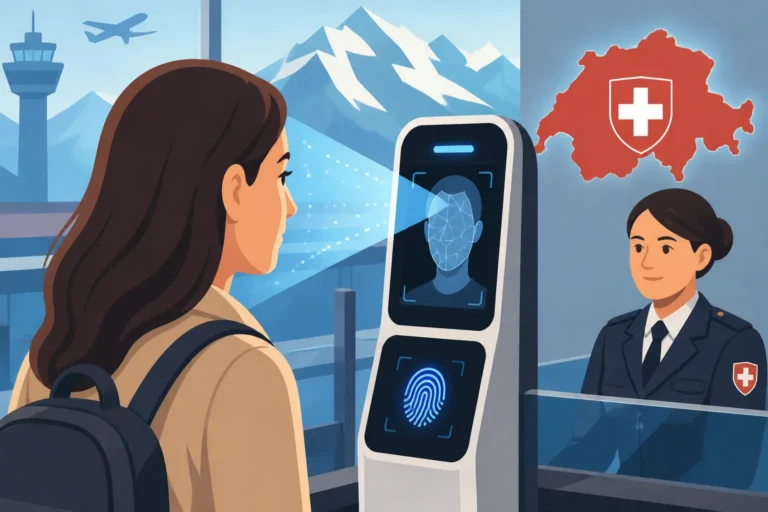
Shortly after you register, you’ll receive an invitation by mail to go to a cantonal migration office for your biometrics. This is where they take your photo, scan your fingerprints, and record your digital signature. This data is used to create your biometric residence permit card (the size of a credit card).
The appointment is usually very fast—about 10 to 15 minutes. However, getting the appointment can be tricky during the peak September rush. My advice? Check your physical mailbox every single day. Swiss officialdom relies heavily on the postal service. If you miss the letter and don't show up for your appointment, your permit process will grind to a halt.
Make sure you look presentable for the photo—you’ll be stuck with that image for at least a year! You don't need to bring much to this appointment other than your passport and the invitation letter. Once the biometrics are done, the data is sent to a central printing facility, and your card will be mailed to your home address about 7 to 10 days later.
Getting Your Physical Residence Permit Card
The day your residence permit arrives in the mail is a major milestone. It’s usually a small, plastic card that looks very official. This card, often referred to as the "Ausländerausweis," is your most important document in Switzerland. You should carry it with you at all times, as the police can technically ask to see it at any time (though this rarely happens to students).
With this card, you can finally open a "real" bank account. While some neobanks might let you sign up with just a passport, the traditional Swiss banks (UBS, ZKB, BCV) will want to see the physical permit. You can also now sign up for a mobile phone plan or a gym membership. It is your key to the Swiss "system."
Make sure to check the expiry date on the card. For most students, the permit is valid for one year and must be renewed annually. About two months before it expires, you’ll receive a "Verfallanzeige" (an expiration notice) in the mail. You take this notice to your local town hall, show that you are still enrolled in school and still have enough money, pay another fee, and they’ll issue a new card. It’s a yearly ritual you’ll quickly get used to.
Working While Studying: Rules and Restrictions
One of the first questions students ask is, "Can I get a job?" The answer is yes, but there are some very specific Swiss hoops you need to jump through. The rules are designed to ensure that work doesn't interfere with your studies and that you aren't undercutting the local labor market.
The 15-Hour Weekly Limit for Non-EU Students
For non-EU students, there is a "waiting period." You are generally not allowed to work for the first six months of your stay. The logic is that you should focus on your studies and get settled first. After that six-month mark, you can work up to 15 hours per week during the semester. During semester breaks (summer and winter holidays), you are allowed to work 100%, or 40 hours per week.
This is a hard limit. Your employer will have to apply for a work authorization for you, and the authorities will check your Student Visas and Part-Time Work: The 15-Hour Weekly Limit Explained rules before granting it. If you are caught working more than 15 hours, you risk losing your student permit and being deported. It’s simply not worth the risk.
EU/EFTA students have it easier. They can start working immediately upon arrival and aren't subject to the six-month waiting period, though they are still generally expected to keep their work hours reasonable so as not to lose their "student" status. If an EU student starts working 40 hours a week, the canton might decide they are no longer a student and try to switch them to a regular work permit, which involves different tax and social security implications.
Finding Part-Time Work in the Swiss Market
The Swiss job market is competitive, even for student jobs. If you don't speak the local language, your options will be limited to international companies, English-language tutoring, or hospitality roles in tourist-heavy areas. Zurich and Geneva have the most opportunities for English speakers, while smaller towns like Neuchâtel or St. Gallen might be tougher if you don't have some German or French.
Many universities have their own internal job boards. Check these first! Jobs like library assistant, research aide, or student ambassador are perfect because the university already understands the visa restrictions. These roles are also usually very flexible around exam periods, which is vital when the Swiss exam season hits (it’s brutal, trust me).
Networking is also huge in Switzerland. Don't be afraid to tell your classmates and professors that you are looking for work. A lot of student jobs are never advertised; they are just passed from one graduating student to a new arrival. Join student associations and go to the "Apéros"—these social mixers are where half the jobs in Switzerland are found.
Internship Laws: When Paid or Unpaid Matters
Internships are a common part of Swiss degrees, especially in fields like hospitality, engineering, or business. If an internship is a mandatory part of your curriculum, the rules are slightly different. Often, the six-month waiting period for non-EU students can be waived if the university provides a letter stating the internship is required for graduation.
Even if the internship is unpaid, you still need authorization. The Swiss authorities are very wary of "unpaid labor" that replaces real jobs. If you are doing an internship, make sure it is officially recognized by your school. If you are doing an internship outside of your mandatory curriculum, it counts toward your 15-hour-a-week limit.
Pay for interns in Switzerland is generally decent compared to other countries, though it's still low by Swiss standards. You might earn anywhere from CHF 1,500 to CHF 3,000 per month for a full-time internship. While that sounds like a lot, remember that your expenses will stay high, and you’ll likely be paying for your own health insurance and housing out of that amount.
Transitioning from Student to Professional
The "holy grail" for many international students is finding a job in Switzerland after graduation. The good news is that Switzerland has a specific policy to help you do just that. They’ve invested in your education, and in many cases, they’d quite like you to stick around and contribute to the economy.
The 6-Month Post-Graduation Job Seeker Visa
Once you finish your degree, you don't have to leave the next day. You can apply for a six-month extension of your residence permit specifically for the purpose of finding a job. During these six months, you are allowed to stay in Switzerland and look for work that matches your qualifications.
To get this extension, you need to provide proof that you have completed your studies (a certificate from the university) and proof that you still have the financial means to support yourself. Crucially, you can still work up to 15 hours a week during this period to keep some cash flowing. This is a life-saver for many, as the Swiss hiring process for professional roles can easily take 3 to 4 months.
Be aware that this six-month period is non-renewable. If you haven't found a job that can sponsor your permit by the end of it, you will generally be expected to leave the country. My advice? Start your job hunt in your final semester. Don't wait until you have the diploma in your hand to start sending out CVs.
Switching from a Student Permit to a Work Permit
When you finally land that dream job, the process of From Student Visa to Work Permit: The Step-by-Step Transition begins. Your employer will have to apply for a work permit on your behalf. For non-EU nationals, this is where the "quota" system comes back into play. However, there is a special rule for Swiss university graduates: if your job is of "high scientific or economic interest," the employer doesn't have to prove they couldn't find a Swiss or EU person for the role.
This is a massive advantage. It essentially puts you on a level playing field with local candidates for highly skilled roles. However, the job must be related to your field of study. If you graduated with a Master’s in Nuclear Physics and you try to get a work permit to be a barista, the authorities will say no. They want you to use the skills the Swiss education system gave you.
The administrative transition from a "Student B Permit" to a "Work B Permit" can take some time. You might have to submit new biometrics, and your tax status will change. You'll move from being exempt from certain social security contributions to paying the full freight. It’s the moment you truly become part of the Swiss workforce.
Employer Sponsorship: The Quota Reality
While the transition is easier for graduates, it’s not guaranteed. Small companies might be hesitant to deal with the paperwork of sponsoring a non-EU permit. You need to be your own best advocate. During interviews, if the topic of your visa comes up, be ready to explain that as a Swiss graduate, the process for the employer is simplified.
If you are an EU/EFTA citizen, you don't need "sponsorship" in the traditional sense. You just need a signed employment contract. You take that contract to the local town hall, and they will upgrade your student permit to a work permit. It is almost automatic.
For everyone else, the number of work permits (B and L) for non-EU citizens is capped every year. These quotas usually don't run out for highly skilled graduates, but it’s something to keep in mind if you are applying for jobs late in the calendar year. Most large Swiss companies like Nestlé, Roche, or Google are very experienced with this and will handle the legal side for you.
Living Costs and Budgeting for International Students
Let’s talk money. Switzerland is consistently ranked as one of the most expensive countries in the world. As a student, you'll be living a "budget" life, but a Swiss budget is very different from a budget in Spain or Germany.
Tuition Fees vs Monthly Living Expenses
One of the great ironies of Switzerland is that while living is expensive, tuition is often incredibly cheap. Public universities like ETH Zurich or the University of Basel often charge as little as CHF 500 to CHF 800 per semester. Compared to the US or the UK, this is a steal. You are essentially getting a world-class education for almost nothing.
However, the "living" part will eat your savings. A typical student needs between CHF 2,000 and CHF 2,500 per month to survive. Rent will likely be your biggest expense, followed by health insurance and food. Even if you cook every meal at home and never buy a coffee out, you’ll struggle to spend less than CHF 1,800 a month in a city like Zurich or Geneva.
| Expense Category | Monthly Estimate (CHF) | Tips for Saving |
|---|---|---|
| Housing (Shared Room/Dorm) | 600 – 1,200 | Look for student housing cooperatives (WOKO, Cité U). |
| Food & Groceries | 400 – 600 | Shop at Aldi/Lidl; avoid eating meat daily. |
| Health Insurance | 80 – 350 | Use a student-specific exemption plan. |
| Transport | 50 – 190 | Get the Gleis 7 or a Half-Fare card. |
| Leisure / Misc | 200 – 400 | Utilize university sports and free events. |
Student Discounts and SBB Travelcards
The "SwissPass" is your best friend. Every student should immediately look into The Half-Fare Travelcard (Halbtax): The Must-Have Pass for Swiss Residents. It costs about CHF 190 per year and cuts the price of every train, bus, and boat ticket in half. If you are under 25, you can also get the "Seven25" card, which allows you to travel for free on the entire network after 7:00 PM.
If you find yourself commuting long distances, you might wonder: SBB Travelcards: Is the Generalabonnement (GA) Worth the CHF 4000+ Cost? For most students, the answer is no, unless you are living in one city and studying in another. Most students stick to local monthly passes for their specific city zone, which are much more affordable.
Always carry your student ID. From museums and cinemas to ski lifts and even some kebab shops, student discounts are everywhere in Switzerland. They are usually labeled as "Studierende" or "Étudiants." Don't be shy about asking—those few francs saved here and there add up to a lot of extra supermarket trips by the end of the month.
Managing Health Insurance Costs on a Budget
As mentioned earlier, health insurance is a massive variable. If you are on a tight budget, the Swisscare and Academic Care: Cheap Insurance for Non-EU Students options are non-negotiable. They offer the legally required coverage for about CHF 80–100 per month, compared to the CHF 300+ you would pay on a standard adult plan.
However, be careful if you take on a part-time job. Some insurance providers will increase your premium the moment you start earning an income. Always update your insurance company if your status changes from "pure student" to "working student."
If you have a pre-existing condition or need specific international coverage that includes your home country, you might look into a premium provider like Cigna Global, but make sure it qualifies for the Swiss cantonal exemption. The Swiss authorities are very picky; they won't let you use a "travel insurance" policy for your residency permit. It must be a full health insurance policy that covers everything from GP visits to emergency hospitalizations.
Disclaimer
The information provided in this guide is for informational purposes only and does not constitute legal advice. Swiss immigration laws and cantonal regulations are subject to frequent changes. While we strive to keep this information up to date, always verify specific requirements with the official State Secretariat for Migration (SEM) or your local cantonal migration office. Use of third-party services mentioned is at the user's discretion.