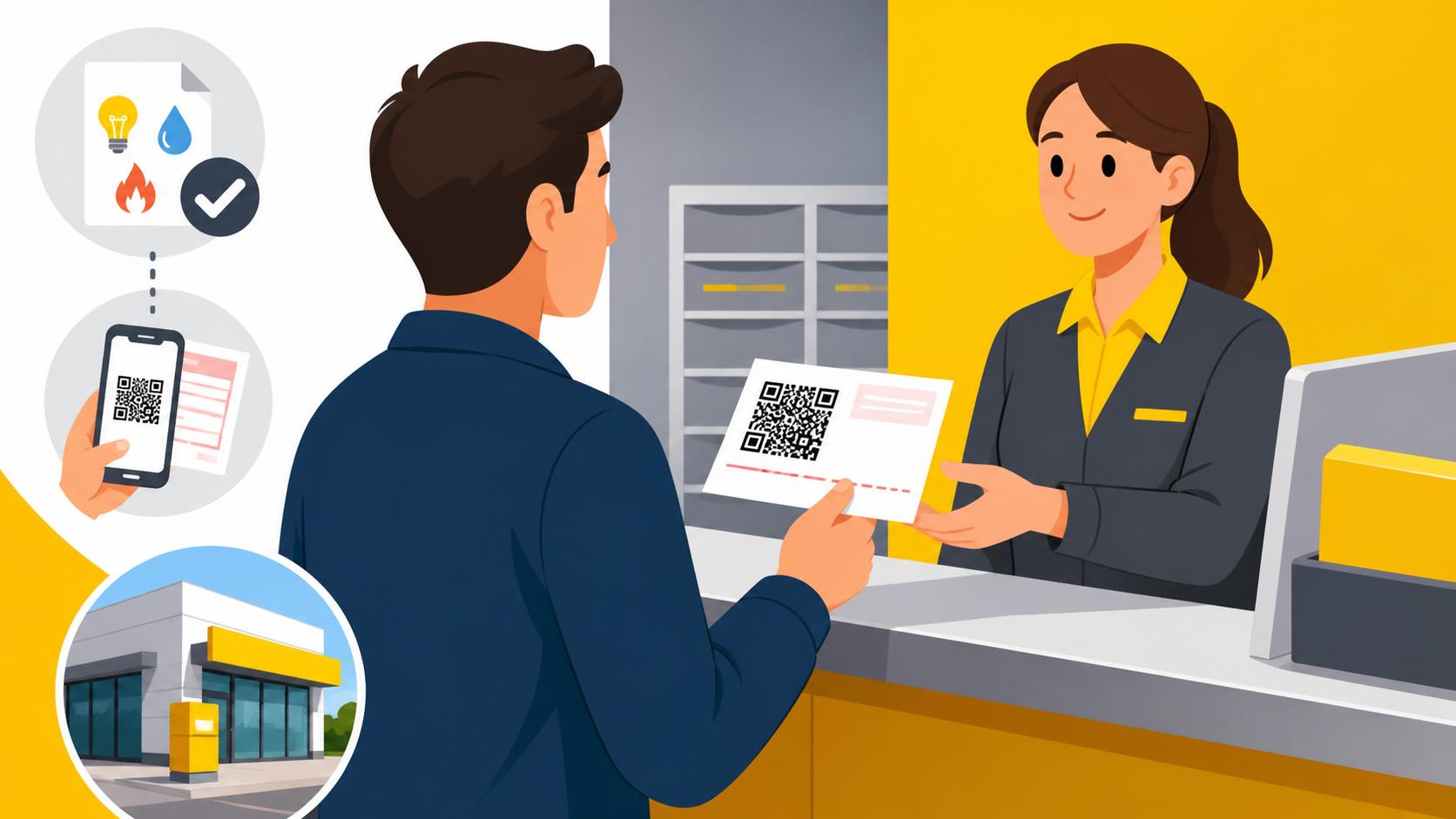
Paying Bills at the Post Office Counter with a QR-Slip (Einzahlungsschein)
Navigating the Swiss administrative landscape often feels like trying to solve a Rubik’s Cube while everyone else is already finished. I vividly remember standing in the middle of a Post Office in Lausanne, clutching a handful of paper slips with QR codes and feeling absolutely paralyzed because I had not yet opened a local bank account. This guide explains exactly how to use the Post Office counter to pay your bills with a physical QR-slip, ensuring you stay in the good graces of your service providers.
The Evolution of Swiss Bill Payments: From Orange Slips to QR-Bills
For decades, the Swiss financial system relied on the "Einzahlungsschein"—those colorful orange and red slips that came attached to the bottom of every invoice. If you’ve been here long enough, or if you’ve been doing your research, you might have heard horror stories about typing in 27-digit reference numbers and getting one digit wrong, which resulted in a financial odyssey to track down your missing money. Thankfully, as part of a nationwide modernization effort, Switzerland fully transitioned to the QR-bill system.
The QR-bill is a white slip with a prominent black-and-white QR code containing all the necessary payment information: the recipient's IBAN, the amount, and the reference number. This change was designed to make digital banking easier, but it also retained a crucial "analog" feature: the perforated edge. This allows you to tear off the payment section and take it to a physical location. For many newcomers, this is a lifesaver during the Financial Checklist for Your First 30 Days as an Expat in Switzerland.
When you first arrive, you might not have access to local e-banking. Perhaps you are still waiting for your residence permit to be processed so you can complete the requirements for Opening a Swiss Bank Account: UBS, ZKB, PostFinance, and Neobanks. In the meantime, the bills for your health insurance, your initial rent, or your mobile phone contract will start arriving. The Swiss do not wait for your administrative life to be in order before they expect payment. This is where the local "Die Post" or "La Poste" branch becomes your best friend.
Why Pay at the Post Office Counter
While most residents eventually move to digital solutions, paying at the counter remains a valid and surprisingly common practice. One of the primary reasons expats choose this route is the lack of a Swiss IBAN in the first few weeks. If you try to pay a Swiss bill from an overseas account, the fees can be astronomical, and the reference number often gets lost in translation between international banks. Even if you use a service like Wise to manage international transfers, you might find that some traditional Swiss institutions are sticklers for receiving payments exactly as specified on the QR-slip.
Another reason is the immediate "peace of mind." When you pay at the counter, the postal clerk scans the code, takes your payment, and provides you with a physical receipt or a stamped "receipt" portion of the slip. In a country where missing a payment deadline can lead to a What is a Betreibung? How an Unpaid Bill Ruins Your Swiss Credit Score, having a physical stamp (the famous "Stempel") is like holding a legal shield. It is undeniable proof that you fulfilled your obligation on a specific date.
Finally, some people prefer this method for budgeting. If you are still getting used to the Cost of Living in Switzerland 2026: Budgeting for Singles and Families, paying bills in cash or with a debit card at the end of the month can help you keep a tangible grasp on your outgoings. It prevents that mid-month "bill shock" when several automated payments hit your account at once.
Step-by-Step: Navigating the Post Office Payment Process
Walking into a Swiss Post Office (Die Post/La Poste/La Posta) is usually a very efficient experience, but there are a few cultural and technical nuances you should know. First, look for the ticket machine near the entrance. You will usually need to select a category. Look for something like "Einzahlen" or "Paiements." If the branch is small, there might not be a machine; you simply join the queue.
Preparing Your Slips
Ensure you have the entire invoice with you, or at least the bottom QR-bill section. Do not tear it off beforehand if you aren't confident; the clerk will often do it for you to ensure the edges are clean for their scanner. If the bill does not have a pre-printed amount (which is rare for standard utilities but common for donations), you will need to write the amount clearly in the designated boxes.
Interaction at the Counter
When your number is called, approach the clerk and say, "Ich möchte diese Rechnung bezahlen" (German) or "Je voudrais payer cette facture" (French). The clerk will scan the QR code. At this point, they will confirm the total amount. You can pay using several methods:
- Cash: The Swiss still love cash, and the Post Office is one of the few places where you can pay a 2,000 CHF health insurance bill in physical notes without anyone batting an eye.
- PostFinance Card: This is the preferred method at the Post Office.
- Debit Cards: Most Maestro or V-Pay cards are accepted.
- Credit Cards: Be careful here. Many branches do not allow you to pay bills (which are considered cash-equivalent transactions) with a standard credit card, or if they do, they may charge an additional fee.
The Receipt
Once the transaction is complete, the clerk will give you a small thermal paper receipt or stamp the "receipt" part of the QR-bill (the small left-hand section). Keep this! I have a dedicated folder for these stamps. If a company ever claims you didn't pay your bill for The Serafe Fee 2026: Paying the Mandatory CHF 335 Media Tax, that stamp is your only way to resolve the issue quickly without a lawyer.
Understanding the Costs and Fees
Nothing in Switzerland is free, and the convenience of having a human process your payment comes with a price. It is a common misconception that the person paying the bill at the counter is the only one who pays a fee. In reality, the Swiss system is designed to encourage digital payments by penalizing the use of the counter.
| Payment Amount (CHF) | Typical Counter Fee (CHF) | Who Pays? |
|---|---|---|
| Up to 50 | 1.20 – 2.00 | Recipient (usually) |
| 50 to 100 | 2.00 – 3.00 | Recipient (usually) |
| 100 to 1,000 | 3.50 – 6.00 | Recipient (usually) |
| Over 1,000 | 6.00+ | Recipient (usually) |
While the table above shows that the recipient usually pays the fee, many companies—especially landlords and small businesses—will add a "handling fee" to your next invoice if they see you are paying at the counter. They are essentially passing the cost the Post Office charges them back to you. This is why, once you are settled, you should look into Setting Up eBill in Your Swiss E-Banking App for Utility Payments to save money.
Alternatives for the Modern Expat
If the idea of queuing at the Post Office every month sounds like a chore, but you still aren't fully integrated into the local banking system, there are hybrid options. You can use apps like Wise to pay into a Swiss QR-IBAN, though you must be extremely careful to include the "Reference Number" in the message field. Without that reference number, the automated systems of Swiss companies won't know the money came from you.
For those interested in more advanced financial management, companies like Trade Republic or Binance are great for investing and managing assets, but they are not designed for paying your local Swiss electricity bill. For daily Swiss life, you need a tool that speaks the local language of "QR-bills."
Once you have a local account, the most popular way to pay is by scanning the QR code using your bank's mobile app. This takes about five seconds and is completely free. You might also want to explore How to Set Up and Use the TWINT Payment App as an Expat, which is the national "digital wallet" of Switzerland. While TWINT is mostly for peer-to-peer payments and shops, some modern invoices now allow you to pay by simply scanning a TWINT QR code.
Critical Deadlines and "Valuta" Dates
In Switzerland, a deadline is a deadline. If your bill says "Payable by the 30th," it means the money must be in the recipient's account by the 30th, not that you should start the payment process on the 30th. When you pay at the Post Office counter, it usually takes 1 to 2 business days for the funds to clear into the recipient's account.
If you find yourself approaching a deadline, the counter is actually faster than some international transfers. However, if you are consistently late, you might find yourself facing "Mahngebühren" (reminder fees), which usually start at 20 CHF or 30 CHF per reminder. If you are struggling with the administrative load, it is worth checking Canceling Swiss Contracts: Deadlines for Internet, Mobile, and Insurance to see if there are any unnecessary services you can trim to make your financial life easier.
Language and Etiquette Tips
While many Post Office employees in major cities like Zurich, Geneva, or Basel speak excellent English, you might find it helpful to know a few key terms, especially in smaller towns.
- Einzahlungsschein / Bulletin de versement: The payment slip.
- Quittung / Quittance: The receipt.
- Bar bezahlen / Payer en espèces: To pay in cash.
- Karte / Carte: Card payment.
When you approach the counter, a simple "Grüezi" or "Bonjour" goes a long way. The Swiss value politeness and order. If you have ten bills to pay, have them all ready and separated from the main letters. Don't be the person fumbling through a backpack while a line of ten people waits behind you.
If you ever find that a clerk is confused by your payment, it might be because the bill is for a specialized tax or a foreign-currency invoice. In those cases, you might need to show your ID or permit. This is particularly common if you are Filing a Swiss Tax Return (C Permit or High Earners on B Permit) and need to make a large "Akonto" payment toward your taxes.
Common Issues and How to Solve Them
What happens if the QR code is smudged or won't scan? Most clerks can manually enter the IBAN and reference number, but they may charge an extra "manual entry" fee. If the bill is completely unreadable, you will need to contact the issuer to send a PDF version, which you can then print or show on your phone (though some older Post Office scanners cannot read phone screens well).
Another common hurdle is the "limit." If you are paying a very large amount—say, several thousand francs for a car purchase or a rental deposit—the clerk might ask for proof of where the funds came from due to anti-money laundering regulations. This is standard and nothing to be alarmed about. Just ensure you have your passport and residence permit handy.
For those who are tech-savvy but still want the Post Office experience, there are "Postomats" (ATMs) that allow you to scan and pay bills directly from your PostFinance account without talking to a human. This is a great middle ground if you want to avoid the Best Neobanks in Switzerland: Neon, Yuh, and Zak Compared route and stick with the traditional state-affiliated bank.
Final Thoughts for the New Arrival
Paying at the counter is a rite of passage for almost every expat in Switzerland. It is the bridge between your old life and your new, highly organized Swiss existence. While it may seem "old school," it is a reliable, secure, and legally recognized way to handle your finances during a period of transition. Just remember to keep those stamped receipts; they are the gold standard of "I did my part" in the Swiss system.
Disclaimer
This guide is for informational purposes only. Banking regulations and Post Office fees in Switzerland are subject to change, especially with the 2026 updates to the postal service mandates. Always check with your local "Die Post" branch or your financial provider for the most current rates and terms. We are not financial advisors, and you should perform your own due diligence when managing large financial transactions.