Why Quellensteuer is Deducted Monthly from B Permit Holders
Opening your first Swiss payslip can feel like a punch to the gut when you see a massive chunk of your hard-earned salary missing before it even hits your bank account. I remember sitting in my tiny studio in Oerlikon, staring at the "Quellensteuer" line item and wondering if my company had made a clerical error or if I was being penalized for being a foreigner. This guide solves the mystery of why tax at source exists, how it specifically targets B Permit holders, and what you can do to manage the impact on your monthly budget.
The Logic Behind the Swiss Withholding Tax System
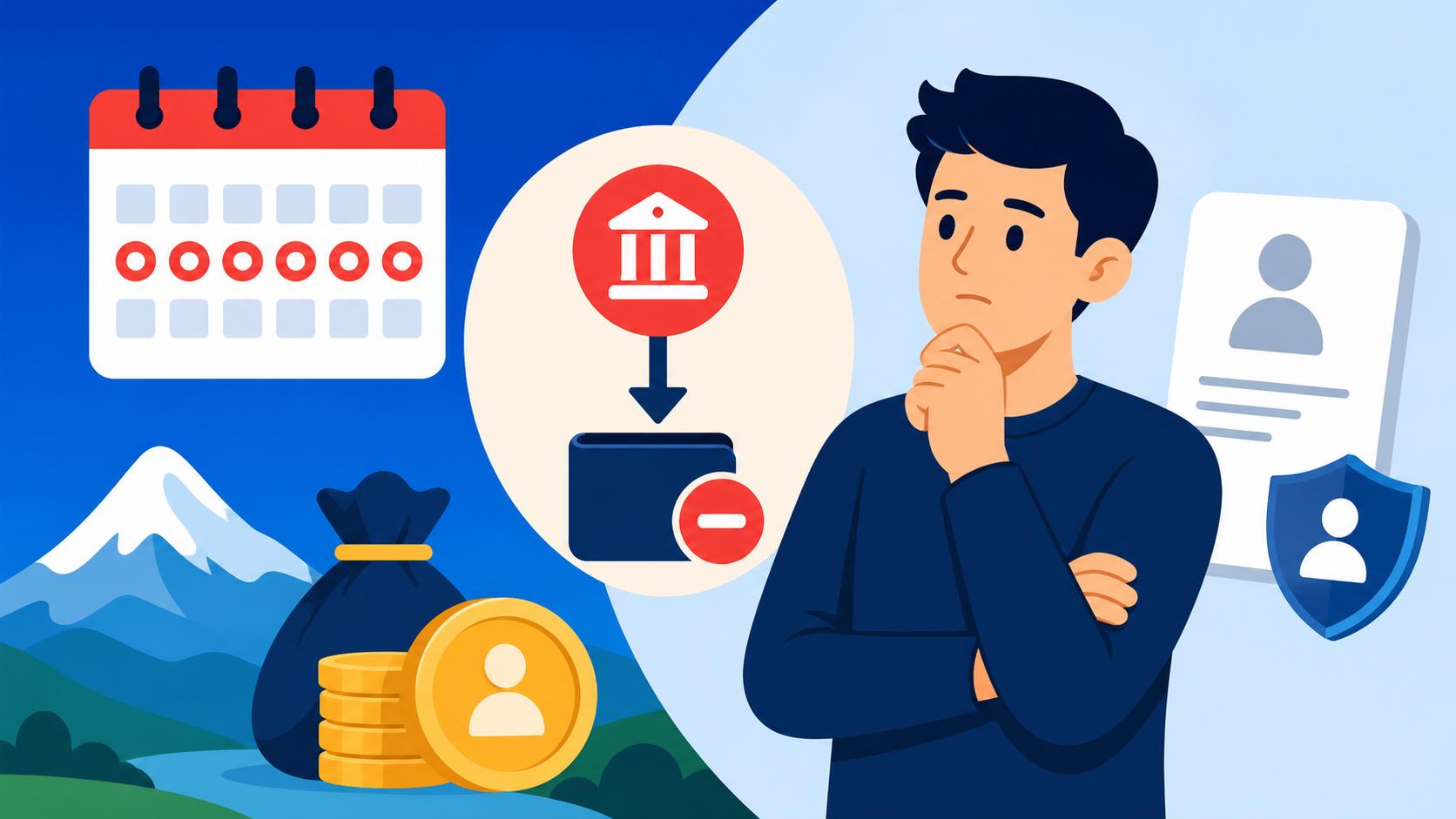
The primary reason Quellensteuer is deducted monthly from your salary is essentially a matter of risk management by the Swiss Federal Tax Administration. In Switzerland, "regular" taxpayers—Swiss citizens and C Permit holders—are trusted to manage their own finances and pay their taxes in large, often intimidating installments once or twice a year. However, for those of us on a B Permit, the authorities view our residency as technically "temporary" or "conditional." By taking the tax directly from your paycheck every month, the state ensures they receive their share before you have the chance to potentially leave the country or mismanage your savings.
It is a paternalistic system, but from a purely administrative standpoint, it is incredibly efficient. Your employer acts as the tax collector. They are legally obligated to calculate your tax rate based on your canton of residence, your marital status, your religion, and whether you have children. This information is funneled into various "tariffs" (like Tariff A for singles or Tariff B for married couples). Because your employer is doing the heavy lifting, you don’t have to worry about a surprise CHF 20,000 bill at the end of the year, which is a common nightmare for those who eventually transition to a C Permit. Understanding how to read your Understanding Swiss Payslips: Deductions for AHV, ALV, and NBU is the first step in realizing that while the deduction is painful, it is also a form of forced budgeting.
From a veteran expat’s perspective, the monthly deduction is actually a bit of a safety net. I’ve seen many friends move to standard taxation after five years and completely fail to set aside the 15-20% of their monthly income required to cover their year-end tax bill. With Quellensteuer, what you see in your bank account is truly yours to spend. However, this convenience comes at a price: the rates are calculated on an average, which means you might be overpaying if you have significant professional expenses or private pension contributions.
Why the B Permit Specifically Triggers This Deduction
The B Permit is the standard residency permit for most expats arriving in Switzerland. Whether you are an EU/EFTA citizen or a third-country national, this permit signifies that you have a job and a place to live, but you haven't yet reached the "permanent" status of the C Permit. Because the B Permit must be renewed (usually every five years for EU citizens and every year for others), the tax office maintains a "pay-as-you-go" relationship with you. This is deeply tied to the Residence Permits in Switzerland: L, B, C, and G Permits Explained framework that governs almost every aspect of your life here.
There is a historical and legal precedent for this. The Swiss authorities want to minimize the "collection risk." If a B Permit holder loses their job and decides to move back to their home country, the tax office doesn't want to be chasing them across borders for unpaid tax debt. By the time you receive your The Swiss B Permit: Eligibility, Renewal, and Restrictions renewal notice, you have already paid every cent you owe for the previous year. This "clean slate" approach is actually one of the criteria the migration office looks at when deciding whether to grant you a permit extension or a C Permit.
It is also worth noting that the "source" in "tax at source" refers to the source of the income. If you were a freelancer or self-employed on a B Permit, the process becomes significantly more complex because there is no employer to deduct the tax. In those rare cases, you might be asked to pay prepayments, but for 99% of B Permit holders in corporate roles, the monthly deduction is unavoidable. This is a fundamental part of The Swiss B Permit: Eligibility, Renewal, and Restrictions that every newcomer must accept as the price of entry into the high-salary Swiss market.
The Magic Number: The CHF 120,000 Threshold
One of the biggest points of confusion for expats is why some B Permit holders still have to file a tax return while others don't. The "Golden Rule" in Switzerland is the CHF 120,000 annual gross salary threshold. If you earn more than this amount in a calendar year, you are automatically shifted into a hybrid system. You will still have Quellensteuer deducted from your monthly payslip, but you are also legally required to file a "nachträgliche ordentliche Veranlagung" (subsequent ordinary assessment).
When you hit this threshold, the tax office will send you the standard tax forms at the beginning of the following year. This is where things get interesting. The tax at source already paid is treated as a "down payment." Once you file your full return, the tax office calculates exactly what you should have paid based on the standard cantonal rates (which can be lower or higher than the source tax rates). If you live in a low-tax canton like Zug but work in Zurich, Earning Over CHF 120,000: Transitioning to Standard Taxation can actually result in a significant refund.
Conversely, if you live in a high-tax commune, you might end up owing even more money on top of what was already deducted from your salary. This is why Filing a Swiss Tax Return (C Permit or High Earners on B Permit) is a task you should never take lightly. If you are close to the threshold—say earning CHF 118,000—you might want to check if any bonuses or "13th-month" payments will push you over, as the administrative burden increases significantly once you cross that line.
| Feature | Quellensteuer (B Permit < 120k) | Standard Taxation (C Permit or > 120k) |
|---|---|---|
| Payment Frequency | Monthly deduction from salary | Yearly or quarterly installments |
| Calculation | Cantonal average "Tariff" | Specific to your town/commune |
| Filing Requirement | None (unless requesting corrections) | Mandatory annual return |
| Administrative Effort | Low (Employer handles it) | High (You handle it or hire a pro) |
| Refund Potential | Via "Tarifkorrektur" only | Full deduction of all global assets/costs |
How to Get Your Money Back via Tarifkorrektur
Just because the tax is deducted automatically doesn't mean the Swiss government gets to keep all of it. As a veteran who spent years on a B Permit, I cannot stress this enough: you are likely overpaying if you aren't filing for a tax correction (Tarifkorrektur). The monthly deduction assumes you have no other expenses, but as an expat, you likely have plenty.
The most common way to lower your tax burden is by contributing to a Pillar 3a account. This is a private pension fund that is tax-deductible up to a certain limit each year. In 2026, for example, you should be looking at Exactly How to Claim the CHF 7,258 Pillar 3a Tax Deduction for 2026 to see how much you can shave off your taxable income. When you submit your Tax Corrections (Tarifkorrektur): Claiming Deductions on Withholding Tax form, you can also claim costs for:
- International weekly commuting (if you have a home elsewhere).
- Expensive professional training or Swiss language courses.
- Large donations to Swiss-recognized charities.
- Childcare costs (Kita) which are notoriously high in cities like Zurich or Geneva.
- Interest on private loans or credit cards.
The deadline for this is usually March 31st of the following year, and it is a "hard" deadline. If you miss it, that money is gone forever. Many expats ignore this because the form is often only available in the local language (German, French, or Italian), but it is worth the effort. By properly utilizing Pillar 3a in 2026: Tax Deductions, Limits, and Investment Options, you are essentially giving yourself a 15% to 25% "discount" on your savings, depending on your tax bracket.
Strategic Financial Management for B Permit Holders
Living with a monthly tax deduction requires a different financial mindset than what you might be used to in your home country. Since your take-home pay is already "net," you have a clearer picture of your actual spending power. This is the time to optimize your cash flow. If you are sending money home to pay off a mortgage or support family, using services like Wise is essential to avoid the hidden fees that Swiss banks often tack onto international transfers. I learned the hard way that sending CHF 2,000 via a traditional bank wire can cost you CHF 50 in bad exchange rates—money that could have gone into your savings.
For those looking to grow their remaining wealth, Switzerland’s tax-free capital gains rule for private investors is a massive perk. You can use platforms like Trade Republic to invest your post-tax salary into ETFs or stocks. Since your income tax is already handled by the Quellensteuer, your primary concern as a B Permit holder is simply declaring these assets if they exceed a certain wealth threshold. If you’re into the digital asset space, be sure to keep a close eye on Crypto Taxation in Switzerland: Declaring Bitcoin and Staking Rewards. Using an exchange like Binance is fine for trading, but remember that while capital gains might be tax-free, "staking" or "mining" is often treated as taxable income, which could complicate your annual tax correction if not reported correctly.
Finally, always keep an eye on your Banking and Finance for Expats in Switzerland: The 2027 Guide to ensure your accounts are set up to handle the unique Swiss "QR-bill" system. Being on a B Permit means you are under more scrutiny, so ensuring your Cheapest Ways to Transfer CHF Abroad: Wise vs Revolut vs Swiss Banks strategy is efficient will help you build a solid financial track record for when you eventually apply for your C Permit.
Common Pitfalls and How to Avoid Them
The biggest mistake I see newcomers make is not updating their employer when their personal circumstances change. If you get married, or if your spouse starts or stops working, your "Tariff" must change immediately. If you are taxed as a single person (Tariff A) but you are actually married (Tariff B or C), you could end up with a massive tax debt at the end of the year because the married rate is calculated differently. Your employer isn't a mind reader; you must provide them with your marriage certificate or your spouse's salary details.
Another pitfall is the "Church Tax." When you register at the Kreisbüro (city hall) upon arrival, you are asked for your religion. If you tick "Catholic" or "Protestant," the tax office will automatically deduct an extra 1-2% from your salary for the church. If you aren't a practicing member, this is a significant annual expense that provides no tax benefit to you. It is a very Swiss quirk that catches many off guard, and while it's easy to opt-out later, getting a refund for the months you already paid is nearly impossible.
Lastly, don't assume that because you are taxed at source, you are "invisible" to the tax authorities. They have access to your bank records if they suspect underreporting of global assets. While Switzerland is no longer the "secret" banking haven it once was, it remains a place where compliance is expected and rewarded with a stress-free residency experience. Stay organized, keep your receipts for deductions, and remember that every franc saved through a tax correction is a franc you can spend on a weekend in the Alps.
Disclaimer
This article is for informational purposes only and does not constitute professional tax, legal, or financial advice. Swiss tax laws and cantonal regulations are subject to change and can vary significantly depending on your specific location and personal circumstances. Always consult with a qualified Swiss tax expert or the official cantonal tax office (Steueramt) before making significant financial decisions.