What is NBU on My Payslip? Non-Occupational Accident Insurance Explained
Receiving your first Swiss salary statement can be a bewildering experience, especially when you realize your take-home pay is significantly lower than the gross amount on your contract. I remember sitting in my tiny Zurich apartment, staring at the acronym "NBU" on my payslip and feeling a wave of frustration that yet another chunk of my hard-earned money was being diverted into a mysterious social pot. This guide will meticulously break down what NBU actually is, why it is mandatory, and how this specific deduction provides some of the most valuable protection you have while living in Switzerland.
Decoding the Acronym: What is NBU?
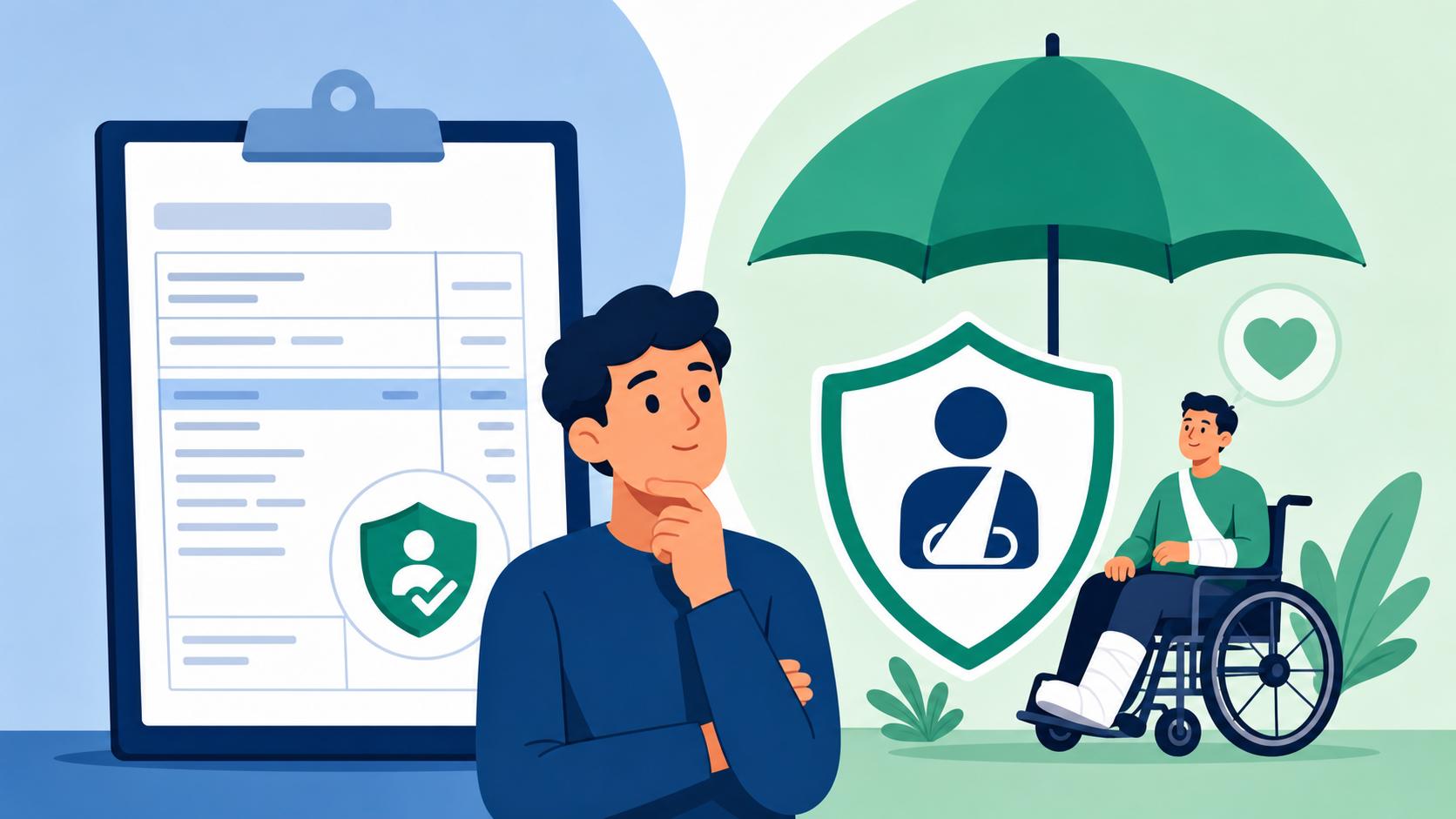
In the world of Swiss administrative jargon, NBU stands for Nichtberufsunfallversicherung, which translates to Non-Occupational Accident Insurance. While the name is a mouthful, its purpose is straightforward: it covers the medical costs and loss of income resulting from accidents that happen outside of your working hours. This is a mandatory component of the Swiss social security system, governed by the Federal Accident Insurance Act (UVG).
When you look at your payslip, you will usually see two types of accident insurance mentions. The first is BU (Berufsunfallversicherung), which covers accidents that happen at your workplace or during work-related travel. The second is NBU. For most expats, understanding the distinction is crucial because while your employer is legally required to pay the full premium for BU, they are entitled to deduct the premium for NBU directly from your gross salary.
The importance of this deduction cannot be overstated. If you are a resident, Understanding Swiss Payslips: Deductions for AHV, ALV, and NBU is the first step toward financial literacy in the Confederation. Many foreigners mistakenly assume their standard health insurance covers accidents. While it technically can, NBU offers far superior benefits, including the elimination of the "Franchise" (deductible) and the "Retention" (10% co-pay) for accident-related treatments. In a country where a simple mountain rescue can cost thousands, having this deduction on your payslip is actually a financial lifesaver.
The Scope of Coverage: From Ski Slopes to Kitchen Mishaps
One of the biggest surprises for newcomers is just how broad the NBU coverage actually is. In many other countries, if you hurt yourself on the weekend, you have to navigate the complex web of private health insurance, out-of-pocket maximums, and sick leave policies. In Switzerland, the NBU kicks in the moment you step out of your office or log off from your remote workstation.
Imagine you are enjoying a weekend in the Alps and suffer a fall. This is a classic scenario where Occupational Accident Insurance (UVG): What Happens When You Ski and Crash? becomes relevant, as NBU covers the medical treatment, search and rescue costs, and even the transport back to your home Canton. But it isn't just for high-adrenaline sports. NBU covers:
- Accidents occurring during household chores (falling off a ladder while changing a bulb).
- Injuries sustained during your daily commute (if you are not considered "at work" during that time).
- Sports injuries, from casual jogging to club football.
- Accidents that happen while you are on vacation, even if you are outside of Switzerland.
Crucially, NBU also covers salary continuation. If your injury prevents you from working, the insurance typically pays 80% of your insured salary starting from the third day after the accident. This provides a massive safety net that prevents a physical injury from turning into a financial catastrophe. If you are someone who likes to invest your savings through platforms like Trade Republic or Binance, knowing that 80% of your income is protected even during a long recovery allows you to maintain your investment strategy without having to liquidate assets in a panic.
The 8-Hour Rule: Who is Covered and Who Isn't?
There is a very specific "fine print" rule in Swiss law that every expat must understand: the 8-hour rule. To be automatically covered for NBU through your employer, you must work at least 8 hours per week for that specific employer.
If you work exactly 8 hours or more, your employer is legally obligated to enroll you in NBU. If you work less than 8 hours per week—perhaps you are a student with a very small part-time job or you are on a highly reduced Working Models: Part-Time Percentages (e.g., 80% Workload) Explained schedule—you are only covered for occupational accidents (BU). In this case, you must inform your private health insurance provider that you need to include "accident coverage" (Unfalldeckung) in your basic KVG policy.
For those working multiple small jobs, this can get complicated. You need to ensure that at least one of your employers is deducting NBU, or you must carry the coverage yourself. Being caught without accident coverage is a major risk. When I first moved here and was doing freelance consulting, I didn't realize I was responsible for my own accident insurance until a friend pointed out that my health insurance premiums were unusually low because I had opted out of accident coverage. I had to quickly rectify that to avoid paying thousands out of pocket for any potential mishaps.
| Insurance Type | Who Pays the Premium? | What is Covered? | Salary Continuation? |
|---|---|---|---|
| BU (Occupational) | Employer (100%) | Workplace accidents and occupational diseases. | 80% after the 3rd day. |
| NBU (Non-Occupational) | Employee (usually 100%) | Sports, home accidents, vacation injuries. | 80% after the 3rd day. |
| Health Insurance Accident Cover | Employee | Medical costs only (subject to deductible). | No (unless private policy). |
Premiums and Costs: How Much is Disappearing?
The amount deducted for NBU is not a flat fee; it is a percentage of your gross salary. Typically, NBU premiums range between 1% and 3%, depending on the risk category of your industry. For example, if you work in an office, your NBU rate will be lower than someone working in construction or heavy industry, as the statistical likelihood of you engaging in high-risk leisure activities is calculated differently by insurers like Suva or AXA.
When budgeting for your life in Switzerland, you must account for these deductions. If you are calculating your monthly expenses using Cost of Living in Switzerland 2026: Budgeting for Singles and Families, always use your net salary, not the gross. It’s also worth noting that there is a cap on the insured salary. As of 2026, the maximum insured salary for mandatory accident insurance is CHF 148,200 per year. If you earn more than this, your NBU deduction will only apply to the first 148,200, unless your employer has a supplementary "UVG-Z" policy.
For expats who move money internationally, using a service like Wise to manage your funds across borders can help mitigate the sting of these deductions by saving you money on currency exchange fees. Every franc saved on a transfer is a franc that offsets the NBU deduction on your payslip.
How NBU Interacts with Health Insurance and Medical Bills
One of the most confusing aspects of the Swiss healthcare system is the overlap between your health insurance (Krankenkasse) and your accident insurance (NBU). When you visit a doctor or a hospital in Switzerland, the first question they will ask is: "Is this an illness or an accident?"
If it is an accident and you are covered by NBU, you should provide your employer's accident insurance details (company name and policy number). The medical provider will then bill the accident insurer directly. The beauty of this system is that The Swiss Franchise System: How Deductibles and Copays Work does not apply here. You do not have to pay your 300 to 2,500 CHF deductible, nor do you pay the 10% co-insurance. The accident insurance covers 100% of the medical costs from the very first franc.
This distinction is vital for your wallet. I have seen expats accidentally file accident claims through their health insurance, only to be hit with a massive bill because they hadn't met their annual deductible yet. Always ensure the doctor marks it as a "Non-Occupational Accident." If you are unsure about the billing process, reading up on Understanding KVG/LAMal: Mandatory Basic Health Insurance Explained will help you see where the boundaries between these two systems lie.
Dealing with Emergencies: Ambulances and Rescue
Switzerland is a land of outdoor adventure, but those adventures come with risks. If you are hiking in Graubünden and need an ambulance, you might be shocked to learn that health insurance only covers a portion of that cost. In fact, Does Basic Swiss Insurance Cover Ambulance Rides? The 50% Rule Explained is a common pain point for many residents.
However, if the ambulance ride is the result of an accident covered by your NBU, the coverage is generally much more generous. NBU insurance usually covers the full cost of medically necessary transport and a significant portion of rescue costs. This is one of the primary reasons why the NBU deduction on your payslip is actually a bargain. For the price of a few cups of coffee a month, you are covered for high-cost emergency scenarios that would otherwise bankrupt a person.
What Happens if You Leave Your Job?
A common anxiety for expats is the "gap" period between jobs. When you resign or your contract ends, your NBU coverage through your employer typically expires 31 days after your last day of work. If you are taking a "sabbatical" or a long break before your next role, you are suddenly at risk.
To solve this, you can purchase "Interim Insurance" (Abredeversicherung). This allows you to extend your employer’s NBU coverage for up to six months. You must apply for this and pay the premium before the initial 31-day grace period ends. If you fail to do this, you must immediately contact your health insurance provider to re-activate the "accident" portion of your basic insurance. Failing to manage this transition is a common mistake that I personally witnessed a former colleague make—he broke his leg while between jobs and ended up paying for the surgery out of his own savings because he forgot to bridge the insurance gap.
Summary of Action Steps for Expats
- Check your payslip: Locate the NBU line item and verify the percentage being deducted.
- Confirm the 8-hour rule: If you work less than 8 hours, call your health insurance and add accident coverage today.
- Note your policy details: Keep your employer's accident insurance provider name and policy number in your phone or wallet.
- Inform your doctor: Always clarify if a visit is due to an accident to avoid deductible charges.
- Bridge the gap: If you leave your job, either buy Abredeversicherung or update your health insurance immediately.
While the NBU deduction might seem like just another tax, it is actually a robust, highly functional insurance policy that offers peace of mind in one of the most active and adventurous countries in the world. Whether you are biking through the city or skiing in the Alps, that small line item on your payslip is working hard to ensure that a bad fall doesn't lead to a bad financial future.
Disclaimer
The information provided in this article is for informational purposes only and does not constitute legal, financial, or professional medical advice. Swiss laws and insurance regulations are subject to change. Always consult with your employer's HR department, your insurance provider, or a qualified financial advisor regarding your specific situation and coverage details.