Buy Now Pay Later in Switzerland: How Invoicing Purchases Works
When you first move to Switzerland and click through an online checkout for a new coffee machine or a pair of hiking boots, you might be surprised to see "Invoice" (Kauf auf Rechnung) as a prominent payment option alongside credit cards. In many countries, buying on credit is the norm, but the Swiss have a deeply ingrained culture of receiving the goods first and paying the bill later. This guide will help you navigate the intricacies of the Swiss invoicing system, avoid the dreaded debt register, and understand how modern "Buy Now Pay Later" (BNPL) services are reshaping local shopping habits.
The Swiss Obsession with Invoicing: More Than Just a Bill
If you have spent your life in the US, UK, or Australia, you are likely used to the immediate "pay now" friction of online shopping. In Switzerland, the philosophy is different. The Swiss consumer highly values the ability to inspect a product before the money leaves their bank account. This is why you will see the option to pay by invoice on almost every major website, from Galaxus to Zalando. It is a system built on a surprising amount of social trust, but it comes with a rigid set of administrative rules that can catch a newcomer off guard.
Why the Swiss Prefer Invoices Over Credit Cards
Invoicing is historically the most popular way to pay for goods and services in Switzerland. Part of this is cultural; the Swiss are generally debt-averse and prefer to see a physical or digital bill that they can authorize through their own bank. Unlike credit cards, which might involve high interest rates if not paid off, a standard Swiss invoice usually gives you 15 to 30 days to pay without any added interest. It feels more like a utility bill than a loan.
During your Financial Checklist for Your First 30 Days as an Expat in Switzerland, you will realize that nearly every local service—from your doctor to your internet provider—operates this way. In the retail world, this means you can order three different sizes of a jacket, keep the one that fits, return the others, and only pay for the one you kept. No waiting for a refund on your credit card; you simply adjust the amount you pay on the final invoice. It is a highly efficient system once you understand the rhythm.
How Kauf auf Rechnung Actually Works at Checkout
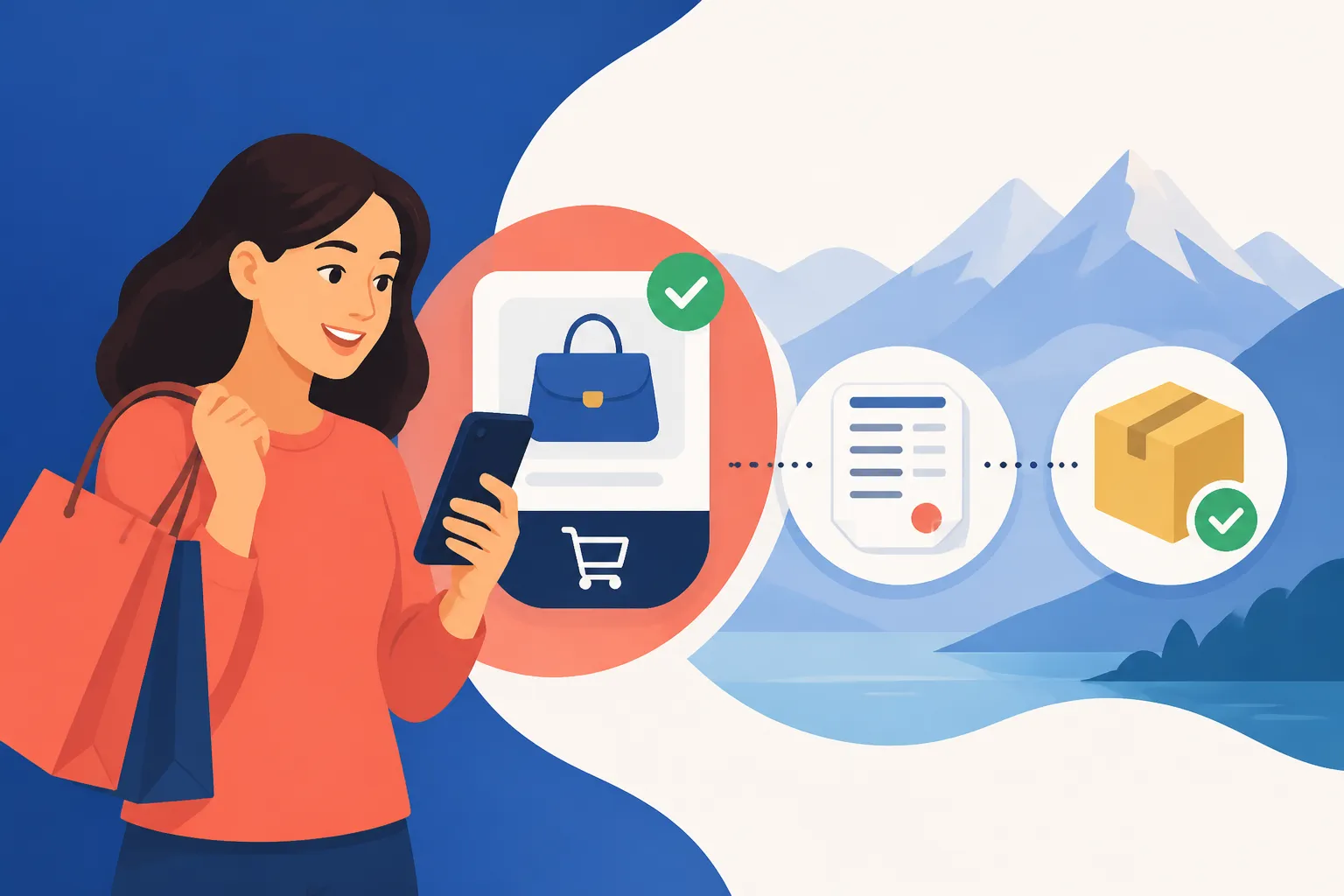
When you select "Kauf auf Rechnung" at an online checkout, the merchant performs a lightning-fast credit check. If you have just arrived in the country and haven't yet built a "credit score" or a history in the local databases, you might find this option blocked. Many expats find they have to pay by card for the first few months until they are established in the system.
Once approved, the merchant ships your goods. Inside the box (or more commonly now, via email), you will receive a QR-bill. This is a white slip of paper with a large QR code containing all the payment details. You don't need to manually type in IBANs or reference numbers anymore. You simply open your banking app, scan the code, and hit "pay." If you are managing your initial relocation costs and need to move money from abroad to cover these bills, using a service like Wise can be a lifesaver to avoid the heavy currency conversion fees charged by traditional Swiss banks.
Major BNPL Players and Methods in Switzerland
While the traditional invoice is the "grandfather" of Buy Now Pay Later, modern tech companies have entered the Swiss market to offer more flexible options, such as paying in three installments or delaying the payment for 90 days. This has merged the traditional invoice culture with the global BNPL trend, though the Swiss versions tend to be more regulated and slightly more formal.
Third-Party Providers: Klarna, Bob Finance, and MF Group
If a shop doesn't want to take the risk of invoicing you directly, they will outsource the process to a third-party provider. Klarna is increasingly common in Switzerland, particularly on international fashion sites. However, Switzerland also has its own heavy hitters like the MF Group (PowerPay) and Bob Finance (Bob Pay). These companies essentially buy the debt from the merchant and then bill you.
The catch with these providers is that they are very strict. If you miss the payment window, they don't just send a friendly reminder; they often apply a "Mahngebühr" (reminder fee) of CHF 20 to CHF 30 immediately. If you are using Best Neobanks in Switzerland: Neon, Yuh, and Zak Compared, you can usually set up these payments as "eBills," which means the invoice appears directly in your banking app for one-click approval, reducing the risk of missing a deadline.
Store-Specific Invoicing: Migros, Coop, and Galaxus
Major Swiss retailers often run their own internal invoicing systems. For example, Galaxus (the "Amazon of Switzerland") allows you to pay by invoice for a small fee (usually around CHF 1.50 to cover the processing costs). The Migros and Coop ecosystems also have their own versions, often linked to their loyalty cards.
This store-specific method is often the most expat-friendly once you have a B Permit. They tend to be slightly more lenient with their internal customers than the aggressive third-party BNPL apps. However, always check the fine print. Some stores will default to a "monthly bill" model where they consolidate all your purchases into one statement, which can make it harder to track individual expenses if you aren't disciplined with your budgeting.
The Administrative Side: Deadlines, Fees, and QR-Slips
The Swiss system is famous for its punctuality, and this extends to your bills. If an invoice says "payable within 30 days," they do not mean 31 days. In my first year in Basel, I ignored a small CHF 15 bill for a week past its due date, only to receive a reminder with a CHF 20 "administration fee" attached. The penalty was larger than the original purchase.
Understanding the 30-Day Window and Late Penalties
Typically, the 30-day clock starts the moment the invoice is generated, not when you receive the goods. If the shipping is delayed, your actual window to pay might only be 20 days. Most Swiss merchants send the first reminder (1. Mahnung) for free or a small fee, but the second and third reminders come with heavy surcharges.
For those focusing on long-term wealth management, these small fees are the "silent killers" of a budget. Companies like Taxes for Expats often emphasize the importance of keeping clean financial records, as late payments can eventually snowball into legal issues that complicate your residency. Keeping a folder—physical or digital—dedicated to "Unpaid Invoices" is a survival skill for any new Swiss resident.
Using TWINT and E-Banking to Pay Invoices
The easiest way to handle these invoices is through the local mobile payment giant, TWINT. Many QR-bills now allow you to pay directly by scanning the code within the TWINT app. It’s instantaneous and links directly to your bank account. If you haven't set this up yet, you should read about How to Set Up and Use the TWINT Payment App as an Expat as soon as possible.
Alternatively, you can use the eBill system. Instead of receiving a PDF or a piece of paper, the company sends the bill directly to your e-banking portal. You get a notification, you check the amount, and you click "approve." It is the most "Swiss" way to handle finances: organized, digital, and perfectly on time. If you are still waiting for your local bank account to be fully functional, you can use Wise to pay an IBAN directly, which is often faster than waiting for an international transfer to clear.
Risks and Consequences: The Shadow of the Betreibung
In many countries, a late bill is a nuisance. In Switzerland, it is a threat to your future in the country. The Swiss have a centralized debt registry system, and being entered into it can have devastating consequences for your life here.
What Happens if You Miss a Payment?
If you ignore the reminders, the creditor will eventually start a "Betreibung" (debt enforcement proceeding). This isn't just a collection agency calling you; it is a formal legal process handled by the cantonal debt office. Once a debt is registered, it stays on your "Betreibungsauszug" (debt register extract) for five years, even after you pay it off.
This extract is a document you will need for almost everything in Switzerland. Want to rent a new apartment? You must provide a clean debt extract. Want to apply for a C Permit or Swiss citizenship? They will check your debt history. For a deeper dive into why this matters, see our guide on What is a Betreibung? How an Unpaid Bill Ruins Your Swiss Credit Score.
Impact on Your Credit History and Future Permits
The Swiss authorities and landlords view a debt entry as a sign of poor integration and unreliability. It is very difficult to explain away a "Betreibung" once it is on your record. Even if you are working with a firm like Taxes for Expats to optimize your tax returns, they cannot help you erase a legitimate debt entry.
If you find yourself in a situation where you cannot pay an invoice, the absolute best thing you can do is call the company before the deadline. Swiss companies are often surprisingly willing to set up a payment plan or extend a deadline if you are proactive. Silence is interpreted as a refusal to pay, which triggers the legal machinery. If you ever feel a debt entry is unfair, you should look into Clearing an Unjustified Betreibung from the Swiss Debt Register immediately.
Comparing Payment Options in Switzerland
| Payment Method | Interest/Fees | Speed | Best For |
|---|---|---|---|
| Traditional Invoice | Usually free if paid in 30 days | Goods arrive first | Regular shopping, trying on clothes |
| Klarna / BNPL Apps | Free for short term, high if late | Instant approval | Small, quick purchases |
| Credit Card | Monthly interest if not cleared | Instant payment | Travel, large electronics, miles |
| TWINT | Free | Instant | Local shops, splitting bills, QR-bills |
| Installment Plan | 10% – 14% interest | Monthly payments | Large furniture or emergency repairs |
Strategic Advice for Newcomers
When you are first navigating the Swiss market, it is tempting to use "Kauf auf Rechnung" for everything because it feels like "free" money for 30 days. However, the administrative burden of tracking 10 different invoices with 10 different deadlines can be overwhelming. I suggest sticking to one or two trusted methods. Use Best Swiss Credit Cards for Travel Miles and Cashback in 2026 for your big-ticket items to get the insurance and rewards, and save the invoicing for things like clothing returns or local service providers.
Also, be aware of the "hidden" BNPL. Many insurance companies and even the tax office allow you to pay in installments, but they might charge a small "interest" or "service fee" for the privilege. When you receive your Understanding Your Swiss Salary Certificate (Lohnausweis) for Tax Season, you'll want to make sure you have enough cash set aside to pay your taxes in one go, rather than relying on expensive installment plans.
Lastly, always ensure your address is updated with the "Kreisbüro" (district office). If an invoice is sent to your old address and you don't receive it, the law still considers you responsible for the late fees and subsequent debt proceedings. The "I didn't get the mail" excuse rarely works in a Swiss court.
Disclaimer
This article is for informational purposes only and does not constitute financial or legal advice. Switzerland's debt enforcement laws (SchKG) are strict and vary slightly by canton. Always read the specific terms and conditions of any "Buy Now Pay Later" or invoicing service provider before committing to a purchase. If you are facing serious debt issues, please consult with an official debt counseling service (Schuldenberatung) in your local canton.