Car Leasing vs Cash Purchase in Switzerland: The Real Cost Breakdown
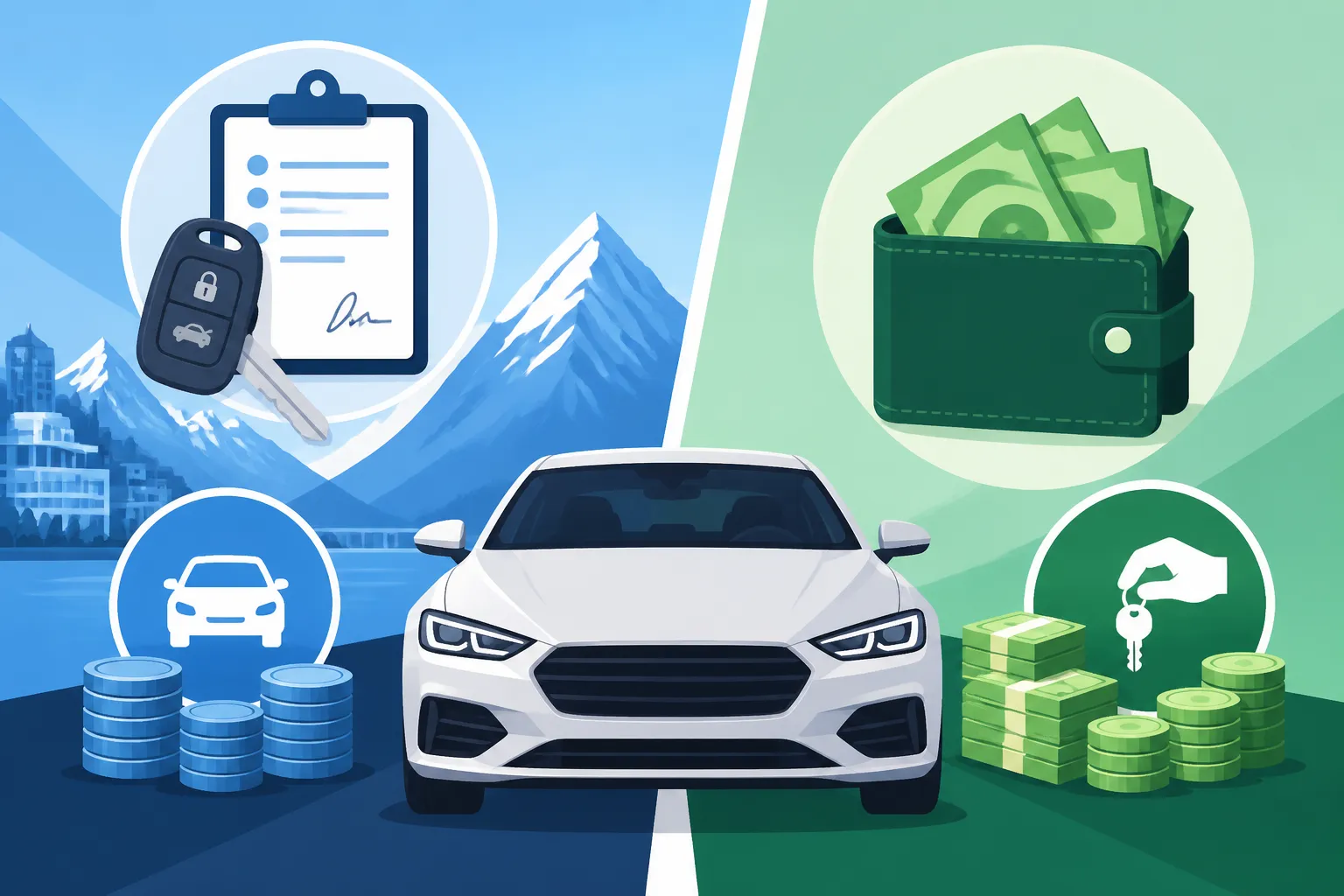
Moving to Switzerland often involves a calculated choice between the world-class SBB train network and the undeniable freedom of having your own four wheels. However, the price tags on Swiss vehicles—and the complex financial structures surrounding them—can lead to immediate sticker shock for even the most seasoned expat. This guide breaks down the true cost of car leasing versus cash purchase to help you navigate the Swiss market with confidence.
The Financial Psychology of Swiss Car Ownership
In many countries, buying a car is a simple transaction: you save up, you pay, and you drive. In Switzerland, the culture is shifted heavily toward leasing, even for those who have the cash sitting in a bank account. This is largely due to the historically low interest rates and the Swiss preference for predictable monthly outgoings. When you first arrive and begin Cost of Living in Switzerland 2026: Budgeting for Singles and Families, you will notice that nearly every dealership advertisement leads with a monthly payment rather than a total price.
The "Swiss way" is often about risk mitigation. If you buy a car cash, you take on 100% of the depreciation risk. If the used car market crashes or if a specific model gains a reputation for unreliability, that loss sits squarely on your balance sheet. With a lease, you are essentially paying for the use of the car and the right to hand it back when you are done. However, this convenience comes with strings attached that many expats overlook until it is too late.
Furthermore, the administrative burden of owning a car in Switzerland is significant. From the moment you pick up your plates at the Cantonal Road Office, you are entering a world of mandatory inspections, strict insurance requirements, and cantonal taxes. Understanding the Annual Car Costs in Switzerland: Insurance, Tax, and Servicing is vital before you decide which financing route to take. The choice between leasing and buying isn't just about the monthly payment; it’s about how much of your mental energy you want to spend on vehicle logistics.
Cash Purchase: The Purest Path to Ownership
Buying a car outright is the most straightforward method, yet it requires the largest upfront capital. For an expat moving from a country with a weaker currency, this often means transferring significant sums of money. This is where using a service like Wise is highly recommended. Traditional Swiss banks often hide a 2-3% margin in their exchange rates; on a CHF 50,000 car purchase, that is CHF 1,500 literally disappearing into thin air. By using Wise to move your relocation funds into your Swiss account, you ensure that every franc goes toward the vehicle itself.
The primary advantage of a cash purchase is the total lack of restrictions. You own the asset. You can drive 5,000 kilometers or 50,000 kilometers a year without worrying about "excess mileage" penalties. You are also free to choose your insurance level. While new cars should almost always have "Vollkasko" (full comprehensive) coverage, an older car bought cash allows you to opt for "Teilkasko" or just the mandatory "Haftpflicht" (third-party liability), which can save you thousands over several years. You can read more about these tiers in our guide on Mandatory and Optional Insurance: Liability, Legal, and Household.
However, the downside is the "opportunity cost." Switzerland is a country where capital can often be better deployed elsewhere. Additionally, the Wealth Tax in Switzerland: How Global Assets Are Assessed means that a car you own outright is an asset that must be declared on your tax return. While the value of the car depreciates each year on your tax form, it still contributes to your overall taxable wealth. For those working with specialized firms like Taxes for Expats, it is important to track these asset values accurately to ensure you aren't overpaying on your municipal tax bill.
Leasing: The All-Inclusive Swiss Alternative
Leasing in Switzerland is essentially a long-term rental agreement with a fixed term, usually between 24 and 48 months. The most common form is the "closed-end" lease, where you agree on a "Restwert" (residual value) at the start. You pay for the difference between the purchase price and that residual value, plus interest. It sounds simple, but the "small print" in a Swiss leasing contract can be brutal for the uninitiated.
First, leasing mandates "Vollkasko" insurance. This is non-negotiable. The leasing company owns the car, and they want it protected against everything from hail storms in the Alps to a scratched door in a tight Coop parking garage. When you are Buying a Car: Leasing, Autoscout24, and Mandatory Auto Insurance, you must factor this higher insurance premium into your monthly budget. Secondly, you are bound by a kilometer limit. If you exceed this limit, the per-kilometer charge at the end of the lease can be as high as 50 to 80 centimes, which adds up incredibly fast if you decide to take frequent road trips to Italy or France.
Another critical factor for expats is the "exit clause." If your professional situation changes and you need to leave the country unexpectedly, breaking a Swiss lease is notoriously expensive. The leasing company will recalculate the entire contract as if it were a shorter (and thus more expensive) lease, often demanding a "penalty" payment of several thousand francs. This is a major consideration if you are still on a temporary permit. We often suggest reviewing your status in Withholding Tax (Quellensteuer) vs Standard Taxation for Foreigners to see how car-related expenses might or might not be deductible; generally, for private individuals, leasing payments are not tax-deductible in Switzerland.
Comparing the Real Costs: A 4-Year Breakdown
To truly understand the difference, we have to look at a hypothetical scenario. Let’s take a standard mid-sized SUV with a purchase price of CHF 45,000 and compare the costs over a 4-year period with an annual mileage of 15,000 km.
| Cost Component | Cash Purchase (4 Years) | Leasing (4 Years, 2.9% Interest) |
|---|---|---|
| Upfront Payment | CHF 45,000 (Full Price) | CHF 4,500 (10% Down) |
| Monthly Payment | CHF 0 | CHF 550 |
| Total Interest Paid | CHF 0 | CHF 3,200 |
| Insurance (Vollkasko) | CHF 4,800 (Avg. CHF 100/mo) | CHF 6,000 (Mandatory High Tier) |
| Maintenance & Service | CHF 3,000 | CHF 3,000 (unless "service incl.") |
| Resale/Residual Value | CHF 22,000 (Your Cash) | CHF 22,000 (Owned by Bank) |
| Total Net Outlay | CHF 30,800 | CHF 34,600 |
In this scenario, the cash buyer is "up" by nearly CHF 4,000 over four years. However, the cash buyer had to part with CHF 45,000 on day one. If that cash buyer had instead kept that money in a diversified investment or used it to lower a mortgage, they might have earned more than the CHF 4,000 they "saved." This is the classic Swiss dilemma. If you have the funds but need to move them from abroad, using Wise ensures you don't lose another CHF 1,000+ in the transfer process itself, making the cash option even more attractive.
For those concerned about the complexities of Swiss filing, consulting with Taxes for Expats can help you determine if your specific situation—perhaps as a self-employed individual—allows you to deduct these costs. For the average "B Permit" holder, the table above represents the hard reality. Leasing is a service of convenience and liquidity, while cash is a service of long-term savings and freedom.
Expat-Specific Hurdles: Permits and Exit Strategies
Your residency status plays a massive role in your ability to lease. If you are on an "L Permit" (short-term), most Swiss leasing companies will outright reject your application or demand a massive down payment (30% or more). Even with a "B Permit," the lease term usually cannot exceed the validity of your permit. This is one of the many Residence Permits in Switzerland: L, B, C, and G Permits Explained nuances that catch people off guard. A cash purchase, by contrast, requires no credit check and no permit verification beyond the basics needed for registration.
Before you buy or lease, you also need to ensure your paperwork is in order. You have exactly one year to get your Converting Your Foreign Driver's License to a Swiss Fahrausweis completed. If you lease a car and then fail the "Kontrollfahrt" (control drive), you are stuck with a car you cannot legally drive and a contract you cannot easily break. This happens more often than you would think, particularly to expats from non-EU countries who find the Swiss driving exam unexpectedly rigorous.
Finally, consider the "Move-Out" factor. Switzerland is a transient place for many. If there is even a 20% chance you will be Leaving Switzerland Financially: Closing Accounts and Pension Payouts within the next three years, buying a high-quality used car cash is almost always the smarter move. You can sell a car on the private market (via sites like Tutti or Ricardo) in 48 hours if the price is right. Closing a lease, however, involves a bureaucratic dance with the leasing bank that can take weeks and cost a fortune.
Final Advice for New Arrivals
If you are new to the country and still finding your feet, we generally recommend starting with a high-quality used car bought cash or a short-term car subscription (like Carvolution or Clyde). This gives you the freedom to learn the Swiss roads, understand your actual mileage needs, and settle into your budget without the 4-year commitment of a lease. If you do go the cash route, remember to use Wise for the transfer to keep your costs down.
As you become more established and perhaps move toward a "C Permit," the benefits of leasing—always driving a car under warranty, predictable costs, and keeping your cash liquid—become more compelling. Regardless of your choice, keep your records meticulously. For US citizens or those with complex global tax footprints, having a clear log of your vehicle assets and expenses will make your annual session with Taxes for Expats much smoother. Switzerland is a beautiful country to explore by car; just make sure the math behind your steering wheel is as solid as the mountains you are driving through.
Disclaimer
The information provided in this article is for informational purposes only and does not constitute financial, legal, or tax advice. Switzerland's cantonal regulations and insurance laws are subject to change. Always consult with a qualified Swiss financial advisor or tax professional before making significant financial commitments or signing long-term contracts.