Canyoning and Adventure Sports in the Berner Oberland
When you first land in Switzerland, especially the breathtaking Berner Oberland, your mind probably jumps to postcard-perfect hikes, serene lake cruises, or the exhilarating rush of skiing down powdery slopes. But let me tell you, there's a whole other side to this stunning region that often gets overlooked by new arrivals and even seasoned expats: the raw, untamed thrill of canyoning and other high-octane adventure sports. This guide is for those of you who've conquered the paperwork and are now ready to truly challenge yourselves against Switzerland's most dramatic landscapes, offering practical advice and a big dose of encouragement for navigating these adrenaline-fueled experiences.
Understanding the Berner Oberland Adventure Hub
The Berner Oberland, with its soaring peaks, cascading waterfalls, and glacial-fed rivers, isn't just a pretty face – it's a natural playground for some of the most exciting adventure sports in Europe. At its heart lies Interlaken, a town literally nestled "between lakes" (Lake Thun and Lake Brienz), which has deservedly earned its reputation as Switzerland's adventure capital. This isn't just hype; the unique geography here creates perfect conditions for a diverse range of activities, from plunging into icy canyons to soaring high above the valleys.
Interlaken: The Epicenter of Thrills
Interlaken isn't just a picturesque town; it's a bustling hub where outdoor enthusiasts converge. You'll find dozens of tour operators, gear rental shops, and adventure booking centers lining its streets, all geared towards getting you out into the wild. Many expats find this a refreshing change from the usual Swiss calm, as the atmosphere is buzzing with international adventurers. From the moment you step off the train (and I've personally used Omio to snag the best train deals heading there, comparing different routes and times), you can feel the energy.
This town acts as the gateway to the truly wild parts of the region. The turquoise waters of Lake Brienz are fed by glacial runoff, and the surrounding mountains create deep, narrow gorges perfect for exploration. The accessibility is a huge plus; you don't need a car to get to most starting points for these adventures, as operators often provide transport, or you can rely on the efficient public transport system.
The Unique Geography for Adventure Sports
What makes the Berner Oberland so special for these sports? It's the sheer verticality and the raw power of nature. Imagine glaciers slowly carving out valleys over millennia, leaving behind steep rock faces, hidden caves, and rivers that plunge dramatically down mountainsides. The meltwater from these glaciers feeds into torrents that are perfect for white-water rafting, while the geological formations create the ideal environment for canyoning.
For skydiving or paragliding, the majestic backdrop of the Eiger, Mönch, and Jungfrau mountains offers views that are simply unparalleled. You're not just doing an activity; you're doing it in one of the most visually stunning places on Earth. This dramatically enhances the experience, turning a simple jump or descent into an unforgettable memory. Many operators intentionally choose routes that maximize these iconic vistas, ensuring every moment is breathtaking.
Canyoning Adventures: A Deep Dive
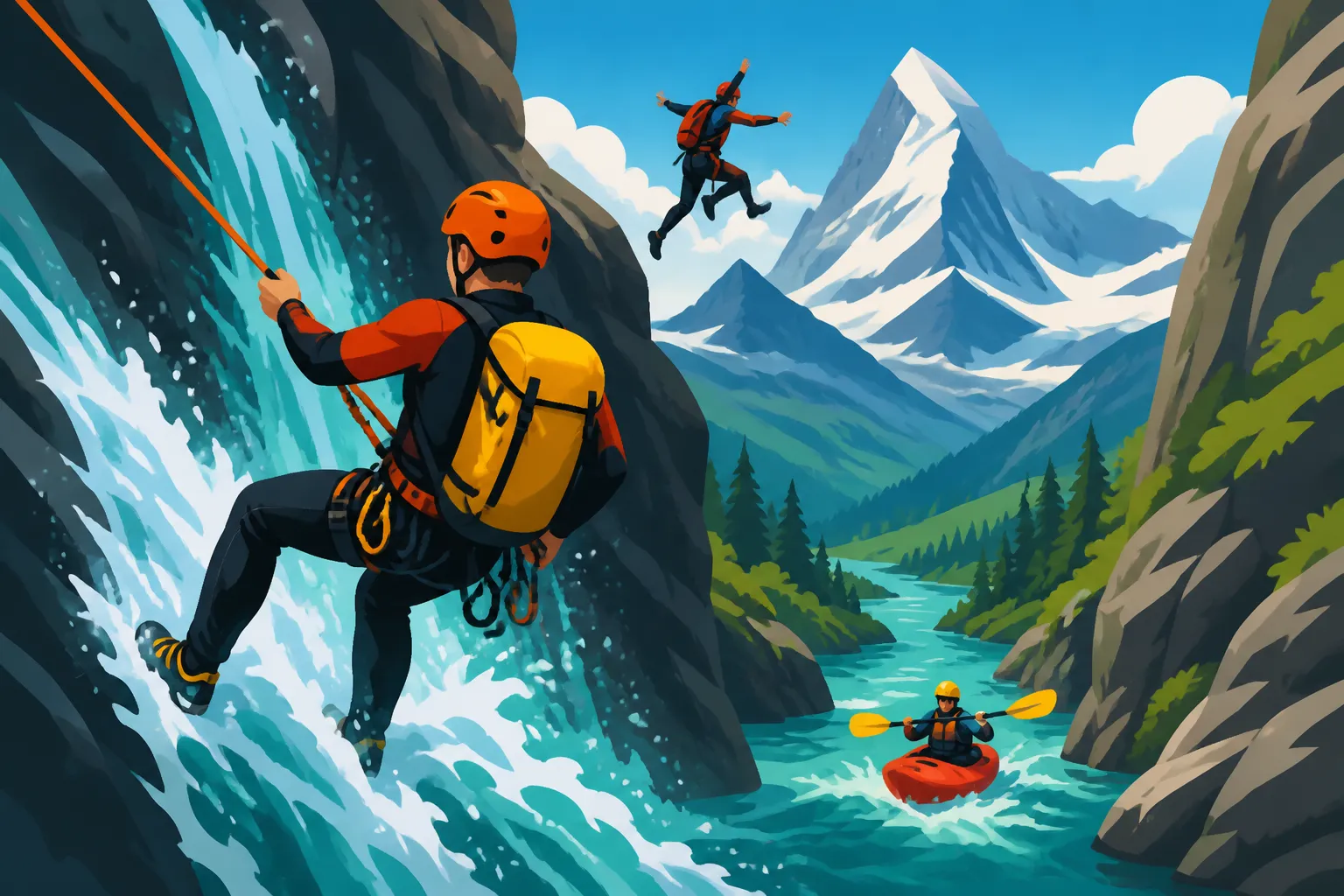
Canyoning, for the uninitiated, is essentially descending a canyon by a variety of techniques including walking, scrambling, climbing, jumping, abseiling (rappelling), and swimming. It’s a full-body workout and an absolute blast, but it's not something you just decide to do on a whim. The Berner Oberland offers some of the best canyoning experiences, from beginner-friendly routes to those that will truly test your limits.
Popular Canyoning Routes and What They Offer
The region boasts several incredible canyons, each with its own character and challenge level.
One of the most famous and beloved beginner-to-intermediate routes is Chli Schliere near Alpnachstad. Now, don't let "beginner-friendly" fool you; this canyon still packs a punch! You'll be navigating through rushing waters, jumping off ledges up to 10 meters high (all optional, don't worry!), and sliding down natural rock slides. It's an incredible introduction to the sport, perfect for a first-timer or a group with mixed experience levels. The guides are fantastic at making everyone feel safe and empowered, coaching you through each jump and rappel. The water is cold, so the thick wetsuits provided are absolutely essential.
For something a bit more advanced, the Grimsel Canyon (Grimsel Schlucht) is a true gem, though it's a bit further afield towards the Grimsel Pass. This canyon is known for its spectacular granite formations, crystal-clear pools, and longer rappels, some dropping up to 50 meters. It offers a more alpine feel, often with snow on the peaks even in summer, making the scenery truly epic. It's typically recommended for those with some prior canyoning experience or a very adventurous spirit and good physical fitness. The sheer scale of Grimsel feels immense, a testament to nature's power.
Closer to Interlaken, there are also various local canyons that operators use, sometimes tailored to weather conditions or group skill levels. These typically involve similar elements of jumping, sliding, and rappelling, providing a fantastic introduction without requiring a long travel time from the town center. Each canyon has its own unique features, from narrow slots to open, sun-drenched sections.
Choosing an Operator and Safety First
This is perhaps the most critical part of planning your adventure. Canyoning is an extreme sport, and safety should always be your number one priority. Do not, I repeat, do not try to go canyoning independently unless you are a highly trained and certified professional with extensive local knowledge.
Always choose a reputable, established tour operator. In Interlaken, companies like Outdoor Interlaken, Alpin Raft, and Canyon Jumps are well-known and have excellent safety records. When you're researching, look for:
- Certifications: Ensure their guides are certified by recognized national or international bodies (e.g., Swiss Outdoor Association).
- Experience: How long have they been operating? Do they have positive reviews specifically mentioning safety and guide professionalism? Checking platforms like GetYourGuide or TripAdvisor can be really helpful here, as you'll see real experiences from fellow adventurers.
- Equipment Quality: They should provide all necessary, well-maintained equipment: wetsuits, helmets, harnesses, and specialized ropes. Don't be afraid to ask about their gear maintenance schedule.
- Briefing and Training: A good operator will give a thorough safety briefing, explain all commands clearly, and provide basic training before you even enter the water. They should make sure you're comfortable with the techniques before attempting anything challenging.
Remember that while basic health insurance (KVG) covers some accident costs, it might not fully cover extreme sports or rescue operations, especially if you're seriously injured in a remote area. This is where something like Accident Insurance (UVG): Occupational vs. Non-Occupational Coverage comes into play for residents, and for tourists, ensuring your travel insurance covers extreme sports is paramount. For actual emergencies, knowing Emergency Numbers 144 vs 112: Which to Call in a Swiss Medical Crisis is vital.
What to Expect on a Canyoning Trip
So, you've booked your trip, you're buzzing with a mix of excitement and nerves. What's the day going to look like?
First, you'll typically meet at the operator's base in Interlaken. Here, you'll get fitted for your wetsuit, helmet, harness, and special canyoning shoes. Trust me, these wetsuits are thick, a bit cumbersome, but absolute lifesavers against the glacial meltwater. You'll likely also receive a quick introduction and fill out any necessary waivers.
Then, you'll be transported by van to the canyon's entry point. This drive is often part of the adventure itself, taking you through stunning mountain roads. Once at the canyon, your guides will give an in-depth safety briefing. They'll explain how to rappel, how to jump safely into water, and what hand signals they'll use. This is your chance to ask any questions and voice any anxieties. A good guide will listen and reassure you.
The actual descent into the canyon can take anywhere from 2 to 4 hours, depending on the route and group size. You'll be walking, sliding, and jumping your way down. The jumps are almost always optional – if you're not comfortable, the guides can usually set up a rappel for you instead. This is great for managing your own adrenaline levels and comfort zones. The feeling of rappelling down a waterfall or sliding into a crystal-clear pool, surrounded by ancient rock, is truly indescribable. It's exhilarating, a little scary, and utterly refreshing. Afterward, you'll be driven back to base, usually with a high-five and a sense of immense accomplishment.
Beyond Canyoning: Other Thrills of the Berner Oberland
While canyoning is a star, the Berner Oberland has a full constellation of other adventure sports to offer. You're spoiled for choice, whether you want to get soaked, soar, or scale.
White-Water Rafting and Hydrospeed
The glacial rivers fed by the surrounding mountains provide some fantastic white-water rafting opportunities. The Lütschine River, in particular, is notorious for its challenging rapids (Class III-IV), making it a favorite for experienced rafters and those looking for a serious thrill. The water is incredibly cold and powerful, making for an unforgettable ride. It's often compared to a roller coaster, but a very natural one. The scenery, as always, adds to the drama.
For families or those wanting a slightly gentler introduction, the Simme River offers a Class II-III experience. It still has plenty of exciting rapids but with more calm stretches to enjoy the views. It's a fantastic way to bond with a group and experience the power of the river in a controlled environment.
If you want to get even closer to the action, hydrospeeding (riverboarding) is an option. You're essentially floating down the river on a reinforced bodyboard, using flippers to steer. It's incredibly immersive and gives you a true feeling of being part of the river. It's definitely for the more adventurous swimmer and offers a unique perspective of the rapids.
Skydiving and Tandem Paragliding
For those who prefer their thrills airborne, the Berner Oberland offers some of the most spectacular aerial adventures imaginable. Imagine leaping from a plane or running off a mountain, with the majestic peaks of the Eiger, Mönch, and Jungfrau as your backdrop.
Tandem Paragliding is probably the most accessible aerial sport. After a brief safety talk, you'll be strapped to an experienced pilot, take a few steps off a slope, and then simply float. The sensation is surprisingly peaceful, not a stomach-dropping fall. You get a bird's-eye view of Interlaken, the sparkling lakes, and the entire valley. It's an incredible way to see the sheer scale of the landscape without needing any prior experience. You can often book these experiences through platforms like GetYourGuide, making the process incredibly smooth. Many of my expat friends have done this and rave about it as a quintessential Swiss experience.
Skydiving is the ultimate adrenaline rush. Freefalling from 4,000 meters (13,000 feet) with an instructor strapped to your back is an experience unlike any other. The initial few seconds of freefall are pure exhilaration, followed by the serene glide under the parachute. The panoramic views during the parachute ride are truly magnificent, a reward for your bravery. Operators like Skydive Interlaken offer both airplane and helicopter jumps, each providing a slightly different ascent and view. This is a bucket-list item for many, and doing it over the Swiss Alps is something you'll never forget.
Via Ferratas and High Ropes Parks
If you prefer to stay connected to the rock but want more than just hiking, via ferratas (Italian for "iron path") are a fantastic option. These are protected climbing routes equipped with fixed cables, ladders, and sometimes even suspension bridges. They allow you to access otherwise inaccessible parts of the mountains. The Klettersteig Mürren is a particularly famous one, offering breathtaking views and some seriously exposed sections, including a heart-stopping suspension bridge over a gorge. You'll need appropriate gear (helmet, harness, via ferrata set) which can be rented, and ideally, some experience or a guide if you're a beginner. It's a mental and physical challenge, offering incredible rewards.
For a more family-friendly or introductory experience, high ropes parks (Seilparks) are widely available. Interlaken has its own Seilpark Interlaken, offering various courses of increasing difficulty, suspended among the trees. You move between platforms using ropes, bridges, and zip lines, all while safely harnessed. It's a great way to build confidence, challenge yourself physically, and have a lot of fun in a beautiful forest setting. This is a perfect activity for a group of friends or a family looking for adventure without the extreme risk.
Planning Your Adventure: Logistics and Practicalities
Venturing into the wild and wonderful world of adventure sports requires a bit of planning, especially here in Switzerland where efficiency is key. You'll want to make sure all your ducks are in a row, from when you go to what you bring, to ensure a smooth and unforgettable experience.
Best Time to Go and Weather Considerations
The prime season for most adventure sports in the Berner Oberland is late spring through early autumn (May to October).
- Summer (June-August): This is peak season. The weather is generally warm and stable, days are long, and all operators are fully active. However, it also means more crowds and you absolutely need to book activities well in advance. The water levels in the canyons and rivers are usually at their best for rafting and canyoning.
- Spring (May) and Autumn (September-October): These shoulder seasons can be fantastic. You'll find fewer crowds and potentially lower prices on things like accommodation (which you can often find great deals on using Booking.com). The weather can be more unpredictable, with cooler temperatures and a higher chance of rain. However, sunny days in spring offer lush green landscapes, and autumn brings spectacular golden foliage, making the scenic aspects even more beautiful. Operators might have reduced schedules, so always check ahead. Canyoning water will be colder in these months.
Always check the local weather forecast specifically for the Interlaken region on the day of your activity. Mountain weather can change rapidly, and operators will cancel or reschedule activities if conditions are unsafe. Don't be disappointed; it's always for your safety!
Booking Your Adventure and Essential Logistics
Booking in advance is highly recommended, especially during peak season.
- Online Platforms: Sites like GetYourGuide are excellent for browsing and booking a wide range of activities. They allow you to compare operators, read reviews, and often offer flexible cancellation policies. This can be super handy for expats still figuring out their schedule.
- Directly with Operators: Many established local companies, like Outdoor Interlaken or Alpin Raft, have user-friendly websites where you can book directly. This often gives you direct access to their full schedule and any special offers.
- Booking Offices: In Interlaken itself, you'll find numerous booking offices. If you prefer face-to-face interaction or have last-minute questions, stopping by one of these is a good option.
When booking, pay close attention to:
- Meeting Point and Time: Is it at their office, or a specific train station?
- What's Included: Most packages include all technical gear (wetsuit, helmet, harness), safety briefing, guide, and often transport to/from the activity site.
- What to Bring: Operators will provide a list. Typically, you'll need a swimsuit, a towel, and sturdy shoes that can get wet (some operators provide these too, or have rental options).
Consider setting up an itinerary using a tool like GetYourGuide to organize all your bookings in one place, especially if you plan multiple adventures. It streamlines the whole process, letting you focus on the fun part.
Getting There and Around the Berner Oberland
Switzerland's public transport system is world-class, and it makes getting to and around the Berner Oberland incredibly easy.
- Trains: Interlaken is easily accessible by train from major Swiss cities. You'll likely arrive at Interlaken Ost station. I've often used the SBB website or the Omio app to find the fastest and cheapest connections.
- Local Buses: For getting to specific trailheads or starting points, local buses are efficient. Most adventure operators include transport from their base in Interlaken to the activity site, so you typically won't need to worry about figuring out local connections for the actual activity.
- Swiss Travel Pass / Half-Fare Card: If you're staying for a while, consider investing in a The Half-Fare Travelcard (Halbtax): The Must-Have Pass for Swiss Residents or even a SBB Travelcards: Is the Generalabonnement (GA) Worth the CHF 4000+ Cost? if you plan extensive travel. These can significantly cut down on your transport costs, making regular trips to places like the Berner Oberland much more affordable.
Essential Gear and Personal Items
While your operator will provide the specialized equipment, there are a few personal items you should definitely bring:
- Swimsuit: To wear under your wetsuit.
- Towel: For drying off afterward.
- Snacks and Water: Adventures are tiring! A small, energy-rich snack for after the activity is always welcome.
- Sunscreen: Even on cloudy days, the alpine sun can be strong.
- GoPro/Waterproof Camera: Many people want to capture the memories! Make sure it's securely attached, or consider the photo/video packages offered by operators.
- Warm Layers: For before and after the activity, especially in spring or autumn. A fleece or light jacket can make a huge difference in comfort once you're out of the wetsuit.
- Small Backpack: To carry your personal items.
Here's a quick comparison of some popular adventure sports to help you choose your next thrill:
| Adventure Sport | Difficulty Level | Typical Duration (Activity) | Avg. Cost (CHF) | Key Skills Needed | Best Season |
|---|---|---|---|---|---|
| Canyoning | Moderate – High | 2 – 4 hours | 150 – 250 | Swimming, Rappelling (taught), Jumps | May – October |
| White-Water Rafting | Moderate – High | 1.5 – 3 hours | 120 – 180 | Teamwork, Paddling | May – October |
| Hydrospeed | Moderate – High | 1.5 – 2.5 hours | 140 – 200 | Strong Swimming, Endurance | June – September |
| Tandem Paragliding | Low (Passenger) | 15 – 30 minutes (flight) | 170 – 220 | None (Follow pilot's lead) | Year-round (weather permitting) |
| Skydiving | Low (Tandem) | 20-40 sec freefall | 400 – 550 | None (Follow instructor) | Year-round (weather permitting) |
| Via Ferrata | Moderate – High | 3 – 6 hours | 80 – 150 (rental/guide) | Strength, Head for Heights | May – October |
| High Ropes Park | Low – Moderate | 2 – 3 hours | 40 – 60 | Balance, Agility | April – November |
Note: Costs are approximate and can vary based on operator, package, and season.
The Berner Oberland truly offers something for everyone, whether you're a seasoned thrill-seeker or just looking to dip your toes into the world of adventure sports. It's an incredible way to experience the raw beauty of Switzerland from a completely different perspective and create memories that will last a lifetime. So, what are you waiting for? Time to get out there and explore beyond the hiking trails!
Disclaimer
The information provided in this guide is for general informational purposes only and does not constitute professional advice. Adventure sports carry inherent risks, and participants should always exercise caution, follow guide instructions, and ensure they have adequate insurance coverage. Weather conditions can change rapidly in mountainous regions; always confirm conditions with your chosen operator. We do not endorse any specific companies, and it is the individual's responsibility to research and select reputable providers.