Noisy Neighbors in Switzerland: How to File a Complaint
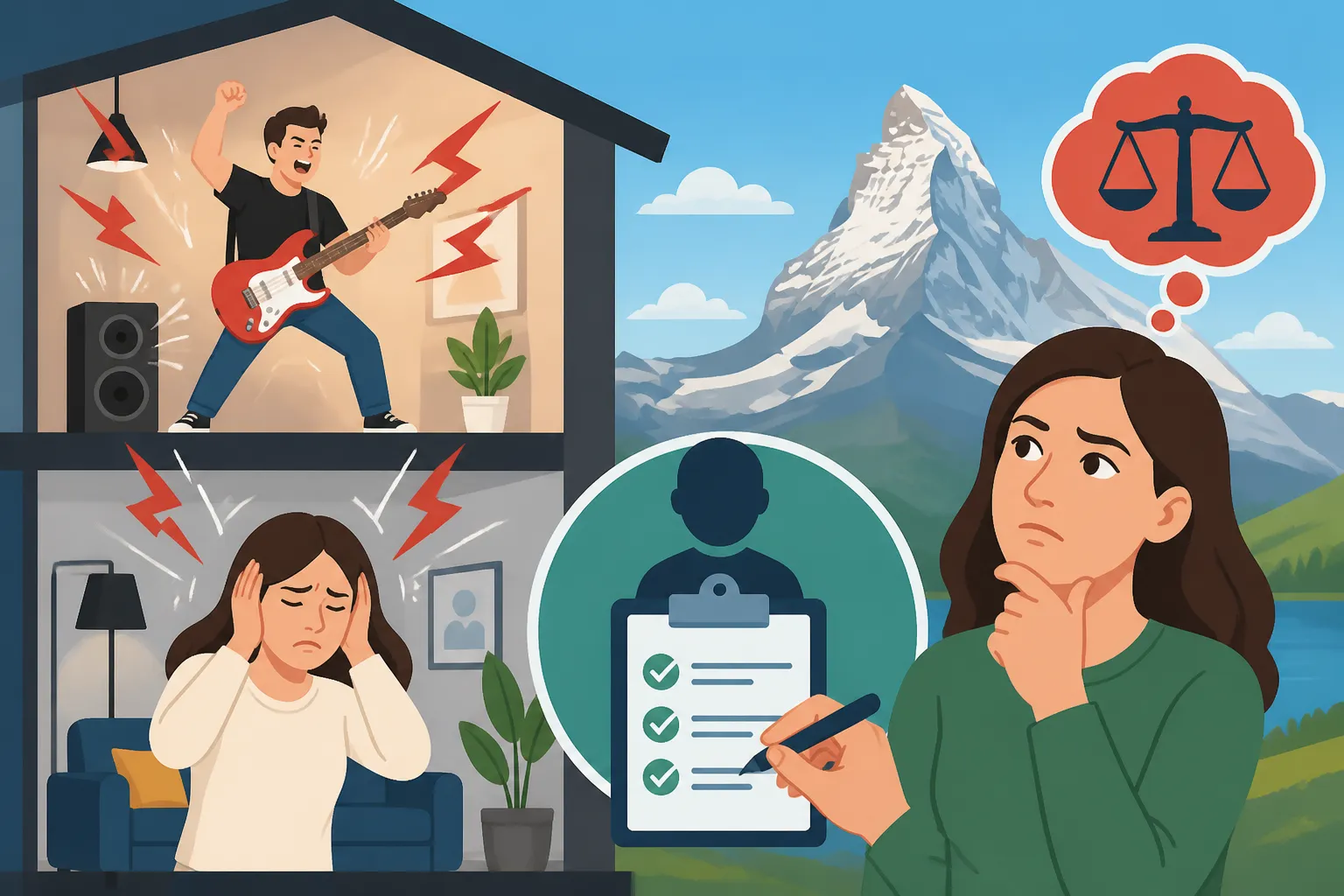
Moving into a new apartment in Zurich, Geneva, or Basel is often a dream come true until the person upstairs decides that 11:00 PM is the perfect time for a cross-fit session or high-speed vacuuming. This guide explains how to navigate the social minefield of Swiss noise complaints, from understanding legal quiet hours to filing a formal dispute that actually gets results.
The Cultural Weight of Silence in Switzerland
When you first arrive in Switzerland, you might feel like you have moved into a giant, open-air library. The silence in residential neighborhoods can be striking, especially if you are coming from a bustling metropolis in the US, UK, or Southern Europe. I remember my first month in a creaky Altbau in Lausanne; I was terrified to even drop a spoon after 9:00 PM. This isn't just "Swiss politeness"—it is a deeply ingrained social contract backed by the law.
In Switzerland, the concept of Ruhezeit (quiet time) is taken very seriously. It is often the first cultural hurdle an expat faces. While you are busy settling in, perhaps using a service like Sirelo to manage your international move and get your boxes delivered, your neighbors are already gauging whether you are the "noisy type." The Swiss value their privacy and their peace, and they expect you to do the same. If you violate these unwritten (and written) rules, you won't just get a dirty look at the mailbox; you might find yourself in a legal battle with your landlord.
Understanding Swiss Everyday Rules: Recycling, Quiet Hours, and Neighborhood Etiquette is essential for your survival here. It is not about being a killjoy; it is about the fact that many Swiss buildings have thin walls and wooden floors that amplify every footstep. If you understand the "why" behind the silence, it becomes much easier to handle the "how" when a neighbor starts making your life miserable with their late-night piano practice.
Understanding Your Legal Rights: Ruhezeiten and the Hausordnung
Before you knock on a door or call the police, you need to know exactly what the rules are. Every apartment building in Switzerland has a Hausordnung (house rules). This document is usually attached to your lease, and it is the "bible" of your building. You should read it as carefully as your employment contract.
The Standard Quiet Hours (Nachtruhe)
Generally, across almost all cantons, Nachtruhe (nighttime quiet) begins at 10:00 PM and ends at 6:00 AM or 7:00 AM. During these hours, "Zimmerlautstärke" (room volume) is the golden rule. This means your music, TV, or conversation should not be audible outside your closed apartment doors. If your neighbor is hosting a booming techno party at midnight on a Tuesday, they are in clear violation of both the Building House Rules (Hausordnung): What Swiss Tenants Must Follow and local police ordinances.
Sundays and Public Holidays (Sonntagsruhe)
Sundays are sacred in Switzerland, but not necessarily for religious reasons—they are for rest. This is the day when the country collectively hits the "mute" button. You are legally forbidden from performing noisy chores like mowing the lawn, using a power drill, or even glass recycling in many communes. If your neighbor is using a hammer to build a bookshelf on a Sunday afternoon, you have every right to be annoyed. You can find more about the local atmosphere in my guide on Quiet Sundays in Switzerland: What the Locals Do.
The Lunchtime Break (Mittagsruhe)
Many newcomers are shocked to learn that some cantons still observe Mittagsruhe, a quiet period between 12:00 PM and 1:00 PM or 2:00 PM. While this is becoming less common in modern city apartments, it is still strictly enforced in many suburban and rural areas. If you are working from home and your neighbor decides to start a construction project during lunch, it might actually be a violation of local custom. If you're ever unsure about a specific local law while out and about, having a reliable data connection through Airalo allows you to quickly check your commune's website for their specific police regulations (Polizeiverordnung).
What Counts as Unreasonable Noise?
This is where things get tricky. Not all noise is a "violation." Living in a community means accepting a certain level of "lifestyle noise." The Swiss courts have a specific term for this: Ortsüblichkeit (what is customary for the area).
Social vs. Excessive Noise
Children playing, occasional crying babies, and the sound of someone taking a shower are generally considered unavoidable "living noises." You cannot successfully complain about a baby crying at 3:00 AM; the law protects the parents in this case. However, excessive dog barking for hours on end, loud shouting matches, or persistent DIY work outside of permitted hours are considered unreasonable.
The Myth of the 10 PM Toilet Flush
You might have heard the urban legend that it is illegal to flush your toilet after 10:00 PM in Switzerland. Let me clear that up: it is a myth. You are allowed to use your bathroom, flush the toilet, and even take a quick shower if you work late. However, filling a deep bathtub at 2:00 AM might be pushing it if your pipes are particularly loud and disturb the person sleeping below you. For a deeper dive into these quirks, check out Can You Flush the Toilet After 10 PM? Debunking Swiss Noise Myths.
| Type of Noise | Permissible? | Action Recommended |
|---|---|---|
| Crying Baby | Yes (always) | Invest in earplugs; no legal grounds. |
| Sunday Vacuuming | No | Friendly reminder of Hausordnung. |
| Late Night Party (once a year) | Usually tolerated with notice | Check if they posted a note in the hall. |
| Persistent Dog Barking | No | Keep a log; contact landlord. |
| Daily Piano Practice (2 hours) | Yes (during day) | Negotiate specific times with neighbor. |
The Protocol: From Friendly Coffee to Formal Complaints
In Switzerland, there is a very specific "escalation ladder" you should follow. Jumping straight to a lawyer or the police is considered extremely aggressive and will likely alienate your other neighbors.
Step 1: The Diplomatic Approach (The "Apéro" Strategy)
Most Swiss noise disputes are solved with a polite conversation. Do not knock on their door while you are angry. Wait until the next day, bring a small chocolate or just a friendly smile, and say: "I’m not sure if you’re aware, but the sound travels quite easily into my bedroom." Often, people simply don't realize how thin the floors are. If your German or French isn't perfect, use a translation app on your phone. Keeping an Airalo eSIM active ensures you have the data to look up the right words if the conversation gets technical.
Step 2: The Written Polite Request
If the verbal talk didn't work, write a polite, dated letter. Keep a copy for yourself. Mention the specific times the noise occurred and refer to the Hausordnung. This isn't a threat; it’s a "documentation of awareness." Many expats find that Renting in Switzerland: The Complete 2027 Guide for Expats helps them understand the formal tone required for these interactions.
Step 3: The "Lärmprotokoll" (Noise Log)
If the noise persists, you must start a Lärmprotokoll. This is a detailed diary of every disturbance. You need to record the date, the exact start and end time, the type of noise, and how it affected you (e.g., "could not sleep," "walls vibrating"). This log is your most powerful weapon if you eventually go to the authorities. Without a log, your complaint is just your word against theirs.
Step 4: Involving the Liegenschaftsverwaltung (Administration)
If the neighbor ignores your letters, it is time to contact the building management. Send them a formal letter (registered mail or Einschreiben is a must in Switzerland) including a copy of your noise log. The landlord has a legal obligation to ensure "quiet enjoyment" of your rented property. They will usually issue a warning to the noisy neighbor.
Legal Escalation and the Power of the Tenants' Association
If the landlord fails to act, or the neighbor remains defiant, you have reached the legal stage. This is where being an expat can feel overwhelming, but you have significant protections under Swiss law.
Joining the Mieterverband or ASLOCA
If you haven't joined the Mieterverband (in German-speaking regions) or ASLOCA (in French-speaking regions) yet, do it today. They are the national tenants' associations. For a small annual fee, they provide legal advice and can even represent you in disputes. I cannot stress enough how much peace of mind The ASLOCA / Mieterverband: Why Every Swiss Tenant Must Join provides when you're dealing with a difficult housing situation.
The Schlichtungsbehörde (Conciliation Board)
If the situation is unbearable, you can take the case to the Schlichtungsbehörde. This is a free mediation service provided by the canton. They aim to find a compromise between tenants and landlords. In some cases, if the noise is proven and the landlord does nothing, you might even be entitled to a rent reduction. This process is detailed in my guide on Challenging an Unfair Rent Increase Through the Schlichtungsbehörde, as the mechanism for noise-related rent reductions is very similar.
Calling the Police (The Nuclear Option)
Only call the police (number 117) if there is an active, excessive disturbance late at night (like a massive party) and you have already tried to ask them to be quiet. The police will come, issue a warning, and sometimes a fine. Be aware that the police report will become a public record that your landlord can see. Use this option sparingly.
Legal Expenses Insurance
Navigating the Swiss legal system is expensive if you don't have the right coverage. Many expats opt for Rechtsschutzversicherung to cover the costs of lawyers if a neighbor dispute turns into a court case. You should look into Legal Expenses Insurance (Rechtsschutz): Is It Worth It for Expats? before a conflict starts, as most policies have a three-month waiting period before they cover a new "event."
Practical Tips for Your Sanity
While you are fighting the legal battle, you still have to live in your home. Don't let a noisy neighbor ruin your experience of living in this beautiful country.
- Soundproofing: If the noise is impact-based (footsteps), high-quality rugs can help. If it is airborne noise (talking/TV), heavy acoustic curtains are a lifesaver.
- White Noise: A simple white noise machine or a fan can mask many late-night disturbances.
- Communication: Sometimes, checking in with other neighbors can help. If four apartments complain together, the landlord will take the issue much more seriously than if it's just the "new foreigner" complaining.
- Know when to move: If you are in a building with fundamentally bad sound insulation and a landlord who doesn't care, it might be better for your mental health to move. Use Sirelo to get quotes for a stress-free transition to a quieter, perhaps newer, Neubau apartment.
Living in Switzerland is a masterclass in community living. It requires patience, a bit of "thick skin," and a firm understanding of your rights. By following the proper protocol and keeping meticulous records, you can protect your peace and enjoy the quiet lifestyle that makes this country so unique.
Disclaimer
The information provided in this guide is for educational and informational purposes only and does not constitute legal advice. While every effort has been made to ensure the accuracy of the details provided as of 2026, Swiss laws and local ordinances can vary significantly by canton and commune. Residents are strongly encouraged to consult with a qualified legal professional or a tenants' association such as ASLOCA or Mieterverband before taking formal legal action. All internal links and brand mentions are provided as helpful resources but do not guarantee specific outcomes in individual housing disputes.