Managing the Shared Waschküche: Wash Calendars and Cleaning the Lint Filter
Nothing says "Welcome to Switzerland" like a passive-aggressive note on your laundry basket because you finished your cycle at 8:05 PM instead of the mandated 8:00 PM. I once spent a frantic forty minutes scrubbing a lint filter because a neighbor gave me "the look" in the hallway, and I quickly realized the shared laundry room is the true heart of Swiss social control. This guide solves the mystery of the Waschküche so you can keep your clothes clean and your neighbors happy.
The Cultural Significance of the Swiss Waschküche
In many countries, having a washing machine in your apartment is a basic standard. In Switzerland, particularly in older buildings in cities like Zurich or Geneva, the shared laundry room—the Waschküche—is a communal institution governed by rules as precise as a Swiss watch. Understanding this culture is the first step in Renting in Switzerland: The Complete 2027 Guide for Expats. You aren't just sharing a machine; you are participating in a social contract that values order, cleanliness, and silence above all else.
The reason for this system is twofold: space and noise. Swiss apartments are often built with high-quality soundproofing, but the vibration of a heavy-duty washing machine on a spin cycle can still disturb neighbors. By keeping the machines in the basement, the building remains a sanctuary of peace. When you first move into a property found via HousingAnywhere, the landlord or building manager (the Abwart or Concierge) will usually give you a tour of this basement dungeon. Pay attention, as this is often more important than the tour of your actual living room.
Foreigners often view the shared laundry room as a nuisance, but long-term expats eventually see the hidden benefits. These industrial-grade machines are significantly more powerful and faster than the tiny units you might find in a London or New York flat. You can often finish three weeks' worth of laundry in a single afternoon if you manage the schedule correctly. However, that efficiency relies entirely on every resident sticking to the unwritten (and very written) rules of the house.
Mastering the Sacred Wash Calendar
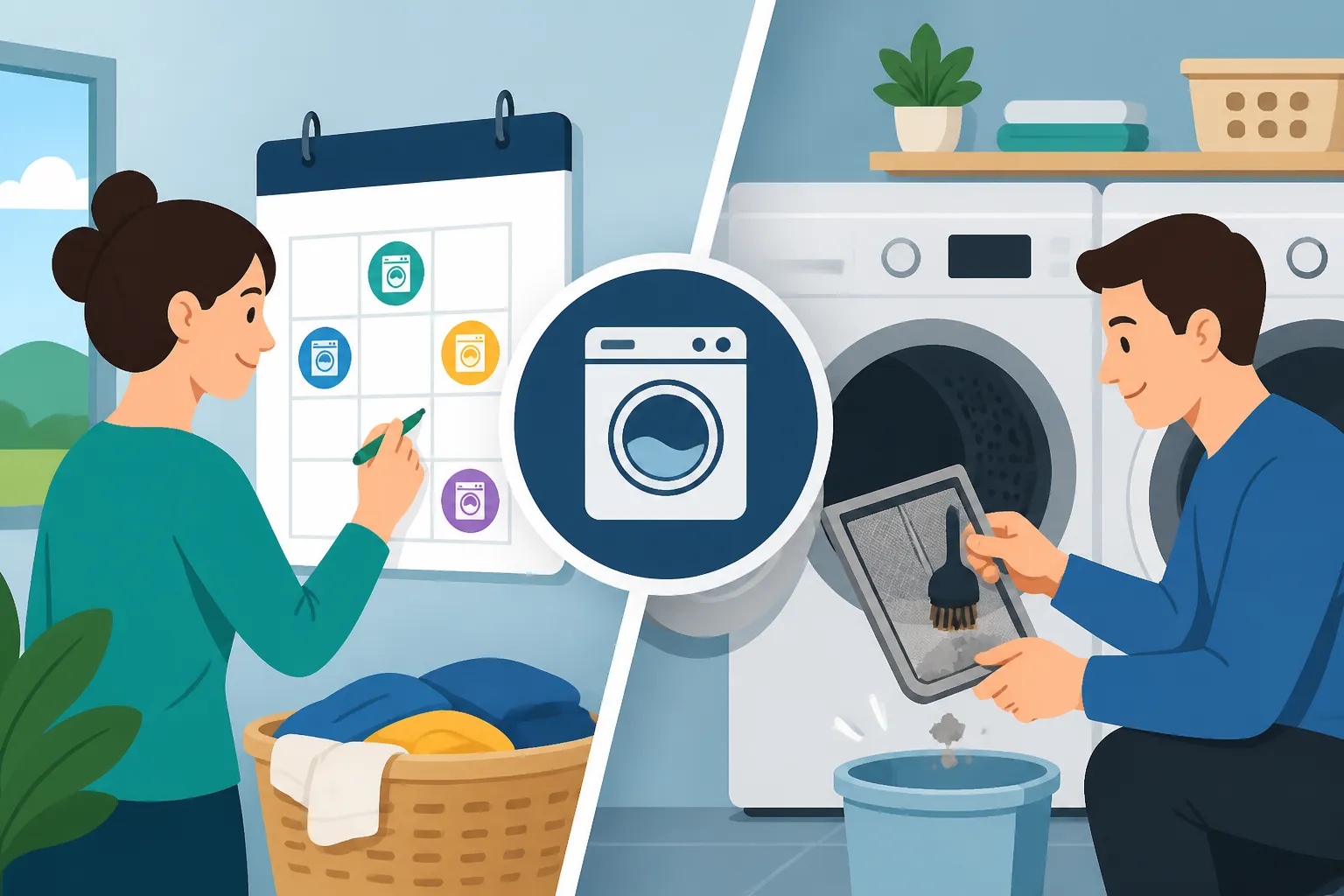
The most critical element of the laundry room is the Waschplan or wash calendar. This is usually a physical piece of paper pinned to a corkboard or a plastic-covered sheet where you write your name next to specific time slots. In more modern buildings, this might be replaced by a digital app or an electronic booking system, but the weight of the responsibility remains the same. If you have just arrived and are using Airalo to stay connected while your home internet is being installed, you might want to use your data to translate the headers on that calendar immediately.
Understanding Your Assigned Time Slots
In many traditional buildings, you are assigned a specific "wash day" every week or every two weeks. For example, you might be the "Tuesday Morning" person. This means from 7:00 AM until 12:00 PM, the machines are legally yours. If you don't use them, they sit empty, unless you have a very friendly relationship with a neighbor who has asked to "borrow" your slot. Violating someone else's slot is considered a major social transgression, akin to cutting in line at a pharmacy.
If your building uses a "free-for-all" sign-up sheet, the competition can be fierce. Expats often complain that the Saturday and evening slots are filled months in advance. A common tip is to check the calendar late at night to see if someone has crossed out their name for the following morning. If you see a gap, grab it. Just remember that Quiet Hours (Ruhezeiten): Sunday Rules for Laundry, Mowing, and Noise are strictly enforced. In many cantons, washing on a Sunday is strictly forbidden because of the noise of the pipes and the humming of the dryer.
The Penalty for Punctuality Failures
Being five minutes late to remove your clothes from the machine might seem trivial, but in the ecosystem of a Swiss apartment block, it is a disruption of the entire day’s flow. The person who has the slot after you has likely timed their day around that 1:00 PM start time. If your wet towels are still sitting in the drum, you are effectively stealing their time. In some buildings, neighbors are authorized to remove your clothes and place them—sometimes unceremoniously—into a laundry basket or on top of the machine.
To avoid this, always set a timer on your phone for five minutes before the cycle ends. If you know you cannot be there exactly when the machine stops, it is better to wait for a different slot. If you consistently fail to respect the timings, the Abwart may receive a formal complaint, which can eventually lead to issues with your lease. This is one of those Swiss Everyday Rules: Recycling, Quiet Hours, and Neighborhood Etiquette that can make or break your relationship with the local community.
Technical Maintenance and the Lint Filter Ritual
Cleaning the machines is not a "once in a while" task; it is an "every single time" requirement. The Swiss expectation is that the machine should look like it has never been used when you finish your session. This is where most expats get into trouble, as the cleaning protocols are often more intensive than what we are used to in our home countries.
The Lint Filter and the Secomat
If your laundry room has a tumble dryer, you must clean the lint filter after every load. However, many Swiss basements use a Secomat—a powerful dehumidifier mounted on the wall of a drying room (Trockenraum). You hang your clothes on lines, turn on the Secomat, and it sucks the moisture out of the air, drying your clothes surprisingly fast without the heat damage of a dryer.
If you use a tumble dryer, you must pull out the filter and manually remove every trace of fuzz. If the machine has a water tank, that must be emptied as well. For the Secomat, you may need to check the water tray or ensure the room's floor is wiped down if any water dripped from your hanging clothes. Failure to do this doesn't just annoy neighbors; it can actually be a fire hazard or lead to mold in the basement, and you could be held liable under your Private Liability Insurance (Privathaftpflicht): Why Expats Need It.
Wiping the Rubber Seals and Drawers
This is the step most newcomers miss. After your final load, you are expected to take a damp cloth and wipe the gray rubber gasket around the door of the washing machine. Hair, lint, and gray sludge tend to collect there. You should also pull out the detergent drawer and rinse away any leftover powder or liquid softener. If the drawer is left sticky, the next person's detergent might not flow properly, and they will certainly know who was there before them.
Leaving the door of the machine slightly ajar is also standard etiquette to allow the drum to air out and prevent smells. If you find the machine is already dirty when you start your slot, it is often a good idea to take a photo. This protects you in case the Abwart comes down later and blames the current user for the previous person's mess. If you need heavy-duty cleaning supplies to keep things sparkling, you can often find bulk options on Amazon Germany that are cheaper than the local boutique supermarkets.
Payment Systems and the "Laundry Key" Mystery
Paying for laundry in Switzerland is rarely as simple as dropping a coin into a slot. Most buildings use a sophisticated (and sometimes archaic) credit system. Understanding how to "refuel" your laundry credit is vital for Cost of Living Realities: Groceries, Telecoms, and Household Expenses because these costs can add up if you have a large family.
RFID Cards and Digital Chips
Most modern buildings issue residents an RFID card or a small plastic chip. You go to a central terminal in the basement, insert your card, and select your machine. The cost (usually between CHF 1.00 and CHF 2.50 per load) is deducted from your balance. To top up these cards, you might have to go to the post office, pay via an app, or in some cases, meet the Abwart in person with cash—a process that feels remarkably like a 1980s spy hand-off.
The Traditional Plug and Key System
In older buildings, you might encounter the "laundry key." This is a physical key that you insert into a special box on the wall which redirects the electricity from your apartment's meter to the washing machine. This way, you pay for the electricity used by the machine directly on your own utility bill. While this seems fair, it means you must never forget your key, as leaving it in the box could result in you paying for the next person's three-hour "Boil Wash" cycle.
| System Type | How It Works | Pro | Con |
|---|---|---|---|
| RFID / Chip Card | Pre-paid card swiped at a terminal. | Very easy to track usage. | Topping up can be an administrative hassle. |
| Apartment Key | Key redirects power from your meter. | You only pay for what you use. | High risk of forgetting the key in the box. |
| Coin Op | Old school 20-cent or 1-franc coins. | No pre-planning required. | Always need a pocket full of heavy change. |
| Digital App | Booking and payment via smartphone. | Can check if the machine is free from upstairs. | Glitchy in basement bunkers with no Wi-Fi. |
Conflict Resolution in the Basement
Inevitably, conflicts will arise. Perhaps someone used your slot, or someone left the floor soaking wet. How you handle these moments will define your reputation in the building. Switzerland is a country of "direct but polite" communication, but in the laundry room, this often translates to the famous "Swiss Note."
The Art of the Polite Note
If someone has left their clothes in the machine during your slot, do not throw them on the floor. Instead, place them neatly in their basket and leave a short, polite note. "Dear Neighbor, I have a slot starting at 10:00 AM, so I have moved your clothes into your basket. Best regards, Apartment 4G." This demonstrates that you know the rules but aren't looking for a fight. If you aren't sure if the noise you are hearing is allowed, check Can You Flush the Toilet After 10 PM? Debunking Swiss Noise Myths for a sense of the general noise culture.
When to Escalate to the Abwart
If a neighbor is consistently "stealing" time or leaving the machines in a disgusting state, do not engage in a shouting match. The Abwart is the designated mediator for these issues. Document the problem with photos and send a calm email. If the landlord or management company tries to unfairly restrict your laundry access or charges you excessive fees for the machines, you may need professional advice. This is one of the many reasons expats should know How Much Does ASLOCA Membership Cost? (CHF 50-80 Guide), as the tenants' association is the best defense against unreasonable house rules.
Solutions for the Laundry-Averse Expat
If the idea of a shared basement and a rigid schedule fills you with dread, you have a few alternatives. Many expats choose to sacrifice a bit of kitchen or bathroom space to install their own private "Waschturm" (washing machine and dryer stack). However, this is not always legally possible.
Before buying a machine on Amazon Germany, you must check your lease. Many Swiss apartments do not have the necessary drainage or electrical outlets in the living areas to support a washing machine. Furthermore, some landlords explicitly forbid private machines because of the risk of water damage and noise. If you do install one without permission and it leaks, your insurance might refuse to cover the damages to the apartment below.
Another option is to use a "Wash-and-Fold" service, which has become increasingly popular in major cities. You drop off your bag of laundry at a local Textilreinigung and pick it up a day later, clean and folded. While this is significantly more expensive than using the basement machine, for a busy professional working 100% hours, the mental health benefit of never having to argue about a lint filter again is often worth the price.
Final Checklist for a Successful Wash Day
To ensure you survive your first month in the building, follow this ritual every single time you head to the basement:
- Check the Calendar: Ensure it is actually your time. Double-check for any handwritten changes.
- The 5-Minute Rule: Always arrive to empty the machine before the timer hits zero.
- The Wipe Down: Clean the door seal, the detergent drawer, and the exterior of the machine.
- The Filter Check: Clean the lint filter and empty the water tank of the dryer.
- The Floor Sweep: If you spilled powder or dropped wet socks, leave the floor dry and clean.
- The Door Gap: Leave the washing machine door slightly open to prevent odors.
Living with a shared laundry room is a rite of passage for anyone moving to Switzerland. It requires patience, a bit of thick skin, and a deep respect for the communal space. Once you master the rhythm, you'll find that your clothes are cleaner, your neighbors are friendlier, and you've successfully integrated into one of the most unique aspects of Swiss urban life.
Disclaimer
This guide is intended for informational purposes only. House rules (Hausordnung) regarding laundry facilities vary significantly by canton, commune, and individual landlord. Always refer to your specific rental contract and building regulations before using shared facilities. We are not responsible for any neighborly disputes, fines, or laundry mishaps resulting from the interpretation of these general guidelines.