Foraging and Mushroom Picking Rules in Switzerland
There's something incredibly appealing about the idea of stepping into the pristine Swiss forests and emerging with a basket full of nature's bounty, isn't there? The crisp air, the rustling leaves, the thrill of discovery – it paints such a romantic picture. But before you grab your basket and foraging knife, you absolutely need to understand that Switzerland, with its meticulous rules for nearly everything, has very specific guidelines for collecting wild mushrooms and other edibles. This guide will walk you through the often-complex, cantonal-specific regulations for foraging in this beautiful country, helping you stay on the right side of the law and, crucially, safe!
The Allure and the Reality: Why Swiss Foraging is Different
For many of us, the concept of foraging evokes images of abundant, untouched nature where edible treasures are simply waiting to be discovered. It feels like a fundamental human right, a connection to our primal past. And while that spirit is indeed part of the Swiss landscape, the reality here is deeply intertwined with a profound respect for property, nature conservation, and a very structured approach to resources. You quickly learn in Switzerland that even the most seemingly 'free' activities often come with a rulebook.
The Romantic Ideal vs. Swiss Regulations
You might arrive in Switzerland from a country where foraging is less regulated, perhaps even an encouraged national pastime. The idea of freely collecting wild berries, herbs, or mushrooms from public lands seems straightforward. However, Switzerland operates on a nuanced system that balances public access with conservation and private property rights. Unlike some countries that embrace a broad "right to roam" (Jedermannsrecht), the Swiss version is more restricted. Forests are generally accessible, but what you can do in them, especially regarding harvesting, is closely monitored. This isn't about stifling enjoyment; it's about preserving the delicate ecosystem and ensuring everyone, including future generations, can benefit from nature without depletion. For expats, this often means a significant mental shift from what they're used to. It's not just about knowing what's edible; it's about knowing when, where, and how much you can take.
General Principles: What You Need to Know First
Before we dive into the nitty-gritty of mushroom specifics, let's establish some foundational principles that apply to virtually all foraging endeavors in Switzerland. Firstly, and perhaps most importantly, cantonal differences are huge. What's perfectly fine in Ticino might be illegal in Zurich. There's no single, federal foraging law for all wild produce. Each canton (and sometimes even individual commune) sets its own rules. Secondly, protected species are off-limits, always. This includes not only rare plants but also certain fungi. If in doubt, don't pick it. Thirdly, weight limits and time restrictions are common. For mushrooms, this often means a daily limit per person and specific "no-picking days" each month. Finally, respect for property is paramount. You cannot forage on private land, agricultural fields, or in designated nature reserves without explicit permission. Ignoring these foundational principles can lead to hefty fines and a rather unpleasant introduction to Swiss bureaucracy. Understanding these Swiss Everyday Rules: Recycling, Quiet Hours, and Neighborhood Etiquette is crucial for anyone living here, and foraging is no exception.
Deciphering Mushroom Picking Rules by Canton
Alright, let's talk about the fungi, because mushrooms are often the most strictly regulated of all foraged goods. The Swiss are passionate about their forests and their mushrooms, and they have a highly organized system to manage them, including mushroom control centers (Pilzkontrolle) where experts verify your harvest.
Common Restrictions: Daily Limits and No-Go Days
This is where things get really specific and, frankly, a bit quirky for many foreigners. Many cantons impose a daily weight limit on how many mushrooms you can pick per person. This limit is often around 1 to 2 kilograms. It's not about being greedy; it's about ensuring sustainable harvesting and allowing the fungi to reproduce. Imagine being out in the forest, basket filling up nicely, only to realize you've hit your 1kg limit and have to leave perfect specimens behind! It's a genuine challenge to our natural instincts.
Even more perplexing for newcomers are the no-picking days. In several cantons, you are forbidden from picking mushrooms on specific days of the week or month. For instance, in the canton of Zurich, mushroom picking is generally forbidden from the 1st to the 7th of each month, and also on the 2nd Tuesday of the month, or every Monday and Tuesday in other areas. The canton of Vaud also has strict limits, often restricting picking to certain days or setting a maximum weight. Ticino, being a bit more Mediterranean in its approach, tends to be more lenient, often allowing up to 2 kg per person per day without the same strict "no-go" days as German-speaking cantons, though some communes might have local ordinances. This makes planning a foraging trip quite the logistical puzzle, especially if you're traveling from another canton. You wouldn't want to make a special journey, perhaps using your The Half-Fare Travelcard (Halbtax): The Must-Have Pass for Swiss Residents or even a SBB Travelcards: Is the Generalabonnement (GA) Worth the CHF 4000+ Cost?, only to discover it's a forbidden day!
Here's a simplified table illustrating some common cantonal differences for mushroom picking, but always double-check the latest regulations for your specific commune:
| Canton | Daily Limit (per person) | Forbidden Days (Example) | Notes |
|---|---|---|---|
| Zurich | 1 kg | 1st-7th of each month, plus some Tuesdays (check commune) | Strict. Picking at night is also forbidden. |
| Vaud | Often 1-2 kg | Generally Tuesdays, but varies by commune. | Focus on private property restrictions and protected areas. |
| Ticino | 2 kg | Fewer or no widespread "no-go" days (check commune). | Generally more liberal, but individual communes can impose restrictions. |
| Bern | 2 kg | None federally; some communes might have local rules. | Emphasizes protecting natural reserves and private land. |
| Lucerne | 2 kg | Mondays and Tuesdays | Common days off for picking, often cited for recovery of fungi. |
Identifying Protected Species and Forbidden Zones
Beyond the quantity and timing, you also need to know what you're picking. Switzerland has a number of protected mushroom species that are absolutely forbidden to collect, regardless of how rare or tempting they might seem. These might include certain types of truffles (which require special permits and trained dogs), rare boletes, or other fungi critical to the local ecosystem. Picking these can result in significant fines.
Then there are the "no-go zones." National parks, many nature reserves, and designated biodiversity areas strictly prohibit any form of foraging. Even in regular forests, you might encounter signs indicating specific areas where collecting is forbidden. And of course, private property is sacrosanct. If you see fences, "Privat" signs, or signs indicating a farmer's field, stay out. This includes forests that are privately owned. While the general rule allows access to forests, this does not automatically grant the right to harvest from them if they are explicitly private. Always err on the side of caution. Getting caught trespassing or picking in a protected area will swiftly turn your idyllic forest stroll into a very expensive lesson in Swiss law.
Beyond Mushrooms: General Foraging Guidelines
While mushrooms garner the most attention regarding regulations, the principles of responsible foraging extend to all wild edibles. Whether you're eyeing some juicy wild berries, a patch of aromatic herbs, or even dandelions for a salad, a similar mindset of respect and restraint is required.
Berries, Herbs, and Wild Fruits
The rules for berries, herbs, and wild fruits are generally less stringent than for mushrooms, but they are by no means non-existent. For items like wild garlic (Bärlauch), elderflower, blackberries, or blueberries, the unspoken rule is usually "take what you need for immediate personal consumption, but don't overharvest." This means filling a small basket for your evening meal or making a small batch of elderflower syrup, not stripping an entire patch to sell at a market. The quantity allowed is often determined by a common-sense approach rather than strict weight limits, though some specific, rarer herbs might have restrictions or even be protected.
The key here, again, is sustainability. If everyone cleared an entire patch of wild garlic, it would quickly disappear, depriving both wildlife and other foragers. When you pick herbs, take only a few leaves or flowers from each plant, allowing it to continue growing. For berries, leave plenty for birds and other animals – you're part of the ecosystem, not its sole consumer. Always be mindful of the habitat; avoid disturbing nesting birds or trampling delicate undergrowth.
Respecting Property and Nature
This ties back to the broader Swiss cultural value of order, respect, and stewardship. When foraging, you are a guest in nature, and often, on someone else's land, even if it's a forest. As mentioned, private land is off-limits. This includes not just clearly marked fields but also areas cultivated for forestry or even private gardens adjacent to forests.
The concept of "Jedermannsrecht" in Switzerland allows free access to most forests and uncultivated land, but it explicitly does not grant the right to harvest commercial quantities, or sometimes any quantity, of anything that isn't specifically defined by cantonal law. For example, while walking in a forest is generally permitted, walking through a young tree plantation or a field of growing crops is not. Think of it this way: if a farmer has put effort into growing something, it's theirs. If the forest floor is someone's livelihood (e.g., specific timber areas), respect that. Learning to differentiate between truly wild, freely accessible areas and those that are managed or private is part of living in Switzerland and understanding its nuanced approach to nature and land use. This also extends to general outdoor activities, where Hiking in Switzerland for Beginners: Trail Grades and the SAC System will teach you about respecting marked trails and the importance of staying on them.
Practical Tips for the Aspiring Swiss Forager
So, you're armed with the knowledge of Swiss rules and ready to venture out. That's fantastic! But knowing the rules is just the beginning. Responsible and safe foraging requires a bit more preparation, education, and the right mindset.
Education is Key: Courses and Identification Guides
This is perhaps the most critical piece of advice for anyone interested in mushroom picking: never eat a wild mushroom unless you are 100% certain of its identification. This is not a hobby where "pretty sure" is good enough. Switzerland takes this very seriously, which is why they have a fantastic system of official mushroom control centers (Pilzkontrolle or Contrôle des champignons). These are often run by certified experts (from VAPKO – Association suisse des organes officiels de contrôle des champignons) and are typically free services, especially during peak mushroom season. You bring your harvest, and they will meticulously inspect every single mushroom, separating the edible from the poisonous, and educating you along the way. Using this service is not a sign of inexperience; it's a mark of wisdom and responsibility.
Consider taking a local mushroom identification course. Many communities offer them, and they are invaluable for learning about local species, identifying features, and the canton-specific rules. Investing in a good, up-to-date field guide specific to Switzerland or Central Europe is also highly recommended. There are also apps that can help, but always, always consult an expert for final verification. Your health and safety, and potentially that of your family, depend on it. If you happen to ingest a poisonous mushroom, time is of the essence, so familiarize yourself with Emergency Medical Services: Ambulances, REGA, and Crisis Protocols and know how to quickly access Finding Medical Care in Switzerland: Doctors, Specialists, and Referrals.
Essential Gear and Etiquette
While you don't need much to forage, a few items can make your experience more enjoyable and responsible:
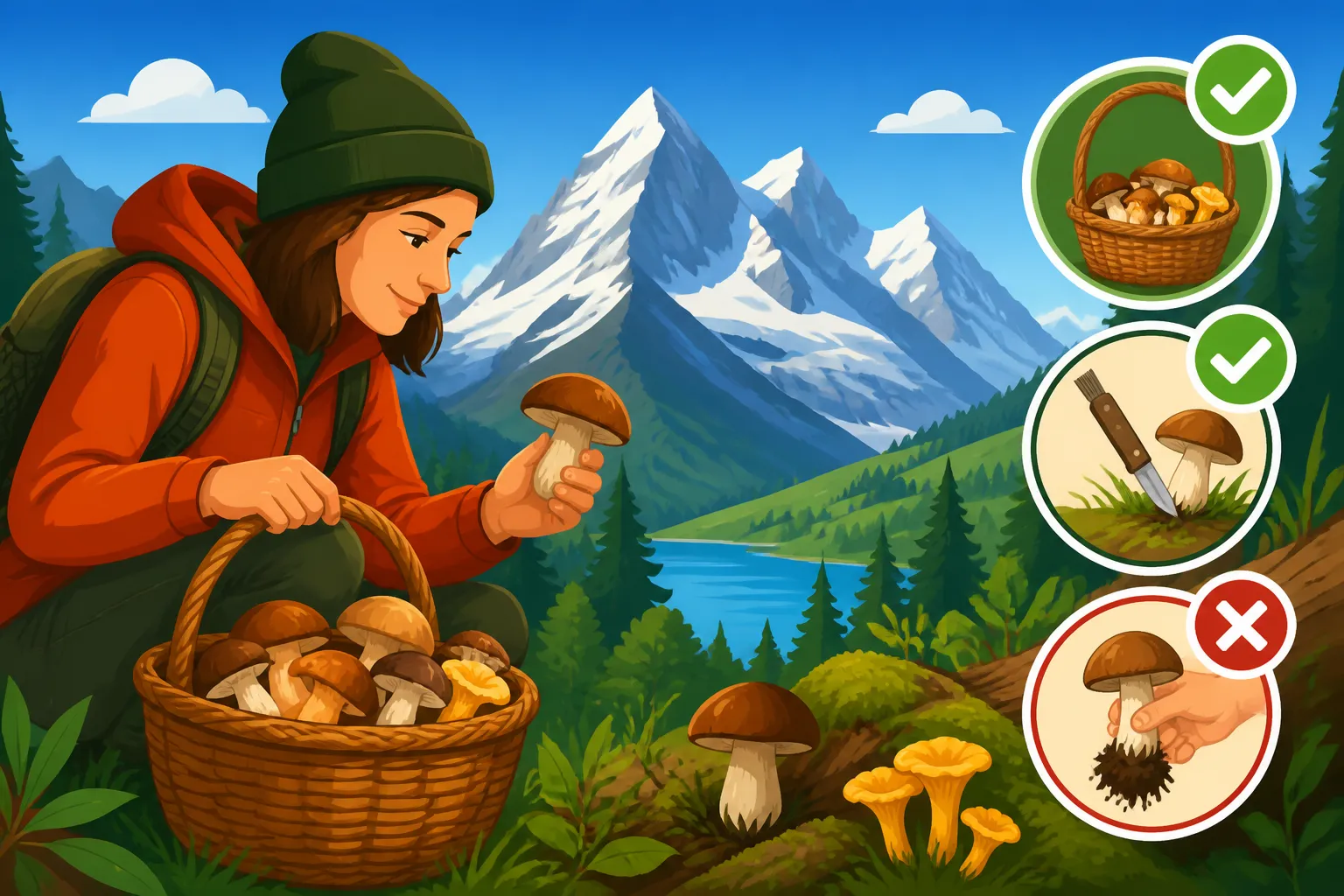
- Basket or cloth bag: Avoid plastic bags, which can make mushrooms sweat and degrade quickly. A woven basket allows for air circulation, keeping your finds fresh and allowing spores to drop back into the forest, aiding reproduction.
- Small knife and brush: For carefully cutting mushrooms at the stem base and gently cleaning off dirt, leaving as much of the mycelium (the underground fungal network) intact as possible.
- Map/GPS: Even familiar forests can be disorienting. A physical map or a reliable GPS app (like SwitzerlandMobility) is essential, especially if you're venturing off the beaten path. Always check the local Weather and Geography: Föhn Winds, Winter Readiness, and Alpine Living conditions before heading out, as mountain weather can change rapidly.
- Identification guide: Keep it handy for on-the-spot verification.
Beyond gear, adopting good foraging etiquette is key to being a welcome guest in the Swiss outdoors:
- Leave no trace: Pack out everything you pack in. Even natural items like apple cores can take a long time to decompose and are not always appropriate.
- Don't uproot: When picking herbs or berries, never pull up the entire plant. Take only what you need, allowing the plant to recover and produce again. For mushrooms, cut the stem cleanly rather than pulling the whole thing out.
- Be quiet and respectful: The Swiss forests are home to diverse wildlife. Move quietly, don't play loud music, and avoid disturbing animals.
- Stick to paths: Unless you're specifically mushroom hunting in designated areas, try to stay on marked trails to minimize impact.
If you're unsure about where to start or prefer a guided experience, platforms like GetYourGuide sometimes list local foraging tours or workshops. These can be a fantastic way to learn from experts and discover prime spots without the worry of regulations or misidentification. For longer trips to prime foraging cantons, you might want to look into accommodation options on Booking.com to make a weekend of it, and Omio can help you plan your train journeys to these more remote areas. Ultimately, integrating into the Community and Integration: Making Friends and Adapting to Swiss Life often means embracing these local customs and respecting the rules that preserve Switzerland's incredible natural beauty.
Happy (and safe) foraging!
Disclaimer
The information provided in this guide is for general informational purposes only and does not constitute legal advice. While we strive to provide accurate and up-to-date information, rules and regulations for foraging and mushroom picking in Switzerland can vary significantly by canton and even commune, and are subject to change. It is your sole responsibility to research and comply with all current local, cantonal, and federal laws and regulations before engaging in any foraging activity. Never consume wild mushrooms or plants without absolute certainty of their identification by a certified expert, such as an official Swiss mushroom control center (Pilzkontrolle/Contrôle des champignons). The author and publisher assume no liability for any errors or omissions, or for any adverse consequences resulting from the use of this information, including personal injury, illness, or legal penalties.