How to Pay Medical Bills: Tiers Garant vs. Tiers Payant Billing Systems
Navigating the Swiss healthcare system often feels like learning a secret language, especially when you are standing at a pharmacy counter or opening a thick envelope from a specialist. I still remember staring at my first blue QR-bill in Zurich, wondering why my insurance hadn't paid it and if I was about to be deported for a missed payment. This guide clarifies the Tiers Garant and Tiers Payant systems so you can manage your medical expenses without the stress.
Understanding the Swiss Medical Billing Landscape
The Swiss healthcare system is a masterpiece of efficiency, but for the newly arrived expat, the administrative side can feel like a labyrinth. Unlike many systems where you either pay nothing at the point of service or pay everything upfront for a private claim, Switzerland operates on two distinct billing tracks. These tracks determine who pays whom, and when. The system is governed by the Understanding KVG/LAMal: Mandatory Basic Health Insurance Explained framework, which ensures that regardless of the billing method, your essential care is covered once your personal cost-sharing limits are met.
Why the System Feels Counterintuitive
If you come from a country with a National Health Service, the idea of receiving a bill in the mail for a routine check-up feels like a mistake. In Switzerland, doctors are essentially independent contractors or part of private groups, even if they are treating you under the mandatory basic insurance umbrella. They need to get paid, and the "Tiers" system determines if they ask you for the money or if they go straight to your insurance provider. It is not uncommon to walk out of a consultation without having touched your wallet, only to receive a bill two weeks later that looks like a complex mathematical proof.
This decentralized approach is designed to keep patients aware of the costs of their care. The Swiss authorities believe that if you see the bill, you are more likely to question unnecessary treatments or notice errors. While this adds an administrative burden to your Sunday afternoon, it is a core pillar of how Switzerland manages its healthcare costs. If you are using a provider like Cigna Global for supplemental or international coverage, you might find their processes slightly different, often leaning toward a more global reimbursement model that bypasses some of the local cantonal quirks.
The Role of Your Health Insurance Card
That small plastic card in your wallet, often called the VeKa or Carte d'assuré, is your golden ticket. It contains your administrative data, your insurance number, and a chip that pharmacies and hospitals use to see which "Tiers" system your specific insurance plan utilizes. Whenever you visit a new doctor or a specialist, the first thing the receptionist will ask for is this card. In many cases, the card serves as a guarantee of payment, allowing the provider to decide which billing system to initiate based on their agreement with your insurer.
However, simply having the card does not mean you won't get a bill. Your insurance model—whether it is Telmed, HMO, or a standard plan—can influence how bills are routed. Even if you have the best insurance, if you haven't yet reached your annual deductible, the billing system is essentially just determining who handles the paperwork before the money eventually comes out of your pocket. For those managing chronic conditions and ordering supplements or wellness products from iHerb, keeping these receipts separate from your mandatory insurance claims is vital for your own bookkeeping.
Tiers Garant: The Pay-First-Claim-Later Model
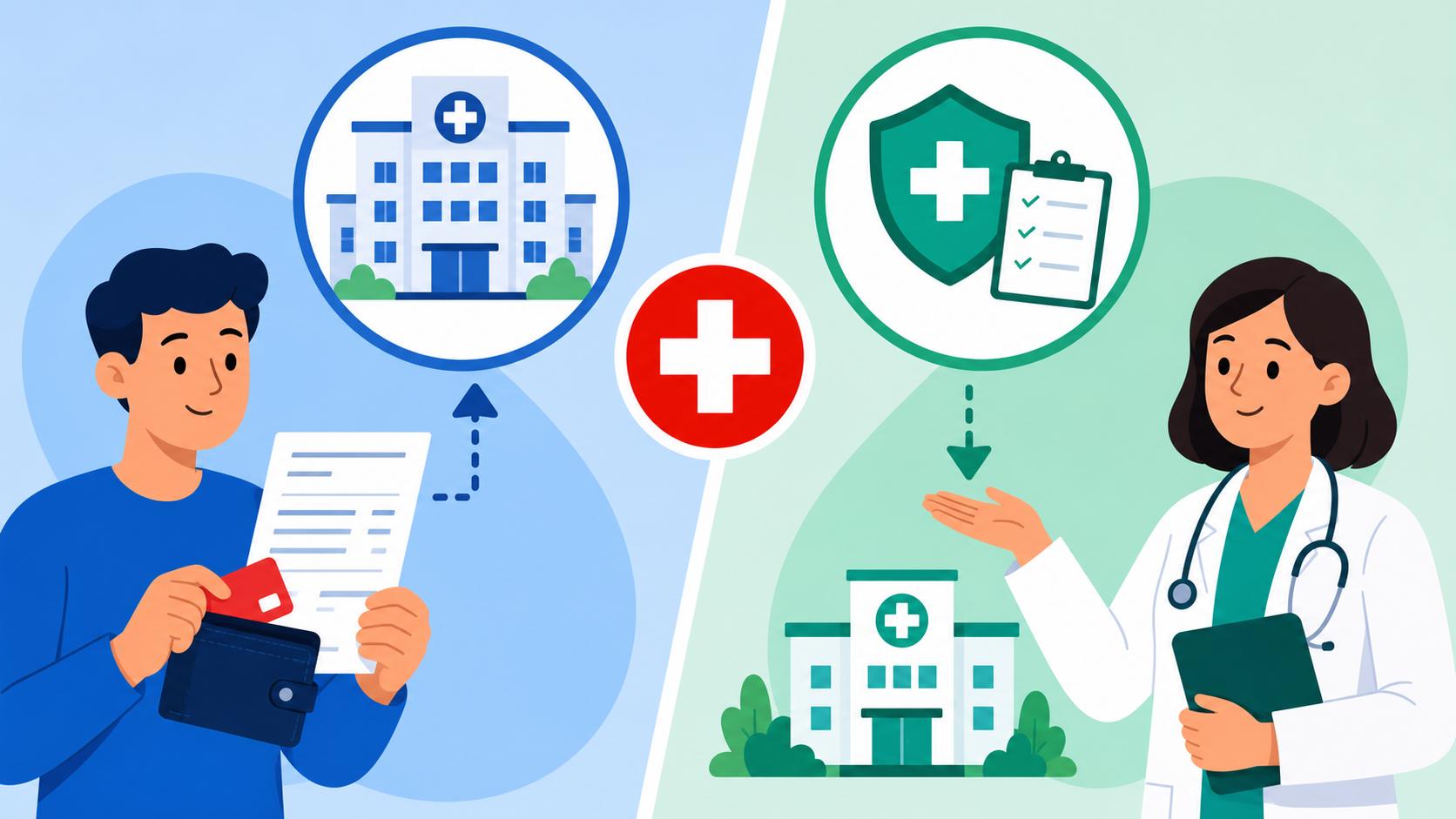
Tiers Garant is the most common system for outpatient care, such as visits to your family doctor (Hausarzt) or a local therapist. In this model, the "third party" (the insurer) is "guaranteed" that the bill will be settled by you first. You are the primary debtor in the eyes of the doctor. You receive the care, the doctor sends you the bill, you pay the doctor, and then you ask your insurance company to pay you back. It sounds tedious, and in the beginning, it absolutely is.
How Tiers Garant Works in Practice
After your appointment, you won't pay at the reception desk. Instead, a few days or weeks later, you will receive a bill in the mail. This bill usually comes with a "Rückforderungsbeleg" (reimbursement voucher). You are expected to pay the full amount to the doctor's office within the timeframe specified, usually 30 days. Once you have paid, you must send that reimbursement voucher to your insurance company. This can be done via post or, increasingly, through your insurer's mobile app.
The insurance company then reviews the bill against your current status. They look at The Swiss Franchise System: How Deductibles and Copays Work to see if you have already met your deductible for the year. If you have, they will reimburse you the amount minus your 10% copay. If you haven't met your deductible, they will simply log the amount against your total and send you a statement showing how much of your "Franchise" is left. I highly recommend paying these bills immediately. Swiss providers are quick to send "Mahnungen" (reminders), which can come with hefty late fees and eventually affect your credit score.
Pros and Cons of Paying Upfront
The biggest advantage of Tiers Garant is the total transparency. You see exactly what the doctor is charging for. You see the Tarmed points (the Swiss billing units for medical services) and can spot if you were charged for a 20-minute consultation when you were only in the room for five. It also gives you more flexibility in choosing providers, as almost every doctor in Switzerland accepts Tiers Garant.
The downside, of course, is cash flow. If you have a high deductible (like CHF 2,500) and you have a series of expensive tests in January, you could be out of thousands of francs while waiting for the administrative wheels to turn. This is why many expats choose to supplement their local coverage with international plans from Cigna Global, which can sometimes provide a buffer or alternative payment routes for major procedures. For smaller health needs, like vitamins or OTC skincare from iHerb, the costs are usually low enough that they don't impact this cash flow, but they also won't count toward your Swiss deductible.
Managing Cash Flow and Personal Health Expenses
When you are living in a high-cost city like Zurich or Geneva, a sudden CHF 800 medical bill can sting. Smart expats treat their "Franchise" like a dedicated savings account. If you choose the CHF 2,500 deductible to save on monthly premiums, you should ideally have that CHF 2,500 sitting in a liquid account ready to cover these Tiers Garant bills. It is a mental shift: the money isn't gone; it's just your "self-insurance" fund.
Furthermore, remember that not everything sent to your insurer will be reimbursed. If you are buying premium health products from iHerb, these are personal expenses. Only medications prescribed by a doctor and listed on the "Specialties List" (Spezialitätenliste) will be covered under the Tiers Garant system. Always check with your pharmacist if a medication is covered before you assume you'll get that 90% reimbursement back.
Tiers Payant: Direct Billing Simplified
Tiers Payant is the "dream" system for most expats because it removes the middleman—you. In this model, the healthcare provider sends the bill directly to the insurance company. The insurance company pays the doctor or pharmacy directly, and then they send you a separate invoice for any part you owe (your deductible or copay). This is the standard for hospital stays and is very common in pharmacies across the country.
The Seamless Experience of Direct Settlement
Imagine walking into a pharmacy in Basel with a prescription. You hand over your card, the pharmacist scans it, and you walk out with your medication without ever opening your wallet. This is Tiers Payant in action. The pharmacy knows that your insurer, say CSS or Helsana, has an agreement to pay them directly. A few weeks later, you’ll get a "Leistungsabrechnung" (statement of benefits) from your insurer. If you haven't met your deductible, the insurer will ask you to pay them back for the medication they just bought for you.
This system is much easier to manage because you only deal with one entity for payments: your insurance company. You don't have to keep track of a dozen different doctor's bills and check if you've been reimbursed for each one. To learn more about which medications fall into this category, you can read about Pharmacies and Medication: Prescriptions, Costs, and OTC Regulations to understand the nuances of Swiss drug pricing and coverage.
Which Insurers and Providers Prefer Tiers Payant?
While pharmacies and hospitals almost always use Tiers Payant, many independent doctors avoid it because of the administrative overhead of dealing with dozens of different insurance companies. However, some "managed care" insurance models, such as certain HMO plans, require you to go to centers that use Tiers Payant. This is a significant factor when Comparing Health Insurance Models: Telmed, HMO, Family Doctor, and Standard during the open enrollment period in November.
Interestingly, international insurers like Cigna Global often have direct-settlement networks with major Swiss hospitals, effectively acting like a Tiers Payant system for their members. This can be a lifesaver during an emergency or a planned surgery where the costs can quickly escalate into the tens of thousands of francs. Always ask your provider "Bieten Sie Tiers Payant an?" (Do you offer direct billing?) if you want to avoid the upfront payment.
When Tiers Payant Isn't Actually Fully Covered
A common trap for newcomers is thinking that Tiers Payant means "free." It absolutely does not. Even if the insurance pays the bill directly, you are still responsible for your share of the costs. This is often where confusion arises. You might receive a bill from your insurance company three months after a pharmacy visit, asking for CHF 40. This is likely your 10% copay or the remainder of your deductible.
If you are using a Tiers Payant system, it is even more important to keep an eye on your Out-of-Pocket Maximums: Calculating Your True Annual Healthcare Costs. Once you reach your deductible and your additional CHF 700 copay limit, the Tiers Payant system truly becomes "free" for the rest of the calendar year for covered basic services. Until then, you are just delaying the payment rather than avoiding it.
| Feature | Tiers Garant | Tiers Payant |
|---|---|---|
| Who receives the bill? | You (the patient) | The Insurance Company |
| Who pays the provider? | You (within 30 days) | The Insurance Company |
| How do you get your money? | You claim reimbursement from insurer | N/A (Insurer bills you for your share) |
| Common Use Cases | General Practitioners, Therapists | Pharmacies, Hospitals, Lab work |
| Primary Advantage | Transparency and provider choice | Better cash flow and less admin |
| Primary Disadvantage | Upfront cash requirement | Harder to spot billing errors initially |
Decoding the Medical Bill (Rückforderungsbeleg)
Swiss medical bills are dense. They are not just a total amount; they are a breakdown of every minute the doctor spent on your case. This includes "Leistung in Abwesenheit," which refers to the time the doctor spent reviewing your file or writing a prescription when you weren't even in the room. Understanding this document is essential for both Tiers Garant and Tiers Payant users.
Anatomy of a Swiss Medical Bill
At the top, you’ll see the diagnosis code (usually blurred or coded for privacy) and the Tarmed positions. Tarmed is the tariff system used for outpatient medical services in Switzerland. Each service—like a physical exam or a blood pressure check—is assigned a certain number of points. These points are then multiplied by a "Taxpunktwert" (tax point value) which varies slightly by canton. This is why a doctor's visit in Geneva might cost more than the exact same visit in Appenzell.
The most important part for you is the "Rückforderungsbeleg." If you are under Tiers Garant, this is the part you scan and send to your insurer. It contains the "VeKa" number and the "ZSR" number (the doctor’s unique ID). For a deeper dive into these codes, check out How to Read a Swiss Medical Bill (Rückforderungsbeleg) and Claim Refunds. Understanding these details can help you identify if you've been double-billed or if a lab test was mistakenly added to your invoice.
Understanding Tarmed and Lab Costs
Laboratory costs are often billed separately from the doctor's consultation. Even if you see a doctor who uses Tiers Garant, the blood work they send to an external lab might be billed via Tiers Payant. This results in you receiving one bill from the doctor (to be paid by you) and another statement from your insurance (for the lab work they paid on your behalf). It can be dizzying, but it is standard practice.
When you see a Tarmed position like "Konsultation, erste 5 Min.," it means the first five minutes of the meeting. The doctor then bills in 5-minute increments. This is why being prepared for your appointment is so important—it literally saves you money. For those who prioritize high-quality supplements and prefer to source their own health aids from iHerb, you can sometimes avoid some of these high lab costs for routine nutritional monitoring if you work with a doctor who is open to "biohacking" or alternative testing methods.
Navigating the Franchise and Copay Reality
Regardless of which billing system you use, the "cost" to you remains the same based on your insurance contract. The Swiss system is built on a "user pays" principle up to a certain threshold. This threshold is composed of your chosen "Franchise" (deductible) and the "Selbstbehalt" (copay).
How Your Deductible Influences Billing
Your deductible can range from CHF 300 to CHF 2,500. If you have a CHF 2,500 deductible, you will be paying every single Tiers Garant bill and every Tiers Payant invoice from your insurer until you have spent that first CHF 2,500. Only then does the insurance start covering 90% of the costs. This is explained thoroughly in our guide on The Swiss Franchise System: How Deductibles and Copays Work.
I often see expats get frustrated because they think their insurance "isn't working." In reality, the insurance is working in the background, tracking your spending. Whether you pay the doctor (Tiers Garant) or you pay the insurance company back (Tiers Payant), you are essentially in the "deductible phase" until that magic number is reached. If you have international coverage through Cigna Global, you may have a different deductible structure, so it is always worth comparing which insurance to use for specific treatments.
The 10 Percent Copay Rule
Once your deductible is met, you still pay 10% of every bill. However, there is a cap. For adults, this cap is CHF 700 per year. Once you have paid your deductible PLUS CHF 700 in copays, the insurance pays 100% of everything else. This is the "peace of mind" ceiling. If you have a major accident or a chronic illness, your maximum financial exposure is your Franchise + CHF 700.
This is why Tiers Payant: Which Swiss Insurances Pay the Pharmacy Directly? is such a useful resource. If you are in the 10% copay phase, Tiers Payant is much more convenient because the insurer calculates that 10% for you and just sends you a small bill for the difference, rather than you having to pay 100% and wait for a 90% refund.
Practical Tips for Managing Your Healthcare Admin
Living in Switzerland requires a bit of "admin stamina." After a few years here, I've learned that the more you automate, the less you'll hate the "blue bills." The goal is to spend less time at your kitchen table with a calculator and more time enjoying the mountains.
Using Digital Apps for Faster Reimbursement
Almost every major Swiss insurer (Sanitas, Helsana, Groupe Mutuel, etc.) now has an app. Use it. Instead of mailing your Rückforderungsbeleg, you simply take a photo of it. In my experience, reimbursement via the app takes about 3 to 7 business days, whereas the paper route can take weeks. This significantly mitigates the cash flow issues of the Tiers Garant system.
If you are using international plans like Cigna Global, they also have highly sophisticated portals. Since they deal with multiple currencies and systems, their digital tools are often even more robust than local Swiss ones. Combining a local KVG plan with a high-end digital-first international plan can give you the best of both worlds: local compliance and global administrative ease.
Handling Disputes and Billing Errors
Don't be afraid to question a bill. Swiss doctors are human and their billing departments can make mistakes. If you see a charge for a "telephonic consultation" that never happened, call the doctor's office. Usually, it’s a simple coding error that they will fix immediately. If they refuse to budge and you feel the charge is truly wrong, you can contact the "Ombudsman of Health Insurance" for your region.
Also, be mindful of the "30-day" rule. If you are traveling or moving house, ensure your mail is forwarded. A missed medical bill can lead to a "Betreibung" (debt enforcement), which is a massive headache when you try to renew your permit or rent a new apartment. If you’re buying health-related items from iHerb, keep those invoices too—while they won’t help with your insurance, they are great for tracking your total health spending for your own personal budget.
Disclaimer
This guide is for informational purposes only and does not constitute legal or financial advice. Swiss health insurance laws and billing practices are subject to change, and specific cantonal regulations may apply. Always consult your insurance policy documents or a qualified insurance advisor for advice tailored to your personal situation.