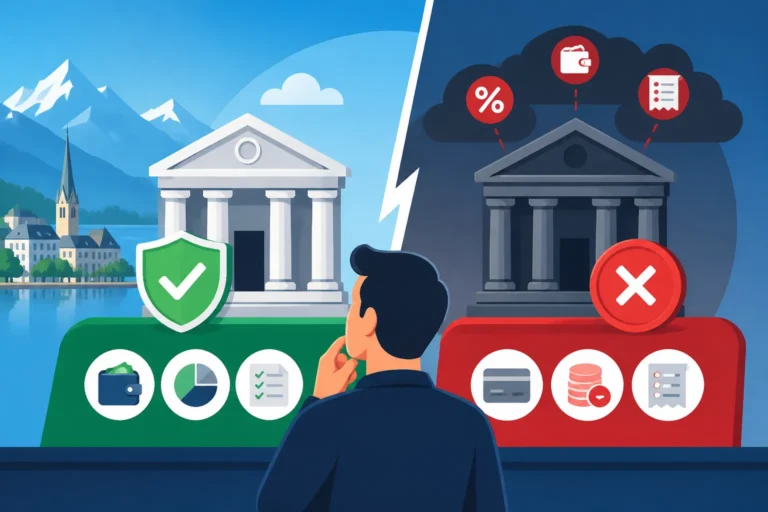
Clearing an Unjustified Betreibung from the Swiss Debt Register
Finding out that a random company has initiated a debt collection procedure against you is a rite of passage no expat wants, yet many of us endure. I remember the pit in my stomach when a landlord rejected my application because of a rogue 150-franc entry from a gym I’d quit months prior. This guide explains how to fight back and clear an unjustified Betreibung.
The Shock of the Betreibung: Why the Swiss System Feels Unfair
The first time you see a "Zahlungsbefehl" (order to pay) in your mailbox, it feels like a legal summons that implies you have done something wrong. In many countries, a debt collection entry only happens after a court has proven you owe money. Switzerland operates on a "guilty until you object" basis. This means that literally anyone can go to the local Betreibungsamt (Debt Collection Office), pay a small fee, and trigger an entry against you without providing a single shred of evidence that the debt is real.
I have seen expats get hit with these entries over disputed apartment cleaning fees, "missing" library books that were actually returned, or medical bills that were already covered by insurance. The administrative burden is shifted entirely onto you, the resident. If you don't act immediately, that entry sits on your record for five years, making it nearly impossible to rent a new home or get a competitive interest rate on a loan. Understanding this "no-evidence-required" start is crucial because it validates your frustration—it is an inherently stressful system designed for administrative efficiency, not necessarily for your peace of mind.
The stakes are higher than just a piece of paper. Most landlords in major cities like Zurich or Geneva won't even look at your dossier if your extract isn't "blank." Even if the entry is for a tiny amount, it signals "financial instability" to a risk-averse Swiss clerk. This is why Checking Your Debt Register Extract (Betreibungsauszug) for Loans should be a regular habit, especially before you start a house hunt. You do not want to discover a mistake while you are standing in a queue for a viewing with fifty other people.
Step One: The Immediate Action – Filing a Rechtsvorschlag
The moment the postman hands you that official-looking document—often a yellow or blue form—the clock starts ticking. You have exactly 10 days from the moment of receipt to file a "Rechtsvorschlag" (legal objection). This is your most powerful tool. By filing this objection, you effectively say to the authorities: "I do not recognize this debt." This action immediately halts the collection process. The creditor cannot seize your assets or garnish your wages until they go to court to "lift" your objection.
Filing a Rechtsvorschlag is surprisingly simple, but many expats miss the window because they are busy Translating Medical Records from English to German/French for Your Hausarzt or simply trying to figure out what the document means. You can usually do it on the spot when the document is served, or you can go to the Betreibungsamt in person within those ten days. You don't need a lawyer at this stage; you just need to sign the section that says "Rechtsvorschlag erhoben."
If you miss this 10-day window, the debt is legally deemed "accepted" in the eyes of the enforcement office. At that point, the creditor can move to the next stage, which involves seizing assets. I cannot stress this enough: even if you know for a fact the bill is fake, a scam, or a mistake, you must file the objection. It’s the difference between a controlled legal dispute and a financial disaster. This is one of those Financial Checklist for Your First 30 Days as an Expat in Switzerland items that people rarely tell you about until it's too late.
The Lingering Stain: Why an Objection Isn't Enough
Here is the catch that catches most foreigners off guard: even if you file a Rechtsvorschlag and the creditor never takes you to court, the entry still appears on your Betreibungsauszug. It will show the name of the company, the amount they claimed, and a note saying "Rechtsvorschlag erhoben." While this tells a savvy reader that you disputed the debt, many automated background checks and conservative landlords simply see the entry and stop reading. In the Swiss housing market, "clean" means "empty," not "contested."
This creates a "legal ransom" situation. Some unscrupulous companies know that expats are desperate for clean records to secure housing. They might initiate an unjustified Betreibung, wait for you to object, and then do nothing. They know that eventually, you will want that entry gone and might pay the "debt" just to make the administrative headache disappear. This is a common tactic in disputes over Nebenkosten (Ancillary Costs): Heating, Water, and Annual Adjustments where a landlord might try to squeeze an extra few hundred francs out of a departing tenant.
To truly clear your name, you have to go beyond the objection. You need to get that entry physically removed or hidden from third parties who request your extract. This is a multi-step process that requires patience and a very specific paper trail. It is significantly more complex than How to Read a Swiss Medical Bill (Rückforderungsbeleg) and Claim Refunds, as it involves the SchKG (the Swiss Federal Act on Debt Collection and Bankruptcy).
Path A: Negotiating a Withdrawal (The "Peaceful" Route)
The fastest and cheapest way to clear an entry is to get the creditor to withdraw it. If the entry was a genuine mistake—for example, a telecom company forgot they processed your cancellation—contact their billing department immediately. Once you prove the debt is invalid (keep your emails, receipts, and cancellation confirmations!), ask them to send a "Rückzug der Betreibung" (withdrawal of the debt collection) to the relevant Betreibungsamt.
Do not just take their word for it over the phone. I once had a gym manager tell me "no problem, we'll fix it," only for the entry to remain on my record for six months because the paperwork got lost in their internal accounting. You should demand a copy of the withdrawal letter they sent to the office. Some creditors will try to charge you a "processing fee" for this withdrawal. While annoying, paying a 50-franc fee to clear a 500-franc unjustified entry is often the pragmatic choice if you are in the middle of a house hunt.
If you are dealing with a larger dispute, such as a disagreement with a landlord, you might want to involve The ASLOCA / Mieterverband: Why Every Swiss Tenant Must Join. They are experts at handling these types of predatory "ransom" Betreibungen and can often draft a letter that scares a landlord into withdrawing the claim. If you use a modern financial service like Wise to manage your Swiss and international payments, ensure you have the digital receipts ready as proof of payment; these are often the "smoking gun" that forces a creditor to back down.
Path B: The 3-Month Rule (Article 8a SchKG)
If the creditor is stubborn or simply unresponsive, you have a legal pathway called the "Request for Non-Disclosure" under Article 8a of the SchKG. This was a massive win for consumer rights in Switzerland a few years ago. Essentially, if you have filed a Rechtsvorschlag and three months have passed, you can petition the Betreibungsamt to hide the entry from third parties.
To succeed with an Article 8a request, the following must be true:
- You filed a Rechtsvorschlag within the 10-day limit.
- At least three months have passed since the entry was made.
- The creditor has not initiated a court proceeding (Rechtsöffnung) to prove the debt.
You will have to pay a small administrative fee (usually around 40 CHF) to the Betreibungsamt to file this petition. The office will then give the creditor 20 days to prove they have actually started legal action against you. If the creditor fails to provide that proof, the entry will be hidden from anyone who requests your extract (like a potential landlord or a bank). It’s not technically "deleted" from the internal database, but for all practical purposes, your extract will appear clean to the outside world.
Path C: Taking the Case to Court (Art. 85a)
In rare cases where a creditor is actively pursuing an unjustified debt and refuses to back down, you might have to go on the offensive. Under Article 85a of the SchKG, you can sue the creditor to prove the debt does not exist. This is the "nuclear option." It is expensive, time-consuming, and definitely requires professional legal help. I usually recommend this only if the amount is significant (several thousand francs) or if the entry is preventing you from something massive, like a mortgage approval.
Before going down this route, check if you have Do I Need Legal Expenses Insurance (Rechtsschutzversicherung) in Switzerland?. This insurance is a lifesaver in these scenarios, as it covers the court fees and lawyer costs that would otherwise make fighting an unjustified Betreibung a losing financial battle. If the court rules in your favor, they will order the Betreibungsamt to delete the entry entirely.
While waiting for these legal processes, it’s a good idea to keep your other financial affairs in perfect order. Platforms like Trade Republic can help you keep your savings structured, and if you are dealing with international wealth declarations, ensure your Binance or other crypto holdings are properly declared to avoid tax-related Betreibungen from the cantonal authorities.
Comparison of Removal Methods
| Method | Best For | Cost | Timeframe | Result |
|---|---|---|---|---|
| Creditor Withdrawal | Clear mistakes / paid debts | 0 – 100 CHF | 1-2 Weeks | Entry is fully removed from extract |
| Art. 8a Petition | Unresponsive or "ghosting" creditors | ~40 CHF | 3 Months + 20 Days | Entry is hidden from third parties |
| Art. 85a Lawsuit | High-value disputes / active harassment | High (Legal Fees) | 6-12 Months | Entry is deleted by court order |
| Payment (under protest) | Urgent housing applications | The "debt" amount | Immediate | Entry stays but shows as "paid" |
The "Payment Under Protest" Trap
One of the most frustrating scenarios I’ve seen is an expat who finds an unjustified Betreibung just days before they need to submit an apartment application. In desperation, they pay the debt just to get it over with. Warning: This does not clear your record. If you simply pay the debt, the entry on your extract will change from "Open" to "Paid" (Bezahlt). To a Swiss landlord, this still looks like you were a bad payer who only coughed up the money after the authorities got involved.
If you must pay to stop the pressure, you should only do so if the creditor signs a written agreement beforehand promising to withdraw the entry immediately upon receipt of funds. This is a common point of confusion. A "Paid" entry is almost as damaging as an "Open" entry in the eyes of the Zurich or Geneva rental market. Always prioritize the "Rückzug" (withdrawal) over the "Zahlung" (payment).
If you are using modern tools like Wise or specialized Swiss banking apps to settle these disputes, keep the transaction IDs and descriptions very clear. Use the reference numbers provided on the original Zahlungsbefehl to ensure there is no ambiguity about which entry you are settling.
Proactive Defense: Staying Off the Radar
The best way to deal with an unjustified Betreibung is to never get one in the first place. This sounds obvious, but the Swiss system is pedantic. If you move apartments, you must ensure your mail is forwarded via the Swiss Post. A single "lost" final utility bill is the number one cause of Betreibungen for expats. I’ve seen people get an entry for a 20-franc final bill they never received because they forgot to set up forwarding.
Another tip: always keep a "dispute folder." If you cancel a contract with a Swiss telecom or a gym, keep the confirmation letter for at least five years. If you have a disagreement over a medical bill, don't just ignore it. Write a formal letter (registered mail / Einschreiben) explaining why you aren't paying. This creates a paper trail that proves you are a responsible "debtor" in case the company tries to initiate a collection procedure.
Managing your cash flow with tools like Trade Republic and being diligent about your What is a Betreibung? How an Unpaid Bill Ruins Your Swiss Credit Score status will save you thousands of francs and hours of stress. Being an expat in Switzerland means playing by a very specific set of rules. Once you master the "Rechtsvorschlag" and the Article 8a petition, the system becomes much less intimidating. You aren't powerless; you just have to be as organized as the Swiss authorities themselves.
Disclaimer
This article is for informational purposes only and does not constitute legal or financial advice. Swiss debt collection laws (SchKG) are complex and subject to change. Always consult with a qualified legal professional or the local Betreibungsamt regarding your specific situation. The author and publisher are not responsible for any actions taken based on this content.