Child Benefit Payments (Kinderzulage) and Their Tax Implications
Trying to balance a family budget in Switzerland often feels like performing surgery with a blunt instrument. I vividly remember my first month in Zurich, staring at a 15-franc pack of diapers and wondering if I’d need a second mortgage just to keep the nursery stocked. This guide solves the confusion surrounding Swiss child benefits and their specific tax consequences.
Understanding the Foundation of Familienzulagen
The Swiss social security system operates on the principle that the cost of raising children should be partially offset by the state and employers. This is known as Familienzulagen (Family Allowances). While it might look like a simple "extra" on your monthly statement, it is a highly regulated pillar of the Cost of Living in Switzerland 2026: Budgeting for Singles and Families. For many of us arriving from countries where child benefits are flat-rate or means-tested, the Swiss approach can be a bit of a culture shock.
In Switzerland, child benefits are not a one-size-fits-all welfare check. They are tied directly to your employment and are intended to bridge the gap in purchasing power between employees with children and those without. This is why you see it appearing on your monthly pay slip. When you are Understanding Swiss Payslips: Deductions for AHV, ALV, and NBU, you will notice that while your employer deducts money for various insurances, they also add the child benefit amount to your gross total.
Who is Eligible for the Payment
Eligibility is generally broad but strictly defined by your status in the country. If you are an employee working in Switzerland and earning at least CHF 7,350 per year (as of 2026), you are entitled to these benefits. This applies whether you are on a B permit or a C permit. Even self-employed individuals and those not in gainful employment with limited means can apply, though the process differs slightly.
The catch for many expats is the "coordination of rights." If both parents work, only one can claim the benefit for a specific child. Usually, this is the parent with the higher income or the one who primarily resides with the child. If you are a single parent or part of a blended family, the administration might ask for proof of custody or residency. I’ve seen many newcomers get frustrated because both parents applied, leading to a "double-dip" error that required months of bureaucratic back-and-forth to resolve. It’s always best to decide which parent will be the primary claimant before submitting paperwork to HR.
Benefit Types and Age Limits
There are two primary stages of family allowances that you need to be aware of:
- Kinderzulage (Child Allowance): Paid from the month of birth until the child reaches age 16. If the child is unable to work due to health reasons, this can be extended to age 20.
- Ausbildungszulage (Education Allowance): Paid from age 16 until the child finishes their education, up to a maximum age of 25. The amount for the education allowance is significantly higher than the standard child benefit to account for the rising costs of university and vocational training.
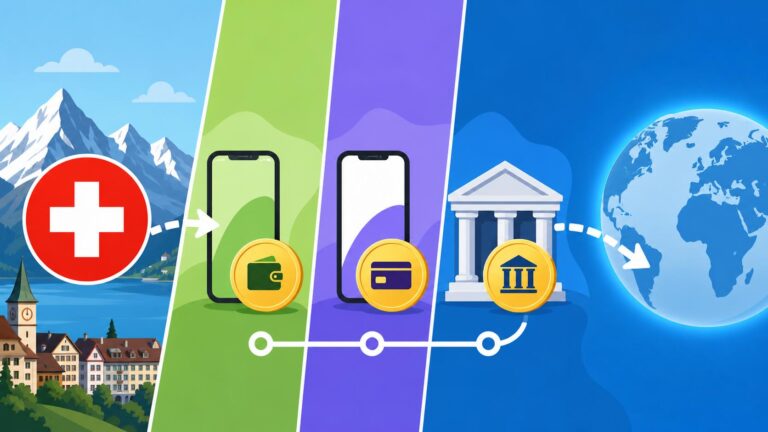
For families navigating Maternity and Child Healthcare in Switzerland: From Pregnancy to Pediatrics, knowing these timelines helps in long-term financial planning. It is also important to note that if your child lives abroad (for example, in an EU/EFTA country while you work here), you may still be entitled to these benefits, though the amount might be adjusted based on the cost of living in that country. In such cases, using a service like Wise to send these funds back home can help you avoid the steep currency conversion fees typical of traditional Swiss banks.
The Financial Reality of Cantonal Differences
One of the most uniquely "Swiss" aspects of child benefits is that while the federal government sets a minimum floor, the cantons have the final say on the actual amount. As of 2026, the federal minimum is CHF 200 per month for the child allowance and CHF 250 for the education allowance. However, very few cantons stick to these minimums.
Comparing Cantonal Rates
If you live in Geneva or Vaud, you will likely receive more than a colleague doing the same job in Zurich or Zug. This is meant to reflect the variance in local living costs. For instance, Geneva often leads the pack with some of the highest family allowances in the country. This can make a massive difference in your monthly liquid cash flow.
| Canton | Child Allowance (per month) | Education Allowance (per month) |
|---|---|---|
| Zurich | CHF 200 | CHF 250 |
| Geneva | CHF 311 | CHF 415 |
| Vaud | CHF 300 | CHF 440 |
| Zug | CHF 200 | CHF 250 |
| Basel-Stadt | CHF 200 | CHF 250 |
These amounts are usually paid out per child. If you have three children in Geneva, you could be looking at an extra CHF 1,000+ hitting your account every month. However, don't start spending it all just yet—there is a tax bill lurking in the shadows.
The Impact of Large Families
Some cantons offer even higher rates starting with the third child. This is a pro-natalist policy designed to support larger households. For example, in some regions, the benefit for the third child might jump by CHF 50 or CHF 100 compared to the first two. When you are Opening a Swiss Bank Account: UBS, ZKB, PostFinance, and Neobanks, it might be worth setting up a separate sub-account specifically for these benefits so you can track them easily and set aside a portion for the eventual tax hit.
The Hidden Trap: Why Kinderzulage is Taxable Income
This is where most expats get tripped up. In many countries, child benefits are "net" payments—what the government sends is yours to keep. In Switzerland, child benefits are considered part of your gross taxable income. They are not tax-free gifts.
How it Affects Your Bracket
Because the allowance is added to your salary, it increases your total annual taxable income. If you are right on the edge of a higher tax bracket, the child benefit could technically push you over, resulting in a higher percentage of tax on your entire income. This is especially relevant for those Filing a Swiss Tax Return (C Permit or High Earners on B Permit). If you are taxed at source (Quellensteuer), your employer will automatically calculate the tax on the higher amount, but if you file a full return, you must ensure these figures are accurately reported.
I remember my second year in Switzerland, being shocked that I owed several hundred francs more in tax than I had projected. It turned out I hadn't accounted for the fact that my CHF 4,800 in annual child benefits was being taxed at my marginal rate. It is a classic "Swiss surprise" that requires careful budgeting.
Deductions to Offset the Tax
The good news is that the Swiss tax system also provides for "Child Deductions" (Kinderabzug). While the benefit itself is taxable, you are simultaneously allowed to deduct a certain amount from your taxable income for each child you support. In many cases, the deduction is larger than the benefit, which results in a net tax saving. However, these deductions also vary by canton.
When you are looking at Tax Allowances and Deductions: Commuting, Meals, and Childcare, you should prioritize maximizing these offsets. You can often deduct costs for childcare (Krippe/Hort), medical expenses, and even certain educational costs. By balancing the taxable benefit against these deductions, you can significantly lower your overall liability.
Navigating the Application Bureaucracy
You do not receive child benefits automatically. You have to work for them. For most of us, this means dealing with the HR department and the cantonal Ausgleichskasse (Compensation Office).
The Documentation Hurdle
The paperwork required can be extensive, especially if your children were born outside of Switzerland. You will typically need:
- Original birth certificates (often with a certified translation if not in German, French, or Italian).
- Your residence permit and your spouse's permit.
- A "Certificate of Non-Payment" from your home country if you recently moved, to prove you aren't receiving double benefits.
- Proof of enrollment for children over 16.
This process can take anywhere from two to six months. The silver lining is that benefits are retroactive. If it takes five months to process your claim, you will receive a lump-sum payment for those five months once approved. This is a perfect time to look into a high-yield savings environment like Trade Republic to park that lump sum while you decide how to best use it for your child's future.
Coordination for Cross-Border Workers
If you are a "Frontalier" living in France or Germany but working in Switzerland, the rules get even more complex. Usually, the country of residence pays the child benefit first, and Switzerland pays a "top-up" difference if the Swiss rate is higher. This requires constant communication between the two countries' social security offices. It is a bureaucratic marathon, and I strongly recommend keeping digital copies of every single letter you receive from these authorities.
Strategies for Managing and Investing the Benefit
Since these payments are consistent and predictable, they offer a unique opportunity to build a nest egg for your children. Rather than letting the money disappear into the "black hole" of grocery bills and rent, many savvy expats treat the Kinderzulage as a dedicated investment fund.
Long-Term Savings and Education Funds
If you can afford to live on your base salary alone, consider automating a transfer of the child benefit amount directly into an investment account. Using a platform like Trade Republic allows you to set up automated savings plans into ETFs, which historically provide a much better return than a standard Swiss "Junior Sparkonto."
Over 18 years, a monthly benefit of CHF 250 invested with a 5% return could grow to nearly CHF 85,000. That’s a significant head start for a child entering the expensive Swiss university system or looking to move out of the family home. For those who are more tech-inclined, even small diversifications into assets through platforms like Binance can be a part of a broader, modern family wealth strategy, provided you understand the risks involved.
Integrating with the Three-Pillar System
Another strategy is to use the tax savings generated by child deductions to fund your Pillar 3a in 2026: Tax Deductions, Limits, and Investment Options. By reducing your taxable income through a 3a contribution, you effectively "shield" the extra income provided by the child benefit from the highest tax rates. It’s a way of using the state’s money to build your own private pension while simultaneously raising your family.
Final Practical Tips for Expats
Navigating the Swiss system is a lesson in patience and precision. If you are just starting out, don't be afraid to ask your HR department for help. They handle hundreds of these applications and usually have a streamlined process.
- Check your payslip every January: Cantonal rates often adjust at the start of the year. Ensure your employer has updated the amount.
- Notify HR of changes immediately: If your child moves out, finishes school early, or if you get a divorce, you must inform the compensation office. Failure to do so can lead to "unjustified enrichment" claims, where the state demands years of back-payments with interest.
- Keep an eye on the Franchise: While managing family costs, remember that your health insurance choices affect your bottom line. Check our guide on How to Choose the Right Deductible (Franchise) for Your First Year to ensure you aren't overpaying for medical coverage.
Raising a family in Switzerland is undeniably expensive, but the Kinderzulage is a vital tool that, when managed correctly, can provide a significant financial cushion. Just remember to save some of it for the taxman!
Disclaimer
This article is for informational purposes only and does not constitute legal, financial, or tax advice. Swiss laws and cantonal regulations regarding family benefits and taxation are subject to frequent change. Always consult with a qualified tax professional or your local cantonal compensation office (Ausgleichskasse) to confirm your specific eligibility and obligations.