Budgeting in Zurich and Geneva: Managing Expat Expenses in High-Cost Cities
Staring at a CHF 25 pizza in Zurich for the first time usually triggers a specific kind of existential dread for most newcomers. I remember sitting at a lakefront café during my first week, doing the mental currency conversion and realizing my "generous" salary was being eaten alive by basic subsistence. This guide solves the Swiss budgeting puzzle by breaking down exactly where your money goes in Zurich and Geneva and how to keep more of it.
The Housing Hurdle: Renting in Switzerland’s Most Expensive Markets
Finding a place to live in Zurich or Geneva is often described as a blood sport, and for good reason. With vacancy rates hovering near zero, you aren't just looking for an apartment; you are auditioning for one. In these cities, your rent will likely be your largest outgoing expense, and the standard advice is to ensure your gross monthly income is at least three times the cost of the rent. If you don't meet this threshold, most landlords won't even look at your application dossier.
Navigating the Rental Market and Upfront Costs
In Zurich, neighborhoods like Enge or Seefeld command premium prices, while in Geneva, Eaux-Vives and Pâquis are equally competitive. When you finally secure a lease, the "hidden" costs start to appear. Most landlords require a rental deposit of three months' rent, which can easily exceed CHF 8,000 for a modest two-bedroom flat. This is a massive liquidity hit for anyone just arriving. Many expats choose to use SwissCaution and Firstcaution: Using Deposit Insurance Instead of Cash to keep their savings accessible rather than locked in a low-interest bank account for years.
Beyond the base rent, you need to account for the "Nebenkosten" or ancillary costs. These cover communal expenses like hallway cleaning, snow removal, and water. However, heating is the big variable. Since many Swiss buildings use older oil or gas systems, you might receive a surprise bill at the end of the year if the winter was particularly harsh. It is vital to understand Receiving the Nebenkostenabrechnung: Why You Might Owe Extra Heating Costs so you can set aside a small monthly buffer for these adjustments.
The Essential Insurance Stack for Tenants
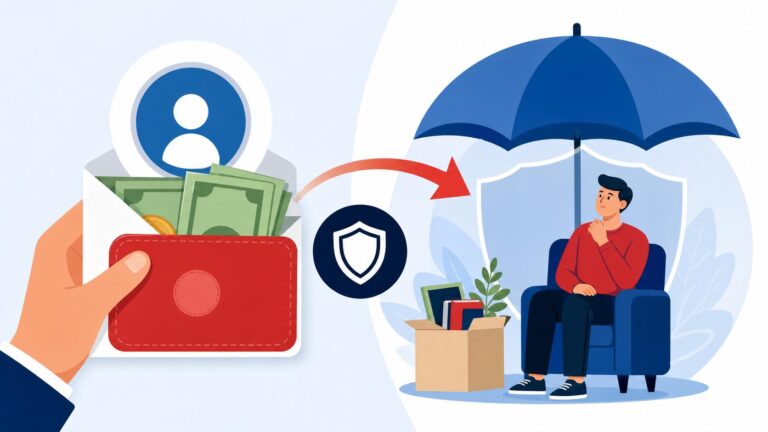
If you think you can skip insurance to save a few francs, think again. Most Swiss landlords will not hand over the keys unless you provide proof of private liability insurance. This covers "Grobvorgeschichte" or gross negligence, such as if you accidentally overflow the bathtub and damage the neighbor's ceiling. It is surprisingly affordable but absolutely mandatory in the eyes of the local culture. You can find more details on why this is a non-negotiable in our guide on Private Liability Insurance (Privathaftpflicht): Why Expats Need It.
Additionally, household contents insurance is highly recommended. While Zurich and Geneva are incredibly safe, "simple theft" outside the home—like having your bike stolen from the train station—is a common occurrence. Combining these insurances into a single package usually costs between CHF 200 and CHF 400 per year, which is a small price to pay for peace of mind in such a high-cost environment.
Mandatory Monthly Drains: Health Insurance and Fees
In Switzerland, the system is designed so that almost nothing is "free" or deducted at the source in a way that feels invisible. You are responsible for paying your own premiums and mandatory fees, which can feel like a secondary tax if you aren't prepared for the monthly outflow.
Decoding the Health Insurance Puzzle
Health insurance in Switzerland is mandatory for everyone living here for more than 90 days. Unlike many other European countries, it is not tied to your employer. You must choose a private provider and a "franchise" (deductible) level. If you are healthy and rarely see a doctor, choosing the highest franchise of CHF 2,500 will significantly lower your monthly premiums. However, if you have a chronic condition or children, the lowest franchise of CHF 300 is usually the smarter financial move.
The premiums in Zurich and Geneva are among the highest in the country due to the density of high-end medical facilities. You should expect to pay at least CHF 350 to CHF 500 per month per adult for basic coverage. For a deeper dive into managing these rising costs, check out Budgeting for Swiss Health Insurance: The Impact of Rising Premiums. Remember that these premiums only cover basic care; dental and glasses are almost always out-of-pocket expenses unless you buy expensive supplementary plans.
The Media Tax and Local Fees
Every household in Switzerland, regardless of whether they own a TV or radio, must pay the mandatory media fee, commonly known as the Serafe bill. It’s an annual charge of CHF 335 (as of 2026) that supports public broadcasting. While it might seem annoying to pay for a service you might not use if you don't speak the local language, it is strictly enforced. We have broken down the payment process in The Serafe Fee 2026: Paying the Mandatory CHF 335 Media Tax to help you avoid late penalties.
Then there is the matter of garbage. You cannot simply use any plastic bag for your trash. In Zurich, you must buy "Züri-Sacks," and in Geneva, the system involves similar paid bags or communal stickers. These bags are expensive—roughly CHF 2 per 35-liter bag—which is the Swiss way of incentivizing recycling. It sounds trivial, but for a family of four, "trash tax" can add up to CHF 300 a year if you aren't diligent about sorting your PET, glass, and cardboard.
The Expat Grocery Strategy: Eating Well Without Overspending
Groceries in Switzerland are notoriously expensive, especially meat and fresh produce. If you shop like you did back home without adjusting your habits, your monthly food bill will easily exceed CHF 1,000 for a couple. The key to surviving is understanding the supermarket hierarchy and the local customs regarding cross-border shopping.
Supermarket Tiers and Loyalty Hacks
The "big two" are Coop and Migros. Coop is generally seen as the more premium option with better brand variety, while Migros is the reliable middle-ground choice. To save money, you need to master their loyalty programs. Migros' Cumulus card and Coop's Supercard allow you to collect points that translate into cash vouchers. More importantly, both stores have "reduced" sections where items nearing their expiration date are marked down by 25% to 50% after 4:00 PM. For more tips on navigating these giants, see Migros vs Coop: Decoding the Swiss Supermarket Loyalty Programs.
For the real budget-conscious expat, Aldi and Lidl are the go-to options. Over the last few years, these discounters have expanded significantly in Zurich and Geneva, offering high-quality Swiss-sourced meat and dairy at a fraction of the price of the big chains. You might have to visit two different stores to get everything on your list, but the savings are substantial—often 30% or more on a weekly shop.
The Border Run and Import Limits
Geneva residents have a massive advantage here: they can simply hop on a tram or drive ten minutes to France. Shopping at a Carrefour or Intermarché in Annemasse can cut your grocery bill in half. However, the Swiss authorities are very strict about what you bring back. There are specific Meat Import Limits: Why You Can Only Bring 1kg Across the Border that are strictly enforced at the customs points. If you are caught with 5kg of chicken, you will face a fine that negates all your savings.
Zurich residents don't have it as easy, as the German border (Konstanz or Waldshut) is about an hour away. While many make the trip for bulk items and toiletries, the cost of fuel and the value of your time often make it less "profitable" than it is for those in Geneva. For smaller items and specialty goods, many expats find that ordering through Galaxus vs Digitec: Ordering Electronics and Homeware Online or even Amazon Germany (which often handles Swiss VAT/customs for you) is more efficient.
Transportation: Maximizing Mobility on a Budget
In Zurich and Geneva, owning a car is often more of a burden than a luxury. Parking is incredibly scarce and expensive, and the public transport networks are world-class. Budgeting for transport means deciding which SBB (Swiss Federal Railways) pass fits your lifestyle.
The Power of the Half-Fare Card
If you live in Switzerland, the first thing you should buy—before you even get your furniture—is the Half-Fare travelcard. It costs CHF 190 for the first year and gives you a 50% discount on almost all trains, buses, trams, and even many mountain cable cars. Without it, a round-trip ticket from Zurich to Geneva will cost you over CHF 180; with it, the card pays for itself in just two trips. It is arguably the best value-for-money investment in the country. Learn how to get yours in The Half-Fare Travelcard (Halbtax): The Must-Have Pass for Swiss Residents.
For those who commute daily, the General Abonnement (GA) is the "all-you-can-eat" pass. It costs nearly CHF 4,000 per year for second class, which sounds astronomical, but if you live in Winterthur and work in Zurich, or live in Lausanne and work in Geneva, it is often cheaper than owning and insuring a vehicle.
Car Sharing and Urban Cycling
If you only need a car for the occasional IKEA run or a weekend trip to the mountains, car-sharing services are the way to go. Mobility is the dominant player here, with dedicated parking spots at almost every train station. This allows you to avoid the costs of insurance, maintenance, and the dreaded seasonal tire changes. We've detailed how to use these services in Car Sharing in Switzerland: How Mobility Works Without Owning a Car.
In the summer, both Zurich and Geneva are very bike-friendly. Zurich offers "Züri rollt," where you can borrow a bike for free for a day by leaving a small deposit. Many expats buy a used "Bahnhofsvelo" (station bike)—something sturdy but not so flashy that it attracts thieves—to handle the daily commute between the apartment and the tram stop.
Financial Strategy: Managing Transfers and Investments
When you earn Swiss Francs (CHF), you are holding one of the world's strongest currencies. However, the costs of moving that money across borders or letting it sit idle in a standard Swiss bank account can erode your wealth. You need a modern financial stack to manage your expat life efficiently.
International Money Transfers with Wise
Most traditional Swiss banks will charge you a hidden 3% margin on the exchange rate when you send money back to the UK, US, or EU to pay off a mortgage or student loan. Over a year, this can cost you thousands of francs. Using Wise is the standard work-around for the expat community. Wise allows you to transfer CHF at the mid-market rate with a transparent, low fee. I personally use it to move my monthly "savings" into my home country account, and the difference compared to using a big bank like UBS is staggering. It’s an essential tool for any Swiss-based expat.
Investing for the Future with Trade Republic
Switzerland has a unique "Three-Pillar" pension system. While your first and second pillars are largely handled through your employer, the Third Pillar (3a) is where you can save significantly on taxes. Every franc you contribute to a 3a account—up to the annual limit—is deductible from your taxable income. For 2026, the limit is CHF 7,258. You can read more about how this works in Pillar 3a in 2026: Tax Deductions, Limits, and Investment Options.
For your non-pension investments, using a low-cost broker is key. Many expats turn to Trade Republic to build their portfolios. Trade Republic offers a user-friendly interface and very low trading fees compared to traditional Swiss brokerages, which often charge CHF 40+ per trade. It’s an excellent way to invest your leftover CHF into ETFs or stocks while benefiting from the fact that Switzerland generally does not tax capital gains on private wealth (provided you aren't classified as a professional trader).
Managing Digital Assets with Binance
The Swiss "Crypto Valley" in Zug has made the country very crypto-friendly, and many expats in the tech sectors of Zurich and Geneva hold digital assets. If you are looking to trade or manage a crypto portfolio, Binance remains a top choice due to its high liquidity and vast range of supported tokens. However, you must be diligent about your tax declarations. Even if there is no capital gains tax on the price appreciation of your Bitcoin, you must still declare the total value of your holdings as part of your wealth tax. For more on the legal side, see Crypto Taxation in Switzerland: Declaring Bitcoin and Staking Rewards.
Estimated Monthly Budget for a Single Person
| Expense Category | Zurich (Estimated CHF) | Geneva (Estimated CHF) |
|---|---|---|
| Rent (1-bedroom apartment) | 2,200 – 2,800 | 2,100 – 2,700 |
| Health Insurance (Basic) | 420 | 450 |
| Groceries & Household | 600 | 550 |
| Public Transport (Local Pass) | 85 | 70 |
| Utilities (Internet/Mobile/Serafe) | 150 | 150 |
| Leisure & Dining Out | 400 | 400 |
| Total Estimated Monthly | 3,855 – 4,455 | 3,720 – 4,320 |
Social Life and Integration: The "Hidden" Costs of Friendship
One of the most surprising expenses in Switzerland is the cost of socializing. "Going for a drink" is rarely just one drink, and at CHF 10-12 per beer in a Zurich bar, a night out can quickly spiral. To budget effectively, you need to adopt the "Apéro" culture.
The Apéro and Dining Out Hacks
The Swiss love an Apéro—drinks and light snacks before dinner. This is often done at someone’s home or in a park by the lake. Buying a bottle of wine and some Gruyère at Migros is 80% cheaper than doing the same at a bar in Sechseläutenplatz. If you do eat out, look for "Mittagsmenü" (lunch specials). Many restaurants in Geneva and Zurich offer a fixed-price three-course lunch for CHF 25-35, which would cost CHF 70+ during dinner service. For more on this, see Lunch Culture in Switzerland: Hot Meals and Canteen Subsidies.
Integration Through Clubs (Vereine)
If you want to meet locals and find a community that doesn't revolve around expensive bars, join a "Verein" or local club. Whether it's a hiking group, a football club, or a choir, these are the backbone of Swiss social life. The annual membership fees are usually very low (CHF 50-150), and they provide a "free" social calendar of events and excursions. This is far more sustainable for your budget and your mental health than trying to "buy" your way into a social circle through expensive dinners. You can find more tips in Volunteering and Local Clubs (Vereine): The Best Way to Meet Swiss People.
Important Medical and Financial Disclaimer
The information provided in this article is for informational and educational purposes only and does not constitute professional financial, legal, or medical advice. Switzerland's laws, tax regulations, and insurance premiums change frequently; therefore, you should always consult with a qualified professional—such as a certified tax advisor, a licensed insurance broker, or a legal expert—before making any major financial decisions or signing contracts. We do not guarantee the accuracy of third-party prices or the currentness of specific cantonal regulations mentioned. Use of the mentioned financial brands is at your own risk.