Driving Scenic Routes in Switzerland: Mountain Passes and Tips
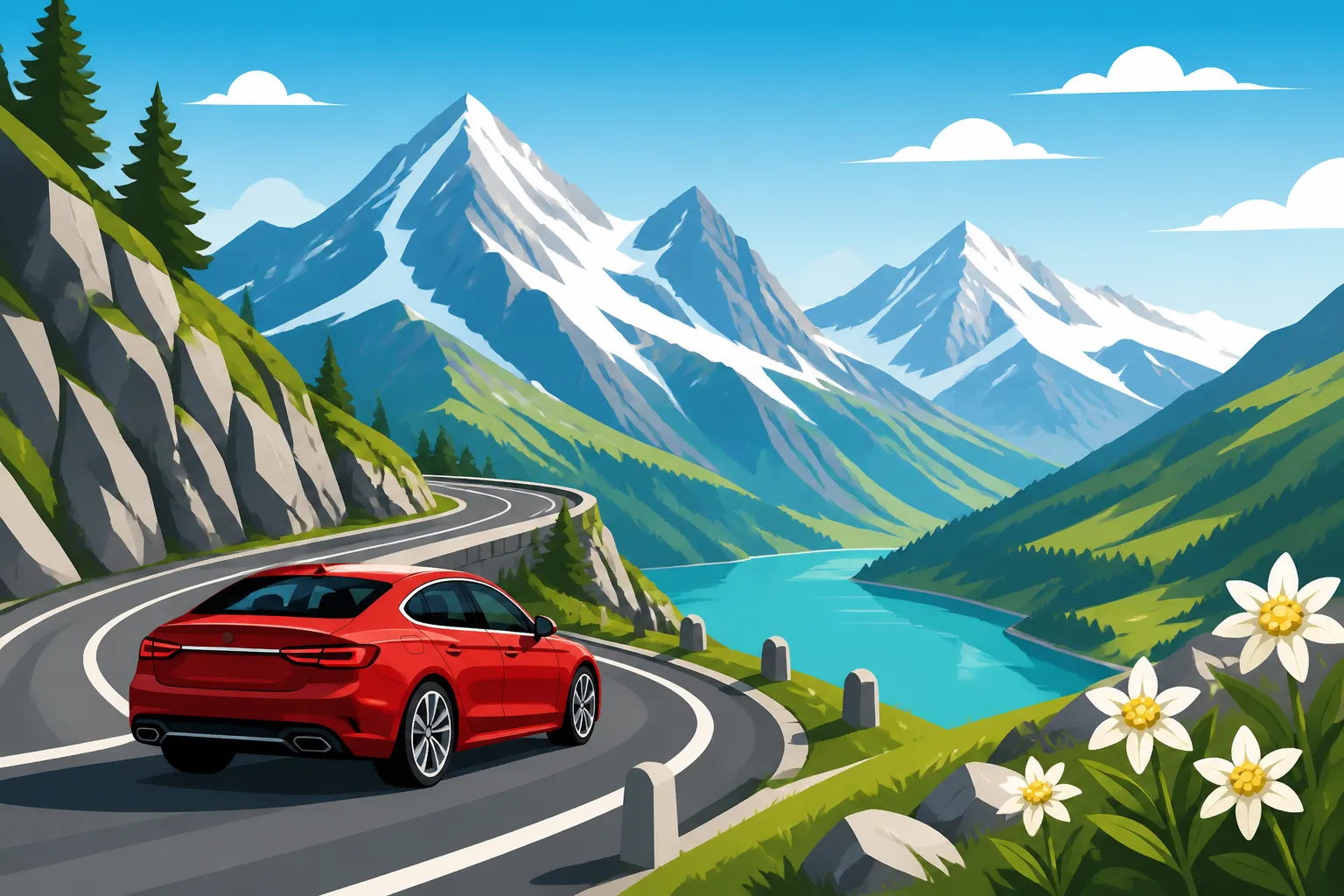
Oh, the sheer thrill and terror of driving some of Switzerland's truly spectacular scenic routes! I remember my first time heading up the Susten Pass, heart pounding, knuckles white on the steering wheel, wondering if I'd accidentally driven into a postcard or off a cliff. It's an experience unlike any other, offering unparalleled freedom to explore the nooks and crannies of this stunning country that public transport simply can't reach. This guide is all about helping you navigate those winding roads, conquer those legendary mountain passes, and truly make the most of your driving adventure in Switzerland, with practical tips and a healthy dose of realism.
Why Hit the Road in Switzerland? The Allure and the Reality
Let's be honest, Switzerland's public transport system is legendary. The trains are punctual, the PostBuses reach even the most remote villages, and you can get pretty much anywhere without a car. So why bother with driving? Well, for all its efficiency, public transport operates on fixed schedules and routes, often missing those spontaneous detours or hidden viewpoints that make a trip truly memorable. Driving offers a different kind of freedom, one where you dictate the pace, stop for every cow bell photo op, and linger longer in that charming little village you stumbled upon.
The Unmatched Freedom of the Open Road
Imagine this: you've just seen a breathtaking vista, a valley carved by glaciers, an azure lake reflecting the peaks. With your own car, you can pull over immediately (where safe, of course!), soak it all in, maybe even set up a picnic. You're not rushing to catch the next train or bus. This autonomy is particularly appealing when exploring the more remote regions, like parts of the Valais or the Engadine, where public transport connections can be less frequent. You can wake up, decide on a whim to drive a lesser-known pass, and change your mind halfway through if the weather shifts. That kind of spontaneity is pure gold when you're craving a genuine adventure. It's about crafting your own journey, not following one.
Accessing Hidden Gems Beyond the Train Tracks
While the SBB and PostAuto network is extensive, there are still countless villages, secluded hiking trailheads, and panoramic viewpoints that are either difficult or impossible to reach without a car. Think of those tiny hamlets perched high on a mountainside, accessible only by a narrow, winding road, or a specific trailhead that doesn't have a direct bus connection. Many of the most stunning hairpin turns and dramatic drops on the mountain passes are designed for the driving experience, not just for viewing from a train window. If you're passionate about photography, hiking, or simply discovering places untouched by the main tourist routes, a car becomes an invaluable tool. It allows you to delve deeper into the real Switzerland, beyond the picture-postcard towns often highlighted by tour operators. Of course, you can always supplement your car travel with public transport on longer legs – checking Omio for train tickets between major cities can be a great way to cover ground quickly before you pick up a rental car for the scenic bits.
Getting Your Vehicle Road-Trip Ready: Essentials and Regulations
Driving in Switzerland comes with its own set of rules and requirements, some of which might be different from what you're used to. It's not just about having a car; it's about having the right car, equipped and ready for whatever the Swiss roads (and weather) throw at you. Ignoring these details can lead to hefty fines or, worse, safety issues.
The All-Important Autobahn Vignette
First things first: the Autobahn vignette. You absolutely need one if you plan on driving on Swiss motorways (Autobahnen) or expressways (Autostrassen). This little sticker, or its new digital counterpart, is your toll pass for the year. It costs CHF 40 and is valid from December 1st of the previous year until January 31st of the following year. So, for example, a 2026 vignette is valid from Dec 1, 2025, to Jan 31, 2027. There's no daily or weekly option for cars; it's an all-or-nothing annual fee. You can buy the physical sticker at border crossings, post offices, petrol stations, and some garages. The new e-vignette can be purchased online via the official Federal Customs Administration website, which is incredibly convenient for avoiding those border stops. If you're renting a car in Switzerland, it will almost certainly already have a valid vignette. However, if you're driving in from a neighboring country with your own car, this is the first thing you need to sort out. Getting caught without one on the highway will net you a hefty fine (CHF 200, plus the cost of the vignette itself), and trust me, they check. This is clearly explained in detail in our guide on Swiss Autobahn Vignette: E-Vignette vs Physical Sticker for 2026.
Rental Car Considerations and Foreign Licenses
If you're not bringing your own vehicle, renting a car in Switzerland is straightforward but has a few nuances. Most major international car rental companies operate here, with offices at airports and major train stations. When booking, consider the size of the car. While a small car is agile on narrow mountain roads, a slightly larger, more powerful vehicle might offer more comfort and safety on steep ascents, especially if you're traveling with luggage or passengers. Always check if the rental includes winter tires during the colder months, as these are crucial for safety and sometimes legally required in specific conditions.
As for your driver's license, if you hold a license from an EU/EFTA country, you can use it indefinitely. If you're from a non-EU/EFTA country, you can use your foreign license for up to 12 months from your arrival date, provided it's accompanied by an international driving permit (IDP) or a certified translation into German, French, or Italian. After that, you'll need to convert your license to a Swiss one, which might involve a control drive or a full re-test depending on your country of origin. This entire process is covered in our comprehensive article on Converting Your Foreign Driver's License to a Swiss Fahrausweis. Always carry your physical license, the vehicle registration, and proof of insurance when driving.
Essential Gear and Winter Driving Preparedness
No matter the season, a few items are absolutely essential to keep in your car. A first-aid kit and a warning triangle are legally mandatory and should be easily accessible. While reflective vests aren't strictly compulsory in Switzerland, they are in many neighboring countries and are highly recommended for safety if you break down on a busy road or motorway.
Now, let's talk about winter. If you're planning a scenic drive between November and April, especially over mountain passes, you must be prepared for snow and ice. While winter tires aren't legally mandatory nationwide, they are generally expected, and if your car causes an accident because it wasn't appropriately equipped for the conditions, you could be held liable. Many mountain passes, particularly the higher ones, close completely during winter months, typically from November to May or June, depending on snowmelt. For passes that remain open, it's common to see "chains required" signs depending on the snowfall. Make sure your rental car has winter tires, or if using your own, ensure yours are in good condition. You might even want to brush up on our guide Winter Tires in Switzerland: Are They Legally Mandatory in 2027?. Having a snow shovel, ice scraper, and warm blankets in the car during winter excursions is just plain common sense. Trust me, getting stuck on a snowy pass without the right gear is an experience you want to avoid.
Conquering the Curves: Navigating Mountain Passes
Driving a mountain pass in Switzerland is a sensory experience – the roar of the engine, the smell of brakes (hopefully not yours!), the breathtaking views at every turn. But it's also a skill that requires focus, respect for the road, and an understanding of specific driving techniques. It's not like cruising on a flat highway, that's for sure.
Understanding Pass Road Characteristics
Swiss mountain passes are engineering marvels, but they are designed to climb steep gradients efficiently. This means they are often characterized by:
- Hairpin Bends (Kehren or Lacets): These are extremely tight turns, sometimes almost 180 degrees, where you'll need to slow down significantly and often use the full width of the road (if safe and clear) to make the turn. Look far ahead to anticipate these.
- Steep Gradients: Expect prolonged ascents and descents with inclines sometimes exceeding 10-12%. This puts a lot of strain on your engine and brakes.
- Narrow Sections: Some older passes, or parts of them, can be incredibly narrow, especially when passing through rock tunnels or along cliff faces. You'll need to be mindful of oncoming traffic and sometimes yield.
- Changing Surfaces: While most main passes are well-paved, you might encounter sections with older asphalt, gravel on the shoulders, or even damp patches that can reduce grip.
Always check the current status of mountain passes before you set off, especially during shoulder seasons (spring and autumn). The Swiss Federal Roads Office (ASTRA) and touring clubs like TCS provide up-to-date information on pass closures and conditions. You can find out more about which passes are open and when in our article Mountain Passes Open in Summer: Furka, Susten, and Grimsel.
Essential Driving Techniques for Mountain Roads
Driving a pass isn't just about putting your foot down; it's about smooth, controlled maneuvers and understanding your vehicle.
- Gear Selection: This is paramount. On ascents, select a lower gear to maintain engine power and avoid bogging down. On descents, use a low gear (engine braking) to control your speed and save your brakes. Constantly riding the brakes on a long downhill stretch will overheat them, leading to brake fade and potentially total failure. If you smell burning, pull over and let your brakes cool.
- Cornering: Approach bends slowly, brake before the turn, and accelerate gently as you exit. This maintains traction and stability. For hairpin bends, stay as wide as possible on approach to give yourself the best turning radius, but always be aware of oncoming traffic.
- Oncoming Traffic: Many mountain roads are one-and-a-half lanes, meaning two cars can pass, but it's tight. Always be prepared to yield, especially to PostBuses – they have priority on these mountain routes and often sound their distinctive three-tone horn to signal their approach around blind corners. You'll recognize the sign for it: a yellow square with a post horn.
- Weather Changes: The weather in the mountains can change in an instant. A sunny valley can quickly turn into a cloudy, rainy, or even snowy pass. Reduce speed, increase following distance, and be extra vigilant. Fog is also a common hazard.
- Tunnel Vision: Switzerland has an incredible network of tunnels. Pay attention to signage for speed limits and lights. Some tunnels can be long and poorly lit, so maintain concentration.
Take your time, enjoy the journey, and don't feel pressured by faster drivers. It's not a race!
Safety First: Avoiding Common Pitfalls
Beyond driving technique, safety on Swiss mountain roads is about preparedness and vigilance.
- Fuel Up: Before heading into the mountains, ensure you have plenty of fuel. Petrol stations can be sparse on the passes themselves, and some close early.
- Stay Hydrated and Rested: Mountain driving is mentally demanding. Take regular breaks, stretch your legs, and drink water. Pull over at designated viewpoints to enjoy the scenery and give yourself a moment to relax.
- Wildlife: Especially at dawn, dusk, or night, watch out for deer, chamois, or even marmots crossing the road. They can appear suddenly.
- Overtaking: Only overtake when you have clear visibility and it's absolutely safe. Blind corners on mountain passes are not the place for risky maneuvers. Swiss drivers are generally patient, but they appreciate efficient and safe driving.
- Emergency Lane/Spaces: If you need to stop for any reason (photo, break, emergency), use designated pull-outs or emergency lanes. Never stop on the main carriageway, especially on a bend. In an actual emergency, remember the national emergency number is 112, or 144 for an ambulance. You can also join REGA, the Swiss Air-Rescue, for peace of mind, as detailed in REGA Membership: Why Expats Need Air Rescue Insurance in the Alps.
Iconic Mountain Passes and Grand Tour Routes
Switzerland boasts some of the most famous and breathtaking mountain passes in the world. They're not just roads; they're experiences, carving through ancient landscapes and offering views that will genuinely make your jaw drop. While many are part of the broader "Grand Tour of Switzerland" (a fantastic marked route for drivers), you can easily pick and choose individual passes for a day trip.
The Historic Gotthard Pass
The Gotthard Pass (Passo del San Gottardo) is one of the most historically significant and strategically important passes in the Alps. Connecting the German-speaking north with the Italian-speaking Ticino, it's been a vital trade route for centuries. When you drive it, you have a choice: the modern, efficient N2 motorway (which tunnels through the mountain, saving hours but sacrificing scenery) or the old pass road, the "Tremola." If you're after the scenic experience, choose the Tremola. This cobblestone road, with its numerous tight hairpin bends, is a piece of history. It's a slower, more challenging drive, but utterly rewarding.
Expect a journey back in time, with old stone buildings and incredible views over the valley. The pass summit itself, at 2,106 meters (6,909 ft), features a historic hospice, a museum, and two small lakes. It's a popular spot for motorcyclists and classic car enthusiasts, so you'll likely see some impressive vehicles. During peak summer, it can get busy, but the atmosphere is generally one of shared appreciation for this magnificent route. It's a quintessential Swiss driving experience.
The Furka, Grimsel, and Susten Loop
This trio of passes in Central Switzerland forms a spectacular loop, often driven together for an unforgettable day. Each pass offers its own unique character and challenges, and together they embody the best of Swiss alpine driving.
- Furka Pass (2,429 m / 7,969 ft): Famous for its role in the James Bond movie Goldfinger (that iconic chase scene!). The Furka offers dramatic, sweeping views of the Rhône Glacier (though sadly receding) and the surrounding peaks. The road is generally wide and well-maintained, but the inclines are significant. Don't miss the opportunity to stop at the historic Hotel Belvédère for photos.
- Grimsel Pass (2,164 m / 7,099 ft): Connecting the Haslital in the Bernese Oberland with the Valais, the Grimsel is known for its stark, granite landscape, impressive hydroelectric dams, and deep blue reservoirs. The road winds past numerous waterfalls and offers some truly unique, almost lunar, scenery. It's generally a smooth drive, but the ascents and descents are steep, requiring careful gear management.
- Susten Pass (2,224 m / 7,296 ft): Often considered one of the most beautiful and easily drivable of the higher alpine passes, the Susten is beloved for its balanced mix of wide, flowing curves and tighter sections. It connects the canton of Uri with the Bernese Oberland and offers incredible views of the Stein Glacier. The road features a couple of tunnels and galleries carved into the rock, adding to the drama. The Susten Pass tends to open later in spring and close earlier in autumn than some others due to its snow exposure.
Driving this loop (e.g., from Meiringen, up the Grimsel, over the Furka, down to Andermatt, then up and over the Susten back towards Meiringen) is a full-day commitment but rewards you with an unparalleled cross-section of alpine landscapes. Many people find charming B&Bs or hotels along the way, using Booking.com, if they want to break it into a two-day adventure.
The Grand Tour of Switzerland: A Longer Driving Adventure
If you have more time and want a truly comprehensive driving experience, consider tackling sections or even the entirety of the Grand Tour of Switzerland. This official, well-marked route covers over 1,600 kilometers, takes you through all four language regions, over five alpine passes, to 22 lakes, and past 12 UNESCO World Heritage Sites. It’s designed to showcase the diverse beauty of the country.
While you don't have to drive the whole thing, the Grand Tour provides an excellent framework for planning a multi-day scenic road trip. It guides you to many of the most iconic viewpoints and charming towns, ensuring you don't miss any of the highlights. The route is clearly signposted with a specific "Grand Tour of Switzerland" logo. You can find maps and detailed itineraries on the MySwitzerland website, which also includes suggestions for where to stay and what to see. It’s a brilliant way to immerse yourself in the country's varied landscapes, from palm trees in Ticino to glaciers in the Valais, all from the comfort of your car.
Road Rules, Etiquette, and the Swiss Driving Mentality
Driving in Switzerland isn't just about knowing where to go; it's about understanding the unspoken rules and the general driving culture. Swiss roads are incredibly safe, but that safety comes from strict enforcement and a collective adherence to rules. Don't assume anything is "just a suggestion."
Speed Limits, Fines, and Radars
Let's not sugarcoat it: Swiss speed limits are taken very seriously, and fines are among the highest in Europe. There is little to no tolerance for exceeding the limit. Even a few kilometers per hour over can result in a fine, and significantly higher speeds can lead to losing your license, income-based fines (where your fine is proportional to your income, a real sting!), and even jail time in severe cases.
Typical speed limits are:
- 50 km/h in built-up areas (towns, villages)
- 80 km/h outside built-up areas (rural roads)
- 100 km/h on expressways (Autostrassen)
- 120 km/h on motorways (Autobahnen)
Radars are everywhere – fixed cameras, mobile cameras, unmarked cars. Assume you are being monitored. It's not just about getting a ticket; it's about road safety. Locals adhere to these limits, and you should too. Don't be that tourist who ruins their trip (and bank account) with a preventable speeding ticket. You can learn more about this in our specific guide on Speeding Tickets in Switzerland: Income-Based Fines and Strict Radars.
Giving Way and Overtaking Protocols
Understanding right-of-way is crucial, especially on smaller roads and in villages.
- Right before Left (Rechts vor Links): This is the default rule at unmarked intersections. If there are no signs (give way, stop, or priority road), traffic coming from your right has priority. This can be confusing, so always be alert.
- PostBuses: As mentioned, PostBuses have priority on narrow mountain roads. If you see one approaching and the road is tight, be prepared to pull over or reverse to let them pass. They signal with a distinctive three-tone horn.
- Overtaking: On two-lane roads, overtaking should only be done when there's ample space, clear visibility, and no risk to oncoming traffic. On motorways, always overtake on the left. Overtaking on the right is strictly forbidden unless traffic is moving in slow, congested parallel lines.
- Roundabouts: Traffic already in the roundabout has priority. Use your indicators to signal when you plan to exit.
Swiss drivers tend to be disciplined and predictable. They expect others to be the same. Aggressive driving is not tolerated and will draw glares, honks, and potentially police attention.
Parking, Tolls, and Road Works
Parking in Swiss towns and cities can be a headache and expensive.
- Blue Zones: These allow free parking for a limited time (usually one hour, but check signs) using a blue parking disc (Parkscheibe). You set the arrival time to the next half hour. You can buy these discs at police stations, post offices, or petrol stations.
- White Zones: These are paid parking, typically with a meter.
- Yellow Zones: These are for residents or specific businesses only. Do not park here.
- Garages: Underground parking garages (Parkhäuser) are often the easiest, though most expensive, option in city centers.
Tolls: Beyond the Autobahn vignette, there are no other general road tolls in Switzerland. However, some specific tunnels (like the Munt la Schera tunnel to Livigno, Italy) and car trains (like the Lötschberg or Vereina tunnels for transporting your car through a mountain by train) do have separate fees.
Road Works: You'll encounter road works frequently, especially in summer. They are usually well-marked with clear speed reductions and diversions. Adhere to these, as fines for speeding through road work zones are even higher. Swiss roads are constantly being maintained and improved, which is why they are in such excellent condition.
Planning Your Ultimate Scenic Drive Itinerary
Embarking on a Swiss road trip requires a bit more planning than simply jumping in the car and going. The rewards, however, are absolutely worth it. Thinking ahead about the season, your route, and where you'll rest your head will make all the difference.
Seasonal Considerations: When to Drive Which Pass
The season profoundly impacts which passes are open and what kind of driving experience you'll have.
- Summer (June to September): This is prime time for mountain passes. All major passes are typically open, and the weather is generally warm and sunny. This means lush green valleys, alpine flowers, and clear views. However, it also means more traffic, especially on weekends and during holidays. Popular passes like the Furka or Susten can get quite busy with cars, motorcycles, and cyclists. Book accommodation well in advance using sites like Booking.com, especially if you have specific stops in mind.
- Spring (April to May): A transitional period. Lower passes may be open, but higher ones will still be snow-bound. This can be a beautiful time to drive, with snow still dusting the peaks but new green emerging in the valleys. Fewer crowds than summer. Be vigilant about checking pass status daily as snowmelt and late snowfall can cause sudden closures.
- Autumn (October to November): Another gorgeous transitional period, with stunning fall foliage in many areas, particularly in the lower valleys and forests. Many higher passes will start to close towards late October or early November. Less traffic than summer, but again, weather can be unpredictable, with early snow possible at higher elevations.
- Winter (December to March): Most high alpine passes are closed. Driving in winter means sticking to main roads and valleys, and being fully equipped with winter tires (and potentially chains). The scenery is still spectacular, but it's a very different driving experience. Consider exploring routes through the Jura mountains or along lakes, which remain accessible.
Always double-check the current status of specific passes on official websites before you leave.
Crafting Your Route: Combining Passes and Attractions
When planning your itinerary, think about what you want to see and how much time you have.
- Loop Routes: Many passes lend themselves to circular routes, like the Furka-Grimsel-Susten loop, allowing you to return to your starting point without retracing your exact steps.
- Linear Journeys: If you're on a longer trip across Switzerland, you can incorporate multiple passes as part of a linear journey, perhaps moving from the Valais towards Graubünden, crossing a new pass each day.
- Mix and Match: Don't feel you have to drive every single kilometer of a pass. You could drive up to a summit, enjoy the views and a short walk, then turn back if time is short.
- Integrate Other Activities: Plan stops for hiking, visiting a charming village, or enjoying a local meal. Websites like GetYourGuide might offer specific tours that integrate scenic drives with other attractions, or you can find ideas for activities along your chosen route. For instance, after driving the scenic route through the Lavaux vineyards, you could plan a wine tasting tour.
Consider the driving time: Google Maps is a good start, but add at least 30-50% for photo stops, slow traffic, and simply soaking in the views. Don't overschedule. Sometimes, less is more, allowing you to truly appreciate each pass.
Accommodation and Dining Along the Way
Choosing where to stay along your scenic route is part of the adventure.
- Mountain Hotels and Refuges: Many passes and alpine villages have charming hotels, guesthouses (Gasthäuser), or even mountain refuges (Hütten) that offer simple but comfortable accommodation. These often come with incredible views and a real sense of alpine tranquility. Booking.com is an excellent resource for finding these smaller, independent places, often with reviews from fellow travelers.
- Valley Towns: Staying in larger towns in the valleys (e.g., Meiringen, Andermatt, Zermatt (though car-free, you'd park in Täsch and take the train), Interlaken) offers more choice in terms of hotels, restaurants, and amenities.
- Camping: Switzerland has numerous well-maintained campsites, offering a more budget-friendly and immersive experience. If you enjoy camping, this can be a fantastic way to spend a night or two amidst nature. Our guide to Camping in Switzerland: Best Sites and Wild Camping Rules has more details.
Dining: Enjoying local cuisine is a must. Many mountain restaurants (Berggasthaus) serve traditional Swiss fare like Rösti, Älplermagronen, or local cheeses. In villages, look for bakeries for fresh bread and pastries, and local shops to stock up on picnic supplies. Even a simple picnic overlooking a panoramic view can be one of the highlights of your trip. Don't be afraid to ask locals for recommendations – they often know the best spots!
| Mountain Pass | Elevation (m) | Typical Opening | Key Features | Average Driving Time |
|---|---|---|---|---|
| Gotthard (Tremola) | 2,106 | June – October | Historic cobblestones, tight hairpins, old hospice | 45-60 min (pass only) |
| Furka Pass | 2,429 | June – October | Rhône Glacier views, James Bond film location | 30-45 min (pass only) |
| Grimsel Pass | 2,164 | June – October | Granite landscape, hydroelectric dams, reservoirs | 30-45 min (pass only) |
| Susten Pass | 2,224 | June – October | Glacier views, tunnels/galleries, wide curves | 45-60 min (pass only) |
| Bernina Pass | 2,328 | All year (winter tires) | Glaciers, lakes, railway parallel, less steep | 60-75 min (pass only) |
| Flüela Pass | 2,383 | June – October | High alpine tundra, remote feel, two lakes at summit | 40-50 min (pass only) |
| Klausen Pass | 1,948 | May – October | Green pastures, waterfalls, a bit narrower, popular for motorbikes | 60-75 min (pass only) |
Note: "Average Driving Time" refers to the time spent actively driving the pass road itself, not including stops or approaches. Opening dates are approximate and depend heavily on snow conditions.
Disclaimer
The information provided in this guide is for general informational purposes only and does not constitute professional advice. While we strive to provide accurate and up-to-date information, rules, regulations, and conditions (especially weather and road closures) can change rapidly. Always consult official Swiss government sources, local traffic authorities, and weather forecasts before and during your trip. Driving in the mountains carries inherent risks; exercise caution, drive responsibly, and ensure your vehicle and insurance coverage are appropriate for your journey.