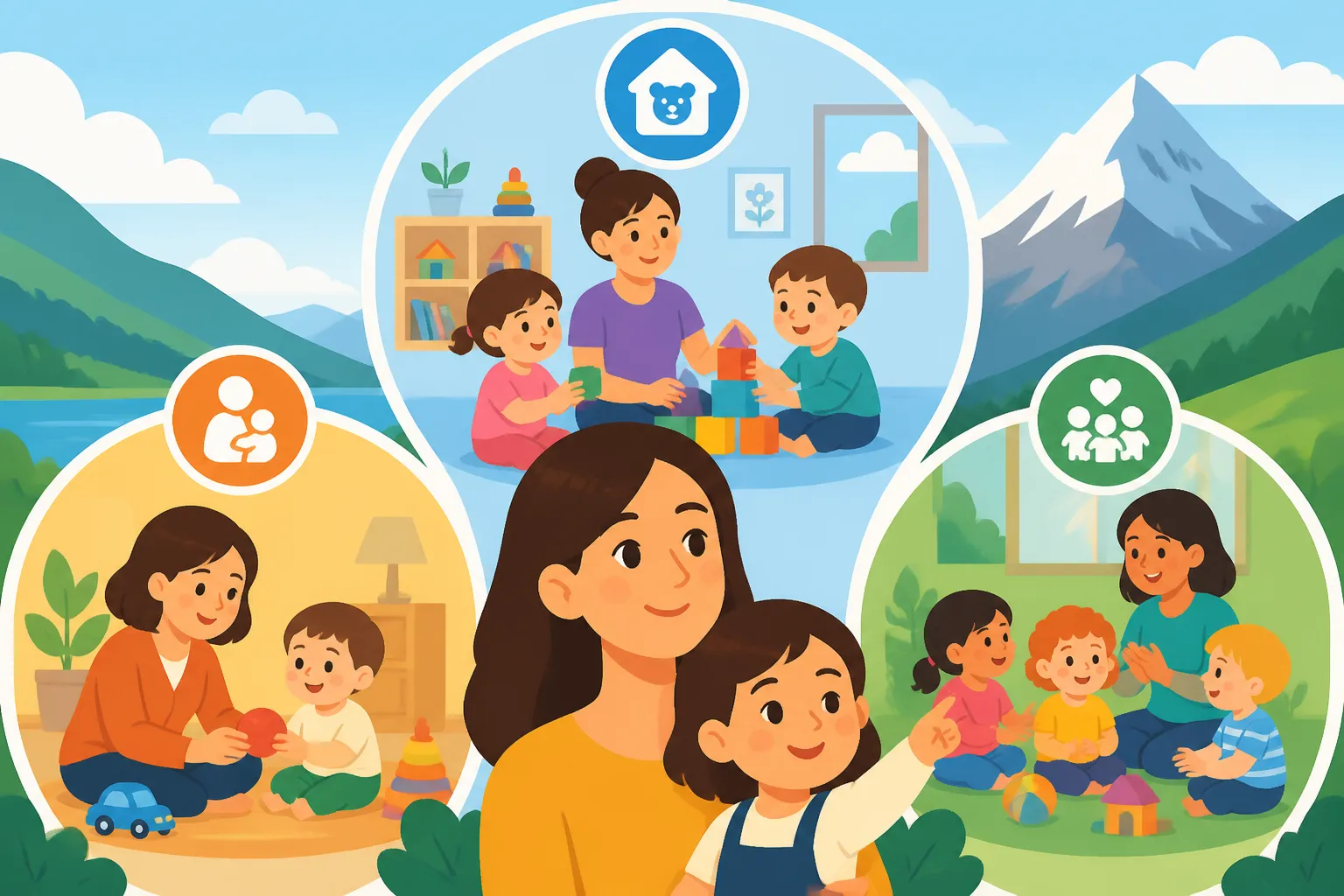
Childcare Options in Switzerland: Kita, Tagesmutter, and Playgroups
Oh, the joy of moving to Switzerland! You’ve landed that dream job, found a stunning apartment (after countless viewings, I’m sure), and now the real fun begins: navigating the wonderfully complex world of Swiss childcare. Believe me, you are not alone if you feel like you’ve been thrown into the deep end of an Alpine lake without a life jacket. It's a system that can be incredibly efficient once you understand it, but getting there? That's another story. This guide is here to shed some light on the main childcare options available – Kita, Tagesmutter, and Playgroups – helping you decipher the jargon, understand the costs, and hopefully, find the perfect fit for your little ones so you can focus on settling into your new Swiss life.
Kita: The Swiss Daycare Center Experience
Let's dive headfirst into the most common and often sought-after option: the Kita. "Kita" is the German shorthand for Kinderkrippe (crèche) or Kindertagesstätte (daycare center). In French-speaking Switzerland, you'll hear "crèche," and in Italian, "nido d'infanzia." These are formal, structured childcare facilities for infants and children usually up to school age, offering full-day or half-day care.
What is a Kita and How Does it Operate?
Think of a Kita as a proper institution. They are typically staffed by trained early childhood educators and follow educational principles, even for babies. The environment is designed for children, often with age-separated groups, dedicated play areas, and a structured daily routine that includes meals, naps, indoor and outdoor play, and various developmental activities like singing, crafting, and storytelling. They operate on fixed schedules, usually opening early in the morning (around 7 AM) and closing in the late afternoon or early evening (around 6 PM or 7 PM). Some even offer extended hours, but those are less common and come with a premium.
A Kita provides a very stable and stimulating environment. The children are exposed to a group setting from a young age, which can be fantastic for developing social skills, learning to share, and adapting to routines. For expat children, it's often their first exposure to a local language environment, which can be incredibly beneficial for language acquisition, even if they start off understanding very little. The staff are professionals, trained to handle different developmental stages and group dynamics, and they adhere to strict safety and hygiene standards.
The Application Maze and What to Expect
Finding a Kita spot can be akin to winning the lottery, especially in popular cantons and cities like Zurich, Geneva, or Zug. Demand often far outstrips supply, leading to notoriously long waiting lists. Seriously, some parents put their unborn children on lists! The process usually starts with researching centers in your area. Many cantons and municipalities have online directories or portals where you can search for registered Kitas. For example, in Zurich, the city's website offers a comprehensive list and sometimes even a central registration system.
Once you identify potential Kitas, you'll typically need to fill out a detailed application form, often in German or French. This will ask for everything from your child's birth date and any allergies to your work schedule and desired care hours. Don't be surprised if they ask for your salary details for calculating potential subsidies – more on that later. Many Kitas also require an in-person visit (a Besichtigung) before they even consider your application, which is a great chance to ask questions and get a feel for the place. Be persistent, follow up, and consider applying to multiple Kitas to maximize your chances. This is where your new expat grit will truly be tested!
When you finally get an offer, make sure to read the contract carefully. It will detail everything from the daily rates to notice periods and what's included (food, diapers, etc.) versus what you need to provide. Typically, Kitas require a minimum attendance of 40-60% (two to three full days) per week.
Costs and Navigating Subsidies
Let's talk money, because Kita costs in Switzerland are notoriously eye-watering. They vary wildly by canton, municipality, and the Kita itself, but expect to pay anywhere from CHF 80 to CHF 150 per day for full-time care. Yes, per day. For full-time care (five days a week), this can easily amount to CHF 2,000 to CHF 3,000+ per month per child. This makes childcare one of the largest expenses for families, often surpassing rent in some budgets. It’s a shocker for many newcomers, especially those from countries with more subsidized systems. You can find more details on this in our guide to Childcare Costs in Switzerland: Daycare (Kita) Prices by Canton.
The good news is that many cantons and municipalities offer subsidies (known as Betreuungsgutscheine, Kita-Gutscheine, or Subventionen) for families based on their income and assets. These subsidies can significantly reduce your out-of-pocket costs, sometimes by as much as 50-70%, or even more for lower-income households. The application process for these vouchers is separate from the Kita application itself and can be quite bureaucratic. You'll usually need to provide your tax statements, salary certificates, and proof of residency. It’s worth the effort, but be prepared for paperwork and potential waiting times. Make sure to check with your specific Gemeinde (municipality) or Commune about their subsidy programs as soon as you start looking into childcare.
Tagesmutter: The Warmth of Family Day Care
If the institutional feel of a Kita isn't quite what you're looking for, or if you simply can't secure a spot, a Tagesmutter (literally "day mother") or Maman de jour in French, is an excellent alternative. This is essentially a professional childminder who cares for a small group of children (usually up to five, including her own) in her own home.
Understanding the Tagesmutter Model
The Tagesmutter model offers a more home-like, flexible, and often more personal environment for children. The children are integrated into the Tagesmutter's family life, sharing meals, playing in her home and garden, and often accompanying her on errands or to local playgrounds. This can be a huge comfort for younger children, especially those still adjusting to a new country. The ratios are much lower than in a Kita, allowing for more individualized attention. This can be particularly appealing for babies and toddlers who thrive in a calmer, more nurturing setting.
Many Tagesmüttern are registered with a local Tagesfamilienverein (day family association) or agency. These associations often provide training, support, and oversight, ensuring certain standards of care, safety, and hygiene are met. They also handle contracts, billing, and sometimes even substitute care in case the Tagesmutter is ill or on holiday. This adds a layer of professionalism and security for parents.
Finding and Vetting Your Tagesmutter
Finding a Tagesmutter often involves a mix of formal and informal channels. Your local Tagesfamilienverein is usually the best place to start. They maintain lists of available Tagesmüttern, help match families based on needs (location, age of child, language spoken), and facilitate the contractual process. You can also find them through word-of-mouth, local expat groups, or online platforms.
When interviewing a potential Tagesmutter, it’s crucial to ask lots of questions. Inquire about her experience, philosophy on childcare, daily routine, what activities she offers, how she handles discipline, and her approach to food and naps. Critically, observe her interaction with the children already in her care and how she responds to your child during a trial visit. Don't shy away from asking for references. It's also important to clarify expectations regarding holidays, sick days, and payment terms. You want to make sure your communication styles align, especially if there's a language barrier. I remember when I first moved, I wished I had known about services like Airalo for easy international communication during these initial setup phases – it would have saved me a lot of hassle with temporary SIMs!
Costs and Financial Support for Family Day Care
The costs for a Tagesmutter can sometimes be slightly lower than a Kita, but this isn't always the case, especially if she's highly experienced or offers specialized care. Expect to pay anywhere from CHF 5 to CHF 15 per hour, depending on the canton and whether she’s privately arranged or through an association. For full-time care, this can still add up to CHF 1,500 to CHF 2,500 per month.
The good news is that if you use a Tagesmutter registered with a Tagesfamilienverein, you can often benefit from the same cantonal and municipal subsidies that apply to Kitas. The process for applying for these subsidies will be similar – income-based assessments and a stack of paperwork. If you arrange care privately, subsidies are usually not available, but you might have more flexibility in negotiating terms and hours. Make sure to clarify this before signing any contracts. Families usually pay the association, which then pays the Tagesmutter, simplifying the financial aspect and ensuring proper social security contributions.
Spielgruppe: Nurturing Social Skills with Playgroups
For those looking for a gentle introduction to group settings, or a less intensive option for slightly older children before kindergarten, the Spielgruppe (playgroup) is a fantastic Swiss institution. In Romandie, you’ll hear groupe de jeux.
What a Playgroup Offers
A Spielgruppe is a semi-structured play environment for children typically aged 2.5 to 5 years old. Unlike Kitas, Spielgruppen are usually not for full-day care and don't provide meals. Children attend for a few hours, one or two mornings or afternoons a week. The focus is purely on play, social interaction, and fostering creativity through crafts, stories, and songs. It’s less about formal education and more about giving children a space to play and socialize outside the family home, develop independence, and learn group dynamics in a small, nurturing setting.
For expat children, Spielgruppen are an invaluable bridge to the local language and culture. The children pick up local vocabulary naturally through play, hear songs in Swiss German or French, and interact with local kids before starting kindergarten. This low-pressure environment can make the transition to school much smoother. It's also an excellent way for parents to meet other local parents and begin building their own community, which is so important for Community and Integration: Making Friends and Adapting to Swiss Life.
Accessing Playgroups and Typical Structure
Finding a Spielgruppe is generally easier than finding a Kita spot, and waiting lists are usually shorter. Many are run by local churches, community centers, or independent educators. You can often find lists on your municipality's website, through local parent forums, or by simply asking around in your neighborhood.
The typical structure involves a small group of children (8-12 kids) with one or two Spielgruppenleiterinnen (playgroup leaders). They might have a theme for the week, but the activities are largely free play, allowing children to explore various stations like building blocks, drawing corners, dollhouses, and often a dedicated outdoor play area. Parents usually drop off their children and pick them up a few hours later, giving them a brief respite and a chance to run errands.
There are also Waldspielgruppen (forest playgroups) where children spend the entire session outdoors, regardless of the weather, learning about nature and developing resilience. These are incredibly popular and offer a unique experience if you’re keen on outdoor education.
Understanding Playgroup Costs
Compared to Kitas and Tagesmüttern, Spielgruppen are significantly more affordable. Expect to pay anywhere from CHF 20 to CHF 40 per session (2-3 hours). If your child attends twice a week, this might amount to CHF 150 to CHF 350 per month. Subsidies for Spielgruppen are less common and usually only available in specific municipalities for very low-income families, as the costs are already much lower. This makes them a more accessible option for many families.
The payment structure is usually a fixed monthly or semester fee. Some Spielgruppen also require a small registration fee. It’s important to note that if your child misses a session due to illness or holiday, you typically still pay the full fee. This is a common practice across all Swiss childcare options.
A Look at Other Childcare Solutions
While Kita, Tagesmutter, and Spielgruppen cover the main official options, it's worth briefly touching on a few others that might come into play for expat families.
Nannies and Au Pairs
For families who prefer in-home care, or who have multiple children, a nanny or au pair can be a viable option. Nannies are professional caregivers who work in your home, providing dedicated care for your children. Au pairs are typically younger individuals from abroad who come to Switzerland to learn German or French, living with the family and providing childcare in exchange for room, board, and a small allowance.
These options offer maximum flexibility and personalized care. However, they are generally the most expensive. A nanny can cost several thousand francs per month, plus social security contributions. Au pairs are more affordable but come with specific legal requirements regarding working hours, language course attendance, and accommodation. For those with older children, you might also look into After-School Care (Tagesschule and Hort) in Switzerland Explained, which provides supervised activities for school-aged kids after classes finish.
Babysitters and Emergency Care
For occasional evenings out or short-term needs, babysitters are plentiful. Websites like Babysitting24 or local community boards are good places to find them. The Swiss Red Cross also trains and certifies babysitters, so look for those credentials. Rates usually range from CHF 15 to CHF 25 per hour, depending on age, experience, and location.
For emergencies, your Kita or Tagesmutter might have an established network for substitute care. Otherwise, asking friends, neighbors, or colleagues for recommendations is often the quickest route. Knowing your emergency numbers, like 144 for medical emergencies, is always critical, but having a trusted local contact for childcare emergencies can be a lifesaver.
Comparative Overview of Swiss Childcare Options
To give you a clearer picture, here’s a quick comparison of the main options:
| Feature | Kita (Daycare Center) | Tagesmutter (Family Day Care) | Spielgruppe (Playgroup) | Nanny/Au Pair (In-Home) |
|---|---|---|---|---|
| Age Range | 3 months – Kindergarten/Preschool | Infants to Primary School Age | 2.5 years – Kindergarten/Preschool | Infants to Teens |
| Environment | Structured, institutional, group-focused | Home-like, small group, family integration | Play-focused, social, semi-structured | Personalized, in-your-home, flexible |
| Hours | Full-time or part-time (min. 2-3 days) | Flexible, often full-time or significant part-time | 1-2 sessions/week (2-3 hours/session) | Highly flexible, based on contract |
| Cost (Monthly) | CHF 2,000 – CHF 3,000+ (full-time, per child) | CHF 1,500 – CHF 2,500+ (full-time, per child) | CHF 150 – CHF 350 (2 sessions/week) | CHF 2,500 – CHF 5,000+ (plus benefits) |
| Subsidies | Often available (income-based) | Often available (if registered with association) | Rarely available | Rarely available |
| Availability | High demand, long waiting lists in cities | Moderate demand, can be easier than Kita | Generally good availability | Dependent on finding suitable individual |
| Language | Exposure to local language, multicultural | Often local language immersion | Local language immersion through play | Variable (can be English-speaking or local) |
| Pros for Expats | Structured learning, early language, professional | Nurturing, flexible, family feel, individual attention | Gentle introduction to local language/culture, affordable | Max flexibility, personalized, familiar environment |
| Cons for Expats | Very expensive, long waiting lists, bureaucratic | Finding a good match, less formal oversight (if private) | Limited hours, not full-time care | Most expensive, employer responsibilities |
Navigating the Childcare Maze: My Best Advice
My biggest piece of advice for any expat parent in Switzerland is this: start early, be patient, and don't be afraid to ask for help. Seriously, the moment you know you're moving here, or even if you're already here and pregnant, start researching childcare options. The early bird definitely catches the Kita spot in this country!
Don't underestimate the power of local networks. Join expat Facebook groups, ask colleagues, and connect with other parents at playgrounds or local events. People who have been through the system are often the best source of up-to-date information and insider tips. Your Gemeinde or Commune office will also have resources, usually online, but sometimes you just need to walk in and ask. Remember, many Swiss cantons are unique in their approaches and regulations.
Finally, while the costs can seem astronomical, remember that Switzerland also offers a high quality of life and often excellent salaries. Factor childcare into your overall budget, and definitely look into the Cantonal Premium Reductions (Prämienverbilligung) for Low-Income Households – although specifically for health insurance, it highlights that financial assistance mechanisms do exist for residents. The system might feel like a complex puzzle at first, but with persistence, you'll find the right pieces to fit your family's needs.
Remember how you juggled all the paperwork for your permit or housing? This is just another layer of that expat experience. You've got this! And hey, once it's all sorted, you might even find time to explore the Alps or finally get that Half-Fare Travelcard (Halbtax): The Must-Have Pass for Swiss Residents you’ve been eyeing.
Disclaimer
The information provided in this guide is for general informational purposes only and does not constitute professional advice. While we strive to keep the information up-to-date and accurate, childcare regulations, availability, and costs in Switzerland can vary significantly by canton and municipality and may change. It is essential to consult official cantonal and municipal websites, relevant childcare associations, or legal professionals for the most current and specific advice tailored to your individual circumstances. We recommend verifying all details with the respective authorities or providers before making any decisions.