Buying a Car in Switzerland: New vs Used and Where to Look
Navigating the world of car ownership in Switzerland can feel like stepping into a labyrinth, especially when you're fresh off the plane. Between the language barriers, the Swiss love for meticulous processes, and a completely different market, figuring out whether to buy new or used, and where to even begin looking, is enough to make anyone’s head spin. This guide is here to untangle that knot for you, offering a realistic, expat-friendly roadmap to purchasing your very own vehicle in this stunning, yet sometimes bewildering, country.
The Big Decision: New vs. Used Cars in Switzerland
When you first consider buying a car here, the initial hurdle isn't just how to buy it, but what kind of car to even aim for. Switzerland is known for its high quality, but that often comes with a higher price tag. This makes the new versus used debate even more critical for expats trying to balance budget with reliability and convenience. Let's break down the realities of each option.
Why a New Car Might Tempt You And Your Wallet
Ah, the allure of a brand-new car! The pristine smell, the latest technology, and that comforting full factory warranty. For many, especially those coming from countries where car prices are lower, buying new feels like a default. In Switzerland, it’s a decision that weighs heavily on your wallet, but it comes with distinct advantages. You're guaranteed to be the first owner, meaning no hidden mechanical surprises from previous drivers. The car is likely to feature the newest safety features, infotainment systems, and often better fuel efficiency, which can be a real plus with Swiss petrol prices. Plus, the peace of mind that comes with a comprehensive manufacturer's warranty covering parts and labor for several years is invaluable, reducing the stress of unexpected repair costs significantly. Imagine driving off the lot with a sleek new Volvo or a reliable Skoda, knowing you won't have to worry about major maintenance for at least the next three to five years. For expats who value predictability and ease, a new car from an authorized dealer might just be the ticket, especially if your employer offers a good relocation package.
However, let's not sugarcoat it: the initial cost is significantly higher. You'll also take the steepest depreciation hit in the first few years, which is something to consider if you're not planning on staying in Switzerland long-term. Even if you're enjoying your new life here, you might move cantons or even leave the country eventually, and that depreciation can sting. You also need to factor in the higher registration fees for new vehicles and often more expensive mandatory full comprehensive insurance compared to a used car.
Embracing the Second-Hand Market: Practicality Over Prestige
For most expats, especially those just finding their feet and perhaps still reeling from the general cost of living in Switzerland, the used car market is where the smart money goes. Buying a used car offers substantial cost savings upfront, not just on the purchase price but also on insurance premiums and potentially even yearly road taxes, depending on the car’s age and emissions. You skip that major initial depreciation hit, which means your investment retains its value much better over time. Think about it: you could get a well-maintained, three-year-old BMW or Mercedes for a fraction of its new price, giving you a taste of Swiss quality without the crippling financial strain. The selection in the used car market is also incredibly diverse, ranging from small city cars perfect for navigating narrow Swiss streets to robust SUVs ideal for those mountain adventures.
The trade-off, of course, is the potential for hidden issues. While Switzerland has high standards for vehicle maintenance, a used car always carries a degree of risk. You might inherit previous owners’ problems, from minor cosmetic wear and tear to more serious mechanical quirks. This is where vigilance, asking for detailed service records (known as the "Serviceheft" or "carnet d'entretien"), and independent inspections become absolutely crucial. Many used cars will come with a short warranty from the dealer, typically 3 to 12 months, which offers some protection, but it’s rarely as extensive as a new car warranty. Always be prepared for the possibility of minor repairs earlier than you would with a brand-new vehicle. For example, a small rattling noise that wouldn't bother a Swiss driver might be a cause for concern for you, but understanding what's normal for a used car and what isn't is key.
Navigating the Swiss Car Market: Where to Find Your Wheels
So, you’ve decided on your approach – new or used. Now, where do you actually find a car in Switzerland? This isn't like back home where you might just pop into a superstore or scroll through Facebook Marketplace. The Swiss market has its own quirks and trusted channels.
Dealerships: Convenience at a Premium
For a new car, or a high-quality, certified used car, official brand dealerships are your go-to. Think names like AMAG for Volkswagen, Audi, SEAT, and Skoda, or other official dealers for BMW, Mercedes, Toyota, etc. These dealerships offer a streamlined buying experience, often with English-speaking staff, making the process much less daunting for expats. They provide manufacturer-backed warranties, comprehensive service packages, and often handle all the registration paperwork, which is a huge relief when you're still grappling with the local language. Many will even help with financing or leasing options, explaining everything in detail. You can walk in, test drive a car, and potentially drive away a few days later with everything sorted.
For used cars, many official dealerships also sell "Jahreswagen" (year-old cars) or "Occasionen" (used cars) that are often ex-fleet vehicles or trade-ins, carefully inspected and certified. While you'll pay a bit more than a private sale, the peace of mind from a dealer warranty and their reputation often makes it worthwhile. Independent garages also sell used cars, typically at lower prices, but their warranties and after-sales service can vary, so always check their reviews. Remember, the convenience comes with a higher price tag due to overheads and the added value of their services.
Online Marketplaces: A Hunter's Paradise
If you’re looking for a used car and are comfortable doing a bit more legwork, online marketplaces are where the action is. These platforms offer an enormous selection, allowing you to filter by make, model, year, price, mileage, canton, and even specific features. This is where you'll find both private sellers and smaller independent dealers vying for your attention.
- AutoScout24.ch: This is arguably the biggest and most popular platform in Switzerland for buying and selling cars. It's user-friendly, has extensive filtering options, and you'll find everything from luxury cars to budget-friendly daily drivers. You can compare prices easily and often see detailed specs and multiple photos.
- Tutti.ch: Similar to a general classifieds site, Tutti.ch also has a strong car section. You might find some excellent deals here, particularly from private sellers, but the listings can be less formal than on AutoScout24.
- Ricardo.ch: Switzerland’s equivalent of eBay, Ricardo.ch, offers auction-style listings for cars. If you're savvy, you might snag a bargain, but be prepared for competitive bidding and always, always inspect the car thoroughly before finalizing any purchase.
When browsing these sites, be cautious. While most sellers are legitimate, there are always a few dodgy listings. Always arrange to see the car in person, and never send money before inspection. Be prepared to travel to different cantons to see cars, as the best deal might not be in your immediate vicinity. This can feel like a bit of a treasure hunt, but the rewards can be significant savings.
Other Avenues: Friends, Forums, and Fleet Sales
Don't underestimate the power of your expat network or local connections. Word-of-mouth recommendations can lead to fantastic finds. Many expats leaving Switzerland will look to sell their cars quickly, and you might get a good deal from someone you trust, or a friend of a friend. Check expat Facebook groups or forums dedicated to Swiss living – cars frequently pop up for sale there.
Some larger companies, especially those with significant car fleets, might also have internal programs for selling off their used vehicles to employees or to the public at reduced rates. Keep an ear out at your workplace or ask around. You might also find local garages, particularly in smaller towns, that have a few used cars on their lot. These might not be advertised online as extensively, but a visit could yield a gem, and you'll often build a more personal relationship with the garage for future servicing.
The Nitty-Gritty: Essential Steps After You Find "The One"
Once you've zeroed in on the perfect car, the real fun (read: administrative work) begins. This is where Swiss efficiency meets Swiss bureaucracy, and it's vital to get every step right.
Understanding the MFK Inspection Motorfahrzeugkontrolle
The MFK, or Motorfahrzeugkontrolle, is Switzerland's mandatory vehicle inspection, akin to an MOT in the UK or a TÜV in Germany. It’s a thorough check to ensure the car is roadworthy, safe, and environmentally compliant.
- When is it needed? A car generally needs an MFK for the first time five years after its initial registration, then every three years, and finally every two years after that. However, if you're buying a used car that's more than 10 years old, or if it hasn't had an MFK in over a year, you might need to put it through a new inspection immediately, especially if it's being sold across cantonal borders. When a car changes ownership, particularly from a different canton, the buyer is often responsible for arranging a new MFK, even if the previous one is still technically valid.
- The process: The MFK is conducted at your cantonal Strassenverkehrsamt (Road Traffic Office) or an authorized inspection center. You'll receive an invitation by post when your car is due. For a used car purchase, if the MFK is required, you usually need to register the car in your name first (temporarily) and then book the appointment.
- What to expect: They'll check everything from brakes, tires, lights, and suspension to emissions and general condition. If the car fails, you'll get a list of defects that need to be fixed, and then you'll have to bring it back for a re-inspection, which costs more time and money. This is why it's absolutely crucial to either buy a car with a recently passed MFK or, if buying privately, insist on a pre-purchase inspection by a trusted garage. You don't want to buy a seemingly cheap car only to spend thousands on repairs to pass the MFK.
Insurance, Registration, and Number Plates
These are the non-negotiables that make your car legal to drive on Swiss roads.
- Mandatory Auto Insurance (Haftpflichtversicherung): Before you can even register the car, you must have third-party liability insurance. This is non-negotiable and covers damages you might cause to other vehicles, property, or people. This is part of the broader Mandatory and Optional Insurance: Liability, Legal, and Household landscape you'll quickly become familiar with in Switzerland. Beyond this basic liability, you'll likely want to consider partial comprehensive (Teilkasko) or full comprehensive (Vollkasko) insurance, especially for newer or more expensive cars. Teilkasko covers things like theft, fire, natural disasters, and animal collisions, while Vollkasko adds coverage for damages to your own vehicle, even if you're at fault. Comparing quotes from providers like AXA, Generali, Mobiliar, or Zurich is essential to finding the best deal.
- Registering at the Cantonal Road Traffic Office (Strassenverkehrsamt): Once you have your insurance confirmed (they send an electronic confirmation directly to the Strassenverkehrsamt), you need to register the vehicle in your name. You'll need:
- The original Fahrzeugausweis (the grey registration card, also known as the "carte grise" in French-speaking Switzerland) from the previous owner.
- Proof of identity (your residence permit and passport).
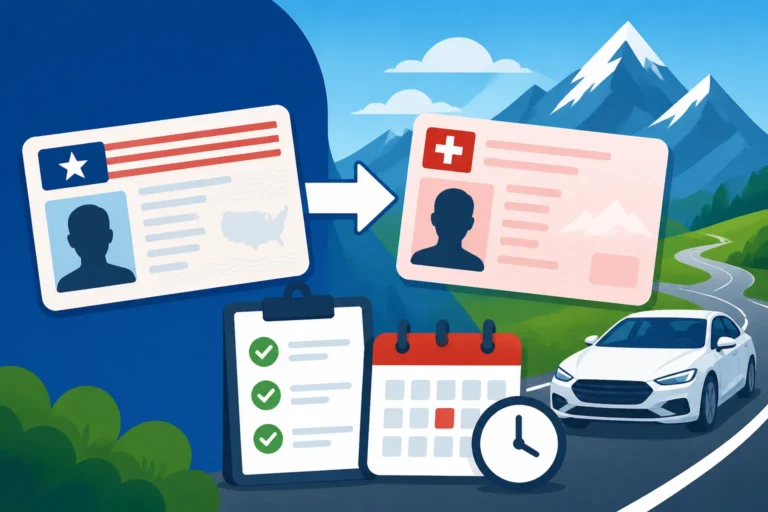
- Your Swiss driver's license. If you're a new arrival, make sure you've already started the process of Converting Your Foreign Driver's License to a Swiss Fahrausweis within your first year.
- The electronic insurance confirmation.
- A valid MFK report if required for the car.
You literally walk into the Strassenverkehrsamt, hand over your documents, and they issue you a new Fahrzeugausweis in your name.
- Getting your Number Plates: In Switzerland, number plates belong to the person, not the car. So, when you register your first car, you'll be issued a new set of plates (two for a car, one for a motorcycle). If you already own plates, you simply transfer them to your new car. You then attach these plates to your vehicle, and voilà, you're legal! Don't forget that if you're planning to use the Swiss highway network, you'll also need to purchase the Swiss Autobahn Vignette: E-Vignette vs Physical Sticker for 2026 annually.
Financing Your Purchase: Cash, Loan, or Lease?
How you pay for your car can have a big impact on your monthly budget and long-term financial health.
- Cash Purchase: If you have the funds, buying with cash is always the simplest and cheapest option as you avoid interest payments and are immediately the sole owner.
- Car Loan (Kredit): Swiss banks and independent credit providers offer car loans. Interest rates can vary, and your eligibility will depend on your residence permit status (B permit holders might face higher scrutiny) and creditworthiness. It’s crucial to shop around and compare APRs. You’ll own the car from day one, but you'll have fixed monthly payments for the loan duration.
- Leasing (Leasing): This is a very popular option in Switzerland, especially for new cars. Leasing means you essentially rent the car for a fixed period (e.g., 2-5 years) with an agreed mileage limit, making monthly payments. At the end of the term, you return the car, or you might have the option to buy it for a residual value. The advantage is lower monthly payments compared to a loan and driving a new car more often. However, you don't own the car, you're usually tied to strict mileage limits, and any excessive wear and tear can incur charges when you return it. Make sure you understand the fine print, especially regarding early termination penalties. For a more detailed comparison, check out our guide on Car Leasing vs Cash Purchase in Switzerland: The Real Cost Breakdown.
| Feature / Aspect | New Car in Switzerland | Used Car in Switzerland |
|---|---|---|
| Initial Cost | High (CHF 25,000 – 80,000+ for standard models) | Moderate to Low (CHF 5,000 – 30,000+ for good condition) |
| Depreciation | Highest in first 3-5 years | Slower, most depreciation already occurred |
| Warranty | Full manufacturer warranty (3-7 years typically) | Dealer warranty (3-12 months) or none (private sale) |
| Maintenance | Minimal in early years, covered by service plans usually | Potentially higher (depending on age/condition), often not covered |
| Technology/Features | Latest models, cutting-edge tech | May have older tech, fewer modern features |
| Financing Options | Attractive leasing deals, loans available | Loans available, less common for leasing |
| Registration Fees | Generally higher for newer/more powerful cars | Lower, based on age/power |
| Insurance Premiums | Often higher (full comprehensive recommended) | Potentially lower (third-party/partial comprehensive) |
| Peace of Mind | High, no hidden issues | Moderate, potential for unknown problems |
| Selection | Limited to current model ranges | Vast, diverse range of makes and models |
Practical Tips and Expat Wisdom for Car Buying
Buying a car in Switzerland is a big investment and a significant step towards feeling settled. Here are some extra tips from a veteran expat to help you navigate it all.
Language Barriers and Local Nuances
This is where many expats hit their first snag. While many Swiss speak excellent English, especially in larger cities and official dealerships, dealing with private sellers or smaller garages in the German, French, or Italian-speaking regions might require some linguistic acrobatics.
- Bring a Translator: If you're going to view a private sale or an independent garage in a region where you don't speak the local language, bring a Swiss friend or colleague with you. Their presence can be invaluable for understanding details, asking the right questions, and even for cultural nuances in negotiation.
- Use Translation Apps: Google Translate or DeepL can be your best friends for deciphering online ads or translating quick phrases during a conversation.
- Understand Local Jargon: Terms like "Fahrzeugausweis" (registration document), "Serviceheft" (service book), "Winterreifen" (winter tires), "Autobahnvignette" (highway sticker), and "Leasingvertrag" (leasing contract) are common. Familiarize yourself with them.
- Punctuality is Key: This is Switzerland, after all! Always be on time for appointments, whether it's with a dealer or a private seller. Being late is seen as disrespectful. You'll quickly learn that Swiss Customs and Etiquette: Social Norms Every Newcomer Should Know apply to everything, even car shopping.
Test Drives, Paperwork, and Negotiation
Don't rush these critical steps. It's easy to get excited, but a thorough approach will save you headaches and money down the road.
- Thorough Test Drives: Don't just drive around the block. Take the car on a variety of roads – city streets, highways, and even some hilly sections if possible. Listen for strange noises, check the brakes, acceleration, and all the electronics (AC, radio, windows, etc.). Make sure all lights work.
- Key Documents: Always verify the Fahrzeugausweis matches the car’s VIN (Vehicle Identification Number) and ensure the seller is the registered owner. Ask for the full service history (Serviceheft) – this is critical for understanding the car’s past maintenance.
- Negotiation in Switzerland: While not as aggressive as in some other countries, there's usually a little room for negotiation, especially on used cars. Don't expect huge discounts, but aiming for a few hundred francs off, or asking for new winter tires or a full tank of petrol, isn't unreasonable. Be polite but firm. A private seller might be more flexible than a large dealership. It's often about finding common ground rather than a fierce battle.
Hidden Costs and Long-Term Ownership
The purchase price is just the beginning. Understanding the total Annual Car Costs in Switzerland: Insurance, Tax, and Servicing is crucial for your long-term budget as an expat.
- Road Tax (Verkehrssteuer): This annual tax is paid to your canton and varies significantly based on factors like engine size, emissions, weight, and sometimes even the Canton itself.
- Service Costs: Regular servicing is essential to keep your car running smoothly and to pass future MFK inspections. Garage labor rates in Switzerland are high, so factor this into your budget.
- Parking Permits & Fees: If you live in a city, you’ll likely need a parking permit for your zone (a "Blaue Zone" permit) or pay for regular parking spots, which can add up quickly. Explore options like Parking in Swiss Cities: Blue Zones, Permits, and White Zones to understand the costs.
- Fuel: Petrol (Benzin) and Diesel are expensive in Switzerland, though competitive with neighboring countries.
- Winter Tires (Winterreifen): While not legally mandatory in every situation, it is highly recommended, and practically a must, to switch to winter tires during the colder months (typically October to Easter). If you cause an accident on summer tires in icy or snowy conditions, your insurance might reduce its payout. You'll need to buy a second set of wheels or pay for tire changes twice a year, plus storage if you don’t have space. We have a dedicated guide on Winter Tires in Switzerland: Are They Legally Mandatory in 2027?.
Buying a car in Switzerland is certainly an administrative marathon, but it offers unparalleled freedom to explore the breathtaking landscapes and charming towns at your own pace. With careful planning and a good understanding of the local process, you'll soon be cruising the scenic routes, perhaps with a navigation system guiding you through stunning passes that you couldn't reach on public transport. And if you're just moving here, remember that services like Sirelo can help make your relocation smoother, leaving you more energy to tackle exciting challenges like car ownership.
Disclaimer
The information provided in this guide is intended for general informational purposes only and does not constitute legal, financial, or professional advice. While we strive to provide accurate and up-to-date information, rules and regulations in Switzerland, particularly concerning vehicle registration, insurance, and taxation, can change and vary by canton. It is essential to consult with official Swiss authorities, your cantonal Road Traffic Office (Strassenverkehrsamt), and qualified insurance or financial advisors for advice tailored to your specific situation. We cannot be held responsible for any decisions made based on the information presented herein.