Storage Rental (Estrich and Keller) in Swiss Apartment Buildings
Finding enough space for your belongings is one of the most persistent headaches for newcomers in Switzerland. While Swiss apartments are known for their quality, they are rarely known for their excessive square footage, often leaving expats wondering where on earth to put their ski gear, winter tires, and bulky suitcases. This guide breaks down everything you need to know about navigating the "Estrich" and "Keller" systems to reclaim your living space.
Understanding the Swiss Storage Hierarchy: Keller vs. Estrich
When you first start Decoding Swiss Apartment Ads: What 2.5, 3.5, and 4.5 Rooms Actually Mean, you will notice that almost every listing mentions a "Keller" or an "Estrich." To the uninitiated, these just sound like fancy words for "storage," but in the Swiss architectural world, they represent two very different environments with their own set of rules and limitations. Understanding which one you have—or if you have both—is crucial for protecting your belongings from the elements and the strict Swiss building codes.
The Keller: Your Basement "Bunker"
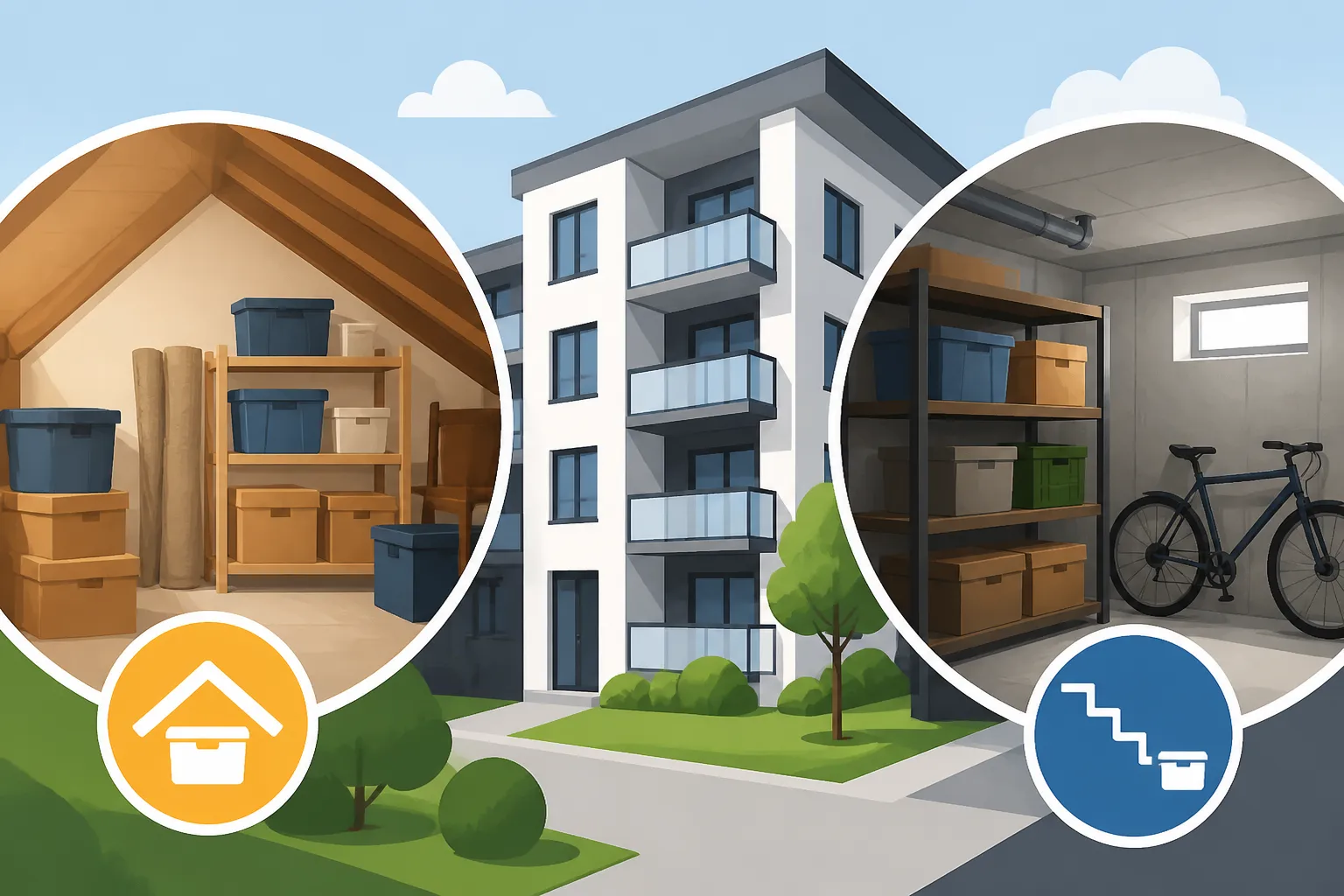
The Keller, or cellar, is usually located in the basement levels of the apartment building. In many older Swiss buildings, these units aren't solid-walled rooms but are instead divided by wooden slats. This "slat style" architecture is designed to encourage airflow, which is essential in a basement, but it also means that your neighbors can technically see what you are storing. It also means that dust and spiders have free rein. If you are lucky enough to live in a modern building, your Keller might be a solid concrete room, sometimes even with a heavy steel door that makes it look like a fallout shelter.
When you are moving heavy items into a basement unit, the logistics can be tricky. Narrow stairs and slow, small elevators are the norm here. If you find yourself overwhelmed by the sheer volume of boxes you need to move downstairs, using a service like Sirelo to compare local moving quotes can save your back and your sanity. They specialize in finding professional help that understands the specific challenges of Swiss apartment layouts, ensuring your heavy winter tires or surplus furniture actually make it into the Keller without damaging the walls of the communal hallway.
The climate in a Keller is generally cool and somewhat humid. This makes it the perfect place for storing things like wine or root vegetables—true to its historical purpose. However, for a modern expat, it is more likely the place where you’ll store your summer tires in the winter and your Winter Tires in Switzerland: Are They Legally Mandatory in 2027? in the summer. Be warned: the humidity can be a death sentence for cardboard boxes and expensive leather goods. Always use plastic bins with airtight lids if you are storing clothes or books in a basement unit.
The Estrich: The Attic Space
The Estrich refers to the attic storage, usually tucked away under the eaves of the roof. Unlike the Keller, which stays cool year-round, the Estrich is subject to extreme temperature fluctuations. In the height of a Swiss summer, it can become a literal oven, while in winter, it might be just a few degrees above freezing. This makes it a terrible place for electronics, candles (which will melt into a puddle by July), or anything sensitive to heat. It is, however, usually much drier than the basement, making it a better choice for storing textiles, provided they are sealed against moths.
Accessing the Estrich often involves a very small, very old elevator that stops one floor short, or worse, a set of pull-down stairs. This is where you put the things you only need once a year: the Christmas tree, the "just in case" camping gear, or the suitcases you used when you first arrived. Because it’s right under the roof, you also need to be mindful of weight limits. Swiss buildings are sturdy, but the Estrich floor isn't always designed for a collection of heavy weights or solid oak wardrobes.
One veteran tip for the Estrich: check it after a heavy storm. While Swiss maintenance is generally excellent, old roofs can occasionally leak, and you don’t want to discover a soggy box of family photos six months after a spring downpour. When you are first What to Check During a Swiss Apartment Viewing (Besichtigung), ask the landlord specifically about the insulation and "dichtigkeit" (watertightness) of the attic space.
Common Areas and the No Hallway Rule
There is a cultural shock that hits many expats the moment they try to leave a pair of muddy hiking boots or a stroller in the hallway outside their apartment door. In Switzerland, the communal hallway is strictly off-limits for storage. This is primarily a fire safety regulation—hallways must remain clear for evacuation—but it is also a matter of "Ordnung" (order). Your neighbors will likely complain, and the "Hauswart" (building manager) will send you a stern letter if you infringe on these common areas.
This rule extends to the stairwells and the areas outside the Keller and Estrich units. You cannot leave items "temporarily" in the corridor while you reorganize your unit. Everything must be contained within your designated slats or walls. This strictness is part of the broader Swiss Everyday Rules: Recycling, Quiet Hours, and Neighborhood Etiquette that keep apartment living harmonious but can feel incredibly restrictive when you are trying to find a home for a new bicycle.
| Storage Type | Ideal Items | Climate | Main Risk |
|---|---|---|---|
| Keller | Tires, Wine, Tools, Sports Gear | Cool, Humid | Mold, Mildew, Dust |
| Estrich | Clothes, Suitcases, Decorations | Variable, Dry | Heat Damage, Moths |
| Hallway | Nothing (strictly forbidden) | Ambient | Fines, Evacuation risk |
Legal Rights and Contractual Realities of Storage
Navigating the legalities of storage in Switzerland is just as important as the physical organization. In many countries, a "storage unit" is an optional add-on, but in Switzerland, it is often inextricably linked to your rental contract. However, don't assume that because there is a basement, you automatically get a piece of it. You must check the fine print of your lease to see exactly what is included and what your responsibilities are.
Is Storage Always Included in the Rent?
In the vast majority of Renting in Switzerland: The Complete 2027 Guide for Expats, a Keller or Estrich is included in the base rent. It is usually listed as a "Nebengelass" or an "Abteil." During the Swiss Apartment Handovers (Wohnungsübergabe): Protocols and Deposits, the landlord should show you exactly which unit is yours and hand over the keys (if it has a built-in lock) or show you where to place your own padlock. If the unit isn't empty when you move in, you have the legal right to demand the landlord clears it immediately.
Occasionally, in high-demand cities like Zurich or Geneva, landlords might try to rent storage units separately to maximize profit. If your contract doesn't explicitly mention a storage room, you might find yourself with nowhere to put your bulky items. If you are in the process of Moving to Switzerland: Shipping Your Belongings and Customs Clearance, make sure your relocation agent or landlord confirms your storage allocation in writing before your shipping container arrives. If you are managing the digital side of your move and need to stay connected while coordinating these logistics, an e-SIM from Airalo can be a lifesaver, allowing you to research local laws or contact your landlord without worrying about roaming charges or finding a local shop immediately.
Damage, Insurance, and Liability
One of the biggest mistakes expats make is assuming their landlord's insurance covers their items in the Keller or Estrich. It almost never does. If the basement floods—a semi-regular occurrence in some older lakeside buildings—the landlord is responsible for fixing the building, but you are responsible for your ruined belongings. This is why having Household Contents Insurance (Hausratversicherung): Burglary and Fire Coverage is absolutely non-negotiable for anyone living in Switzerland.
Furthermore, if your storage unit is broken into, you will need to prove to your insurance company that it was properly secured. Most "slat" units require you to provide your own padlock. Don't go cheap here; a sturdy, high-quality lock is a deterrent in communal basements. You should also ensure that your Private Liability Insurance (Privathaftpflicht): Why Expats Need It is up to date, just in case your improperly stored bike falls and damages a neighbor's expensive ski equipment or a communal pipe.
Subletting Your Storage Unit
If you are a minimalist and find yourself with a Keller you don't use, you might be tempted to rent it out to a neighbor to cover some of your own "Nebenkosten" (utility costs). While this is technically possible, you must get written permission from your landlord first. Most Swiss rental contracts have strict clauses against unauthorized subletting. If you get caught renting out your storage space without permission, it could be grounds for the termination of your entire apartment lease.
Conversely, if you need extra space, it is worth asking your neighbors if they have an unused Keller. Often, elderly residents or frequent travelers have empty units and might be happy to let you use them for a small fee. Just ensure that you still have a written agreement and that your insurance company knows your items are stored in a different unit within the building.
Practical Tips for Maximizing Your Swiss Storage Space
Once you have your keys and your contract is signed, the real work begins: fitting ten years of life into a three-square-meter wooden cage. Efficiency is the name of the game here. Because Swiss storage units are often tall but narrow, you need to think vertically.
Managing Moisture and Pests
As mentioned, the Keller is prone to dampness. The first rule of Swiss basement storage is: "Never let anything touch the floor directly." Use plastic pallets or simple wooden blocks to raise your boxes and furniture at least five to ten centimeters off the concrete. This protects your items from minor leaks and allows air to circulate underneath, preventing the dreaded "basement smell" from permeating your things.
For the Estrich, the primary concern is pests and dust. Silverfish and moths love attic spaces. Use vacuum-sealed bags for all clothing and linens. Not only does this save a massive amount of space, but it also creates an airtight barrier that bugs can't penetrate. If you are storing wooden furniture in the attic, be mindful of woodworm. Check periodically for small holes or "dust" piles, which are signs of an infestation.
Security and Personal Locks
Most Swiss storage units in the basement use a simple latch that accepts a padlock. If you are moving in, do not use a flimsy luggage lock. Invest in a heavy-duty weather-resistant padlock. While Switzerland is generally very safe, communal areas in large apartment blocks are a frequent target for opportunistic theft, as it’s easy for someone to follow a resident through the main door.
Inside the unit, try to keep your most valuable items (like high-end mountain bikes or expensive tools) toward the back, hidden behind less interesting items like spare tires or boxes of old kitchenware. If your Keller has wooden slats, consider lining the inside with opaque plastic sheeting or cardboard. This prevents people from "window shopping" through the gaps in the wood and adds a small layer of privacy to your storage.
Professional External Storage Alternatives
Sometimes, no matter how much you declutter, the Keller and Estrich simply aren't enough. This is common for expats who moved from large houses abroad and aren't ready to sell their heirlooms yet. In major cities, "Self-Storage" facilities are becoming more common. Brands like Zebrabox or MyBox offer climate-controlled, highly secure units that are a massive upgrade over a damp basement.
These external units are also an excellent transition solution. For example, if you are Hiring a Moving Company in Switzerland: Costs and Booking Tips and your new apartment won't be ready for two weeks, a professional storage facility is much safer than leaving your life's work in a moving van. While you are getting your Swiss life in order, perhaps using Airalo to navigate your new neighborhood's maps and services, you can rest easy knowing your valuables are in a temperature-controlled environment rather than a sweltering Estrich.
The Logistics of Moving Your Stuff Into Storage
The final hurdle is the physical act of getting your items into these spaces. Swiss apartment buildings often have "quiet hours" that apply even to the basement and attic. If you are banging boxes around at 10:00 PM on a Sunday, you will hear about it from your neighbors.
Using Professional Movers for Heavy Items
Don't underestimate the difficulty of moving items into a Swiss Keller. Many basement stairs are steep, narrow, and poorly lit. If you have a heavy washing machine or a solid wood dresser, trying to do it yourself with a friend is a recipe for a trip to the emergency room. This is where services like Sirelo become invaluable. By using their platform to find movers who specifically offer "small move" or "internal move" services, you can hire two pros for a couple of hours to do the heavy lifting safely.
Movers in Switzerland are also experts at the "Tetris" required to pack a small storage unit. They can help you disassemble furniture so it takes up less space and ensure the heavy items are at the bottom of the stack. This professional touch can often be the difference between needing to rent an extra external unit and fitting everything into the space you already have.
Organizing for Cross-Border Transitions
If you are just arriving and your belongings are being handled by international movers, the Keller is often the dumping ground for everything the movers don't have time to help you unpack. This leads to "The Wall of Boxes" that haunts many expats for years. To avoid this, label every box with its specific destination: "Keller," "Estrich," or "Kitchen."
If you are moving from outside the EU, remember that your storage items are also subject to customs declarations. Ensure your moving company has a detailed inventory that distinguishes between what is going into your living space and what is going into long-term storage. This level of organization is the hallmark of a successful move to Switzerland and will save you hours of digging through boxes later when you finally decide it's time to find that one specific ski jacket.
Disclaimer
The information provided in this guide is for informational purposes only and does not constitute legal or professional advice. Rental laws and building regulations in Switzerland can vary significantly by canton and by individual rental contract. Always consult your specific lease agreement or a local tenants' association, such as ASLOCA or Mieterverband, for advice pertaining to your specific situation. Insurance coverage is subject to the terms and conditions of your individual policy.