Cough and Cold Medicine in Switzerland: Local Brands and Pharmacy Advice
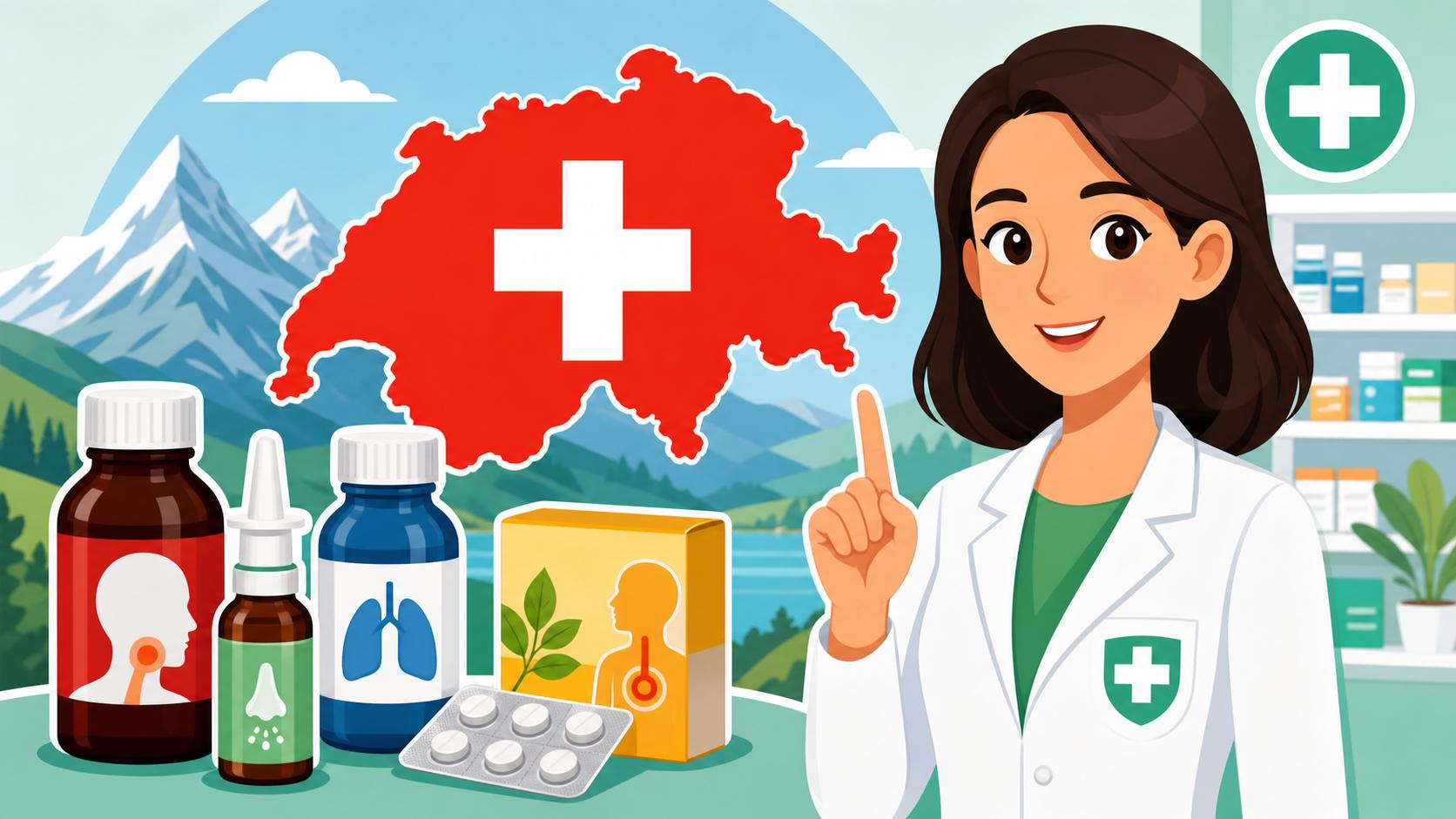
Landing in a Swiss pharmacy with a pounding headache and a raw throat is a rite of passage for every expat. I remember standing in a bright, clinical Apotheke in Zurich during my first winter, staring blankly at shelves filled with brands I didn't recognize while trying to remember the German word for "mucus." This guide deciphers the Swiss medicine cabinet so you can find relief fast.
Navigating the Swiss Pharmacy Landscape
The first thing you’ll notice in Switzerland is that the system for buying medicine is quite different from what you might be used to in the UK, US, or even other parts of Europe. You can’t just grab a 50-pack of ibuprofen at the supermarket next to the milk. In Switzerland, the sale of medicine is strictly regulated and categorized into "dispensing categories" which determine where and how you can buy them.
Most of your cold and flu needs will fall into Category D or E. Category D medicines require a brief consultation with a pharmacist or a trained assistant in an Apotheke or a Drogerie. Category E medicines are available in more general retail settings, but even then, the selection is limited. This is why understanding Pharmacies and Medication: Prescriptions, Costs, and OTC Regulations is essential for your first few months. You will spend a lot of time talking to pharmacists, but the good news is that most of them in major cities speak excellent English and are highly trained to provide medical advice that might save you a trip to the doctor.
There is a distinct difference between an Apotheke and a Drogerie. An Apotheke is a full pharmacy where you can get prescription medications and have access to the full range of medical treatments. A Drogerie focuses more on health, beauty, and "natural" remedies. While a Drogerie can sell many cough and cold medicines, they cannot fulfill prescriptions. If you have international coverage through Cigna Global, you’ll find that their claims process is quite familiar with the receipts you get at a standard Apotheke, but always keep your "Rückforderungsbeleg" for your records.
Common Swiss Brands for Fever and Pain
When you ask for "Tylenol" or "Advil," you will likely be met with a polite but confused smile. In Switzerland, the kings of the painkiller world are Dafalgan and Algifor. These are the household names that every Swiss person has in their medicine cabinet.
Dafalgan and Paracetamol Options
Dafalgan is the most common brand of paracetamol (acetaminophen) in Switzerland. It comes in various forms, including tablets, effervescent discs that dissolve in water, and even suppositories (which are much more common here for children than in many English-speaking countries). If you are looking for alternatives, Panadol is also available but less ubiquitous than Dafalgan.
The dosage is something to watch out for. In Switzerland, 500mg and 1g tablets are standard. Be aware that the 1g tablets often require a prescription depending on the pack size, though pharmacists have some discretion for smaller quantities. For a deep dive into pricing and regulations, check out our guide on Over-the-Counter Painkillers in Switzerland: Dafalgan, Algifor, and Costs.
Algifor and Ibuprofen
If you need an anti-inflammatory, you will be looking for Algifor. This is the Swiss equivalent of Advil or Motrin. It’s highly effective for the body aches that come with a heavy flu. One thing I learned the hard way: Swiss pharmacists are very cautious about stomach irritation, so they will often ask if you’ve eaten before taking it.
If you prefer to stock up on vitamins and supplements to support your recovery, iHerb is a popular choice for expats in Switzerland who want to find specific international brands of Vitamin C or Zinc that might be significantly more expensive at a local Apotheke.
Multi-Symptom Relief: The Swiss Approach to Cold and Flu
In many countries, we are used to "all-in-one" daytime and nighttime liquids. Switzerland tends to prefer targeted treatments, but there are a few heavy hitters that combine ingredients to tackle multiple symptoms at once.
Pretuval: The Swiss Gold Standard
If you ask a pharmacist for something to "knock out" a cold, they will likely point you toward Pretuval. It is a combination of paracetamol, pseudoephedrine (for congestion), and dextromethorphan (for cough). It comes in tablet form or as a "C" effervescent tablet that includes Vitamin C.
Pretuval is incredibly effective, but because it contains a decongestant that can affect blood pressure and sleep, the pharmacist will usually give you a short lecture on when to take it. It’s these small interactions that make Health & Medical navigation in Switzerland feel more personal, albeit occasionally time-consuming.
NeoCitran: The Hot Drink Remedy
For those who prefer a soothing hot drink before bed, NeoCitran is the local equivalent of Lemsip or NyQuil Hot Therapy. It usually contains paracetamol and an antihistamine to help you sleep while drying up a runny nose. There is a "Grip and Erkältung" version (Flu and Cold) that is a staple for those long, dark winter nights in the Alps.
| Brand Name | Active Ingredients | Primary Use | Form |
|---|---|---|---|
| Dafalgan | Paracetamol | Fever and Pain | Tablet/Effervescent |
| Algifor | Ibuprofen | Pain and Inflammation | Liquid/Capsule |
| Pretuval | Paracetamol, Pseudoephedrine, Dextromethorphan | Multi-symptom cold | Tablet/Drink |
| NeoCitran | Paracetamol, Pheniramine | Fever and Nighttime relief | Hot Drink Powder |
| Fluimucil | Acetylcysteine | Productive (wet) cough | Effervescent Tablet |
| Triofan | Xylometazoline, Antazoline | Nasal Congestion | Spray/Drops |
Sore Throat and Cough Solutions
The Swiss take their throat care very seriously. If you go to a pharmacy with a sore throat, you won’t just get a bag of cough drops; you’ll get a pharmaceutical-grade lozenge.
Mebucaine and Neo-Angin
Mebucaine is a powerful local brand that often contains a mild anesthetic and an antiseptic. It numbs the throat almost instantly. Another very common brand is Neo-Angin, which comes in several strengths. If your throat is particularly "crusty" or painful, pharmacists might recommend a spray like Collunosol.
If your insurance situation is complex, perhaps because you are an international student or a temporary worker, knowing which of these are covered or how to manage costs is vital. You might want to read about Health Insurance for International Students: KVG Exemptions and Private Options to see how OTC costs fit into your budget.
Dealing with the Cough: Fluimucil vs. Bexin
The Swiss categorize coughs into two types: "produktiv" (wet/chesty) and "reizusten" (dry/tickly).
- For a wet cough, they will give you a mucolytic like Fluimucil (NAC). This thins the mucus so you can cough it up. Be warned: do not take this at night, or you’ll be up all night coughing!
- For a dry, hacking cough that keeps you awake, you’ll be looking for Bexin or a similar syrup containing dextromethorphan to suppress the urge to cough.
Nasal Congestion and Sinus Relief
Central heating in Swiss apartments can be incredibly drying, which often exacerbates nasal issues during a cold.
Triofan and Otrivin
Triofan is perhaps the most famous nasal spray in the country. It’s very effective but, like all decongestant sprays, the Swiss pharmacists will warn you not to use it for more than five to seven days to avoid "rebound" congestion. For a more natural approach, they often suggest seawater sprays like Libenar or physiological saline rinses.
Many expats who move here for work find that the change in climate leads to frequent sinus issues. If you are struggling with chronic symptoms, it might be time to use your insurance to find a specialist. You can learn more about this in our guide on Finding Medical Care in Switzerland: Doctors, Specialists, and Referrals.
The Natural and Homeopathic Swiss Way
Switzerland has a long history of herbal medicine, and it is very common for a pharmacist to offer you a "natural" alternative alongside or instead of a chemical one.
Similasan and Vogel
Brands like Similasan (homeopathic) and A. Vogel (herbal) are found in every pharmacy. You’ll see treatments for everything from "winter immune support" to specific cough syrups made from spruce shoots or ivy leaf. While some expats are skeptical, many locals swear by them.
Sidroga Teas
Instead of pills, many Swiss people reach for medicinal teas. Sidroga is the brand you will see most often. They have specific blends for "Brust- und Hustentee" (Chest and Cough) or "Blasen- und Nierentee" (Bladder and Kidney). They are surprisingly potent and are considered a legitimate part of the medical toolkit here. If you’re trying to keep your Cost of Living in Switzerland 2026: Budgeting for Singles and Families under control, these teas are often a cheaper first line of defense than expensive multi-symptom capsules.
Practical Pharmacy Advice for Expats
When you are sick, the last thing you want to do is navigate a complex system. Here are a few "pro-tips" I’ve gathered over the years:
- Check the Notfallapotheke: Most pharmacies close by 6:30 PM or 7:00 PM and are closed on Sundays. Every region has a designated "emergency pharmacy" that stays open late or 24/7. You will usually have to pay a "notfall" fee (often around CHF 20-50) for the service. Plan ahead by Finding the Notfallapotheke (Emergency Pharmacy) on Sundays before you actually need it.
- Language Barriers: If your German or French isn't up to scratch, don't worry. Simply point to where it hurts. Most pharmacists are used to expats and will often have printed leaflets in English explaining the dosage.
- Insurance and Receipts: Most cold medicines are paid for out-of-pocket because they fall under your "Franchise" (deductible). However, always keep the detailed receipt. If you have a premium international plan like Cigna Global, some of these costs might be reimbursable depending on your specific policy. Understanding The Swiss Franchise System: How Deductibles and Copays Work will help you realize why the pharmacist gives you so many pieces of paper.
- Stocking Up: Since you can't buy these at the grocery store, I highly recommend keeping a "basic kit" of Dafalgan, Algifor, and a nasal spray at home. There is nothing worse than waking up at 2 AM on a Sunday in a quiet Swiss village with a fever and no medicine.
- Online Options: While you can't get everything online, sites like iHerb are great for preventative care like Elderberry syrup, high-dose Vitamin D (essential for Swiss winters), and herbal teas that can be delivered to your door.
Living in Switzerland means adapting to a system that values high-quality, regulated care over convenience. It might be frustrating not to find a giant bottle of cheap pills at the supermarket, but the advice you get from a Swiss pharmacist is often better than what you'd get from a quick Google search. Stay warm, drink your Sidroga tea, and remember that even the locals find the price of cold medicine a bit hard to swallow sometimes. If you are new to the country, make sure you understand the broader system by reading Healthcare in Switzerland for Expats: The Complete System Overview (2027) to ensure you are fully covered for whatever winter throws at you.
Disclaimer
This guide is for informational purposes only and does not constitute medical advice. Always consult with a qualified healthcare professional or a licensed pharmacist before starting any new medication, especially if you have underlying health conditions, are pregnant, or are taking other medicines. The medical system and drug availability in Switzerland can change, and while we strive for accuracy, you should always verify information with official sources or your insurance provider.